


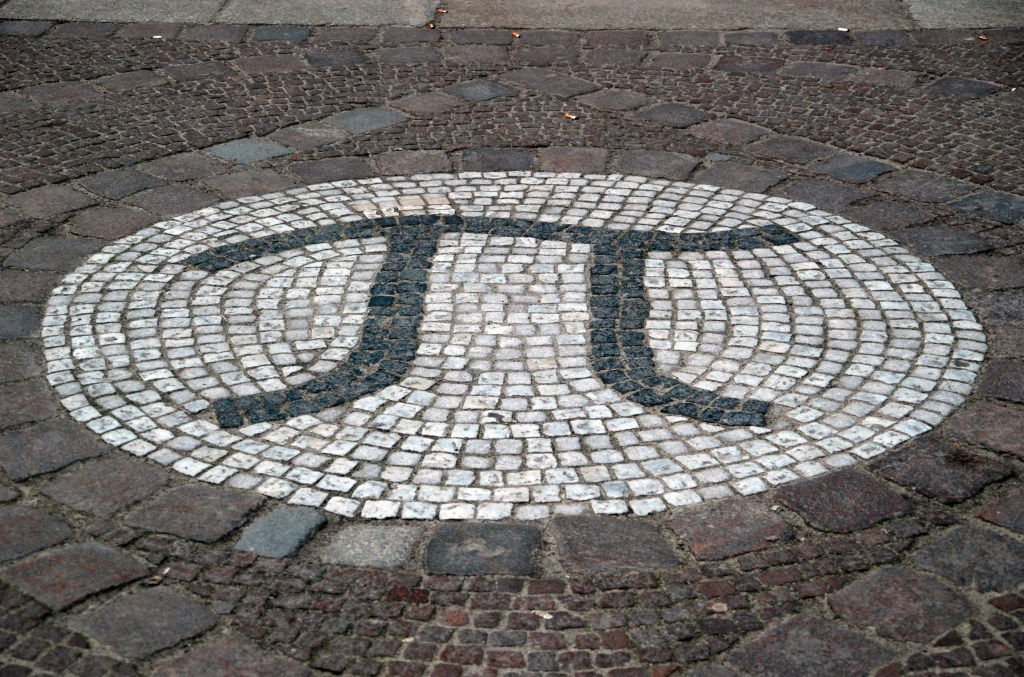
March 14th is known as Pi Day, a day that celebrates the mathematical constant π (pi), which is approximately 3.14. Pi Day has become an annual event that celebrates not only pi but also other interesting numbers that have significance in mathematics and science. This paper explores the history and significance of Pi Day and other interesting numbers that have captured the imagination of mathematicians and scientists around the world.
Pi Day
Pi Day is celebrated on March 14th, as the first three digits of pi are 3.14. The day was first celebrated in 1988 by physicist Larry Shaw at the Exploratorium in San Francisco. Since then, Pi Day has become an annual event celebrated by math enthusiasts around the world [1]. On Pi Day, people celebrate by reciting the digits of pi, holding pie-eating contests, and engaging in other math-related activities.
Significance of pi
Pi is a mathematical constant that represents the ratio of the circumference of a circle to its diameter. It is an irrational number, meaning that it cannot be expressed as a finite decimal or fraction. Pi is an essential concept in mathematics and has numerous applications in physics, engineering, and other sciences [2]. The discovery and calculation of pi have been a significant milestone in the development of mathematics throughout history.
Other interesting numbers

File:Golden_ratio_segments.png
Pi is not the only number that has captured the imagination of mathematicians and scientists. Here are some other interesting numbers:
- e: Euler’s number, also known as the natural logarithm, is a mathematical constant that is approximately equal to 2.718. It is used in calculus, probability, and other fields of mathematics and science [3].
- Golden ratio: The golden ratio is a mathematical concept that describes the ratio of two quantities in which the ratio of the larger quantity to the smaller quantity is the same as the ratio of the sum of the quantities to the larger quantity. It is approximately equal to 1.618 and is often found in nature, art, and architecture [4].
- Avogadro’s number: Avogadro’s number is a constant that represents the number of particles (atoms or molecules) in one mole of a substance. It is approximately equal to 6.022 x 10^23 and is used in chemistry and physics [5].
- The Fibonacci sequence: The Fibonacci sequence is a series of numbers in which each number is the sum of the two preceding numbers. The sequence starts with 0, 1, 1, 2, 3, 5, 8, 13, 21, 34, 55, and so on. The Fibonacci sequence appears in various natural phenomena, such as the arrangement of leaves on a stem and the growth patterns of seashells [6].
Conclusion
In conclusion, Pi Day and other interesting numbers have significant meaning and applications in mathematics and science. Pi is an essential concept that represents the ratio of a circle’s circumference to its diameter and has numerous applications in various fields. Other interesting numbers, such as e, the golden ratio, Avogadro’s number, and the Fibonacci sequence, have also played critical roles in the development of mathematics and science.
Source List:
- “Celebrating Pi Day,” Exploratorium, accessed March 14, 2023, https://www.exploratorium.edu/pi
- “Pi,” Wolfram MathWorld, accessed March 14, 2023, https://mathworld.wolfram.com/Pi.html
- “e,” Wolfram MathWorld, accessed March 14, 2023, https://mathworld.wolfram.com/e.html
- “The Golden Ratio,” Wolfram MathWorld, accessed March 14, 2023, https://mathworld.wolfram.com/GoldenRatio.html
- “Avogadro’s Number,” Encyclopedia Britannica, accessed March 14, 2023, https://www.britannica.com/science/Avogadros-number
- “Fibonacci Numbers and Nature,” The Fibonacci Association, accessed March 14, 2023, https://www.fibonacciassociation.org/Fibonacci-number-in-nature.html
 Wondergressive
