


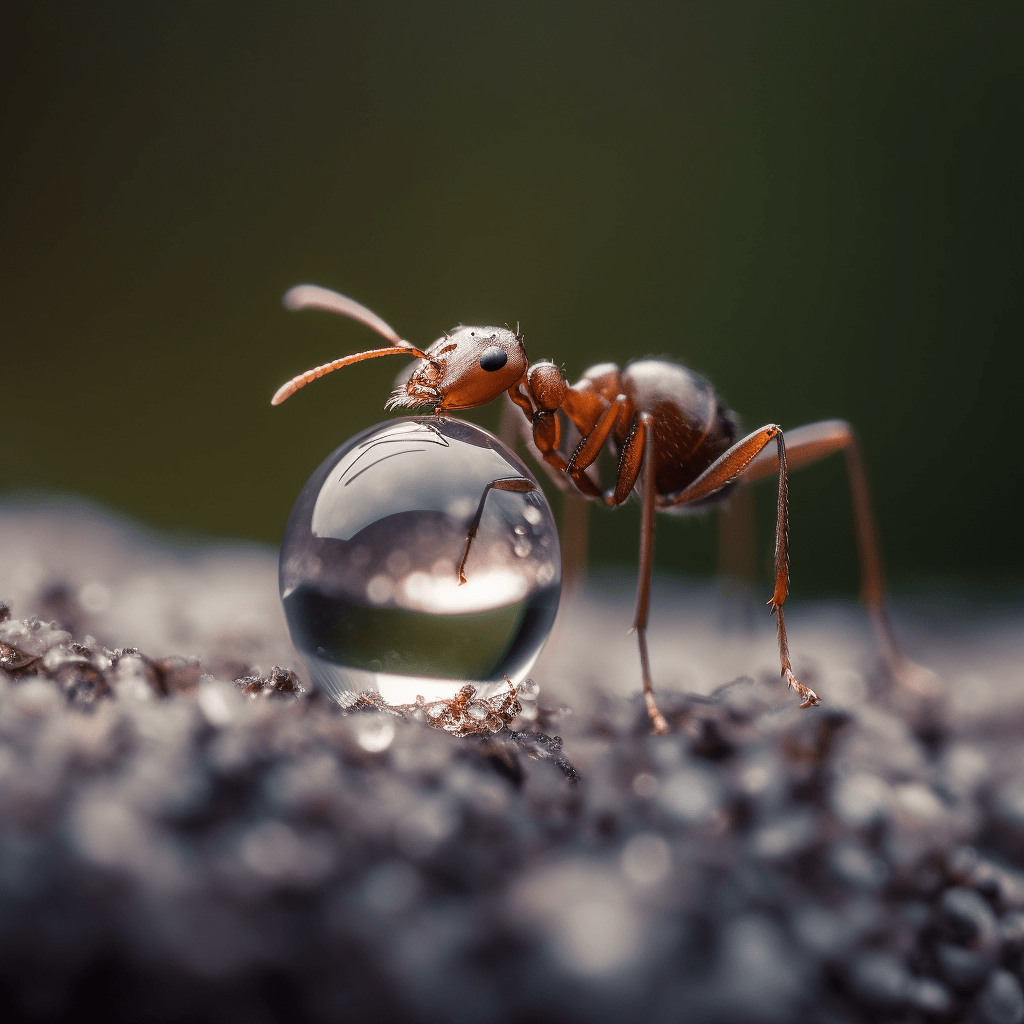
The life of ants may seem mundane and uninteresting to the casual observer, but a closer look at these tiny titans reveals a fascinating world of diversity and intelligence. With over 12,000 known species of ants (1), these small creatures exhibit complex behaviors and exhibit remarkable adaptability in a variety of environments. This article delves into the extraordinary life of ants, exploring their unique characteristics, social structures, communication methods, and problem-solving abilities. We will also highlight the contributions of ants to ecosystems around the world, drawing from the latest research in the field of myrmecology.
Ant Diversity
The diversity among ants is truly astounding. There are over 12,000 known species of ants worldwide, with many more yet to be discovered (1). Some ants are as small as 1 millimeter, while others can reach up to 52 millimeters in length (2). Ants have adapted to live in a range of environments, including deserts, rainforests, grasslands, and even urban settings (3). Some species of ants are highly specialized, such as the leafcutter ants, which cultivate fungus gardens as their primary food source (4).
Ant Social Structures
One of the most fascinating aspects of ant life is their social structure. Most ant species are eusocial, meaning they live in highly organized colonies with a division of labor among individuals (5). Colonies are typically composed of a queen, male ants, and female worker ants. The queen is responsible for laying eggs and is the mother of all ants within the colony (6). Male ants, also known as drones, have a single purpose: to mate with the queen and then die shortly after (7). Female worker ants perform various tasks such as foraging for food, caring for the queen and larvae, and maintaining the nest (8).
Ant Communication
Ants communicate through a variety of methods, including touch, sound, and chemical signals (9). The most common form of communication is through the use of pheromones. These are chemical substances released by ants to relay specific messages to their colony members (10). Pheromones can indicate the location of a food source, alert others to danger, or help to coordinate the construction of a nest (11). Some species of ants even use pheromones to manipulate the behavior of other insects, such as aphids, which they “farm” for their sugary excretions (12).
Problem Solving and Intelligence
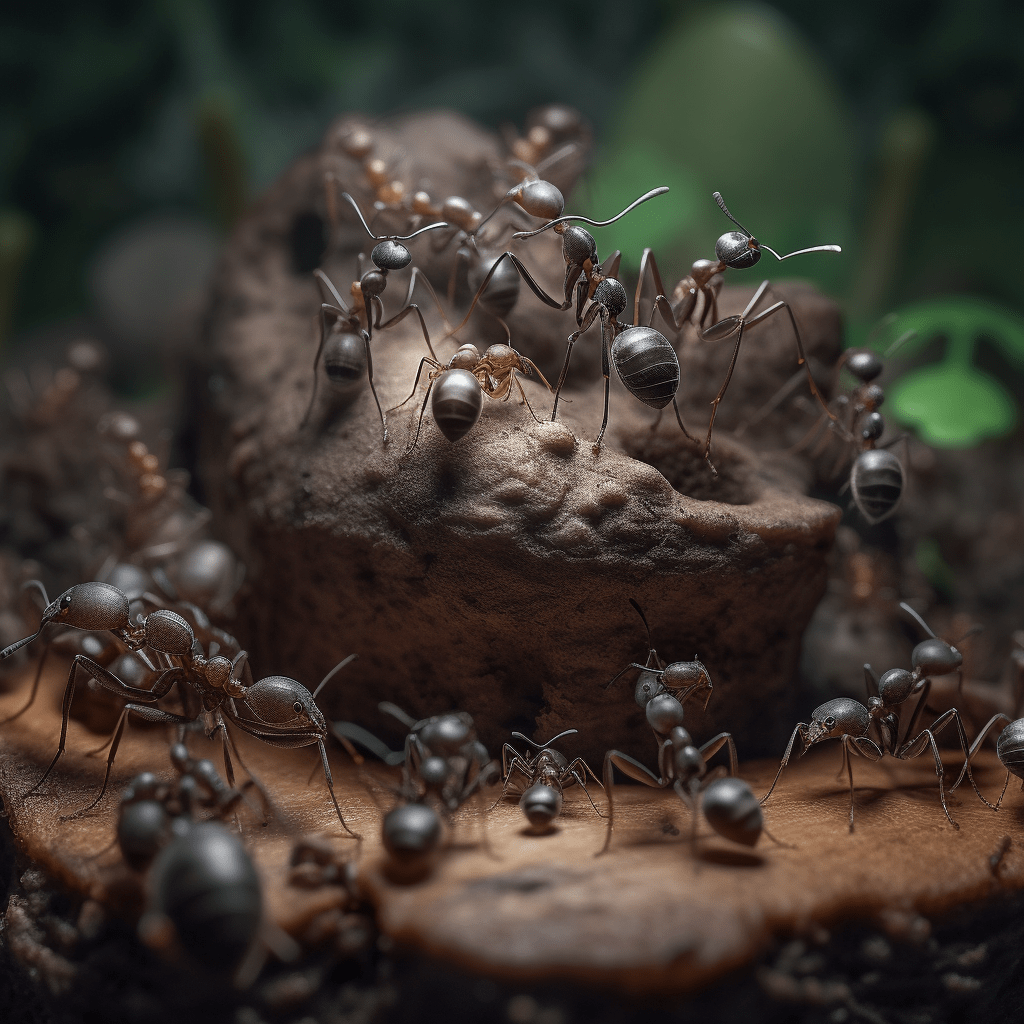
Ants exhibit remarkable problem-solving abilities and intelligence for creatures of their size. They can navigate complex environments, such as mazes, by using a combination of memory, visual cues, and chemical trails (13). Ants are also capable of learning from each other, a phenomenon known as social learning (14). For example, when an ant discovers a new food source, it can teach others in the colony how to locate the food through a process called tandem running (15). Additionally, some ant species are known to engage in cooperative behavior, such as forming bridges or rafts with their bodies to overcome obstacles (16).
Ants and Ecosystems
Ants play a critical role in maintaining the health and balance of ecosystems around the world. They are important decomposers, helping to break down organic matter and return nutrients to the soil (17). Ants also help to disperse seeds, contributing to the growth of plants and the overall biodiversity of an area (18). Furthermore, ants serve as a food source for many animals, including birds, reptiles, and other insects (19). In some ecosystems, ants even act as predators, helping to regulate populations of other insects and small invertebrates (20).
Conclusion:
The extraordinary world of ants is one of diversity, intelligence, and adaptability. As we have explored, these tiny creatures exhibit complex social structures, utilize various communication methods, and display impressive problem-solving abilities. Their contributions to ecosystems around the world are invaluable, serving as decomposers, seed dispersers, and food sources for other organisms. By understanding the fascinating life of ants, we can appreciate the often-overlooked role these tiny titans play in our world and how they continue to captivate researchers in the field of myrmecology.
Source List
- Bolton, Barry. “AntCat: An Online Catalog of the Ants of the World.” AntCat, www.antcat.org.
- Hölldobler, Bert, and Edward O. Wilson. Journey to the Ants: A Story of Scientific Exploration. Belknap Press, 1994.
- LaPolla, Jon S., et al. “A Global Ant Biodiversity Hotspot.” Insect Conservation and Diversity, vol. 4, no. 3, 2011, pp. 174-184.
- Schultz, Ted R., and Seán G. Brady. “Major Evolutionary Transitions in Ant Agriculture.” Proceedings of the National Academy of Sciences, vol. 105, no. 14, 2008, pp. 5435-5440.
- Hölldobler, Bert, and Edward O. Wilson. The Superorganism: The Beauty, Elegance, and Strangeness of Insect Societies. W. W. Norton & Company, 2009.
- Keller, Laurent, and Elisabeth Gordon. The Lives of Ants. Oxford University Press, 2009.
- Boomsma, Jacobus J., et al. “Lifetime Monogamy and the Evolution of Eusociality.” Philosophical Transactions of the Royal Society B: Biological Sciences, vol. 364, no. 1533, 2009, pp. 3191-3207.
- Gordon, Deborah M. Ant Encounters: Interaction Networks and Colony Behavior. Princeton University Press, 2010.
- Wyatt, Tristram D. Pheromones and Animal Behavior: Chemical Signals and Signatures. Cambridge University Press, 2014.
- Vander Meer, Robert K., et al. Pheromone Communication in Social Insects: Ants, Wasps, Bees, and Termites. Westview Press, 1998.
- Hölldobler, Bert, and Edward O. Wilson. The Ants. Belknap Press, 1990.
- Stadler, Barbara, and Anthony F. G. Dixon. “Mutualism: Ants and Their Insect Partners.” Cambridge University Press, 2008.
- Grüter, Christoph, and Tomer J. Czaczkes. “The Role of Transport, Orientation and Recruitment Mechanisms in the Collective Foraging Strategies of Ants.” Insectes Sociaux, vol. 64, no. 1, 2017, pp. 3-13.
- Franks, Nigel R., and Tom Richardson. “Teaching in Tandem-Running Ants.” Nature, vol. 439, no. 7073, 2006, pp. 153-153.
- Richardson, Tom O., et al. “Teaching with Evaluation in Ants.” Current Biology, vol. 17, no. 17, 2007, pp. 1520-1526.
- Mlot, Nathan J., et al. “Fire Ants Self-assemble into Waterproof Rafts to Survive Floods.” Proceedings of the National Academy of Sciences, vol. 108, no. 19, 2011, pp. 7669-7673.
- Frouz, Jan, et al. “The Role of Ants (Hymenoptera: Formicidae) in Soil Modification: A Review.” European Journal of Soil Biology, vol. 95, 2020, pp. 103169.
- Lengyel, Szabolcs, et al. “Ants Sow the Seeds of Global Diversification in Flowering Plants.” PLoS ONE, vol. 3, no. 5, 2008, pp. e2212.
- Hölldobler, Bert, and Edward O. Wilson. “The Importance of Ants.” American Scientist, vol. 81, no. 5, 1993, pp. 422-428.
- Gibb, Heloise, et al. “A Global Database of Ant Species Abundances.” Ecology, vol. 98, no. 3, 2017, pp. 883-884.
 Wondergressive