


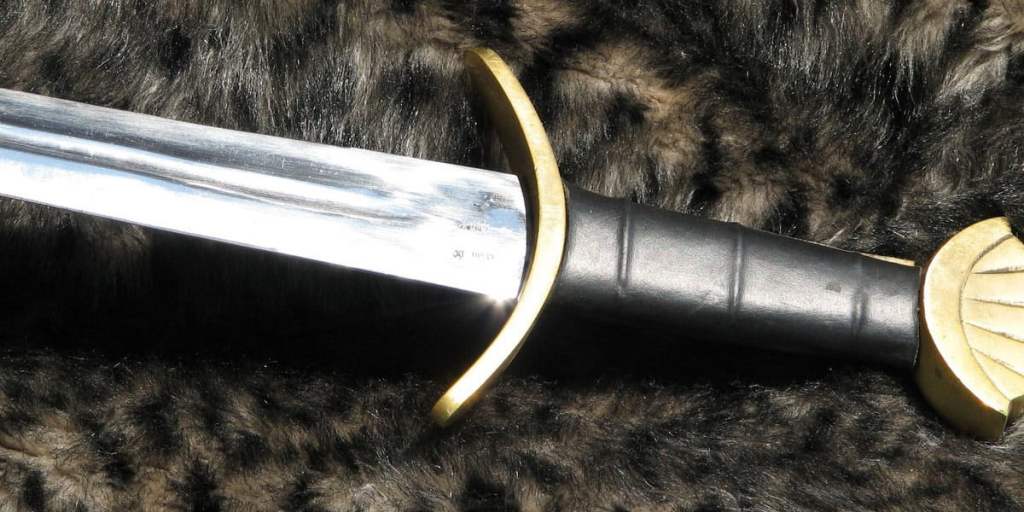
The sword, a weapon that evokes an era of knights and samurais, holds a central place in the history of warfare. Throughout the centuries, many variations of this weapon have emerged, each with its unique characteristics and battle advantages. This article explores some of the most notable swords in history, ultimately aiming to determine the best sword for battle.
The Longsword: Europe’s Dual-Handed Dominator
The longsword, a staple of medieval Europe, is characterized by its cruciform hilt, double-edged blade, and versatile usage. Primarily wielded with both hands, it offered excellent offensive and defensive capabilities. The longsword’s design balanced reach, weight, and maneuverability, allowing for a variety of fighting techniques, including slashing, thrusting, and even grappling.
The Katana: Japan’s Samurai Steel
The katana, with its distinctive curved, slender, single-edged blade, was the weapon of choice for the samurai of feudal Japan. Renowned for its sharpness and cutting ability, the katana was designed for swift, precise strikes. Its creation, involving a meticulous forging process, resulted in a blade that balanced hardness, to retain an edge, with a more flexible spine, to absorb shocks and resist shattering.
The Khopesh: Ancient Egypt’s Sickle-Sword
The khopesh, an ancient Egyptian weapon, combined the functionality of a sword and a battle-axe. Its unique design, featuring a curved blade with the cutting edge on the convex side, made it especially useful for hooking an opponent’s shield or weapon during combat. However, its shorter length made it less suitable for open battlefield engagements compared to some of its longer counterparts.
The Rapier: The Gentleman’s Choice
The rapier, popular in early modern Europe, was a weapon optimized for thrusting, designed to exploit the vulnerabilities in the enemy’s armor. Rapiers had long, narrow blades and complex, protective hilts. They were favored for their speed and agility in combat, although their lack of cutting capacity could be a disadvantage in certain scenarios.
So, What is the Best Sword for Battle?
Determining the “best” sword is complex as it largely depends on the specific context of the battle – the type of armor worn by opponents, the fighting style used, and the physical condition of the wielder, among other factors.
For instance, the longsword’s versatility could make it a superior choice in a battlefield scenario against heavily armored opponents. However, the katana’s exceptional sharpness and speed might be preferable in single combat or in situations requiring swift, decisive strikes.
In essence, the effectiveness of a sword is contingent on it being the right tool for the situation and the skill of the person wielding it. A master swordsman with a deep understanding of their weapon and the techniques of its use can make almost any sword formidable in battle.
In conclusion, the art of the sword is a rich tapestry woven from numerous threads of history, culture, and technology. As we unravel this tapestry, we realize that the search for the “best” sword reflects our broader quest to understand the science of combat and the evolution of warfare.
 Wondergressive