


Paradoxes are fascinating constructs of logic, presenting scenarios that contradict what we typically accept as reality or common sense. They are intricate puzzles that often resist straightforward resolution and spark philosophical debates. This article explores ten of the most captivating paradoxes, which have continued to perplex thinkers throughout the centuries.
1. The Liar Paradox
Originating in ancient Greece with the philosopher Epimenides, the Liar Paradox is one of the simplest yet most profound paradoxes. It is often articulated as a single sentence: “This statement is false.” If the statement is true, then it must be false as claimed. But if it’s false, it contradicts itself, making it true.
2. Schrödinger’s Cat Paradox
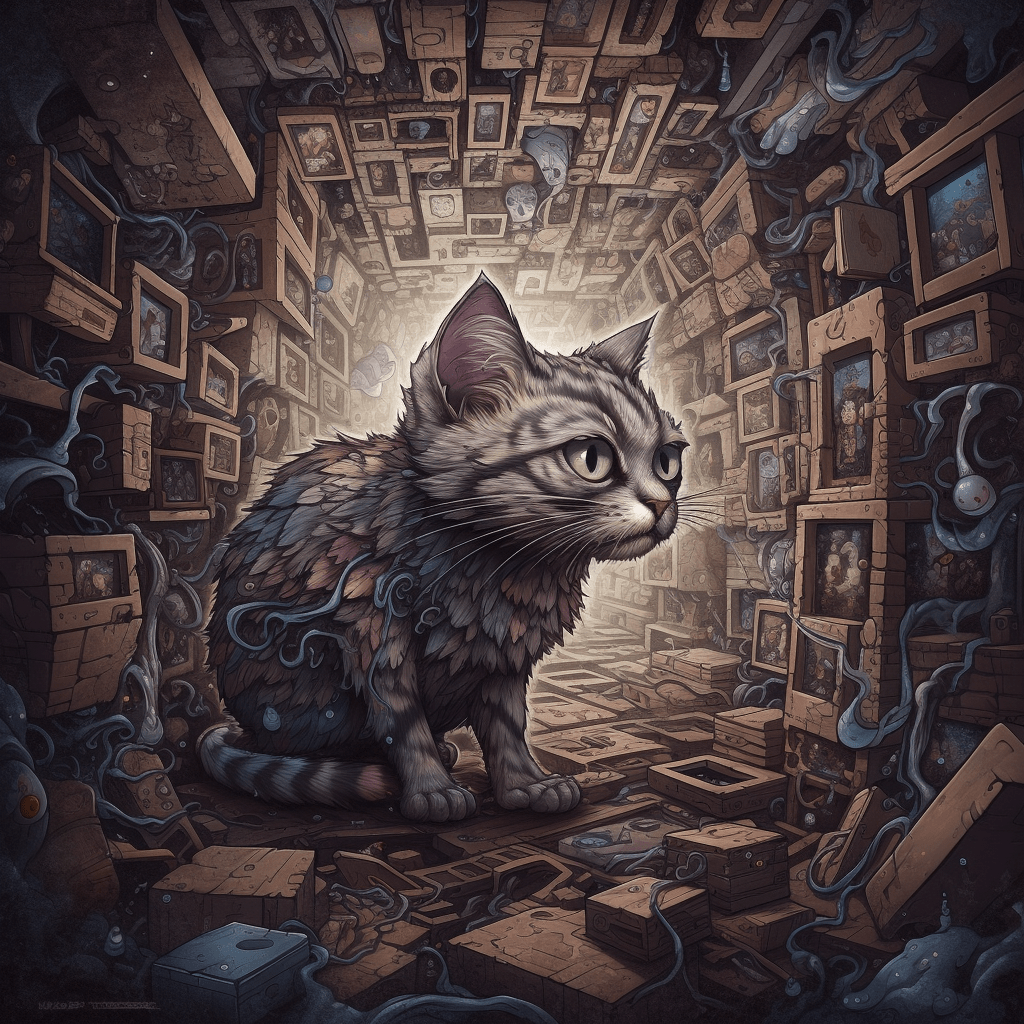
Schrödinger’s Cat Paradox, a thought experiment proposed by physicist Erwin Schrödinger, tackles quantum mechanics’ puzzling aspects. It involves a cat placed in a box with a radioactive substance that could potentially kill the cat. According to quantum theory, until observed, the cat is in a state of superposition – simultaneously dead and alive.
3. The Barber Paradox
Proposed by logician and philosopher Bertrand Russell, the Barber Paradox ponders a theoretical barber who shaves all and only those who do not shave themselves. The paradox arises when we ask: does the barber shave himself? If he does, he doesn’t (since he only shaves those who don’t shave themselves), and if he doesn’t, he does (because he shaves all those who don’t shave themselves).
4. Achilles and the Tortoise
This paradox comes from ancient Greece, from the philosopher Zeno of Elea. In a race between Achilles and a tortoise, where Achilles gives the tortoise a head start, the paradox argues that Achilles will never overtake the tortoise. Because each time Achilles reaches the spot where the tortoise was, the tortoise has moved slightly ahead, creating an infinite series of distances to cross.
5. The Bootstrap Paradox
This is a time-travel paradox, named after the phrase “pulling oneself up by one’s bootstraps”. Imagine someone travels back in time and teaches a young Beethoven how to compose his Fifth Symphony before it was ever written. Who then, originally composed the symphony?
6. The Ship of Theseus
The Ship of Theseus Paradox is a thought experiment that raises questions about identity. If a ship has all its parts replaced over time, is it still the same ship? Conversely, if the removed parts are used to build another ship, which one is the original Ship of Theseus?
7. The Unexpected Hanging
In this paradox, a prisoner is told he’ll be hanged unexpectedly within a week. He concludes he cannot be hanged on the last day because that wouldn’t be unexpected. He then reasons the second-to-last day is also impossible, and so on. So, he becomes convinced he won’t be hanged at all, which makes his hanging unexpected when it does happen.
8. The Sorites Paradox
Also known as the paradox of the heap, this paradox arises from vague predicates. If you have a heap of sand and gradually remove grains, at what point does it stop being a heap? It creates a contradiction where a heap can be created or destroyed by adding or removing a single grain.
9. The Twin Paradox
In this paradox, derived from Einstein’s special theory of relativity, one twin travels to space at a high speed while the other remains on Earth. Upon return, the traveling twin would be younger than the one who stayed on Earth, as time moves slower for those moving at high speeds—a counterintuitive yet scientifically valid concept.
10. The Paradox of Choice
Proposed by psychologist Barry Schwartz, this paradox occurs in our everyday life. It posits that while some choice is undoubtedly better than none, more is not always better than less. An abundance of choices can lead to anxiety, indecision, paralysis, and dissatisfaction—a seemingly contradictory outcome in societies that value variety and freedom of choice.
Conclusion
Paradoxes not only intrigue us but also encourage us to challenge our assumptions about reality, time, identity, choice, and truth. They push the boundaries of our understanding and highlight the complexity and occasional absurdity of the world we live in. By contemplating these paradoxes, we dive into a realm of deeper critical thinking, stimulating our minds and inciting intellectual curiosity.
 Wondergressive