


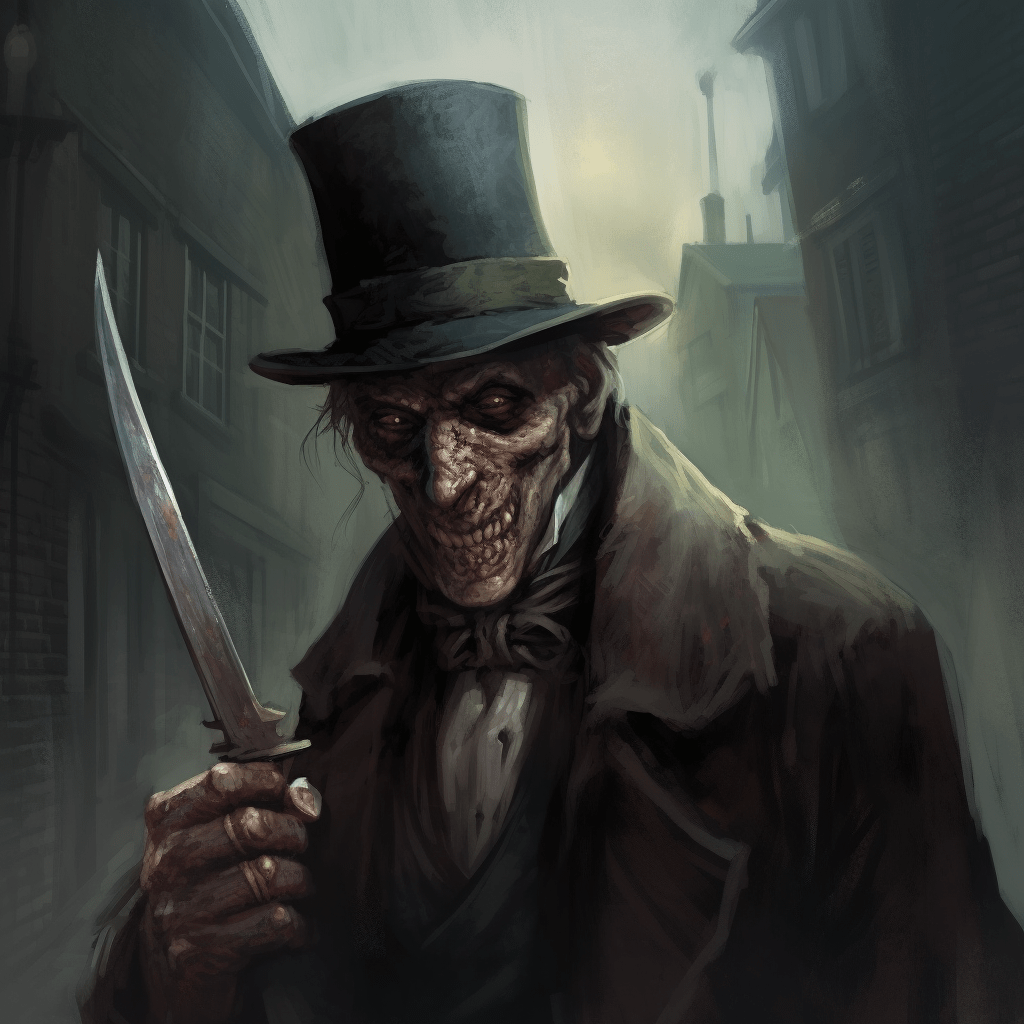
The tale of Jack the Ripper has transcended the annals of crime to become a chilling fixture of cultural lore. More than a century after the notorious serial killer prowled the foggy streets of Victorian London, the identity of this elusive figure remains as enigmatic as the cryptic letters he left behind. This article delves into the labyrinthine mystery that surrounds Jack the Ripper.
II. The Autumn of Terror
In the autumn of 1888, London’s East End was gripped by fear. A shadowy figure stalked the cobbled streets of Whitechapel, preying on women in the night. His grisly modus operandi – brutal mutilations inflicted with surgical precision – earned him the moniker ‘Jack the Ripper’. The murder of five women, known as the ‘canonical five’, is directly attributed to him, although some theories suggest more victims.
III. The Victims and the Crime Scene
The canonical victims – Mary Ann Nichols, Annie Chapman, Elizabeth Stride, Catherine Eddowes, and Mary Jane Kelly – were all women of precarious economic standing, making their living in the unsavory milieu of the East End. Their murders were characterized by a level of savagery that was shocking, even in an era hardened to violent crime. The crime scenes painted a gruesome tableau – throats slashed and bodies horrifically mutilated, indicating the work of someone with anatomical knowledge.
IV. The Letters
Adding to the aura of terror were a series of letters sent to the police and media, allegedly from the killer himself. The most infamous of these, the “From Hell” letter, was sent with a box containing half a human kidney. Whether these letters were a macabre publicity stunt or genuinely from the Ripper, they heightened the public fear and media frenzy.
V. The Suspects
Over the years, countless theories have been proposed about the killer’s identity. The suspects range from the plausible to the absurd. Among the most notable are:
- Aaron Kosminski: A Polish barber and resident of Whitechapel, Kosminski was identified as a prime suspect by several contemporary investigators. Recent DNA evidence lends some credibility to this theory.
- Montague John Druitt: A barrister and school teacher who committed suicide shortly after the last murder. His own family suspected him, but evidence remains scant.
- Prince Albert Victor: The grandson of Queen Victoria, he was implicated by Stephen Knight in his book ‘Jack the Ripper: The Final Solution’. This theory is generally dismissed by most Ripperologists due to a lack of substantial evidence.
VI. Modern Investigations
Advances in forensic science have given rise to renewed interest in the case. DNA analysis and geographic profiling have been applied to the surviving evidence, leading to new theories and heated debates. However, the deterioration of the evidence over time and the lack of any new data has made it difficult to draw definitive conclusions.
VII. The Legacy of Jack the Ripper
The figure of Jack the Ripper has seeped into popular culture, spawning a multitude of books, movies, and TV shows. His identity and motives remain the subject of speculation and debate, maintaining his status as a symbol of the mysterious and macabre.
VIII. Conclusion
Despite the passage of more than a century, the mystery of Jack the Ripper continues to captivate public imagination. The shadowy figure lurking in the gas-lit fog is a chilling embodiment of our fascination with the unsolved and the unknown.
 Wondergressive