


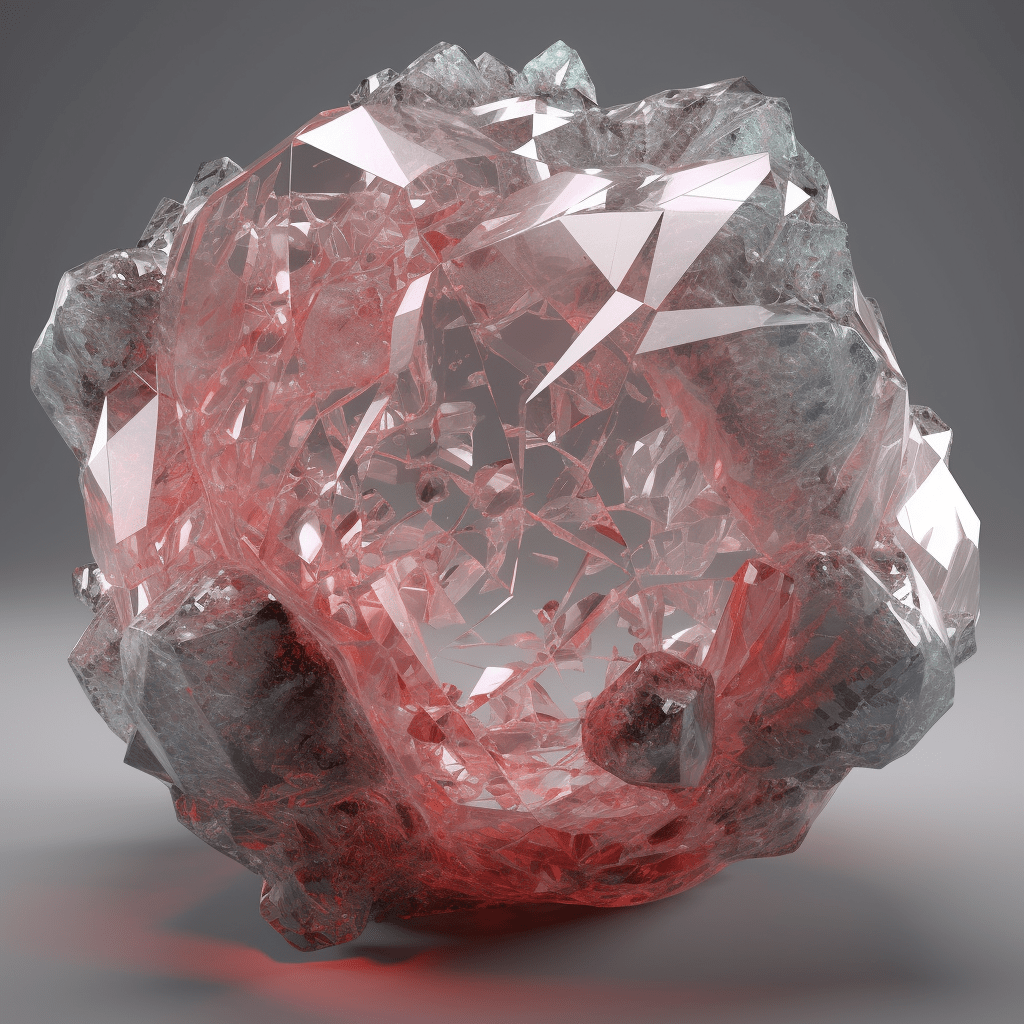
Humans have always been fascinated by the hard and the enduring, from towering mountain ranges to precious gemstones. This fascination transcends aesthetic appeal, delving into realms of scientific exploration and technological advancement. With each generation, we have developed and discovered increasingly robust materials. This article journeys into the fascinating world of the hardest materials known to man, from natural wonders to synthesized marvels.
Topping the list is the famed diamond, celebrated not just for its brilliance and beauty but also for its incredible hardness. Comprising carbon atoms arranged in a crystal lattice structure, diamonds are renowned for their hardness, scoring a perfect 10 on the Mohs hardness scale. Their impressive hardness and thermal conductivity make them invaluable in industrial applications, from cutting tools to high-performance bearings.
However, the quest for the hardest material did not stop at the diamond. Scientists have synthesized several materials harder than a diamond. One such substance is aggregated diamond nanorods (ADNRs), produced under high pressure and temperature by compressing fullerene, a molecule composed of 60 carbon atoms. ADNRs are 11% harder than diamond, offering significant potential for industrial applications.
Wurtzite boron nitride (w-BN) and lonsdaleite, a hexagonal diamond, are other contenders for the title of the hardest material. These substances are 18% and 58% harder than diamond, respectively. Both are formed under incredible pressure, with lonsdaleite typically created when meteorites containing graphite strike the Earth. However, producing these materials in large enough quantities for practical use remains a challenge.
Moving beyond the world of carbon-based materials, another ultra-hard substance is boron carbide. Known as ‘black diamond,’ boron carbide is third in line to diamond and cubic boron nitride in terms of hardness. It’s used in body armor, grit blasting nozzles, and even in nuclear reactors.
Another remarkably hard material is osmium, a dense metal with a bluish-white color. It’s the hardest metal in existence and also the densest. With its high melting point and resistance to wear, osmium finds use in electrical contacts and fountain pen tips, among other applications.
Rhenium diboride, a synthetic superhard material, is also worth mentioning. Notable for its high hardness, it can be synthesized at ambient pressure, making it easier and more cost-effective to produce than some other superhard materials.
In the quest for the hardest material, one must not forget the intriguing case of graphene, a single layer of carbon atoms arranged in a two-dimensional honeycomb lattice. Although not a ‘hard’ material in the traditional sense, its remarkable tensile strength – it’s about 200 times stronger than the strongest steel – puts it in a league of its own.
Looking to the future, one exciting area of research lies in the development of metamaterials – materials engineered to have properties not found in nature. By manipulating matter on a nano scale, scientists can design metamaterials with customized hardness, elasticity, or other properties. This field holds enormous potential for creating ultra-hard materials that can withstand extreme conditions.
In conclusion, the world of the hardest materials is a captivating realm of natural wonder and human ingenuity. The unending quest to develop ever-harder materials has important implications for various industries, including manufacturing, construction, and space exploration. Each new discovery not only pushes the boundaries of our scientific knowledge but also paves the way for technological advancements that could transform our world. As we continue to explore and innovate, who knows what extraordinary materials we might uncover in the years to come.
 Wondergressive