


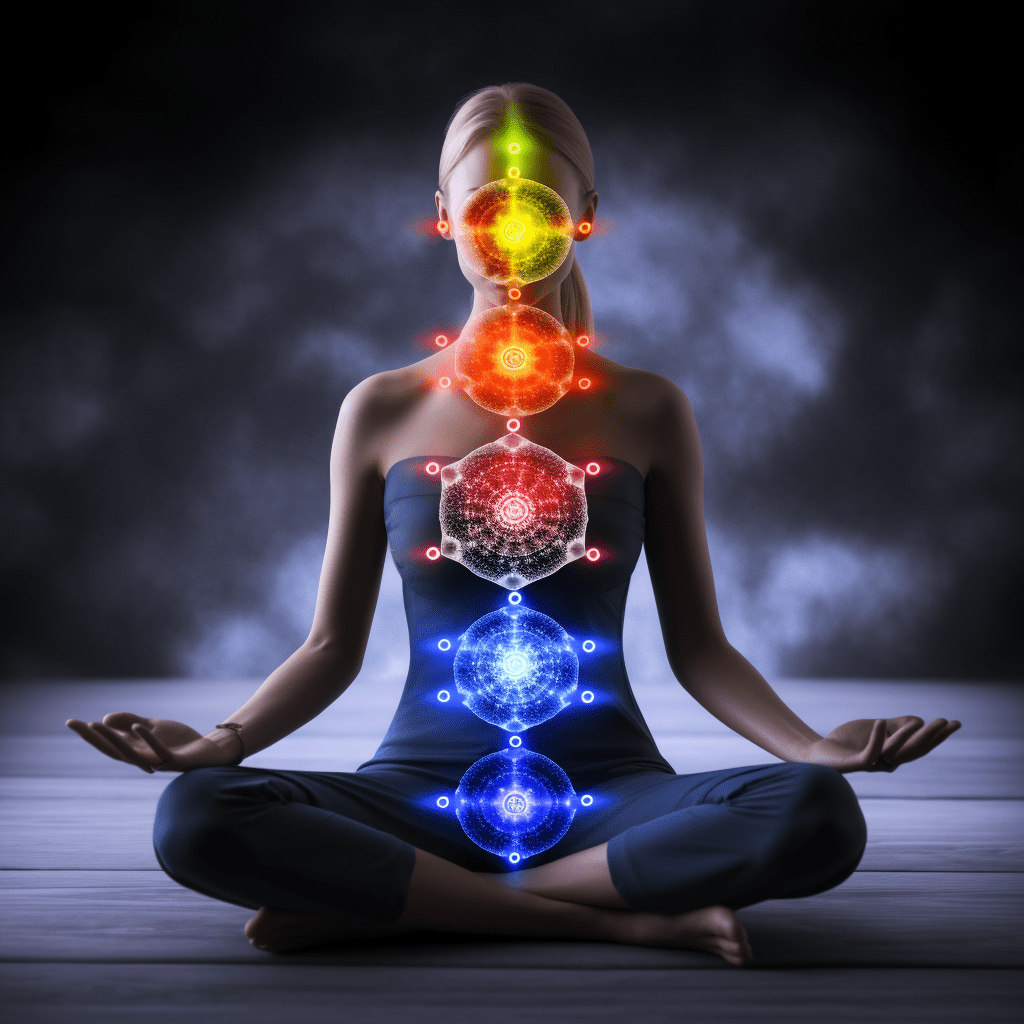
Rooted in the ancient wisdom of India, the concept of chakras, or energy centers, offers a unique lens through which to view the human body, extending beyond the purely physical to encompass emotional, mental, and spiritual dimensions. This millennia-old framework, described in various texts of Hinduism, Buddhism, and Jainism, has captured the imagination of spiritual seekers worldwide. Despite its mystical origins, the chakra system presents a holistic approach to understanding human existence that resonates with many aspects of modern psychology and wellbeing practices.
The traditional chakra system identifies seven primary chakras, each associated with a particular region of the body, and each symbolizing different aspects of human life and consciousness. Journeying through these chakras is akin to exploring the profound and intricate universe within ourselves.
Beginning at the base of the spine, we encounter the Muladhara or Root Chakra, symbolizing our need for stability and safety. This energy center connects us to the earth and our physical environment, reflecting our primal instincts and desire for survival.
Moving upward, we find the Svadhisthana or Sacral Chakra, located just below the navel. This chakra embodies creativity, sexuality, and our ability to accept new experiences. It encourages us to embrace change and flow with life’s currents.
The Manipura or Solar Plexus Chakra, situated in the abdomen, governs personal power, self-esteem, and our sense of individual identity. When balanced, it fosters confidence, proactive initiative, and the strength to overcome challenges.
At the heart level resides the Anahata or Heart Chakra. As the bridge between the lower and higher chakras, Anahata is the hub of love, compassion, and connection. It encourages us to transcend personal identity and experience universal love.
Next is the Vishuddha or Throat Chakra, associated with communication and expression. It is here that our inner truth finds its voice, allowing us to express ourselves authentically and creatively.
Located at the brow or third-eye region, the Ajna or Third Eye Chakra symbolizes intuition, wisdom, and the capacity to see beyond the superficial. It is the seat of insight and spiritual awareness, enabling us to envision possibilities beyond ordinary perception.
Finally, at the crown of the head, the Sahasrara or Crown Chakra connects us to the divine and the limitless expanse of the cosmos. It is the gateway to higher consciousness and spiritual enlightenment, reminding us that we are more than our physical bodies or individual egos.
The concept of chakras, far from being just an esoteric doctrine, offers practical insights into our daily lives. When balanced and aligned, these energy centers can facilitate wellbeing, creativity, and personal growth. Practices like yoga, meditation, and energy healing aim to balance these chakras, promoting holistic health and spiritual development.
In a world increasingly acknowledging the interconnectedness of mind, body, and spirit in health and wellbeing, the chakra system offers a roadmap to inner harmony and balance. Understanding the chakras can lead to greater self-awareness, emotional intelligence, and a deeper appreciation of the human journey—from survival to self-realization.
Contemporary interpretations have also found parallels between the chakras and the endocrine system, suggesting that these ancient symbols might correspond to physiological realities. Although such correlations require further scientific exploration, they hint at a fascinating intersection of ancient wisdom and modern science.
Despite its origins in a different era and cultural context, the chakra system’s core principles remain relevant today. It underscores the importance of balance, harmony, and integration in our lives, inviting us to explore the full spectrum of human potential. From the primal energy of the Root Chakra to the transcendent consciousness of the Crown Chakra, this journey through the body’s energy centers reflects our evolutionary path as individuals and as a species.
The exploration of the chakras can foster a deeper understanding of our emotions, motivations, and relationships, guiding us toward greater authenticity and self-acceptance. This wisdom can prove invaluable in the pursuit of personal growth, healing, and transformation.
Moreover, the chakra system’s holistic perspective encourages us to view ourselves as integral parts of a greater whole, interconnected with all of life. Recognizing the energetic nature of our existence can foster a greater sense of responsibility for our wellbeing, our relationships, and the world around us.
The seven chakras represent a profound map of the human journey, both individually and collectively. They remind us that our existence extends beyond the physical, encompassing a spectrum of experiences and states of consciousness that contribute to our overall sense of life fulfillment and purpose.
The chakras, in essence, offer a compelling journey inward, illuminating the intricate universe within each one of us. They invite us to delve deeper into our inner world, to nurture balance and harmony, and to embark on the ever-fascinating quest for self-understanding and self-realization.
In the end, the intrigue of the chakras lies not only in their ancient origins and mystical symbolism but also in their practical implications for our lives. By bringing attention to these subtle energy centers, we can enhance our self-awareness, nurture our wellbeing, and enrich our experience of life. The journey through the body’s chakras thus becomes a fascinating adventure into the heart of our existence, illuminating the extraordinary depth and potential of the human spirit.
 Wondergressive