


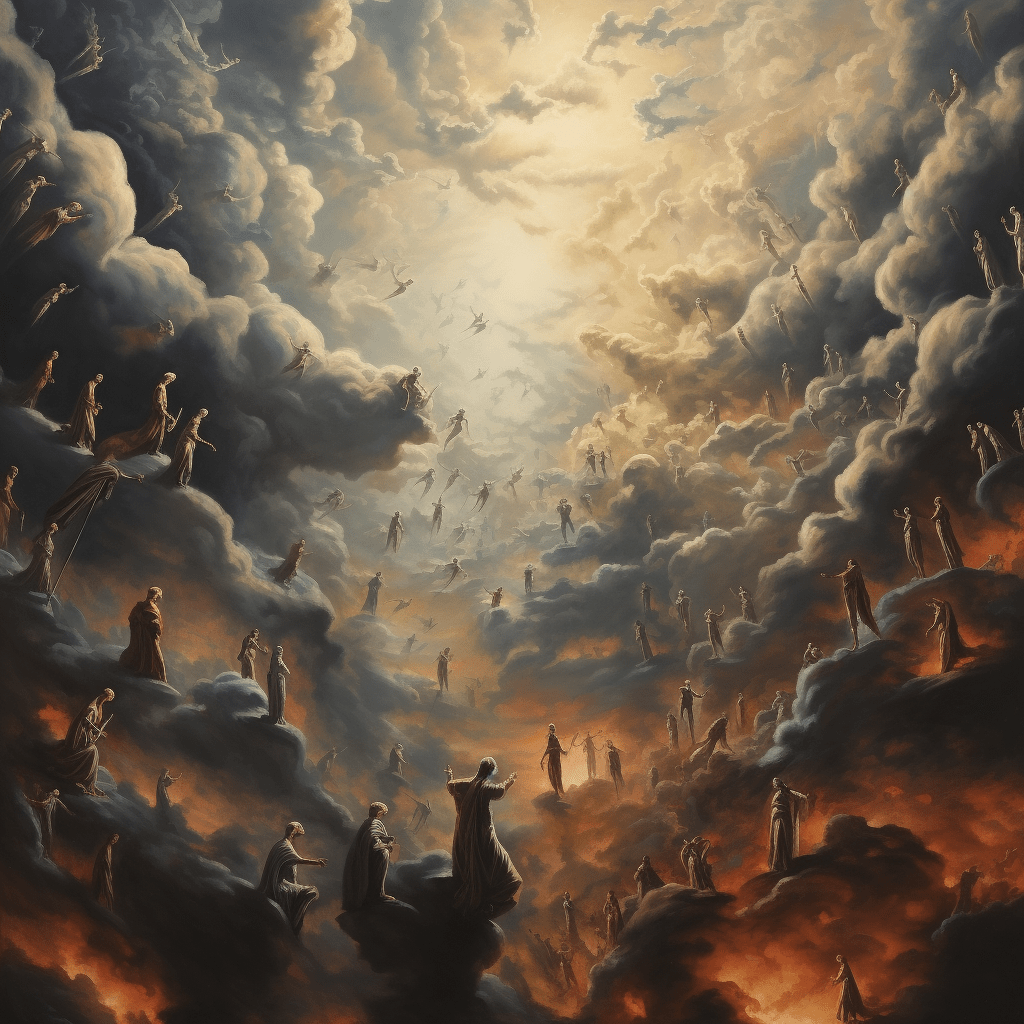
The Bank of Souls theory is a fascinating, philosophical idea that centers on reincarnation. The theory proposes that souls exist in a “bank” of sorts, and they are allocated to new lives upon the event of death. Although the theory is seldom formalized, it resonates with several cultural and religious philosophies worldwide.
Historical and Cultural Influences
The ancient Egyptians had a belief in ‘Ka’, a spiritual double born with every man that continues to exist after death. Hinduism reflects a similar idea in its concept of ‘Atman’, wherein the soul is perceived as eternal and recycles through a cycle of birth, death, and rebirth. Buddhism, while advocating a cycle of rebirth, has a more nuanced interpretation with no permanent soul.
There’s something inherently compelling about the concept of a universal soul bank. This theory is not just confined to religious scriptures or philosophical musings. It permeates our culture and influences our understanding of life, death, and the possible existence beyond our mortal coil.
Debating the Undebatable
The concept of the Bank of Souls opens up a Pandora’s box of questions related to consciousness, self-identity, and what happens after we die. It’s a complex, controversial topic that can incite heated debates. It makes us question where new souls originate if the world’s population grows. Does the Bank of Souls never deplete, or are new souls created to meet the demand?
Portrayal in Popular Culture
The Bank of Souls theory has found a comfortable spot in various forms of media and art, serving as an intriguing plot device. Books, films, and TV shows often explore this concept, either as a central theme or as a backdrop to their narrative. This exploration reflects our collective curiosity and fascination about life, death, and the possibility of existence beyond our current lives.
Conclusion
In conclusion, while the Bank of Souls theory isn’t scientifically provable, it’s a captivating concept that encourages us to explore the profound questions about our existence. It is a testament to our shared curiosity about life and what lies beyond it.
 Wondergressive