


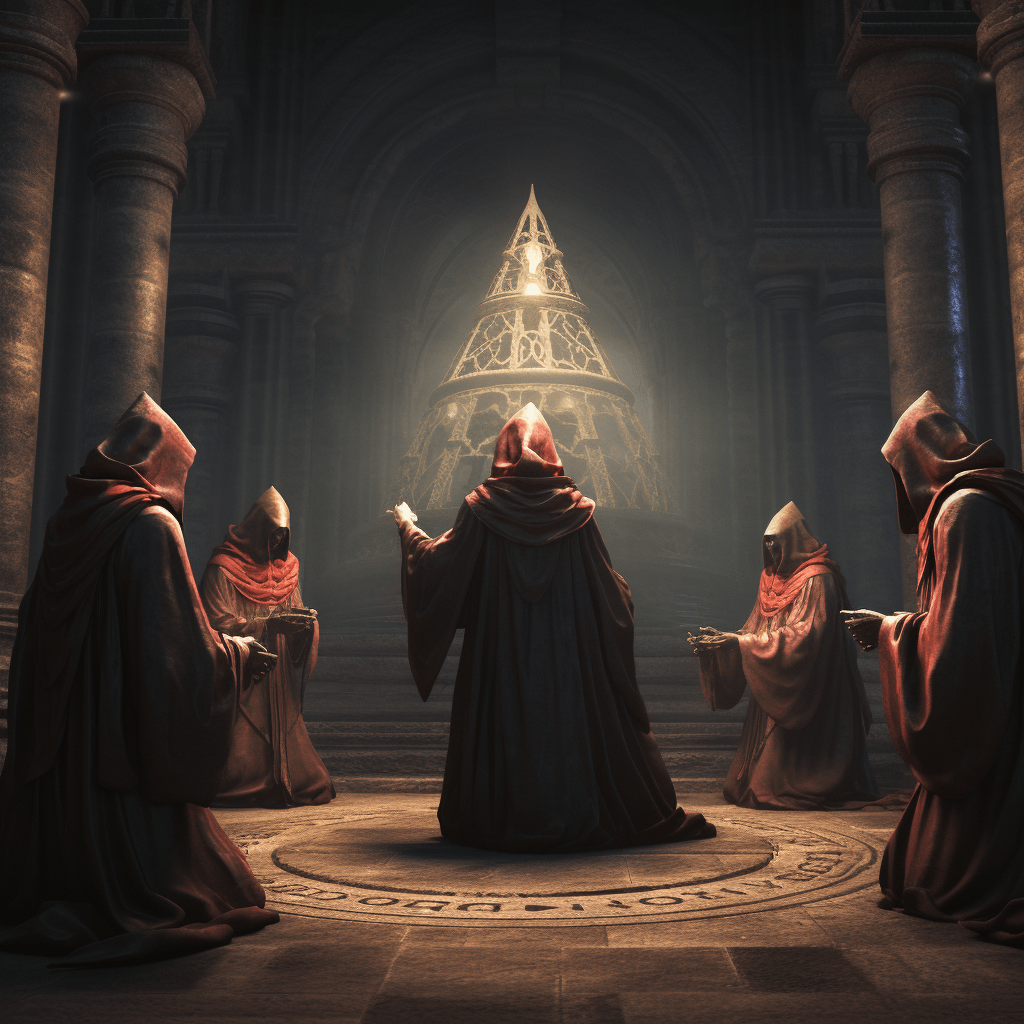
The Origins of Rosicrucianism
Rosicrucianism, a mystical philosophy that was born in the early 17th century, was introduced to the world through two anonymous manifestos: “Fama Fraternitatis RC” (The Fame of the Brotherhood of RC) and “Confessio Fraternitatis” (The Confession of the Brotherhood). These documents, seemingly authored by a mythical figure named Christian Rosenkreuz, offer an intriguing blend of religious, philosophical, and esoteric thoughts. While the existence of Rosenkreuz and the actual Rosicrucian Brotherhood are matters of historical debate, the influence of these texts is undeniable.
Rosicrucian Teachings: Esotericism at its Core
At the heart of Rosicrucian teachings is the belief in universal wisdom, offering an amalgamation of elements from Gnosticism, Hermeticism, alchemy, and Christian mysticism. Central to these teachings is the transmutation of the human soul into a state of divine enlightenment. According to Rosicrucian texts, this knowledge was once universal but got lost in time and the Brotherhood aims to rediscover and impart this wisdom.
Impact on the Enlightenment and Freemasonry
Rosicrucianism played a significant role in shaping the cultural and intellectual landscape of the Enlightenment era. Some scholars assert that the Rosicrucian ideals of reason and fraternity profoundly influenced the principles of Freemasonry.
Even if there is no direct historical link between the two, the shared symbols, rituals, and philosophies make a compelling case for cross-pollination. Freemasonry, in its modern form, contains echoes of Rosicrucian thought, especially in its higher degrees, like the Scottish Rite’s 18th degree, known as the Knight Rose Croix.
Contemporary Rosicrucian Orders
In the modern era, various organizations, like the Ancient and Mystical Order Rosae Crucis (AMORC), claim to preserve the ancient Rosicrucian traditions. These organizations, while diverse in their teachings, hold certain principles common – the divine nature of the human soul, the pursuit of wisdom, and the belief in a higher cosmic order.
Rosicrucianism and Modern Science
Interesting parallels can be drawn between the Rosicrucian search for universal wisdom and the quest of modern science. Both pursue knowledge, although through different paths – science through empirical evidence and Rosicrucianism through spiritual enlightenment. The Rosicrucian emphasis on introspective knowledge shares common ground with the emerging fields of consciousness studies and quantum physics.
The Last Word
In conclusion, the enduring allure of Rosicrucianism is rooted in its mystique and the universal appeal of its core tenets – the quest for knowledge and the spiritual transformation of the self. While the historical existence of the Rosicrucian Brotherhood remains elusive, the impact of its teachings on Western thought is substantial. As we stand on the threshold of new scientific breakthroughs, the Rosicrucian ideals of wisdom and self-realization seem more relevant than ever.
 Wondergressive