

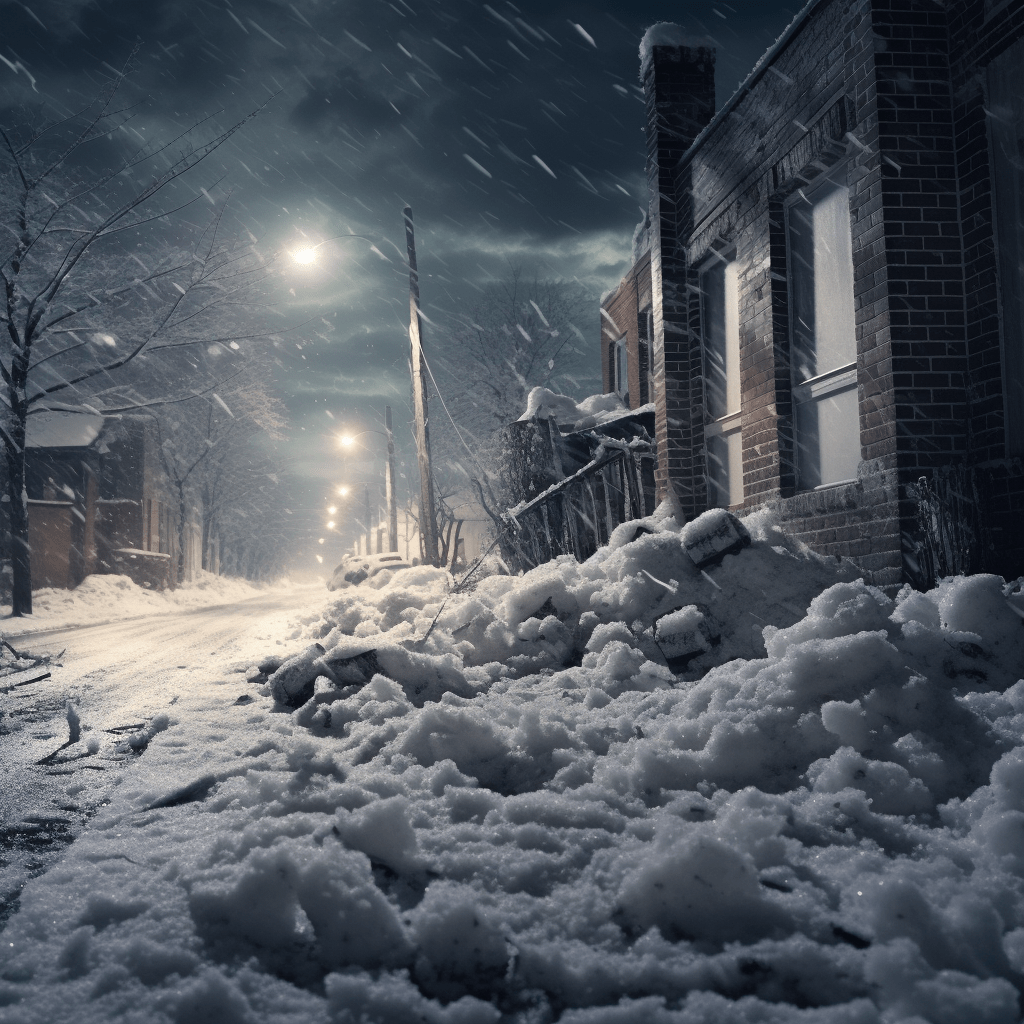
For centuries, snow has been considered a symbol of purity, nature’s way of painting landscapes into a winter wonderland. However, in recent years, a new theory, often associated with conspiracy circles, has emerged. It’s called “artificial poisonous snow.” Some believe that governments or corporations are allegedly manipulating weather systems to drop chemically-tainted snow on unsuspecting populations. While it sounds like something straight out of a dystopian novel, it’s worth considering all the available evidence before making a judgment.
Weather Manipulation: A Historical Overview
To understand the plausibility of artificial poisonous snow, it is first necessary to look into the history of weather manipulation. The idea is not new. “Cloud seeding” to induce rainfall has been a scientific reality since the mid-20th century, used in drought-prone regions to aid in water supply. Moreover, during the Vietnam War, the U.S. military reportedly employed Operation Popeye, a weather modification program aimed at extending the monsoon season to disrupt enemy logistics.
Chemical Composition of Snow
Snow is essentially frozen atmospheric water vapor. However, it can also contain trace amounts of pollutants or particles present in the air when it forms. Some studies have found higher concentrations of pollutants like lead, sulfur, and nitrates in snow compared to rainwater, especially in industrial regions. Therefore, it’s crucial to consider the quality of the air where the snow is falling. However, is it enough evidence to substantiate the claims of “poisonous” snow?
The Rise of the Artificial Poisonous Snow Theory
The theory of artificial poisonous snow took root from various internet-based platforms where individuals shared instances of snow that did not melt properly, leaving behind a black scorch mark, or gave off a chemical smell. Some people claimed the snow to be “plastic-like,” asserting that it was artificial and laced with harmful chemicals.
Unraveling the Evidence
When examining these claims, it’s important to use a scientific lens. The “non-melting” snow and the black scorch marks can be explained through the process known as ‘sublimation,’ where solid substances change to gas without passing through a liquid stage under certain conditions. Moreover, the scorch marks could be due to the soot from the lighter used in these experiments, not the snow itself.
As for the chemical smell, it might be attributed to ‘acid snow.’ This is when snowflakes capture airborne acidic pollutants, like those from car exhausts or industrial processes, leading to an unusual odor. It doesn’t necessarily mean the snow is ‘artificial’ or deliberately poisoned.
The Role of Geoengineering
The discussion would be incomplete without mentioning geoengineering, deliberate large-scale interventions in the Earth’s climate system, to counteract climate change. Some believe that these interventions, like injecting aerosols into the stratosphere, might be responsible for the “artificial” snow. However, as of my knowledge cutoff in September 2021, these methods are purely theoretical and not practically applied on a large scale.
Conclusion: Factual Analysis Over Fear
While the theory of artificial poisonous snow is intriguing, it largely appears to be based on misunderstandings of scientific phenomena and fear of clandestine operations. It’s always crucial to question and stay informed about the world around us, but equally important is relying on verified scientific evidence. There’s no denying that snow, like rainwater, can carry pollutants, which is an environmental issue requiring attention. However, the leap to “artificial poisonous snow” appears to be a bridge too far, given current available evidence.
We should continue to study our environment, question abnormalities, and hold accountable those who harm our shared planet. Still, let’s ensure our concerns are rooted in science and not unfounded fear. The snow, for now, seems to be just what it always has been: a beautiful, natural weather phenomenon.
 Wondergressive