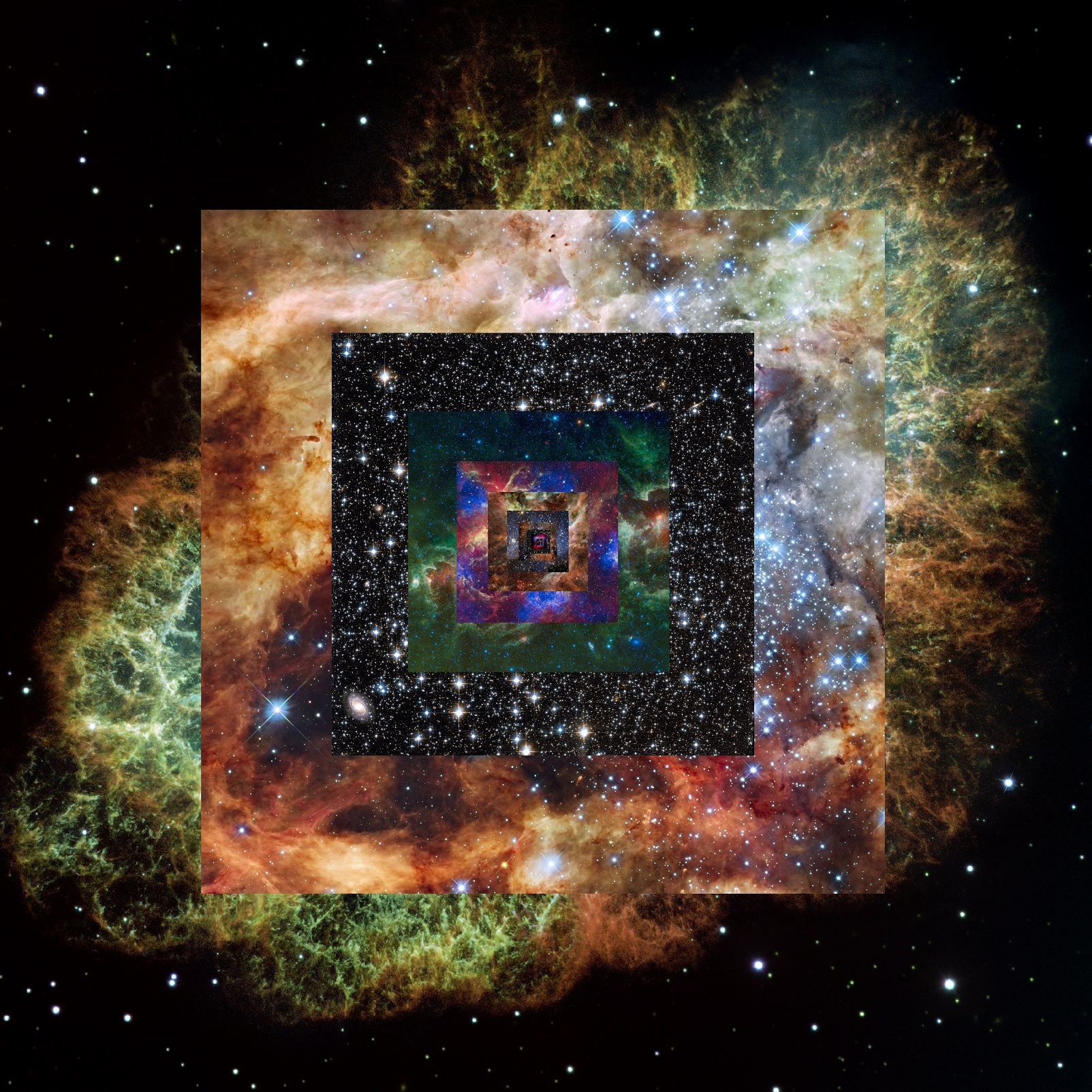


In the domain of science fiction and philosophy, few figures loom as large as Philip K. Dick. An acclaimed author whose work has significantly shaped the genre, Dick delved into topics such as alternate realities, metaphysics, and existentialism. Among his most striking and personal works is the semi-autobiographical novel, “VALIS,” an acronym for Vast Active Living Intelligence System. This entity, as Dick describes, is a form of extraterrestrial divine consciousness that communicates messages to humanity.
The idea of VALIS being real might seem far-fetched, but in the spirit of speculative inquiry, it is intriguing to explore the concept in relation to scientific and philosophical perspectives. Is it possible that VALIS, or something similar, could exist in our universe? Let’s dive into the exploration.
VALIS: An Overview
“VALIS” is a profoundly personal exploration of Dick’s metaphysical experiences, particularly an event in February 1974, often referred to as his “2-3-74” experience. Following a dental surgery, Dick started experiencing a series of visions and insights, which he interpreted as direct communications from a divine, alien intelligence that he eventually named VALIS.
The SETI Connection
The Search for Extraterrestrial Intelligence (SETI) is a collective term for the scientific search for intelligent extraterrestrial life. Since its inception, SETI has been using advanced technologies to scan the skies for potential signals from alien civilizations.
While SETI hasn’t found definitive evidence of extraterrestrial life, it operates on the Drake Equation’s principle, which suggests that the vastness of the universe and the abundance of habitable-zone planets make the existence of intelligent alien life statistically likely.
Could one of these civilizations possess an advanced form of consciousness akin to VALIS? In theory, civilizations millions of years older than ours could have evolved to a state of consciousness that might seem divine or transcendent to us. It’s conceivable that such a consciousness, for purposes unfathomable to us, might seek to communicate with humanity, much like Dick’s VALIS.
A Cosmic Consciousness?
Modern studies in panpsychism, a philosophical theory suggesting that mind or consciousness is a fundamental aspect of the universe, offer another intriguing angle. Eminent scientists and philosophers, such as Christof Koch and Philip Goff, support this view, arguing that even elementary particles possess a rudimentary form of consciousness.
In this context, could the universe itself be a form of Vast Active Living Intelligence System, much like VALIS? If consciousness is indeed fundamental and universal, it might potentially coalesce into a higher form of awareness at cosmic scales, imparting messages or influencing events in ways we’re only beginning to understand.
The Quantum Perspective
Quantum mechanics, with its bizarre and counterintuitive implications, opens yet another door. Concepts such as quantum entanglement and superposition suggest a deeply interconnected universe, where information can instantaneously bridge vast distances.
Could this quantum weirdness facilitate a system akin to VALIS, where information from a higher consciousness is transmitted across the cosmos? Theoretical physicist John Wheeler’s idea of a participatory universe, where observers are integral to the creation of physical phenomena, lends some credence to this notion.
The Simulation Argument
Lastly, the Simulation Argument, proposed by philosopher Nick Bostrom, posits that reality as we know it might be a sophisticated simulation created by an advanced civilization. If we were indeed living in a simulation, the controlling entity could quite easily implant messages or manipulate reality, closely mirroring the functions of Dick’s VALIS.
Possibility and Perception
While these concepts are speculative, they highlight that our understanding of consciousness, reality, and the cosmos is constantly evolving. From SETI to quantum mechanics, panpsychism to simulation theory, each opens a door to intriguing possibilities, including the existence of a system similar to VALIS.
The perceived “divinity” of VALIS may simply be an acknowledgment of our limited understanding. As Arthur C. Clarke famously said, “Any sufficiently advanced technology is indistinguishable from magic.” Replace “technology” with “consciousness,” and the VALIS hypothesis becomes a compelling contemplation.
Does VALIS, as Dick experienced, exist? Perhaps it’s more accurate to say that something like VALIS could exist. As our scientific understanding deepens and our perception of reality broadens, we may someday discover that our universe is more mind-like and interconnected than we currently comprehend, echoing the whispers of VALIS across the fabric of existence.
 Wondergressive