

There’s something intriguing and eerie about the prospect of being able to influence the physical world with our mere presence. One such phenomenon, known as Streetlight Interference (SLI), has been the subject of curiosity, speculation, and scientific investigation. This article explores this compelling phenomenon, and while it remains largely unexplained, presents thought-provoking evidence that might make you reconsider the limits of human influence.
1. What is Streetlight Interference?
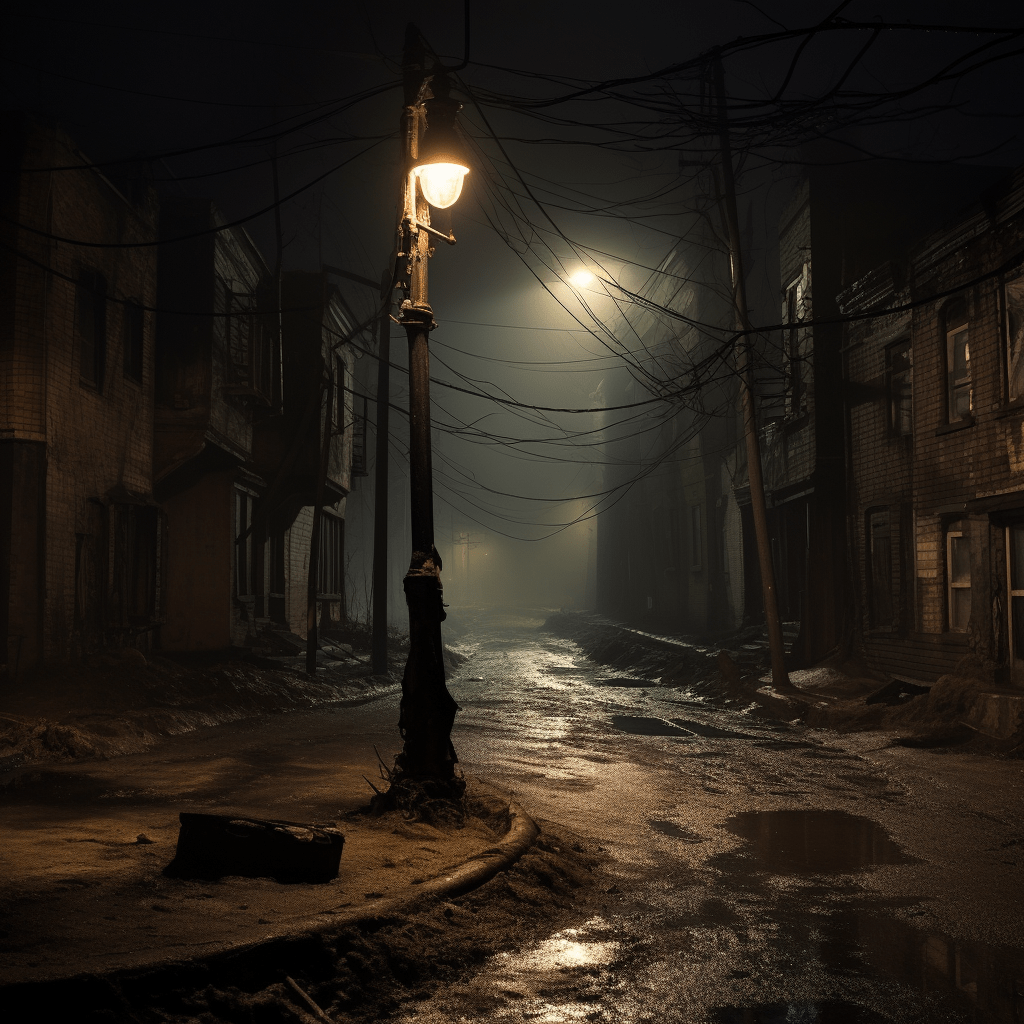
Streetlight Interference is a term coined by British paranormal author Hilary Evans to describe individuals’ purported ability to turn off streetlights or other electrical appliances simply by their presence or a conscious act. Individuals claiming to experience this phenomenon, referred to as SLIders, often report that streetlights turn off as they approach and then turn back on once they’ve passed.
2. Anecdotal Evidence
While empirical research on SLI is sparse, anecdotal evidence abounds. Online forums and social media sites are filled with testimonials from individuals claiming to have this ability. Often, these stories detail a powerful emotional event preceding the onset of these experiences, suggesting a link between intense emotions and electrical disturbances.
3. The Paranormal Perspective
In the realm of the paranormal, SLI is often associated with a form of psychokinesis—the ability to manipulate physical objects using the mind. A key case is that of Nina Kulagina, a Russian woman who was reported to move objects without touching them. While her abilities remain controversial, the intrigue surrounding her case continues to fuel interest in the potential of human psychic influence.
4. The Scientific Lens
From a scientific perspective, the main argument against SLI’s validity is the lack of controlled, replicable experiments. However, this doesn’t mean science completely dismisses such phenomena. Dr. William G. Roll, a parapsychologist, suggested the term ‘RSPK’ (Recurrent Spontaneous Psychokinesis) for uncontrolled psychokinetic effects that seem to center around a specific person, often during periods of emotional stress.
5. Unraveling the Mystery: Coincidence or More?
Skeptics argue that SLI can be attributed to coincidence or confirmation bias, where SLIders only remember instances that confirm their beliefs while disregarding instances when streetlights didn’t react to their presence. However, believers argue that the high frequency and specificity of these events surpass what we’d expect from mere chance.
6. A Technological Explanation: The Light’s Lifecycle
A more mundane explanation lies in the lifecycle of a streetlight. As sodium vapor lights (commonly used in streetlights) near the end of their lifecycle, they may turn off and on due to fluctuations in their internal temperature. Hence, a person walking beneath a streetlight could mistakenly attribute its turning off to their presence.
7. Biological Possibilities: The Human Electromagnetic Field
Every human body produces an electromagnetic field (EMF), albeit weak. Could this be strong enough to influence streetlights? Although the typical human EMF is unlikely to affect a streetlight, some speculate that under certain circumstances—such as periods of intense emotion—this field might be amplified enough to cause electrical disturbances.
8. The Road Ahead: Further Research
While SLI remains a contentious topic, it’s clear that further research is needed. As our understanding of human biology, emotion, and electromagnetic fields advances, we might be closer to understanding this peculiar phenomenon.
Conclusion: Embracing the Mystery
The phenomenon of Streetlight Interference, while not yet fully understood, invites us to question and explore the world around us. Whether it is a manifestation of psychokinesis, an artifact of coincidence, or an interaction with our personal electromagnetic fields, the intriguing mystery of SLI persists. By examining the evidence and keeping an open mind, we pave the way for a deeper understanding of ourselves and the world we inhabit. After all, in the words of physicist Richard Feynman, “The first principle is that you must not fool yourself, and you are the easiest person to fool.” But who knows, perhaps someday, you’ll find that the flickering streetlight isn’t just a faulty bulb, but a spark of the extraordinary in the everyday.
 Wondergressive