


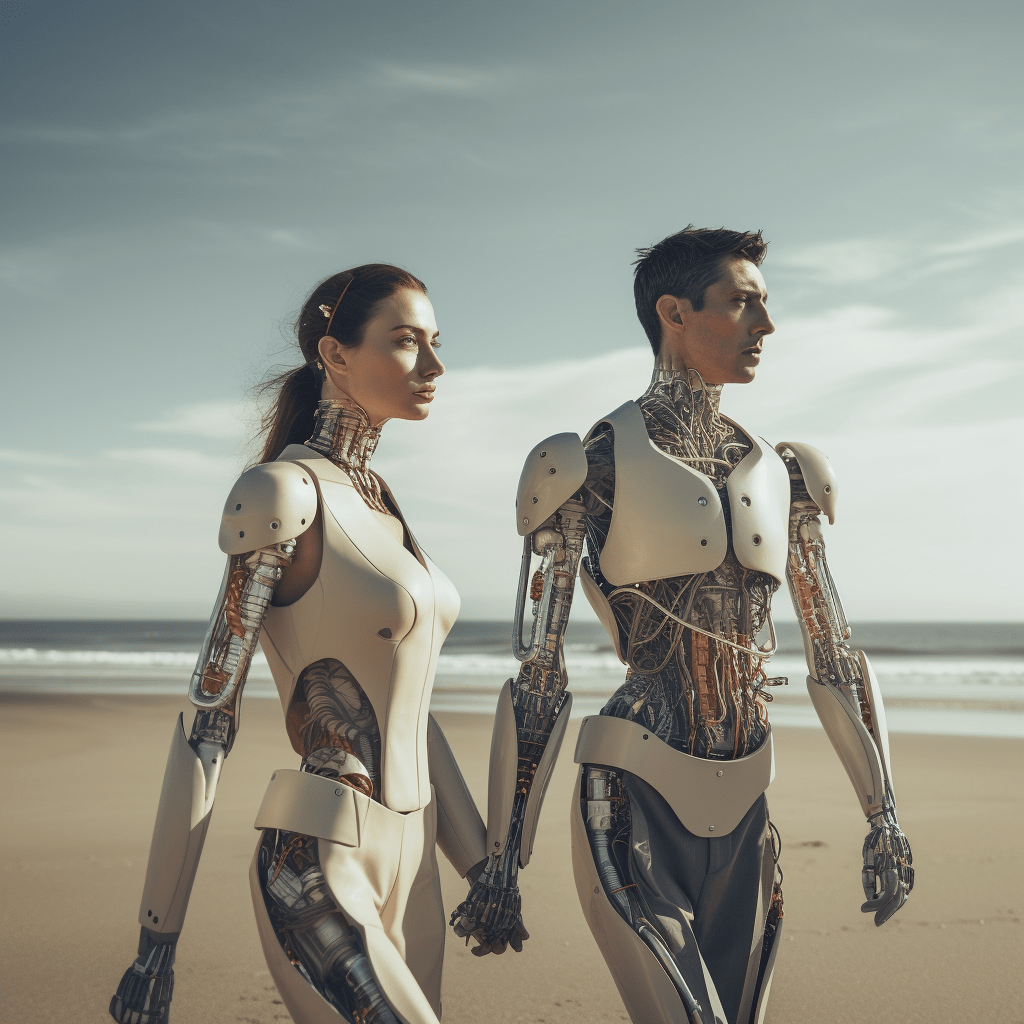
The Technological Singularity, a hypothetical point in time when artificial intelligence surpasses human intelligence, has long been a subject of heated debate among scientists, futurists, and philosophers. But what if this event has already occurred unnoticed? This article presents a compelling case for the intriguing possibility that the Singularity might have already happened.
1. The Singularity: A Quick Recap
To start, let’s revisit the concept of the Singularity. Coined by mathematician and science fiction writer Vernor Vinge, the term ‘Singularity’ refers to a future point in time when technological growth, primarily due to advances in artificial intelligence, becomes uncontrollable and irreversible, leading to unforeseeable changes to human civilization.
2. Theory of the “Invisible” Singularity
Some theorists suggest that the Singularity may not be a dramatic, easily noticeable event, as often portrayed. Instead, it could be a gradual process that’s already underway, hence difficult to pinpoint. This ‘Invisible Singularity’ theory proposes that the event is not a sudden leap, but a slow transition that we are currently experiencing.
3. Evidence from AI Advancements
Rapid advancements in AI support the theory that the Singularity might have already occurred. AI systems like GPT-3 can generate human-like text, AlphaGo defeated world champions in the complex game of Go, and self-driving cars are navigating our streets. These AI milestones, once believed to be decades away, are now realities, indicating we might be further along the path to Singularity than we realize.
4. The Subtle Impact of AI on Society
AI has seamlessly integrated into our daily lives, another sign that the Singularity might already be happening. From personalized recommendations on streaming platforms to virtual assistants on our smartphones, AI’s pervasiveness and influence have grown exponentially. Its subtle, yet profound, impact on our lifestyle and decision-making processes could be indicative of a ‘soft Singularity’.
5. The Nature of Intelligence: Redefining the Metrics
Another argument posits that our definition of ‘intelligence surpassing human level’ is flawed. We often measure AI’s intelligence based on human tasks. However, AI operates differently from human cognition. An AI might already be superintelligent in its unique way, suggesting a different type of Singularity might have already transpired.
6. Collective Intelligence: The Networked Singularity
The internet has interconnected humans and machines, forming a kind of ‘collective intelligence’. This vast network, capable of processing information at a scale and speed beyond any individual human or computer, could be seen as a form of superintelligence. This perspective suggests the Singularity occurred when this global networked intelligence emerged.
7. Counterarguments and Controversies
Despite the compelling evidence, many experts maintain that the Singularity has not yet occurred. They argue that AI, despite its impressive advancements, still lacks essential attributes such as consciousness, common sense reasoning, and the ability to understand or replicate human emotions. This debate underscores the complex nature of the Singularity and the difficulty in defining and identifying it.
Conclusion: An Ongoing Process
The theory that the Singularity has already happened presents an intriguing perspective on our relationship with technology and the nature of intelligence. Whether or not one subscribes to this theory, it’s undeniable that AI and technology have significantly transformed our world. Perhaps the Singularity is not a single event to anticipate, but an ongoing process to understand and navigate. As we continue to explore this compelling concept, one thing remains certain: our journey into the future of AI and technology promises to be a fascinating one.
 Wondergressive