


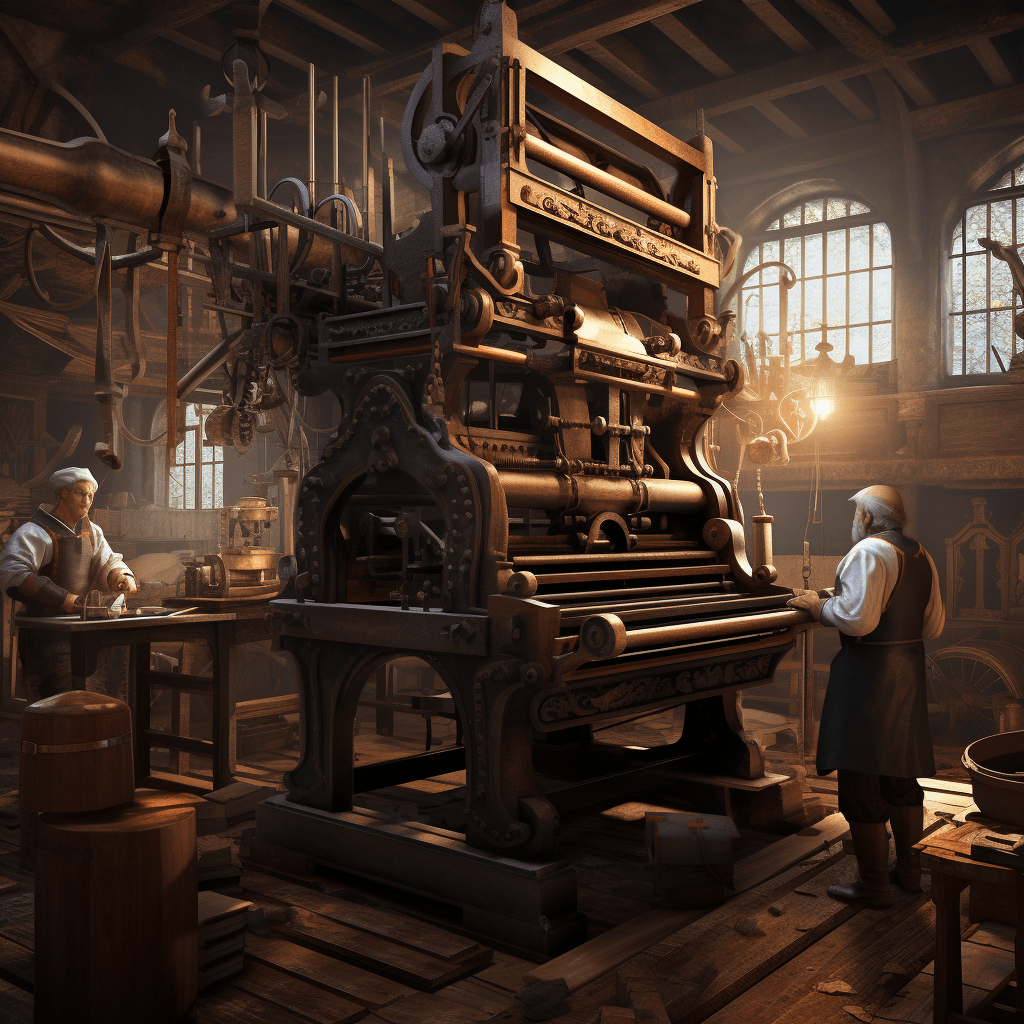
The term “Incunabula” may seem arcane, but its impact resonates through centuries, shaping our knowledge and understanding of the world. Derived from Latin, Incunabula—meaning “in the cradle” or “swaddling clothes”—refers to the earliest period of anything, but in the context of literature and knowledge dissemination, it pertains to books printed before 1501, during the infancy of the printing press.
The Emergence of the Printing Press
In the mid-15th century, Johannes Gutenberg revolutionized the world with the introduction of movable type. Before this, books were hand-copied, a painstakingly slow and error-prone process that resulted in limited copies accessible only to the elite. Gutenberg’s invention democratized knowledge by making it possible to print multiple copies of a text quickly and accurately.
These earliest printed books, the incunabula, were predominantly religious texts, such as the Gutenberg Bible, considered one of the most important incunabula. The period of incunabula represented a pivotal transition from manuscript culture to the printed book, forever altering the trajectory of knowledge and learning.
Implications for Literacy and Knowledge Dissemination
The advent of incunabula transformed society, ushering in an era of rapid information spread and increased literacy. The easy replicability and affordability of printed materials meant a broader section of society could access and consume knowledge, previously the preserve of the wealthy and the clergy.
Historians and researchers value incunabula for the insight they provide into this transformative era. Their study illuminates the shift in societal norms, education, and the democratization of knowledge.
The Cultural Significance of Incunabula
The influence of incunabula extends beyond the dissemination of religious texts. As the printing press became more widespread, so did the scope of subjects printed. Classical texts, scientific treatises, and philosophical discourses began to appear in printed form, spreading ideas and sparking debates that would shape the Renaissance and, eventually, the Enlightenment.
Incunabula also played a crucial role in preserving culture and history. Many vernacular texts, regional histories, and folklore that might have been lost to time were preserved through printing.
The Legacy of Incunabula
The period of incunabula lasted barely five decades, yet its impact reverberates through centuries. It marked the transition from a world where knowledge was a privilege to one where it became a right. It democratized education and fueled intellectual discourse, paving the way for scientific advancements and cultural revolutions.
While incunabula are historical artefacts, they hold contemporary significance. They are a testament to our quest for knowledge and the lengths we will go to disseminate it. The spirit of incunabula lives on in today’s digital age, where information is at our fingertips, echoing the ethos of those early printers who sought to make knowledge accessible to all.
Conclusion
The era of incunabula, brief yet transformative, redefined the landscape of knowledge and society. It democratized information, broke down barriers of class and wealth, and sparked intellectual revolutions. Today, as we stand on the brink of a new revolution in information technology, we would do well to remember the lessons from the cradle of the printing press—the incunabula era. These early printed texts remind us of the power of information and the importance of its accessibility, a concept more relevant now than ever in our increasingly connected world.
 Wondergressive