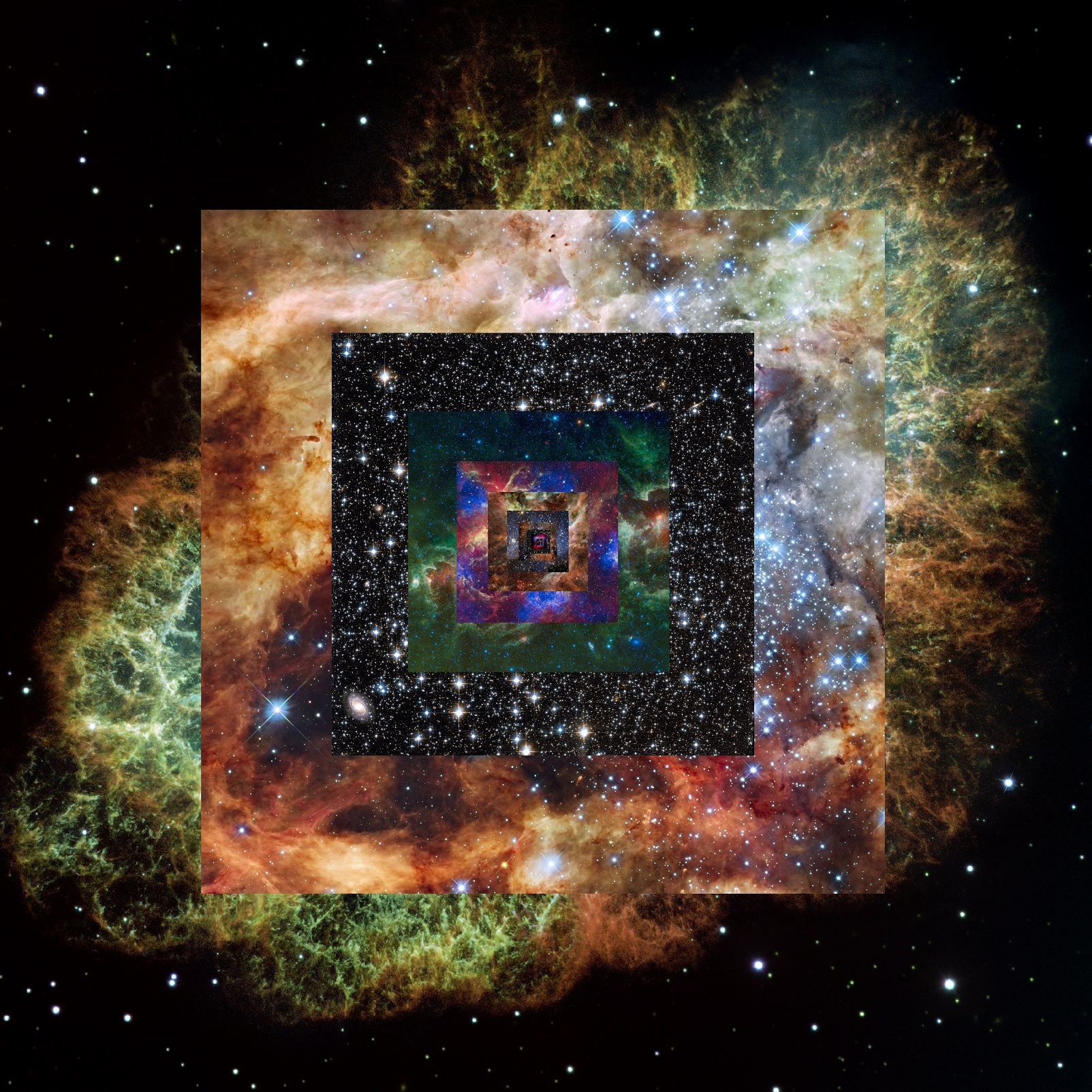



Cosmology, the science of the universe, is constantly evolving as we collect new data and formulate theories to explain our observations. One of these theories, although controversial, has intrigued many: the Hollow Universe theory. This hypothesis suggests our universe is essentially “empty,” or hollow, at its core. It paints a different picture than what we are accustomed to, but let’s delve deeper into its intriguing aspects.
The Birth of the Hollow Universe Theory
The Hollow Universe theory is not as widely accepted as the standard cosmological models. However, it originated from the same passion for exploration and understanding our universe. It has roots in theoretical physics, challenging conventional views and asking us to re-evaluate our preconceived notions about the universe’s nature.
The theory took form from a simple yet profound question: what if the universe is not as “solid” or “filled” as we believe it to be? What if the essence of the universe is fundamentally hollow? Intriguing, isn’t it?
Understanding the Hollow Universe Theory
To understand the Hollow Universe theory, we need to rethink our perception of ’emptiness.’ In this context, ‘hollow’ does not equate to ’empty’ in the traditional sense. Instead, the term ‘hollow’ refers to the conceptualization of the universe as a construct that is primarily void, yet harboring matter and energy in unique configurations.
The universe, according to this theory, is a vast, dynamic expanse wherein mass and energy are distributed irregularly, creating a web-like structure, sometimes called the “cosmic web.” This cosmic web gives the universe its ‘hollowness,’ where vast voids exist alongside dense clusters of matter.
Evidence Supporting the Hollow Universe Theory
The Hollow Universe theory might sound fantastical, but there’s evidence that hints towards its potential validity. The large-scale structure of the universe, as observed, appears to follow a ‘web-like’ pattern of galaxy clusters, as mentioned earlier. This pattern indicates the universe’s structure is more hollow than solid, with the voids accounting for a significant portion.
The phenomenon of cosmic microwave background (CMB) radiation also gives credence to this theory. The CMB, considered the afterglow of the Big Bang, shows slight temperature fluctuations. These variations correlate with the matter distribution in the universe, reinforcing the concept of a universe that is largely ‘hollow.’
Moreover, cosmologists have pointed out that the accelerating expansion of the universe — another puzzling observation — could be better explained within the framework of the Hollow Universe theory.
Challenges and Controversies
Despite the supporting evidence, the Hollow Universe theory is not without its critics. Many argue that the concept of ‘hollowness’ is abstract and does not provide a clear understanding of the universe’s nature. There are also questions about the theory’s ability to accurately account for phenomena like dark matter and dark energy.
However, like all scientific theories, the Hollow Universe theory is a work in progress. It evolves with each new observation and piece of evidence, offering an alternative way to interpret our cosmos.
Conclusion
In the grand scheme of cosmic understanding, the Hollow Universe theory is but one perspective among many. While it might sound outlandish at first, the premises behind the theory, along with the evidence supporting it, make for a compelling argument. It encourages us to broaden our view, reconsider our assumptions, and continue our quest for understanding the universe.
Just as we once moved from believing the Earth was flat to accepting it as a sphere, perhaps one day, we might also transition from seeing the universe as a solid expanse to acknowledging its hollow nature. In the words of J.B.S. Haldane, “The universe is not only queerer than we suppose, but queerer than we can suppose.” The Hollow Universe theory could just be another testament to this sentiment.

 Wondergressive