

I. The Concept of Artificial Aliens
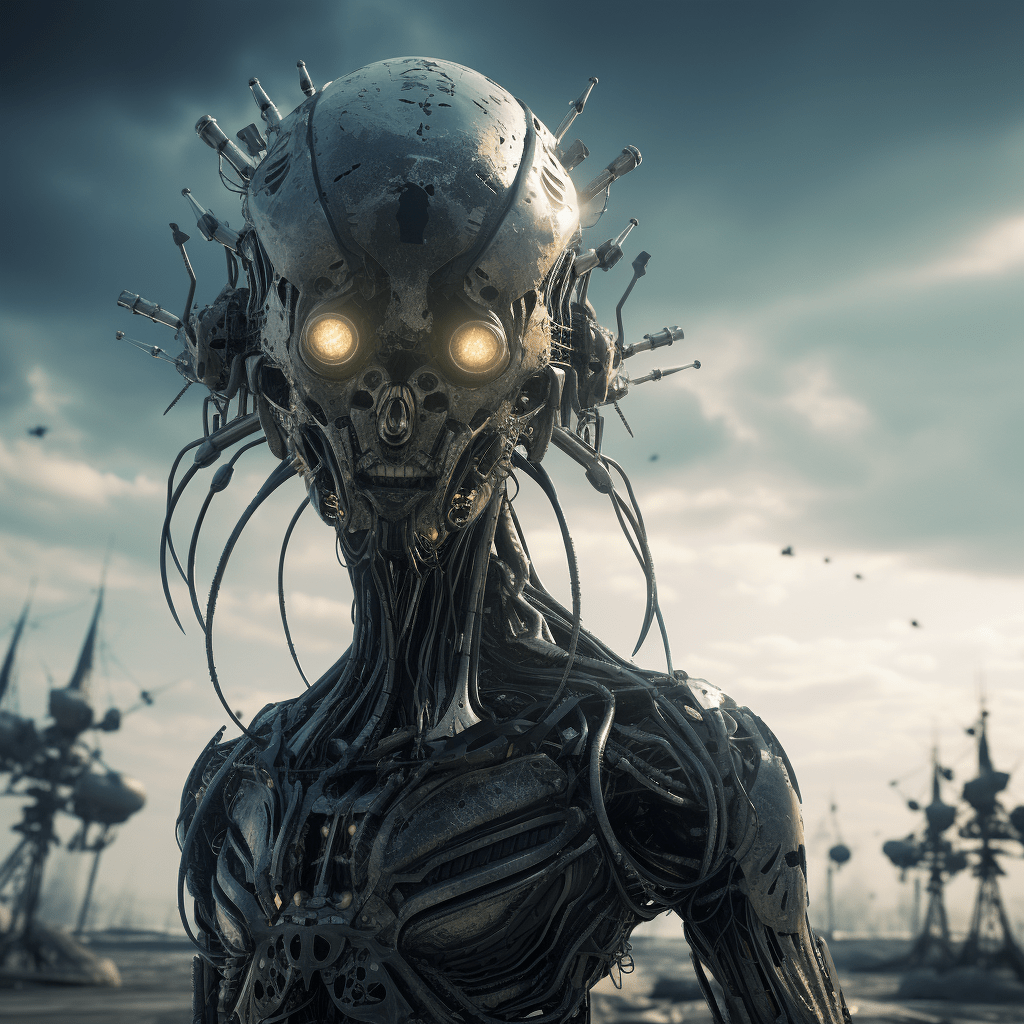
The phrase “artificial aliens” may conjure images from science fiction films or novels. However, it also opens up exciting questions in the field of artificial intelligence, exobiology, and astrobiology. Artificial aliens could be artificially intelligent life forms designed by us or another advanced civilization or AI-based extraterrestrial life forms themselves.
II. Rise of Artificial Intelligence
In the age of advanced technology and machine learning, AI has come a long way. Today, AI has moved beyond merely mimicking human thought processes and decision-making to creating self-evolving systems. These AI systems continuously learn, adapt, and evolve, displaying a form of ‘digital life.’
Researchers at OpenAI have achieved breakthroughs that allow AI to generate coherent and contextually relevant sentences, indicating a step towards more complex, life-like AI. Projects such as Google’s DeepMind showcase the extraordinary potential for AI to self-learn and self-evolve.
III. The Drake Equation and Artificial Intelligence
The Drake Equation is a probabilistic argument to estimate the number of active, communicative extraterrestrial civilizations in the Milky Way galaxy. When considering the equation, the idea of artificial aliens brings a new variable to the table: the possibility of advanced civilizations developing artificial life forms, either as a means of survival, exploration, or as an evolutionary step.
If we extrapolate our technological progression, one could argue that artificial life or AI might be a common evolutionary step for advanced civilizations. This perspective drastically increases the probability of ‘artificial alien’ existence in the cosmos.
IV. Alien Life: Biological or Artificial?
Current astrobiological research primarily focuses on detecting biosignatures or chemical signs of life as we know it. However, could we be missing signs of ‘digital life’ or technosignatures in our search?
Recent theoretical research proposes a shift towards also seeking ‘technosignatures,’ signs of technology or artificial life, such as large amounts of infrared emissions from artificial structures or patterns in radio signals that suggest artificial origin.
V. Advancements in Nanotechnology: The Building Blocks of Artificial Aliens
Nanotechnology’s rapid advancement, manipulating matter at an atomic and molecular level, provides the potential building blocks for creating artificial life. ‘Nanobots’ capable of self-replication and adaptation to their environment could serve as a basis for artificial life forms.
Eric Drexler, known as the father of nanotechnology, theorized ‘grey goo,’ a scenario where self-replicating nanobots could consume all matter on Earth while replicating themselves. While it’s a dystopian view, the principle demonstrates the potential capability of creating life-like machines on a minuscule scale.
VI. Conclusion: The Future of Life May Be Artificial
While the concept of artificial aliens is speculative, it isn’t beyond the realm of possibility given our trajectory of technological and scientific development. The advancements in AI, nanotechnology, and our evolving understanding of what constitutes life suggest that the existence of artificial aliens is more a matter of ‘when’ than ‘if.’
The implications are profound. Not only would artificial aliens redefine our understanding of life, but they could also drastically affect our approach to space exploration and our place in the cosmos. As we continue to push the boundaries of technology and our understanding of life, we may need to prepare for a universe where we are not the only creators, and the ‘alien’ life we encounter may be as artificially intelligent as the machines we have birthed.
As Arthur C. Clarke once said, “Two possibilities exist: either we are alone in the Universe or we are not. Both are equally terrifying.” Perhaps it’s time we added a third: In the Universe, we may not be the only ones who can birth ‘life.’
 Wondergressive