

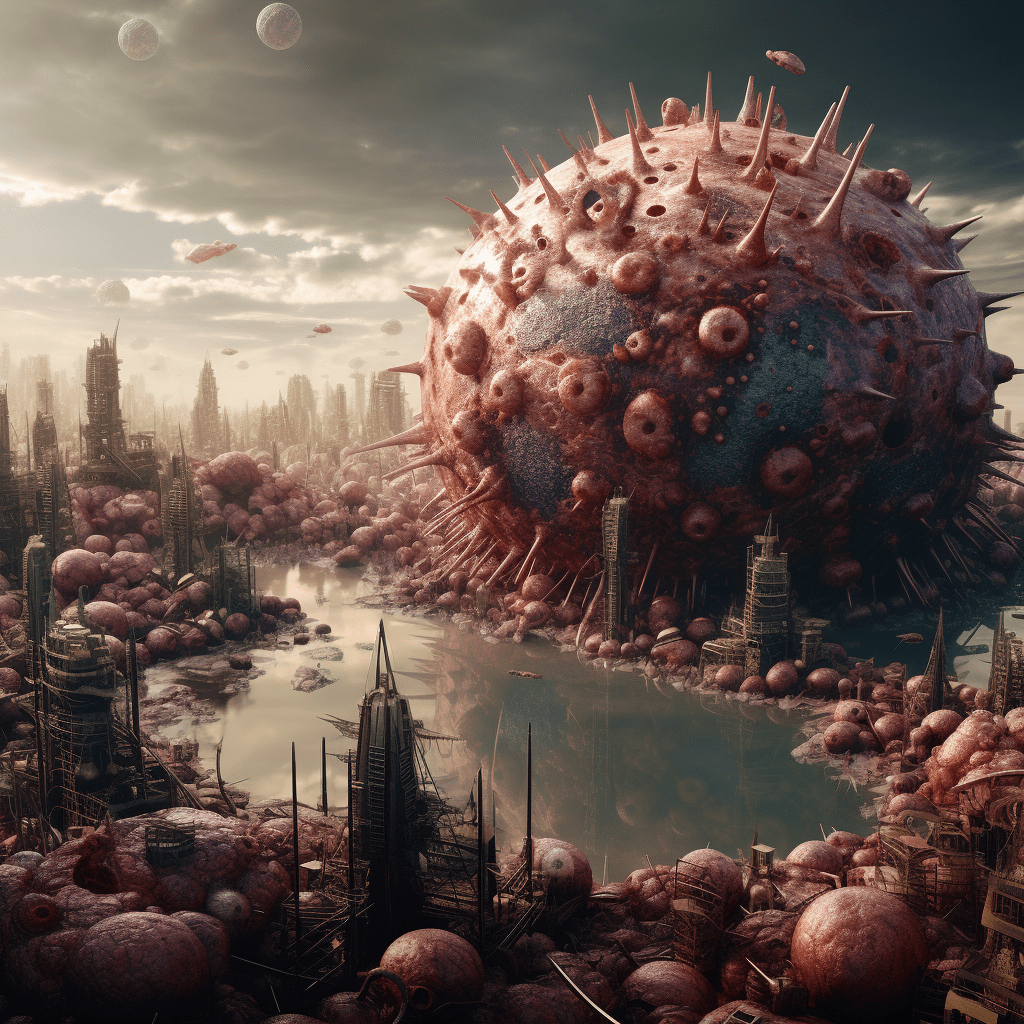
The concept of bacterial humanity, while seemingly unconventional, offers a compelling reimagining of our understanding of life as we know it. The proposition is that humans, as well as all other life forms, could fundamentally be bacterial in origin, and that our existence is deeply entwined with these microorganisms.
Our Bacterial Origins
The Building Blocks of Life
The concept of bacterial humanity stems from the premise that life on Earth began as unicellular organisms, primarily bacteria. The first life forms that existed approximately 3.5 billion years ago were simple, single-celled microorganisms, not too dissimilar from the bacteria that we know today. These organisms paved the way for more complex life forms, including us humans.
From Simplicity to Complexity
Over billions of years, these simple life forms evolved, undergoing countless iterations of mutation and natural selection. A theory known as endosymbiosis suggests that eukaryotic cells, the type of cells that make up all animals and plants, originated from ancestral prokaryotes (bacteria). According to this theory, certain types of bacteria were engulfed by others but were not digested. Over time, these internalized bacteria became essential components of the host cell, eventually evolving into the organelles that we see in modern eukaryotic cells, such as mitochondria and chloroplasts.
Bacteria: An Integral Part of Humanity
Our Microbial Companions
As we delve further into the concept of bacterial humanity, it’s crucial to recognize that even today, bacteria remain an integral part of our biology. The human microbiome, consisting of all the microorganisms that inhabit our body, primarily bacteria, plays a critical role in maintaining our health. There are nearly as many bacterial cells in our bodies as there are human cells, suggesting that we are, in a sense, half bacterial.
Role of Bacteria in Our Health
These bacteria aren’t merely passive passengers. They assist in digestion, modulate our immune system, protect us from harmful pathogens, and even influence our moods and behavior. Dysbiosis, or imbalance of this microbiome, is linked to various health conditions, including obesity, autoimmune diseases, and mental health disorders, underlining the importance of bacteria in our existence.
Bacterial Intelligence: Evidence for Bacterial Humanity?
The Social Lives of Bacteria
Recent research in microbiology has unveiled astonishing abilities of bacteria that reinforce the concept of bacterial humanity. Bacteria are now understood to communicate and cooperate in sophisticated ways, exhibiting traits previously thought to be exclusive to complex life forms.
Quorum Sensing and Collective Decision Making
One of the fascinating aspects of bacterial behavior is “quorum sensing”, a mechanism that allows bacteria to sense the density of their population and regulate their behavior accordingly. This collective decision-making process, akin to a form of bacterial “democracy”, enables bacteria to coordinate their actions and behave almost like a multicellular organism.
Problem-solving Abilities
Studies have also revealed that bacteria can solve complex problems that require cooperation, such as navigating through challenging environments to find nutrients. They display a form of “swarm intelligence”, where the group as a whole can solve problems that individual bacteria cannot. This fascinating glimpse into bacterial intelligence adds weight to the notion of bacterial humanity.
Conclusion: Reimagining Humanity
The concept of bacterial humanity challenges us to rethink our understanding of life and our place in the grand scheme of evolution. Far from being separate, superior entities, we are deeply connected to bacteria – they are a part of our origins, our current biology, and potentially our future. While this perspective may seem unconventional, the mounting scientific evidence supporting it provides a compelling case. This realization not only expands our understanding of biology but also underscores the importance of these microscopic entities in our existence and health. The more we understand about our bacterial companions, the better we can appreciate and harness this interconnectedness for our benefit.
 Wondergressive