

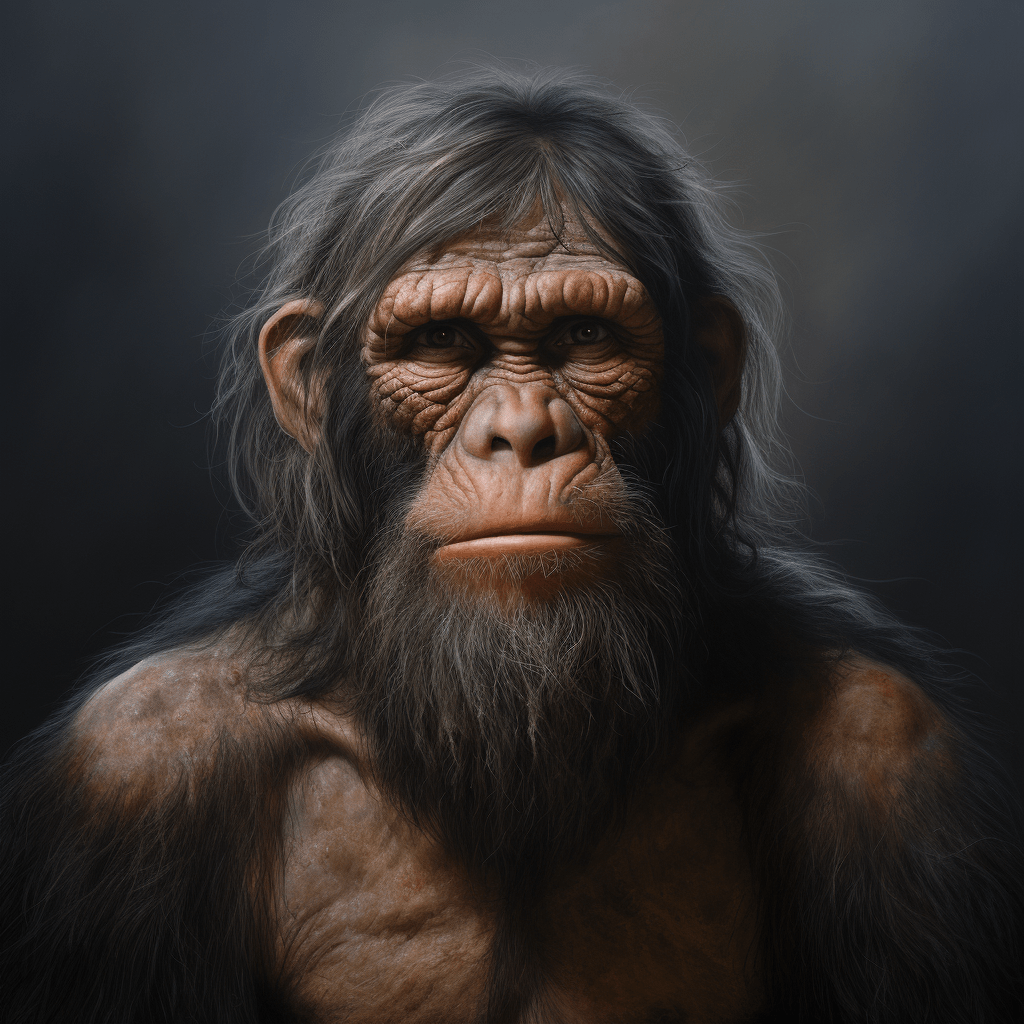
From the dawn of time, humanity has pondered its origins. In recent years, the study of proto-humans—our prehistoric predecessors—has provided fascinating insights into our ancestral past. This compelling narrative invites you to discover the fascinating world of proto-humans and how they’ve shaped the course of our evolution.
The Birth of Proto-Humans: An Evolutionary Perspective
From a biological perspective, proto-humans, often referred to as hominins, represent the critical bridge between the world of primates and our Homo sapiens species. They’re believed to have appeared around 7 million years ago, with Sahelanthropus tchadensis widely accepted as one of the earliest known proto-human species.
Sahelanthropus tchadensis, discovered in Chad, has a combination of ape-like and human-like features, including small canine teeth and a flat face, indicative of bipedal walking—an evidence of the shift towards human characteristics.
Proto-Humans and The Evolutionary Milestones
Our journey towards understanding proto-humans would be incomplete without discussing the Australopithecines. Species like Australopithecus afarensis, represented by the famous Lucy fossil, show clear signs of bipedalism. This development represents a critical evolutionary milestone, marking a fundamental divergence from our ape ancestors.
Further along the evolutionary timeline, Homo habilis emerges as an essential proto-human species. Its larger brain size and evidence of tool use signify a crucial cognitive leap, suggesting a greater capacity for problem-solving and social interaction.
Cognitive Revolution: Evidence From The Neanderthals
Neanderthals, the closest extinct relatives of modern humans, offer intriguing evidence of advanced cognitive abilities. The discovery of burial practices and symbolic artefacts suggests the presence of complex social structures and cultural practices. This behavior points towards the proto-humans’ cognitive revolution, an essential precursor to our species’ complex cognitive abilities.
Homo Erectus: Our Globetrotting Ancestor
Arguably the most successful proto-human, Homo erectus, offers fascinating insights into early human migration. This species expanded out of Africa into Asia and Europe nearly two million years ago, signifying the first known instance of human migration—underscoring the proto-humans’ adaptability and resilience.
The Proto-Humans And Us: The Genetic Link
Genetic research has uncovered significant evidence of interbreeding between modern humans and proto-humans like Neanderthals and Denisovans. These interactions have left a genetic imprint on us, with a small percentage of non-African modern human DNA traceable to these early hominins. This inheritance underscores the complex, intertwined nature of our evolutionary history.
Conclusion
Proto-humans hold a mirror up to our past, helping us understand the evolutionary journey that shaped us into Homo sapiens. The study of these early hominins offers intriguing insights into our origins, shedding light on the traits, behaviours, and capabilities that define us as humans.
Intriguingly, the research is ongoing. Recent discoveries like Homo naledi and Homo longi (nicknamed ‘Dragon Man’) continue to challenge and expand our understanding of the proto-human story. Indeed, the history of proto-humans is still being written, and with every new discovery, the narrative becomes more intriguing, presenting the tantalizing possibility of reshaping our understanding of human evolution.
 Wondergressive