

In the vast ocean of ancient civilization lore, one fascinating, contentious concept stands out: the Anunnaki, deities in ancient Mesopotamian cultures believed to have shaped human civilization. More than just mythological figures, some theorists propose the Anunnaki as extraterrestrial beings. This article explores the intriguing possibility of the ‘Anunnaki Puppet Show,’ a theory that envisions our history as an orchestrated event under their influence.
Unveiling the Anunnaki
First, it’s necessary to understand the roots of the Anunnaki concept. The term “Anunnaki” originates from Sumerian mythology, referring to a pantheon of gods descended from An, the sky god, and Ki, the earth goddess. Their most prominent roles were as judges in the underworld, deciding the fate of humanity after death.
The Sumerians’ advanced knowledge in various fields, such as astronomy, mathematics, and architecture, has led some to believe that these achievements were the result of extraterrestrial guidance. Enter Zecharia Sitchin, a controversial figure in the realm of ancient astronaut theories. His interpretation of Sumerian texts postulates that the Anunnaki were a race of technologically advanced extraterrestrial beings from the planet Nibiru, who visited Earth approximately 450,000 years ago.
The Anunnaki Puppet Show Hypothesis
According to the ‘Anunnaki Puppet Show’ theory, these beings didn’t just visit Earth; they essentially masterminded human civilization. Proponents suggest they genetically engineered Homo sapiens as a worker species, harnessing humanity to mine precious resources, particularly gold.
The ‘puppet show’ analogy arises from the notion that the Anunnaki manipulated humanity’s development throughout history, influencing social, technological, and political progress much as a puppeteer controls their marionettes. They did so, the theory suggests, by installing themselves as gods in human societies and shaping cultural narratives.
Ancient Texts and Iconography: The Evidence
The ancient Sumerian texts, specifically the ‘Epic of Gilgamesh,’ the ‘Atra-Hasis,’ and the ‘Enûma Eliš,’ contain references to these supposed god-like figures. These texts mention how the Anunnaki had the power to control the fate of humanity, demonstrating superior knowledge and technology.
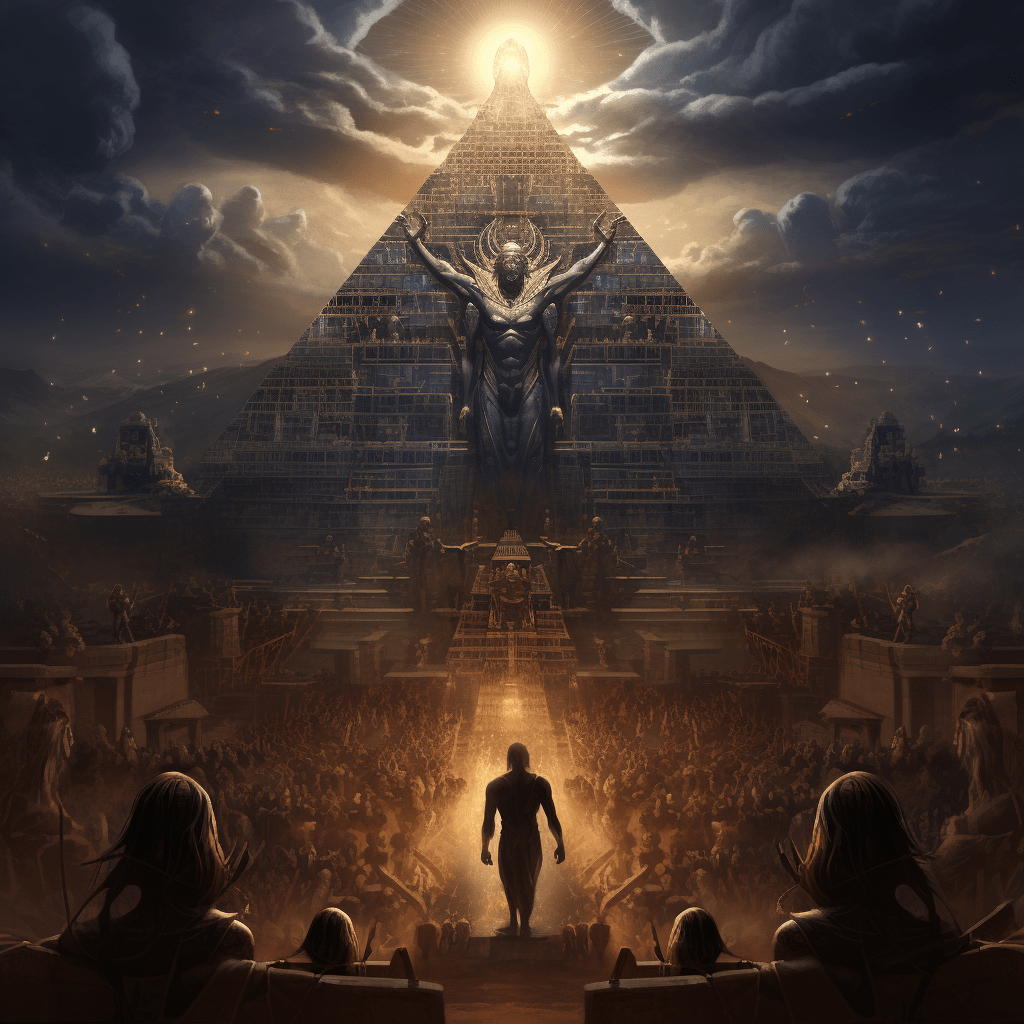
Moreover, ancient Sumerian and Akkadian iconography depict these deities as larger-than-life figures towering over humans, possibly symbolizing their superior status or extraterrestrial nature. Some also interpret the symbols associated with the Anunnaki, such as the winged disc and the seven-pointed star, as representations of advanced technology or spacecraft.
Genetic Engineering and Gold Mining
One of the more captivating elements of the Anunnaki Puppet Show hypothesis is the claim that these beings were responsible for the genetic creation of Homo sapiens. Sitchin proposed that the Anunnaki manipulated the genetics of existing hominins to create a more intelligent, capable species—us. Proponents point to the sudden ‘evolutionary leap’ in the archaeological record as potential evidence of this extraterrestrial intervention.
Moreover, Sitchin’s interpretation of the texts suggests that the Anunnaki came to Earth in search of gold, a resource crucial for their advanced technology. The vast ancient gold mines discovered in South Africa, dating back approximately 200,000 years, are often cited as potential physical evidence supporting this theory.
The Puppeteers of History
The ‘Anunnaki Puppet Show’ theory extends beyond the origins of humanity, suggesting a continued Anunnaki influence throughout history. This notion posits that they orchestrated significant historical events, subtly steering the course of human development. Some believers claim this influence extends into modern times, with the Anunnaki manipulating world governments and financial systems.
While the ‘Anunnaki Puppet Show’ theory is decidedly fringe and lacks mainstream scientific support, its compelling narrative sparks the imagination. It invites us to question our understanding of human history and ponder the vast, mysterious cosmos in which we live. Ultimately, it serves as a reminder of the enduring human desire to make sense of our origins and purpose in the universe.
 Wondergressive