

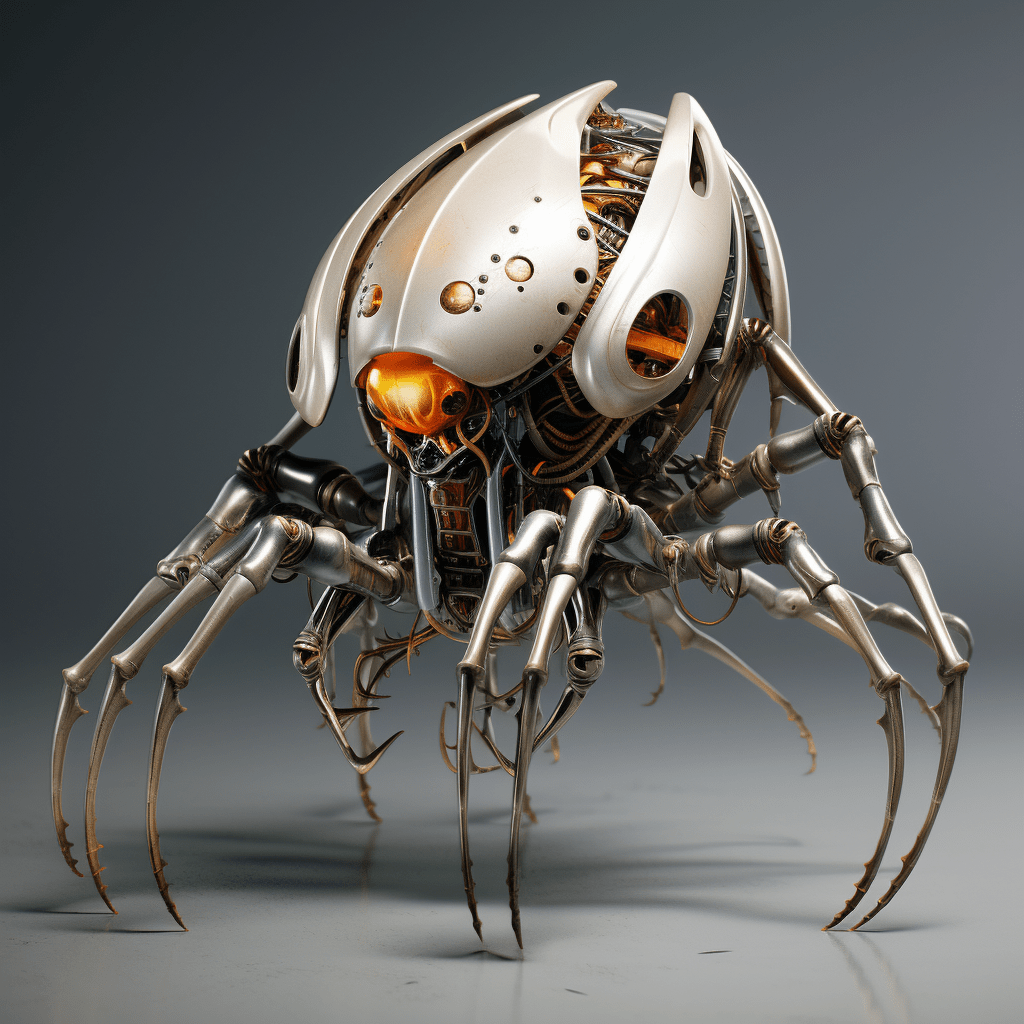
What if not all beings in the universe are made up of flesh and blood? What if there are beings, whose existence transcends the biological norms we’re so accustomed to? This concept of ‘Inorganic Beings’ isn’t new, but it has never failed to intrigue those who question the nature of existence.
Beyond the Limits of Organic Life
Inorganic beings, as the term suggests, are entities that exist without the organic structures that define life as we know it. They lack carbon-based bodies, DNA, and the cellular systems that comprise biological organisms.
The idea of inorganic beings is grounded in many cultural and spiritual traditions, from ancient philosophy to modern metaphysics. For example, in ancient Greek thought, ‘Daimones’ were conceived as non-corporeal beings interacting with humans.
From Myth to Reality: Quantum Physics and Inorganic Beings
Now, you might be wondering, how can we substantiate the existence of such beings? Interestingly, modern quantum physics provides some thought-provoking insights.
The famous wave-particle duality principle suggests that everything in the universe can exist as both particles and waves simultaneously. This goes for atoms, electrons, photons, and potentially even larger entities. Could it be possible that inorganic beings exist within this wave-particle framework, but in forms unrecognizable to human perception?
Moreover, it’s worth considering physicist John Archibald Wheeler’s participatory anthropic principle, which suggests the universe’s very existence is dependent on conscious observation. What if inorganic beings also contribute to this process of observation and creation, thus forming an integral part of the cosmic tapestry?
Unconventional Consciousness: The Mechanisms of Inorganic Thought
Without biological structures, how might inorganic beings think, perceive, or communicate? One possibility is that they operate through mechanisms akin to quantum computing.
Quantum computing works on the principle of superposition, which allows quantum bits or ‘qubits’ to exist in multiple states at once. This results in an enormous processing capacity. If inorganic beings were to use a similar mechanism, they could potentially think and perceive reality in dimensions far beyond our comprehension.
Inorganic Beings: Intelligent Designers?
The concept of inorganic beings extends to the hypothesis that they may be the architects of certain phenomena we find puzzling.
For instance, the ‘Fine-Tuning’ problem in cosmology deals with the universe’s physical constants that appear remarkably fine-tuned for life. Could it be that inorganic beings, operating on a quantum level, influence these constants subtly, leading to the universe as we know it?
Evidence and Testimony
In the realm of the subjective, several psychonauts, those who embark on explorations of consciousness often through the use of psychedelics, claim encounters with seemingly sentient, non-biological entities. While these accounts remain anecdotal, they bring interesting perspectives on the possible manifestations of inorganic beings.
Final Thoughts: A Universe Alive with Possibilities
Inorganic beings’ existence continues to remain speculative and in the realm of metaphysics. However, the very contemplation of their existence pushes the boundaries of our understanding of consciousness and reality. It opens our minds to a universe teeming with possibilities and forms of existence beyond our current comprehension. With ongoing advancements in quantum physics and consciousness studies, who knows what revelations the future holds?
In the words of physicist and author, Sir Arthur Eddington, “Not only is the universe stranger than we imagine, it is stranger than we can imagine.” And in that strangeness, the existence of inorganic beings may find a home.
 Wondergressive