


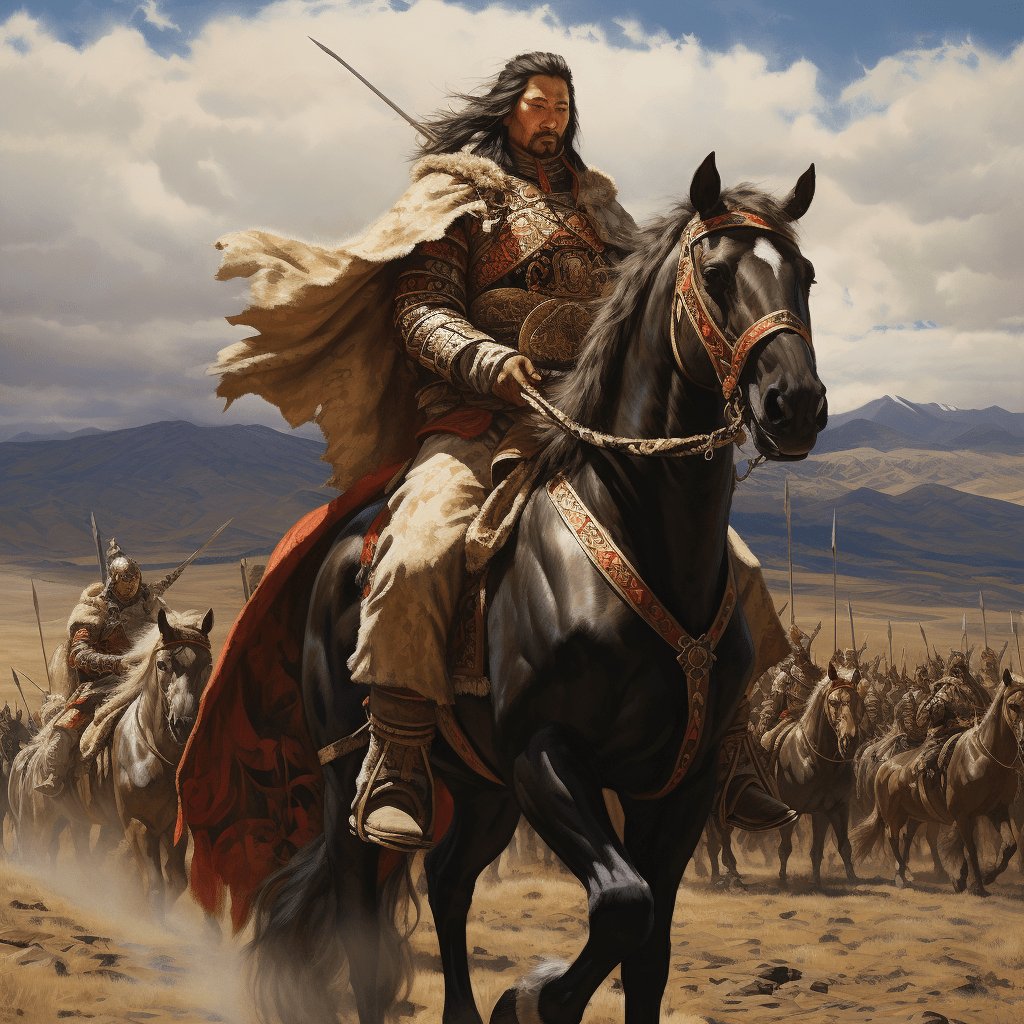
The Mongolian Empire, known for its sweeping territorial conquests under the formidable Genghis Khan, holds a unique place in world history. However, an enticing theory suggests that the Mongolian Empire’s influence and power are not relics of the past but continue to shape global dynamics secretly, even today. This theory, known as the “Secret Mongolian Empire Theory,” makes for a compelling study in historical continuity and power dynamics.
Historical Perspective
Mongolia’s strategic location in Central Asia has influenced the region’s geopolitics and culture. The Mongolian Empire, at its peak in the 13th century, was the largest contiguous land empire in history. However, the empire began to fracture after the death of Möngke Khan, with numerous successors’ states taking its place.
Mongolian Influence Today: Unveiling the ‘Secret’
The Secret Mongolian Empire Theory posits that the descendants of the original Mongol Empire continued to wield significant influence, albeit covertly, after the empire’s apparent downfall. While this might sound speculative initially, several intriguing facts lend some credibility to this theory.
Economic Footprints
The Mongolian Empire was known for its advanced trade networks, such as the Silk Road. Even today, countries that were once under the Mongolian empire, like China and Russia, continue to be prominent players in global trade. Furthermore, Mongolia has abundant mineral resources, including coal, copper, gold, and uranium, suggesting that it could secretly influence global commodities markets.
Political Influence
According to the theory, the Secret Mongolian Empire could be pulling the strings of power in several countries that were once a part of the empire. This is suggested by the significant influence that Mongolia holds in regional organizations like the Shanghai Cooperation Organisation (SCO).
Genetic Traces
An article in the American Journal of Human Genetics in 2003 revealed that approximately 16 million men alive today are genetic descendants of Genghis Khan. This genetic footprint, spanning from Asia to Europe, could potentially imply an extensive, albeit concealed, Mongolian influence.
Counter Arguments and Skepticism
Like any theory, the Secret Mongolian Empire Theory has its skeptics. Critics argue that the cited evidence could be mere coincidences or indirect results of Mongolia’s historical power rather than deliberate, covert influence. The theory’s lack of hard, empirical proof also makes it a target for skepticism.
Looking Ahead: From Theory to Possible Reality?
The Secret Mongolian Empire Theory, despite its contentious nature, opens up intriguing possibilities. As we delve deeper into the study of genetics, trade, geopolitics, and history, we may stumble upon stronger evidence supporting this theory.
Conclusion
While the existence of a Secret Mongolian Empire today remains in the realm of speculation, the notion challenges us to rethink our understanding of historical power dynamics and their impacts on the present day. Irrespective of its veracity, the Secret Mongolian Empire Theory is a compelling testament to the enduring allure of history and the enigmatic narratives it can foster.
While it is intriguing to consider the existence of such a secret empire, rigorous academic scrutiny and research are essential for further exploration of this theory. Nonetheless, the theory encourages us to look beyond apparent historical discontinuities and consider the possibility of more subtle, enduring forms of influence spanning centuries.
 Wondergressive