

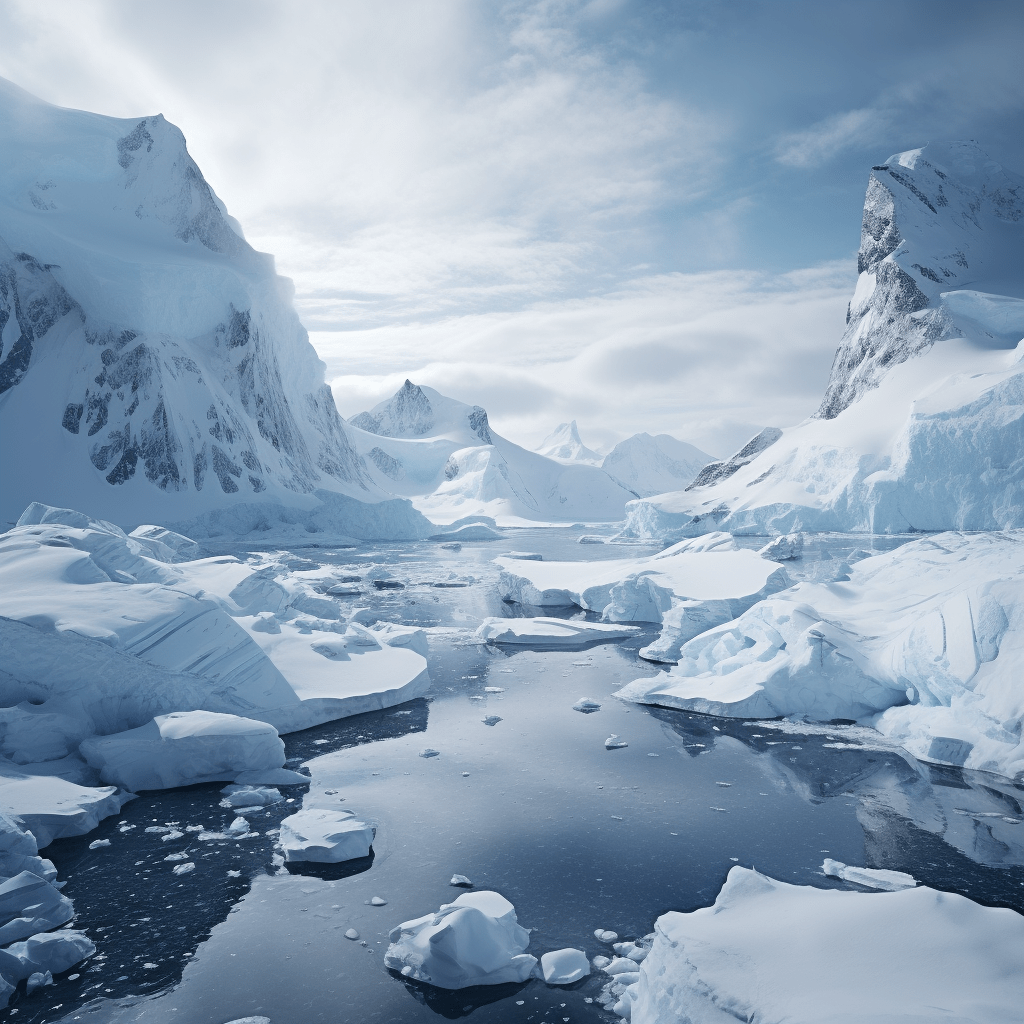
Known for its frigid temperatures and stunning landscapes, Antarctica, the Earth’s southernmost continent, has long captivated human curiosity. Recent discussions around “Antarctica Prevarication” have sparked widespread interest, suggesting the existence of undisclosed knowledge about the icy continent.
Historical Exploration: Establishing the Narrative
Antarctica remained an uncharted and largely speculative landmass until the early 19th century. The expeditions of explorers such as James Clark Ross, Roald Amundsen, and Robert Falcon Scott began to weave the narrative we now accept, establishing Antarctica as a continent defined by its inhospitable environment, devoid of permanent human habitation, and dedicated to scientific research.
The Antarctica Treaty System: A Diplomatic Facade?
The Antarctic Treaty of 1959, signed by twelve nations, declared Antarctica a scientific preserve, banning military activity and promoting scientific research. The treaty’s objective to maintain Antarctica for peaceful, scientific purposes is universally applauded, but the Antarctica prevarication theory posits this to be a veil masking the undisclosed reality of the region.
Unraveling the Ice: Theories and Speculations
Hidden Bases and Secret Activities
One prominent theory suggests undisclosed military or research facilities exist beneath Antarctica’s ice. Reports of unidentified flying objects (UFOs) and unexplained phenomena fuel speculation.
While no concrete evidence has been presented to substantiate these claims, some point to instances such as Operation Highjump – a large-scale United States Antarctic expedition in 1946-1947 – as potential indicators of secret activities. Critics argue these interpretations are far-fetched, pointing to the fact that Operation Highjump’s objectives were openly stated: training personnel, testing equipment in frigid conditions, and consolidating the US’s sovereignty over a sector of Antarctica.
Geological Anomalies
Recent satellite imagery has revealed strange anomalies beneath the ice, such as the gravitational anomaly in Wilkes Land, which some propose to be evidence of an ancient civilization or extraterrestrial involvement.
Mainstream scientific interpretation attributes these anomalies to natural geologic processes. The Wilkes Land anomaly, for example, is commonly thought to be caused by a massive asteroid impact that occurred around 250 million years ago, potentially leading to the largest mass extinction event in Earth’s history.
Climate Change Reveals More
The accelerated melting of Antarctic ice due to climate change is revealing unprecedented landscapes. Some argue these receding ice sheets may expose hidden structures or artifacts.
While there’s currently no tangible evidence supporting such assertions, it is true that climate change has exposed previously hidden parts of Antarctica, leading to significant discoveries. The 2018 unearthing of a 15-million-year-old meteorite bearing simple sugars, essential building blocks for life, hints at the potential for remarkable scientific finds.
Conclusion: Deciphering the Antarctica Enigma
While the theory of Antarctica prevarication provokes fascination, the available scientific evidence supports Antarctica as a continent dedicated to peace and scientific research. However, as our climate evolves and exposes previously inaccessible regions of Antarctica, the potential for unprecedented discoveries remains.
As we continue to explore this fascinating continent, it is crucial to rely on verifiable evidence and scientific methodology. While speculation can spark intrigue and curiosity, it is through diligent research and exploration that we can truly unravel the enigmatic secrets of Antarctica.
 Wondergressive