


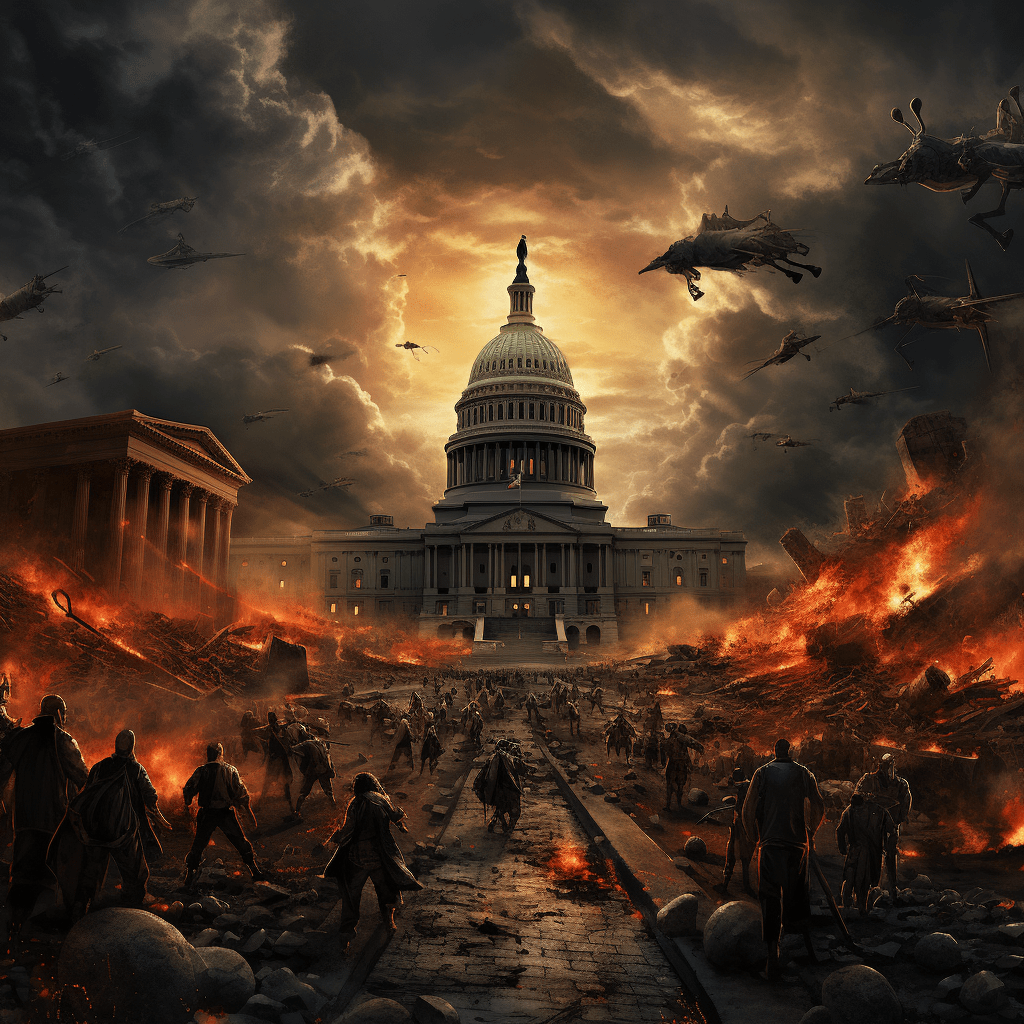
At first glance, the statement “war is fake” may seem far-fetched. After all, war’s brutal reality has been documented throughout human history. But what if we reframed this concept? What if we approached it from the perspective that war, as we perceive and understand it, is largely a construct—shaped by socio-political factors, media representations, and individual perceptions? This concept may not suggest that war’s physical existence is unreal, but rather that our understanding of it might be distorted or incomplete.
War as a Social Construct
Renowned anthropologist and ethnographer, Pierre Clastres, in his seminal work, “Society Against the State,” argued that war is a social construct and a product of specific political, social, and economic circumstances. War does not occur in a vacuum; it’s a consequence of social relations and power dynamics. From this viewpoint, war becomes less an unavoidable reality and more a product of certain human choices and behaviors.
Sociologist Martin Shaw further builds upon this in his work “The Sociology of War and Peace,” explaining that the structures of war are not fixed. They evolve with socio-political changes, making war a fluid and mutable construct, rather than an absolute, inescapable reality.
The Role of Media and Propaganda
Our perception of war is largely influenced by media and propaganda, which can shape narratives and manipulate public opinion. Renowned historian and political scientist, Harold Lasswell, in his influential book “Propaganda Technique in the World War,” detailed how governments used propaganda to create specific images of war, often to justify their actions and mobilize public support.
In the age of digital media, this phenomenon has only intensified. The advent of “infowars,” where information is weaponized to confuse, distract, or mislead, has further blurred the lines between reality and fabrication in the context of war.
Perception and Reality: Two Sides of War
The experience of war varies drastically depending on perspective. For the soldier on the battlefield, the civilian in a war-torn city, or the policymaker in a government building, war is a different reality.
This is exemplified in Chris Hedges’ work, “War Is a Force That Gives Us Meaning,” where he delves into how individuals and societies often assign certain narratives or meanings to war, which might differ from its objective reality. Consequently, our collective understanding of war is more a patchwork of personal perspectives and less a universally agreed-upon truth.
The Psychology of War
Psychologists have long examined how cognitive biases can affect our perception of events. The “just-world hypothesis,” for instance, suggests that people tend to believe the world is just and fair, leading them to rationalize war and violence.
Moreover, research published in “The Oxford Handbook of Political Psychology” discusses the concept of ‘war mentality,’ where societies perceive war as inevitable, often due to fear, historical experiences, or indoctrination. Such psychological constructs further complicate our understanding of war, casting doubts on its perceived inevitability.
Conclusion: War – A Construct More Than an Inevitability?
To suggest that “war is fake” might not mean to deny its physical realities—death, destruction, and suffering are sadly all too real. However, viewing war as a flexible construct shaped by social, political, media, and psychological influences provides a new lens to examine this complex phenomenon.
War, as it appears, may be more rooted in our perceptions, shaped by socio-political structures, media narratives, individual experiences, and psychological constructs. Understanding this could be the key to shifting our collective mindset away from accepting war as inevitable, towards seeing it as a preventable outcome of human choices. After all, if war is a construct, it stands to reason that it can be deconstructed. This perspective, while radical, holds the potential to inspire a reevaluation of our approaches to conflict, peace, and societal progress.
 Wondergressive