


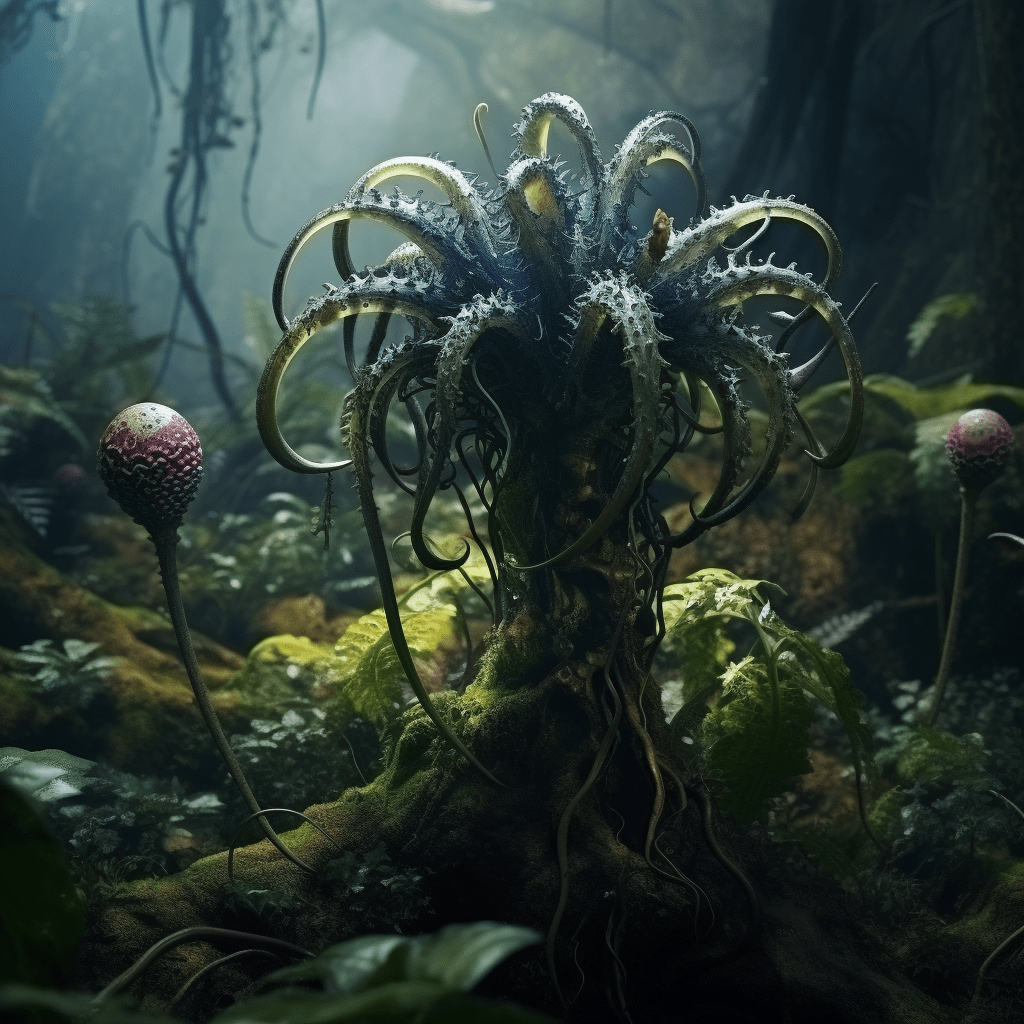
As we move through our daily lives, it’s easy to dismiss plants as passive participants in the world. Yet, in the uncharted regions of our planet, there exists an array of plant species with deadly and hostile attributes. Is it possible that these plants have evolved not just to survive, but to dominate their environment?
The Curious Case of Carnivorous Plants
The existence of carnivorous plants such as the Venus flytrap (Dionaea muscipula), pitcher plant (Nepenthes spp.), and sundew (Drosera spp.) already disrupts the assumption that plants are always the prey, not the predator. These plants have evolved complex mechanisms to lure, capture, and digest insects. But could these mechanisms be adapted to become threats to larger creatures, even humans?
Recent research has shed light on the remarkable adaptability of these species. In a study published in the journal “Nature,” scientists discovered that some pitcher plants in Borneo have evolved to become “toilet plants,” attracting tree shrews with nectar and then using the feces as a source of nitrogen. This demonstrates a dynamic evolution strategy where the plants adapt their trapping mechanisms based on available resources.
The Silent Killers: Poisonous and Psychoactive Plants
The toxicity of certain plants also contributes to their hostile nature. Species such as the deadly nightshade (Atropa belladonna), hemlock (Conium maculatum), and oleander (Nerium oleander) produce potent toxins that can cause serious harm or even death. Intriguingly, these plants don’t just passively sit and wait to be consumed. Research has shown that many toxic plants are skilled chemists, capable of altering their toxin production in response to threats.
Even more sinister, perhaps, are those plants that can alter human perception. The hallucinogenic properties of plants like peyote (Lophophora williamsii) and psilocybin mushrooms (Psilocybe spp.) can be seen as a defense mechanism, disorienting or incapacitating potential predators.
Symbiotic Relations and Plant Warfare
Plants also engage in biological warfare, using other organisms to do their bidding. For instance, some Acacia trees in Africa produce a sweet sap that attracts ants. The ants live on the tree, defending it from herbivores and even pruning off other plants that might compete for light. This level of manipulation, turning other species into allies, demonstrates how plants can be both passive and incredibly hostile.
Conclusion
Understanding the depth of plants’ complex strategies and hostile tendencies helps us realize that they are more than just passive photosynthesizers. This exploration also raises the question, “What else are we missing?” As we continue to investigate the mysterious world of hostile plants, we may find that these silent, stationary life forms are far more active and dangerous than we ever imagined.
Thus, hostile plants, whether through poison, predation, psychoactive substances, or manipulation, have demonstrated an intriguing potential for both survival and domination in their respective environments.
 Wondergressive