


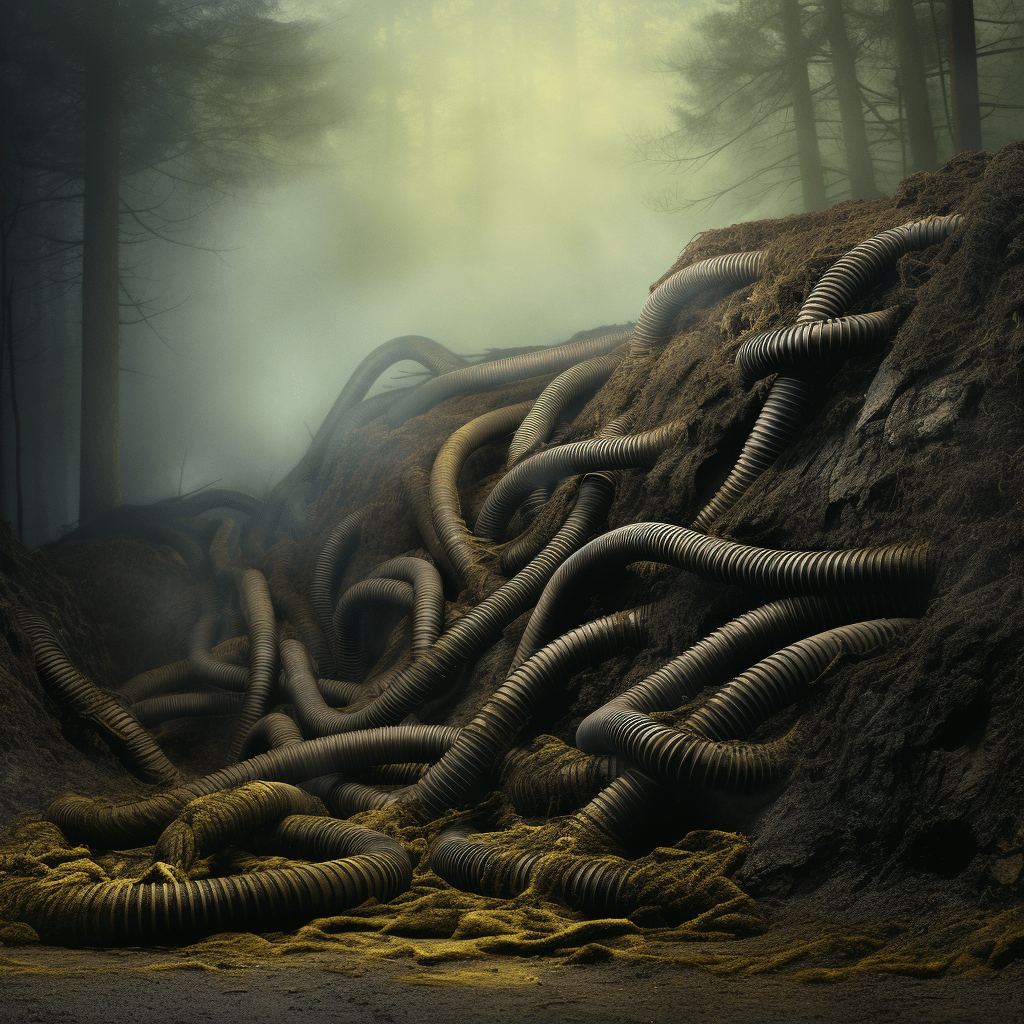
There is a fascinating world around us, teeming with inventions that often seem to stretch the boundaries of reality. Among such remarkable concepts is the theory of self-burying hoses. On the surface, it may sound like an absurd premise—how could a hose, presumably for watering purposes, possibly have the ability to bury itself? Yet, as we delve deeper into this peculiar hypothesis, one cannot help but be intrigued by the plausible mechanisms and supporting evidence.
The Concept of Self-Burying Hoses
The idea of self-burying hoses arises from the realm of advanced gardening and landscaping technologies. Imagine a system where hoses used for irrigation purposes are designed to automatically embed themselves underground. No manual labor, no need for digging up trenches in your beautiful garden. All you need is to place the hose on the ground, and it takes care of the rest.
Technology Behind the Phenomenon
This self-burying behavior could be potentially powered by an intelligent design amalgamating robotics, AI, and materials science. The outer layer of the hose could be embedded with small, AI-controlled, robotic mechanisms that could ‘crawl’ or ‘drill’ their way into the ground. The exact motion and speed could be dictated by the hose’s AI, which would also possess sensors to avoid obstacles and ensure proper alignment.
Supporting Evidence
While self-burying hoses may sound like science fiction, there is a range of existing technologies that provide compelling evidence for this concept’s feasibility. First off, we have the realm of soft robotics. Soft robotics deal with constructing robots from highly compliant materials, similar to those found in living organisms. In fact, robotic snakes, which can traverse a variety of terrains, including burying themselves in sand, have already been developed, lending credence to the possibility of a self-burying hose.
Next, the concept of smart materials or programmable matter comes into play. These are materials with the ability to change their physical properties (shape, density, moduli, conductivity, optical properties, etc.) in a programmable fashion, based on user input or autonomous sensing. Implementing smart materials into the design of the hoses could facilitate the self-burying process.
Potential Benefits
If self-burying hoses could be realized, they hold the potential to revolutionize landscaping and gardening. It could drastically reduce the labor, time, and complexity involved in installing underground irrigation systems. Additionally, they could play a vital role in water conservation by reducing evaporation losses, thereby contributing to more sustainable gardening practices.
Critics and Skepticism
Despite the interesting premise and supporting evidence, the idea of self-burying hoses does have its critics. Some argue that the technological requirements—particularly the AI and robotics—are too complex for such a practical application. Additionally, skeptics point out the potential for mechanical failure and the difficulty in maintenance if the hoses are to malfunction while underground.
Conclusion
While the concept of self-burying hoses may sound fantastical, it is, after all, the seemingly impossible ideas that often pave the path for groundbreaking inventions. With the rapid advancements in robotics, AI, and materials science, the idea of a hose that can burrow itself might not be as far-fetched as we think. Whether this concept will become a reality is yet to be seen, but the possibilities it presents make it a compelling subject for further exploration and research.
 Wondergressive