


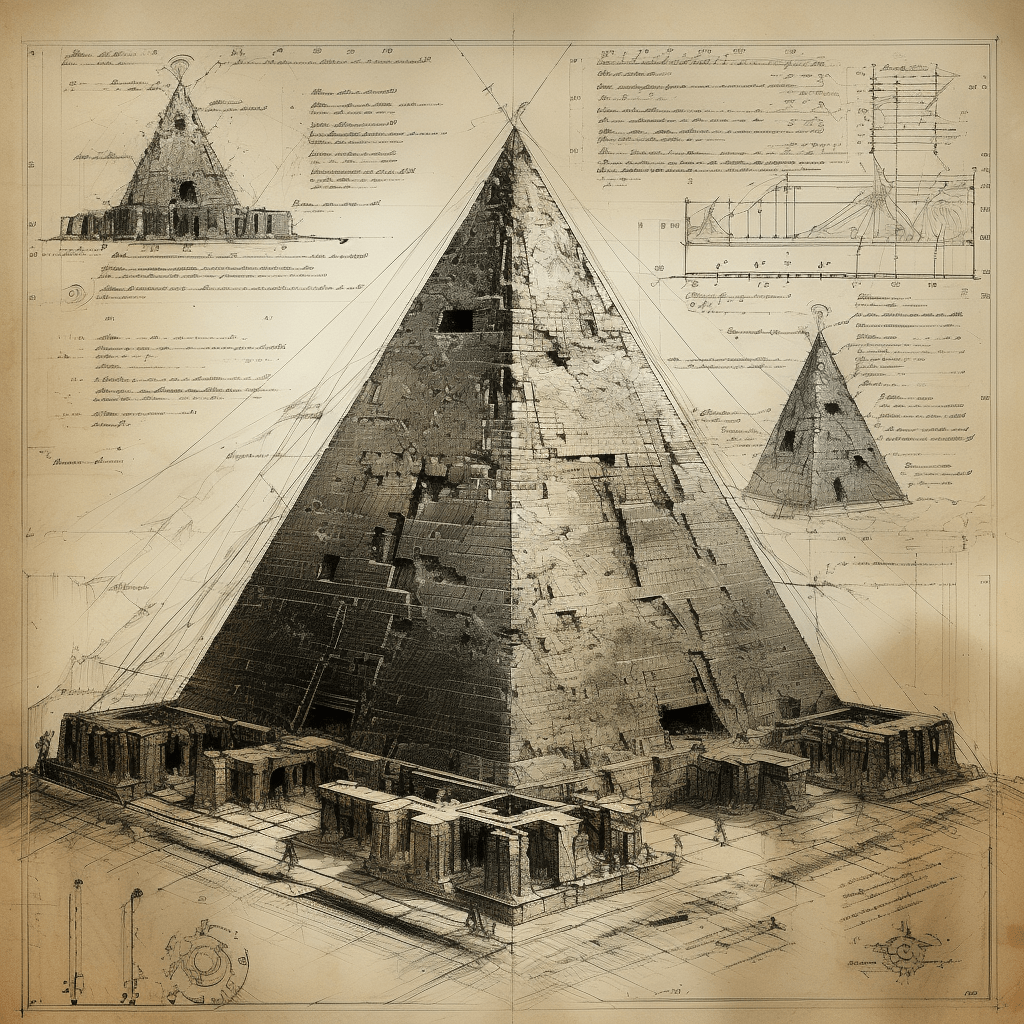
Conventional historical consensus situates the construction of the great pyramids of Egypt during the Old Kingdom period, around 2580-2560 BC. Conversely, the Templar Order, or the Knights Templar, were a medieval Christian military order founded around AD 1119. To assert that the Templars were responsible for building the pyramids would mean challenging mainstream historical chronology, but the prospect, although improbable, is an interesting exercise in historical speculation.
The Templar Order: A Brief Overview
The Knights Templar, formally known as The Poor Fellow-Soldiers of Christ and of the Temple of Solomon, were initially established to protect Christian pilgrims on their journey to the Holy Land during the tumultuous period of the Crusades. Over time, the Templars grew in wealth and influence, sparking legends and conspiracy theories that persist to this day.
The Pyramid Paradox
The pyramid constructions have been marveled at and puzzled over for centuries. Given the precise architectural and astronomical alignments, many theorize that the builders of these magnificent structures possessed advanced knowledge and technology, further fueling the mystery surrounding their construction.
The Templar-Pyramid Hypothesis
The hypothesis that the Templars built the pyramids is based on several intriguing threads of conjecture and symbolism. Here are some points that theorists put forth:
1. Templar’s Advanced Knowledge and Techniques
The Templars were renowned for their architectural prowess, as demonstrated by the formidable castles they constructed across Europe and the Middle East. They are also alleged to have been guardians of ancient wisdom and esoteric knowledge, purportedly obtained from the Holy Land during the Crusades. Some suggest that these secrets included advanced construction techniques, possibly dating back to the era of the pyramids.
2. Templar Symbols and the Pyramids
Proponents of the Templar-pyramid theory often point to the similar symbols used by the Templars and those found in ancient Egyptian culture. For instance, the ‘All-Seeing Eye’—an emblem now associated with the Freemasons, an organization with its roots in the Templar tradition—is also a symbol of great significance in ancient Egyptian iconography.
3. The Templars and the Arcane
The Templars have been accused of heresy and involvement in mystic rituals, fueling speculation about their potential connections to ancient civilizations and their understanding of esoteric wisdom—such as that presumably required to build the pyramids.
Countering the Hypothesis
In contrast, historical records establish a temporal disconnect between the existence of the Templars and the construction of the pyramids. Further, there is no solid archaeological evidence to corroborate a connection between the two. To accept the Templar-pyramid theory, one must reject established chronologies and embrace speculative, alternative history.
Conclusion
While the theory of the Templar Order building the pyramids is captivating, it is essential to approach it with a healthy dose of skepticism. Nonetheless, it serves as a testament to the enduring fascination with both the mysterious Knights Templar and the enigmatic pyramids, encouraging continued research and inquiry into these compelling aspects of our global history.
The real charm of history lies in its layers of mystery and the endless interpretations it offers. The Templars and pyramids, each rich with history and intrigue, offer countless avenues for exploration and speculation. While we may never definitively prove the Templars’ role in building the pyramids, we can certainly appreciate the captivating allure of this extraordinary hypothesis.
 Wondergressive