


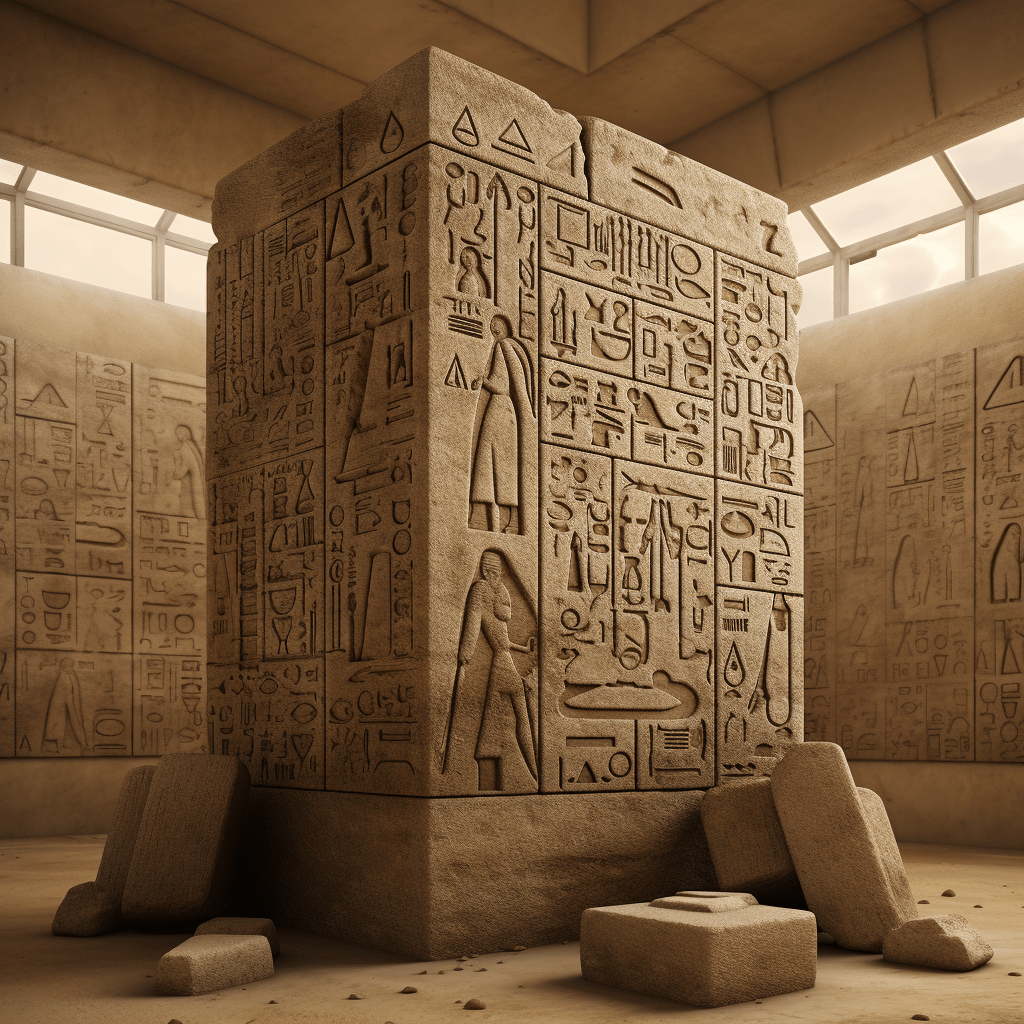
Cuneiform, one of the world’s oldest known systems of writing, originated from the ancient Sumerians of Mesopotamia over 5,000 years ago. It’s notable for its wedge-shaped marks made by a reed stylus into clay tablets. This article will explore the intriguing prospect of integrating the cuneiform language in contemporary technology, and how this fusion of ancient and modern could open up compelling avenues of exploration.
Cuneiform: A Brief Overview
Cuneiform isn’t a language but a script used by various languages, including Sumerian, Akkadian, and Hittite. It’s a system of pictographs that eventually simplified into abstract forms. Despite its complexity, cuneiform was the medium for recording everything from economic transactions to epic poetry.
Deciphering Cuneiform: A Technological Feat
Cuneiform’s decipherment in the 19th century was a significant technological achievement of its time. Scholars used comparative analysis and decryption techniques, much like those used in modern computer language decoding. This historical context underscores the potential for cuneiform’s interaction with modern technology.
Cuneiform in Digital Humanities
Today, the digitization of cuneiform tablets provides a perfect intersection of ancient scripts and modern technology. The Cuneiform Digital Library Initiative (CDLI) is a notable project, compiling an extensive digital library of cuneiform texts. This effort allows scholars worldwide to access, study, and translate these ancient records, highlighting technology’s role in preserving and disseminating knowledge.
Cuneiform and Cryptography
The principles of cryptography—essential for secure communication in today’s digital world—are not far removed from the processes of deciphering ancient scripts like cuneiform. It’s intriguing to think of cuneiform symbols used as cryptographic keys or in steganography (hiding messages within other information), adding another layer of complexity and security.
Cuneiform as a Programming Language?
The idea of cuneiform as a programming language may seem far-fetched, but it’s not entirely implausible. The first programming languages were assembly languages, very low-level systems of simple commands and operations. Considering that cuneiform was used to record complex systems of laws, treaties, and mathematical equations, it’s conceivable to devise a system where cuneiform symbols represent specific computing operations.
This venture would not aim for practicality—modern programming languages are undeniably more efficient. Instead, it would serve as an intellectual exercise and a tribute to humanity’s first steps into written communication.
Cuneiform in Design and Aesthetics
From a design perspective, the unique aesthetic of cuneiform inscriptions can serve as inspiration for digital artwork, fonts, and user interface elements. Digital platforms could use stylized cuneiform symbols as unique design elements, creating a blend of ancient and modern aesthetics.
Challenges and Considerations
Despite its intriguing possibilities, integrating cuneiform into technology isn’t without challenges. It involves complex tasks of translation, symbol recognition, and contextual understanding. Also, considering cuneiform’s cultural and historical significance, it’s crucial to approach its use with respect and sensitivity.
Conclusion: An Intersection of Past and Future
Using cuneiform in modern technology represents more than a quirky blend of the ancient and the contemporary. It’s a testament to human communication’s longevity and adaptability, showing that even a millennia-old script can find a home in the digital age. From digital humanities to cryptography and design, the incorporation of cuneiform into technology opens up a captivating dialogue between our past and future.
 Wondergressive