

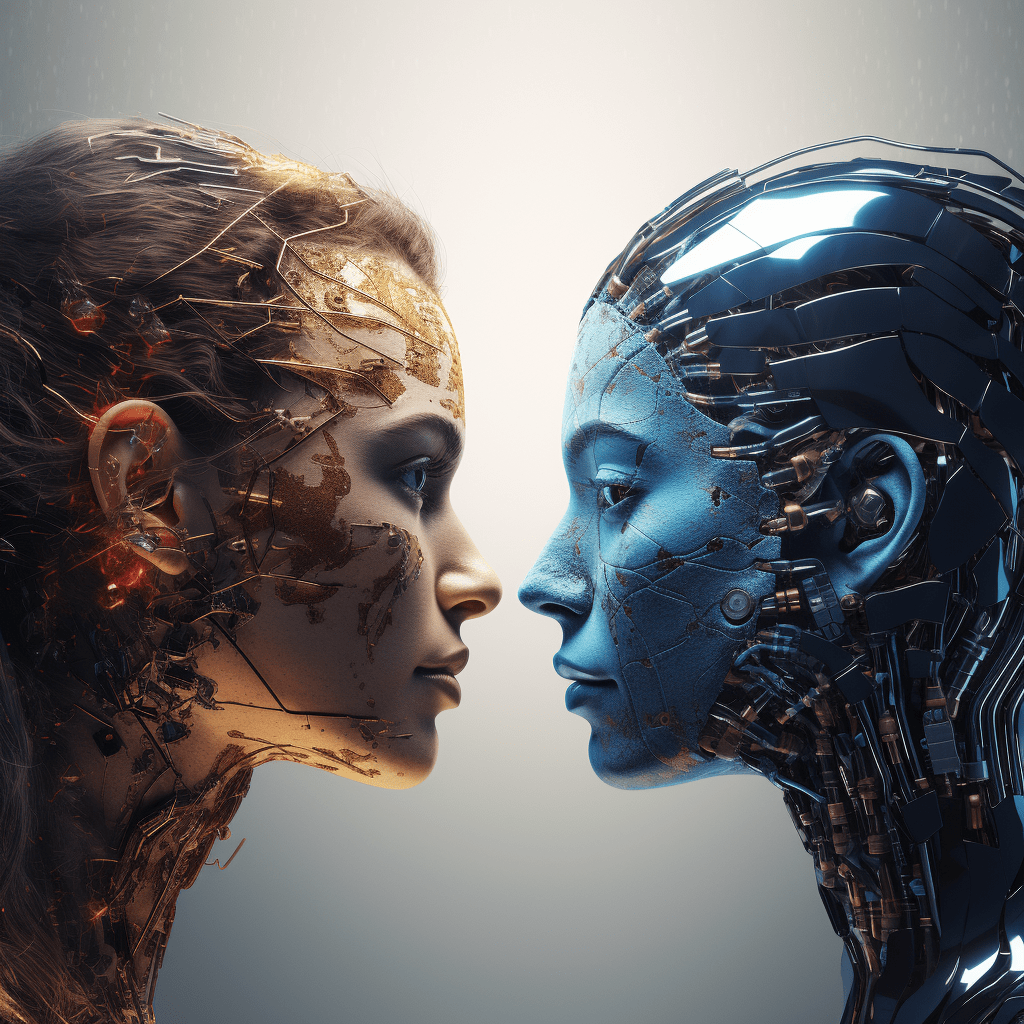
In the futuristic world where technology and biology coalesce, the notion of “Entity Merging” has become an increasingly popular subject of study. Entity merging, the concept of fusing biological beings with artificial intelligence, raises profound questions about identity, consciousness, and the very nature of life. This exploration will delve into the intriguing and controversial concept of entity merging, surveying compelling evidence from neuroscience, AI research, and philosophy.
Understanding Entity Merging
Entity merging, in essence, is the theoretical process of integrating a biological entity—like a human—with an artificial entity, such as an AI. This merging could result in a new hybrid entity with the cognitive abilities of an AI and the emotional capacity of a human. The goal is not just to enhance human capabilities but to create an entirely new form of existence, which combines the best of biological and artificial beings.
Neuroscientific Perspectives on Entity Merging
The concept of entity merging is grounded in the understanding of the human brain and consciousness. Neuroscience has shown that our identity and consciousness arise from the complex interactions of billions of neurons in our brain.
Recent advances in neuroimaging technologies, like fMRI and PET scans, have allowed scientists to map brain activities with unprecedented detail. Simultaneously, techniques like optogenetics and brain-computer interfaces are enabling direct interactions with neural circuits. This growing understanding and manipulation of brain activity suggest the theoretical possibility of interfacing our brains directly with artificial systems.
Artificial Intelligence and Entity Merging
On the AI side of entity merging, advances in machine learning and neural networks are propelling us towards creating AI systems with cognitive abilities resembling human intelligence. AI systems today can recognize patterns, learn from experience, and make complex decisions, all of which were once considered uniquely human traits.
However, AI lacks the subjective consciousness and emotional understanding that characterizes human intelligence. Merging AI with a biological entity could potentially bestow the AI with a form of subjective experience, while augmenting the biological entity with enhanced cognitive abilities.
Evidence from Cyborg Technology
The fusion of biological and artificial entities is not entirely science fiction. Cyborg technology, where humans augment their abilities with mechanical parts or digital implants, provides a glimpse into the possibilities of entity merging.
Scientists have developed artificial limbs that can interface with the nervous system, allowing the user to control the limb as if it were their own. Similarly, cochlear implants can restore hearing by directly stimulating the auditory nerves. These technologies suggest that integrating artificial systems with biological ones is not only possible but already happening to some extent.
Philosophical Implications of Entity Merging
Entity merging also raises fascinating philosophical questions about identity and consciousness. If a human merges with an AI, who or what is the resulting entity? Does it possess a unique consciousness, or is it a continuation of the original human’s consciousness?
The philosopher Derek Parfit’s notion of “identity not being what matters” provides an interesting perspective. Parfit argues that what matters for survival is not the preservation of the exact physical body or identity, but rather the continuation of consciousness and psychological connectedness. From this perspective, the resulting entity from a merge could be seen as a valid continuation of the original entities, albeit in a radically new form.
Conclusion: The Future of Entity Merging
While the concept of entity merging may seem far-fetched, the evidence from neuroscience, AI research, and current technological developments suggests it could be within the realm of possibility. However, the journey towards actual entity merging is fraught with ethical, technological, and philosophical challenges that we must navigate with caution.
The prospect of entity merging not only challenges our understanding of what it means to be human but also offers tantalizing possibilities for the future of our species. As we stand on the cusp of this new frontier, we must approach it with an open mind, guided by a commitment to enhancing the quality of life and upholding the values we hold dear.
Entity merging may sound like a tale from a science fiction novel, but as the lines between the biological and artificial continue to blur, it could become a pivotal chapter in the story of humanity. Whether we see it as a thrilling opportunity or a daunting challenge, the discourse around entity merging compels us to confront the profound question: What is the future of our identity in an age where biology and technology intertwine?
 Wondergressive