


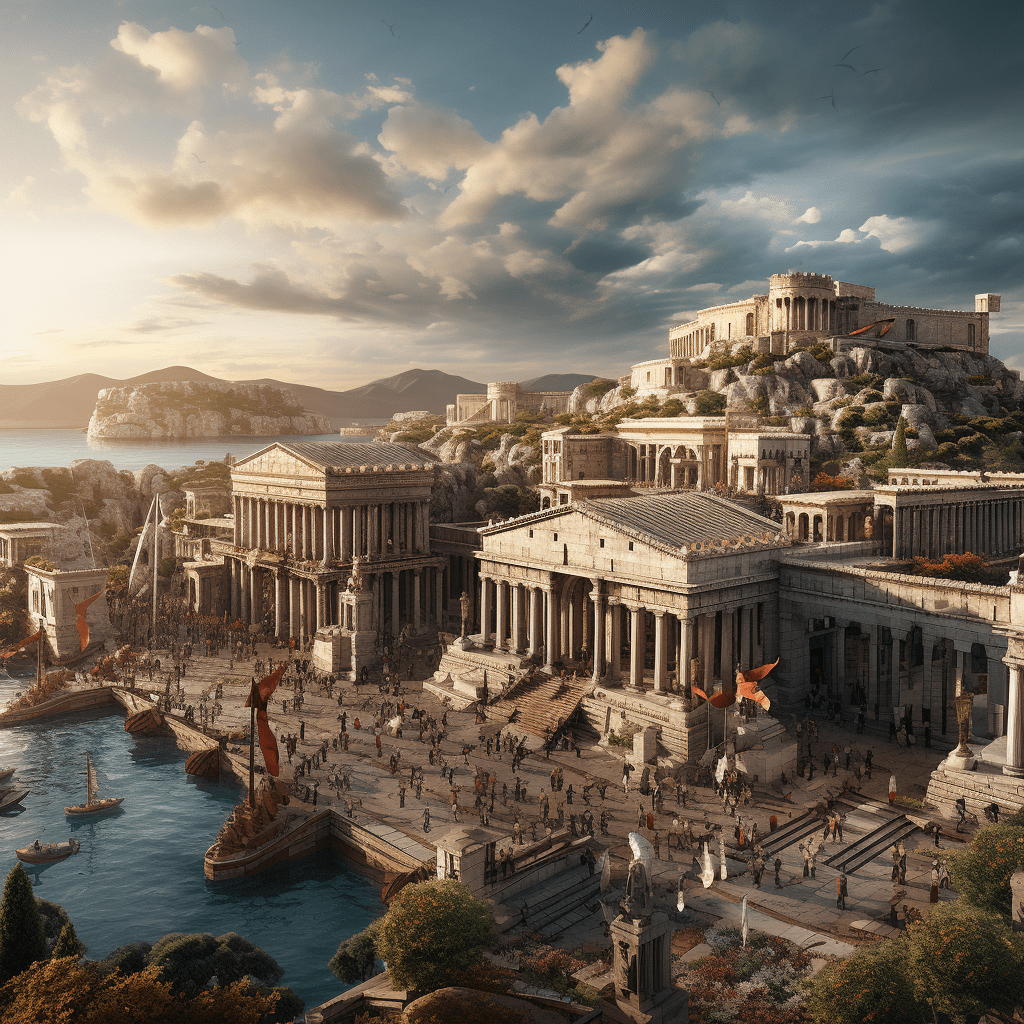
Have you ever wondered whether the great Roman Empire truly fell? What if the empire’s influence never ended but continued to reign across the globe? This article will explore the compelling theory that the Roman Empire, in various forms, might still exert control over the world today.
II. The Historical Legacy of the Roman Empire
The Roman Empire’s influence on today’s world is undeniable. The empire’s legal system, architecture, language, and culture continue to shape societies worldwide. But could it be possible that the Roman Empire’s power persisted beyond these cultural and institutional influences?
III. The Theory of Roman Continuity
Proponents of the Roman Continuity Theory argue that the Roman Empire never really fell. Instead, they assert it merely adapted and transformed over centuries. The Roman Catholic Church, centered in Rome, and later, the Holy Roman Empire, are seen as continuations of the Roman state. They argue that these institutions maintained Roman legal, political, and cultural practices, extending the Empire’s influence into the present day.
IV. The Role of the Catholic Church
The Catholic Church, with its seat of power in Vatican City, Rome, has been a significant global influencer for centuries. This theory suggests that through the church, the spirit of the Roman Empire continues to command a profound sway over world affairs. The Latin language, Roman law, and even the idea of a “pontiff” or “pope” are all carried over from the Roman Empire to the Catholic Church.
V. The Holy Roman Empire: A Revival of Rome?
The Holy Roman Empire, a political entity that existed in Europe from 800 to 1806 AD, considered itself a continuation of the Roman Empire. While it was neither holy nor Roman, this alliance of regions and duchies under a Holy Roman Emperor perpetuated the notion of a united European state, a concept rooted in the Roman Empire.
VI. The Influence on Modern Political Systems
The theory also points out that modern political systems, particularly in the Western world, borrow heavily from Roman governance. The concept of republicanism, civil law, and even architectural symbolism in government buildings all harken back to Rome, suggesting a continuous thread of Roman influence.
VII. Critiques and Counterarguments
Critics argue that the Roman Continuity Theory overlooks significant cultural and historical shifts and reduces complex global power dynamics to an oversimplified narrative. While the Roman Empire undoubtedly influenced subsequent societies, they suggest that equating this influence with direct rule is a stretch.
VIII. Conclusion
While the theory that the Roman Empire still rules the world is captivating, it remains controversial and speculative. Yet, the idea prompts us to consider how empires’ legacies persist and shape our contemporary world in often subtle and overlooked ways. As we uncover the strands of history that connect us to Rome, we can gain a deeper understanding of our own societies and the forces that have shaped them.
 Wondergressive