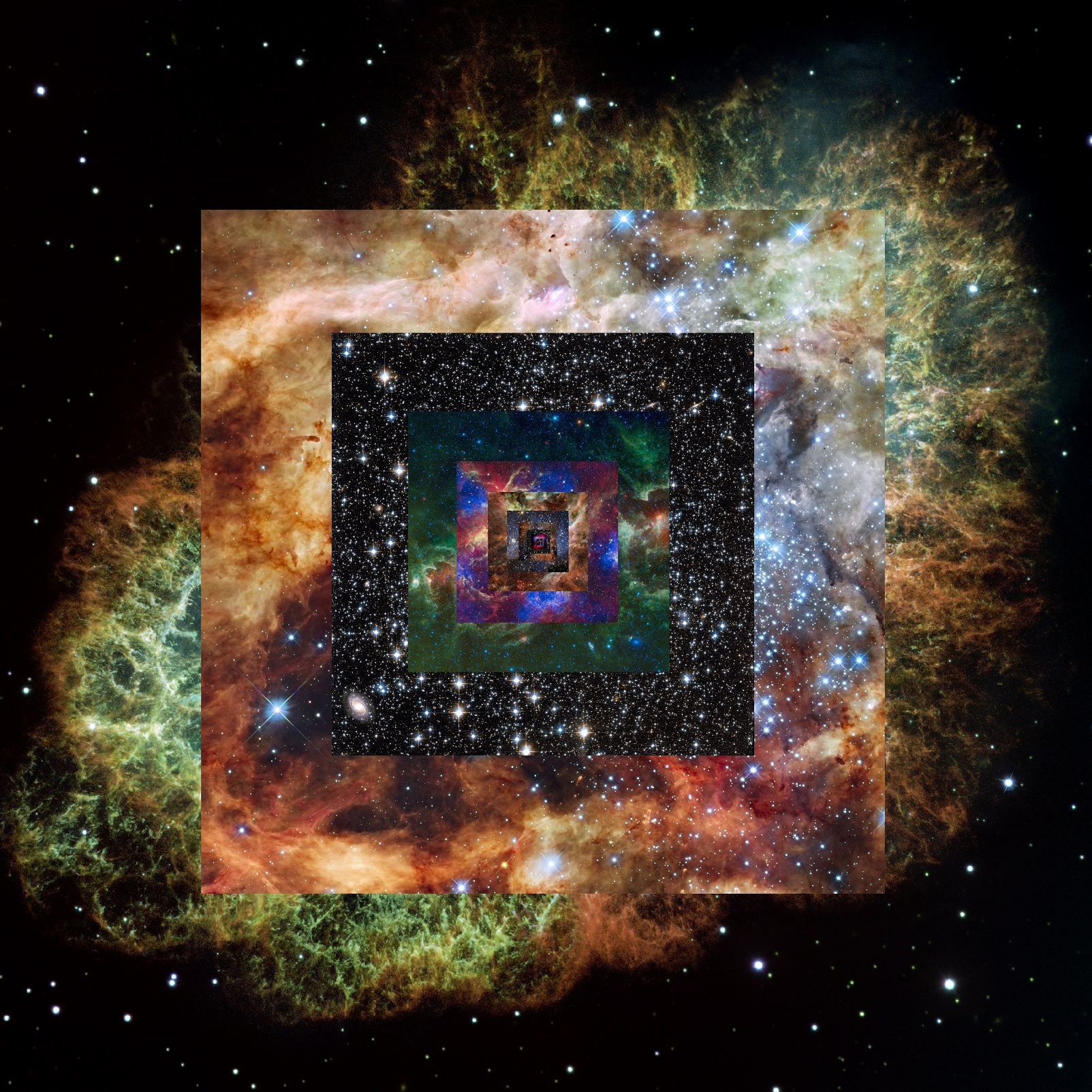



Since the dawn of human civilization, the need for order and understanding has driven our species to create complex systems, philosophies, and theories that govern our perception of reality. We’ve developed religions, political systems, and scientific models, all in a bid to make sense of the world and to gain some semblance of control over it. Conspiracy theories, in particular, have been a tool used to attribute hidden motives and clandestine operations behind the seemingly unexplainable events. But what if the truth is simpler and more disconcerting than we might want to believe? What if no one is actually in control, and we’re simply trying to create a narrative in the face of pure, undirected chaos?
The Nature of Chaos
Chaos Theory, a branch of mathematics, demonstrates how complex and unpredictable outcomes can result from simple systems. It’s the proverbial butterfly flapping its wings in Brazil and causing a tornado in Texas. The world’s systems are interconnected in ways that are too intricate and delicate for us to fully understand or predict. This inherent unpredictability might be a more accurate reflection of reality than our conjectures of shadowy figures pulling strings from behind the scenes.
The Search for Patterns: Apophenia and Pareidolia
Humans are pattern-seeking creatures. It’s in our nature to find patterns, connections, and meanings where none may exist. This can lead to apophenia, the perception of connections and meaningfulness in unrelated things, and pareidolia, the tendency to interpret vague stimuli as something known to the observer, such as seeing faces in clouds. This inclination is often a driving force behind conspiracy theories, as we search for an ordered structure amidst chaos.
Confirmation Bias: Reinforcing the Illusion
Confirmation bias further feeds into the creation of conspiracies. It’s the tendency to search for, interpret, favor, and recall information that confirms our pre-existing beliefs while ignoring or dismissing information that contradicts them. We seek evidence that supports our theories and dismiss the rest as part of the conspiracy, thus reinforcing our belief in a controlled order.
The Science of Complexity: Embracing Uncertainty
As our understanding of the universe expands, we are learning to embrace complexity and uncertainty. Quantum mechanics, for instance, operates on probabilities rather than definitive outcomes. On the grandest scale, the cosmos itself appears to be subject to random quantum fluctuations, creating an infinite array of universes with different laws of physics – the multiverse hypothesis.
The Freedom of Chaos: Implications for Society
If we were to accept that the world is not run by a hidden cabal but rather is a result of chaotic systems and randomness, we might be able to focus more on tangible issues. Instead of speculating about hidden motives and shadowy organizations, we could work together to address socio-economic inequality, environmental issues, and other real-world problems.
Conclusion: The Beauty of Chaos
The theory that no one is in control and the world is just chaos might initially seem frightening. But in a way, it’s liberating. It means that every individual’s actions can potentially have far-reaching effects, just like the butterfly causing a tornado. Perhaps by embracing the chaos and our role within it, we could direct our energies toward constructive change rather than imagining an order that doesn’t exist.
 Wondergressive