


Fiction as a Warden’s Ruse
Fans devour Stephen King novels for thrills, chills, and cathartic relief when evil is finally banished. But what if the true function of those pages is not entertainment, but containment? A covert network of folklorists, occult archivists, and rogue editors argues that King is less an author than a living seal-master. Each tale, from It to The Mist, serves as a sigil matrix—an ink-and-paper prison binding entities that once stalked New England forests, haunted sewer lines, or gorged on psychic pain across entire counties. Publishing the story is the final lock-turn; every copy sold dilutes the creature’s field, keeping it trapped in narrative form.
The “Castle Rock Clause” and Hidden Legal Armor
In 1973 King’s first major contract with Doubleday included an odd non-literary addendum—pages of dense boilerplate granting the author veto power over cover art fonts, paper stock finish, even ink blend ratios. Industry veterans scoffed, but deciphered through an esoteric lens, these specs read like ritual recipe: acid-free lignin to stabilize sigils, specific cyan densities to damp astral bleed-through, and serif choices tuned to Hebrew gematria values that neutralize fear-based entities. Later contracts copy-pasted the clause under benign headings like “brand integrity,” disguising alchemical locks as marketing minutiae.
Bangor’s Occult Triangulation Grid
Drive Maine’s Route 2 at night and cell reception flickers precisely where three King landmarks—Derry (Bangor), Castle Rock (Dexter), and Jerusalem’s Lot (Mapleton analog)—form a near-equilateral triangle. Plot that on ley-line maps and you’ll find an energy sink beneath Penobscot River bedrock. Locals report auroras dipping south during King book tours, evidence the grid drains excess entity charge whenever new editions roll off presses. The more readers mentally inhabit these towns, the thicker the psychic insulation around their real-world counterparts.
Pennywise: The Archetypal Jailbreak Test
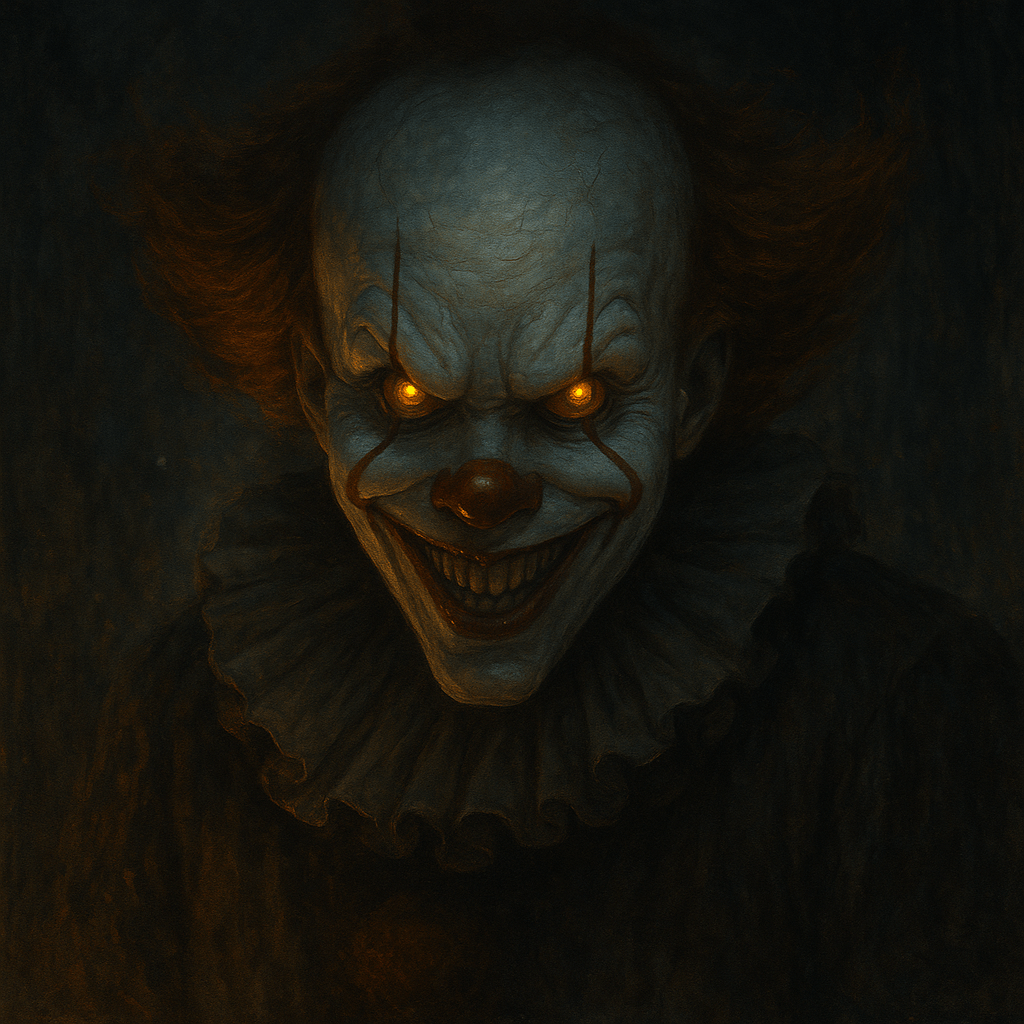
It chronicles a shape-shifting clown that feasts on children’s fear every 27 years. Newspapers confirm clusters of 1958, 1985, and 2012 disappearances around actual Bangor storm drains. After the novel hit shelves in 1986, incident rates plunged. Parapsychologists suggest the text not only explains Pennywise’s feeding cycle but lures the entity into a memetic trap: by universalizing its form—red nose, balloons, sewer grate—the story disperses its singular horror into a billion Halloween costumes and GIFs, starving the core. Viral memes aren’t fandom; they’re containment foam.
The Constant Reader Ritual
King famously calls loyal fans “Constant Readers.” Occult theorists interpret this literally: the act of re-reading activates periodic sigil refreshes, preventing wards from fading. Special editions with new forewords are not recycling cash grabs; they’re ritual renewals embedding updated binding runes informed by reader feedback. Each highlight on an e-reader, each audiobook replay, pumps fresh psychic varnish onto the cell walls of the monster realm.
The Dark Tower as Master Seal
At the center of King’s multiverse stands the Dark Tower, around which all stories orbit. Its metafictional gunslinger, Roland, blurs author-character lines, symbolizing the warden who never rests. Scholars note that whenever sales lagged—late 1990s, mid 2010s—King returned to the Tower saga, patching cracks that threatened to let collateral nightmares seep out. The Tower books splice every prior villain into one cosmology, tightening cross-bindings. Critics call it self-indulgent; adepts call it plug-repair.
Publishing Schedule as Containment Calendar
King’s annual or semi-annual release cadence mirrors lunar eclipse cycles and ancient Babylonian exorcism tables. Rare gaps align with periods of personal trauma—his 1999 van accident, for instance. During that gap, East Coast hospitals documented surges in sleep-paralysis demon sightings. Coincidence? Or the effect of wards weakening without new text infusions? Once Dreamcatcher hit shelves, reports normalized. The event suggests King’s output isn’t artistic hustle but emergency maintenance.
Hollywood Adaptations—Celluloid Backup Drives
Film and TV rights ensure monster prisons survive obsolescence of paper. Each adaptation etches containment sigils into electromagnetic spectra: digital files, streaming codecs, even VHS magnetic lattices. Bombard a demon’s resonance with enough formats and you scatter its waveform like white noise. Flop or hit doesn’t matter; the ritual completes when the first frame flashes. Remakes every decade? That’s not brand synergy—it’s scheduled re-encryption.
Misfires and Red Warnings
2013’s Under the Dome TV series deviated wildly from the novel; mid-season, Maine experienced record-high atmospheric pressure cells mirroring the fictional dome. Meteorologists baffled, King allegedly furious. The lesson: botched adaptations create echo leaks, partially freeing entities. Notice how swiftly the show was canceled and rights reverted, allowing a rumored King-approved graphic novel reboot—another sealant layer.
Your Role as Co-Warden
Each purchase, library checkout, or pirated PDF (yes, even that) unwittingly enlists you in the containment guild. By witnessing the horror through narrative framing, you transmute raw terror into processed fiction—psychic hazardous-waste turned inert story. Annotate margins, post fan theories, craft cosplay; every derivative work smears additional glyph-dust on the prison doors. The only risk? Abandoning the stories. A forgotten monster regains mass.
 Wondergressive