


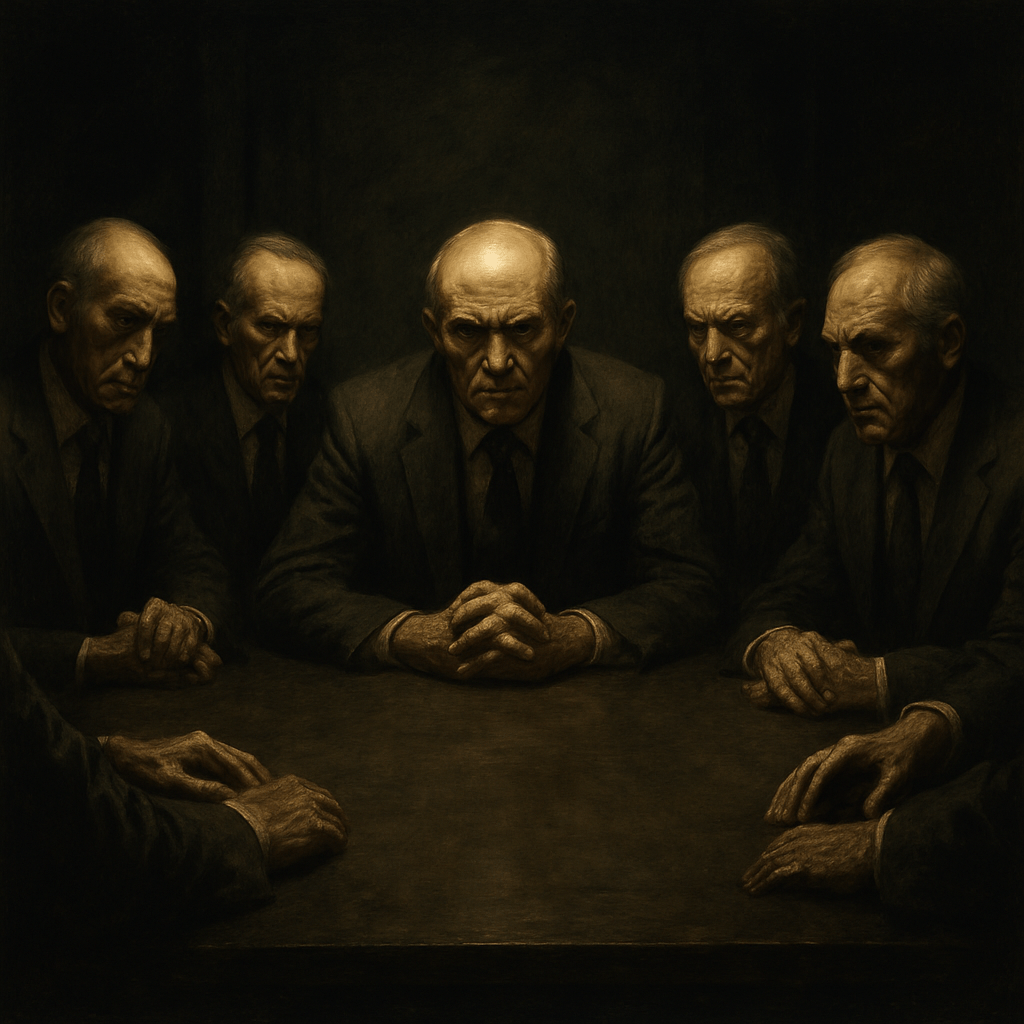
A Hotel in Oosterbeek and the Birth of a Shadow Cabinet
When 120 politicians, financiers, and industrialists slipped into the Bilderberg Hotel in the Netherlands in May 1954, newspapers described a harmless “Atlantic discussion forum.” But recently declassified CIA briefings confirm the meeting was designed as a quasi-official steering committee for post-war Western power—seed-funded by U.S. intelligence and chaired by Dutch royalty to keep it off Capitol Hill’s radar. The experiment worked so well that the gathering became an annual ritual, migrating from one luxury fortress to the next while its guest list quietly synchronized foreign policy, interest-rate strategy, and media narratives across two continents.
How the Invitation List Became a Remote-Control for Governments
Unlike Davos, the Bilderberg conference does not accept applications; you are selected. Each winter a 30-person Steering Committee draws up the roster, balancing the old guard (central-bank governors, NATO chiefs) with “promising newcomers” harvested from the World Economic Forum’s Young Global Leaders pool. The chosen 120–150 elites receive a plain letter, a codename for hotel check-in, and a stern reminder of the Chatham House Rule: reveal any information gleaned in the room and exile is permanent.
Yet every spring a sliver of the guest list leaks, and analysts watch careers skyrocket:
- Emmanuel Macron attended 2014’s Copenhagen summit as an obscure investment banker; two years later he was France’s economy minister and shortly after that its president.
- Mark Rutte, tapped for Bilderberg 2009, became Dutch prime minister within twelve months—and in 2025 rose to NATO’s top job after another Bilderberg appearance.
- Stacey Abrams showed up in Madrid 2024, and within weeks she was floated as a frontrunner for U.N. ambassador should the next Democratic administration prevail.
These “Bilderberg bounces” happen too often to dismiss as coincidence. Membership is not reward for power; it is a receipt that power has been granted.
The Sealed Agendas That Always Seem to Materialize
Each gathering issues a three-line public agenda (“Ukraine, AI, Climate”) so vague it borders on parody. Insiders say the real schedule is delivered orally in a pre-dawn “Alpha Brief” to sub-groups of bankers, energy CEOs, media magnates, and defense ministers. By summer, the world’s headlines invariably echo those talking points:
- 2013’s hidden theme “Digital Dragnet” preceded the GCHQ–NSA data-sharing expansion leaked by Snowden.
- 2017’s focus on “Monetary Normalization” was followed months later by the first synchronized rate hikes across the Fed, ECB, and Bank of England since the crash.
- 2024’s hush-hush session on “Regulating Generative AI” was mirrored weeks later in identical EU, U.K., and White House executive-order drafts.
If Bilderberg were merely a debate society, its predictions would sometimes miss. They don’t.
Intelligence Agencies: The Quiet Chaperones
According to CIA staff notes released under FOIA, the Agency began embedding “Observer Liaisons” at Bilderberg in 1955. MI6 and Mossad soon followed. Their job is twofold:
- Security – sweeping suites for bugs, managing no-fly zones over the venue, and screening kitchen staff for leaks.
- Harvest – collecting candid admissions from drunk finance ministers and CEOs who believe they’re safe behind the Rule of Silence.
The payoff? A real-time map of elite consensus—priceless for planning coups, trade treaties, or currency interventions. Little wonder CIA cables labeled the meeting an “indispensable HUMINT pipeline.”
Media Gatekeepers on a Short Leash
Editors-in-chief from The Economist, Washington Post, and Financial Times attend each year—but are bound not to report. When low-level reporters try, they hit invisible fences: press passes revoked, security teams confiscate cameras, mainstream outlets kill the story as “conspiracy bunk.” Ironically, journalists who break the silence (usually freelancers) find their Google rankings throttled, their YouTube channels demonetized, and their Twitter accounts flagged for “disinformation.” The very editors sworn to inform the public become the meeting’s first line of defense.
The 2025 Stockholm Summit: What We Know
Next June’s venue is Stockholm, Sweden. Flight manifests leaked by an airport ground crew list the usual suspects—BlackRock’s Larry Fink, Microsoft’s Satya Nadella, NATO’s Jens Stoltenberg—but also a novelty: OpenAI’s entire policy board. Pair that with the rumored agenda item “Synthetic Cognition Governance,” and it appears the group will draft global AI red lines before any electorate has a say. Joining them are ECB president Christine Lagarde and two Saudi ministers—a sign the petrodollar/AI nexus is on the table.
Bilderberg’s Private “Rapid Response” Portfolio
One overlooked feature is the contingency note—a sealed envelope each attendee receives before departing. Inside: talking points, hedge-trading signals, and reputational-damage protocols in case the year’s plan hits turbulence. When the 2008 crash detonated, these cheat sheets let insiders short mortgage giants weeks in advance. In 2020, while the world panicked over supply chains, Bilderberg alumni were quietly re-routing rare-earth contracts through Norway and Canada, cushioning their industries against China’s lockdowns.
The Price of Saying No
Dutch prime minister Joop den Uyl skipped Bilderberg 1975 and soon faced a multi-front political scandal that forced his coalition’s collapse. British Labour leader Jeremy Corbyn famously mocked Bilderberg in 2015; within months his own MPs revolted, aided by a media blitz that dredged up decades-old controversies. The lesson isn’t subtle: invitations are offers you can’t refuse.
Why Secrecy Persists in the Age of Leaks
Digital culture should have cracked Bilderberg long ago. Yet the group survives because it sits at the crossroads of three protective layers:
- Diplomatic Immunity – Ministers travel on state passports; their luggage and laptops are legally untouchable.
- Private-Property Shield – Hotels are locked down as “private events,” blocking freedom-of-press challenges.
- Algorithmic Camouflage – Social media platforms label Bilderberg content as low-authority, burying it beneath celebrity gossip.
Leak one memo and a thousand fact-checker pieces bloom calling it fake; by the time the public sorts truth from spin, policy has already shifted.
What Happens if the Curtain Falls
Imagine the raw minutes from just one year became public—revealing which journalists agreed to spike stories, which senators green-lit new wars, which CEOs plotted data-harvesting laws. Electoral revolts would follow, markets would crater, and multiple NATO governments would fall under corruption probes. The very fear of such upheaval ensures every attendee is personally invested in permanent secrecy.
The Invisible Hand That Signs the Decrees
Bilderberg defenders claim the meeting is a harmless talk-shop. History, leaked rosters, and uncanny policy synchronicities scream otherwise. Until cameras roll inside those gilded ballrooms and transcripts hit public servers, citizens can safely assume that our “open societies” are steered each spring in smoke-free rooms we are not allowed to enter. Next June, while headlines gush over Swedish pastries and security cordons, remember: the menu is your future—and you’re not invited.
 Wondergressive