


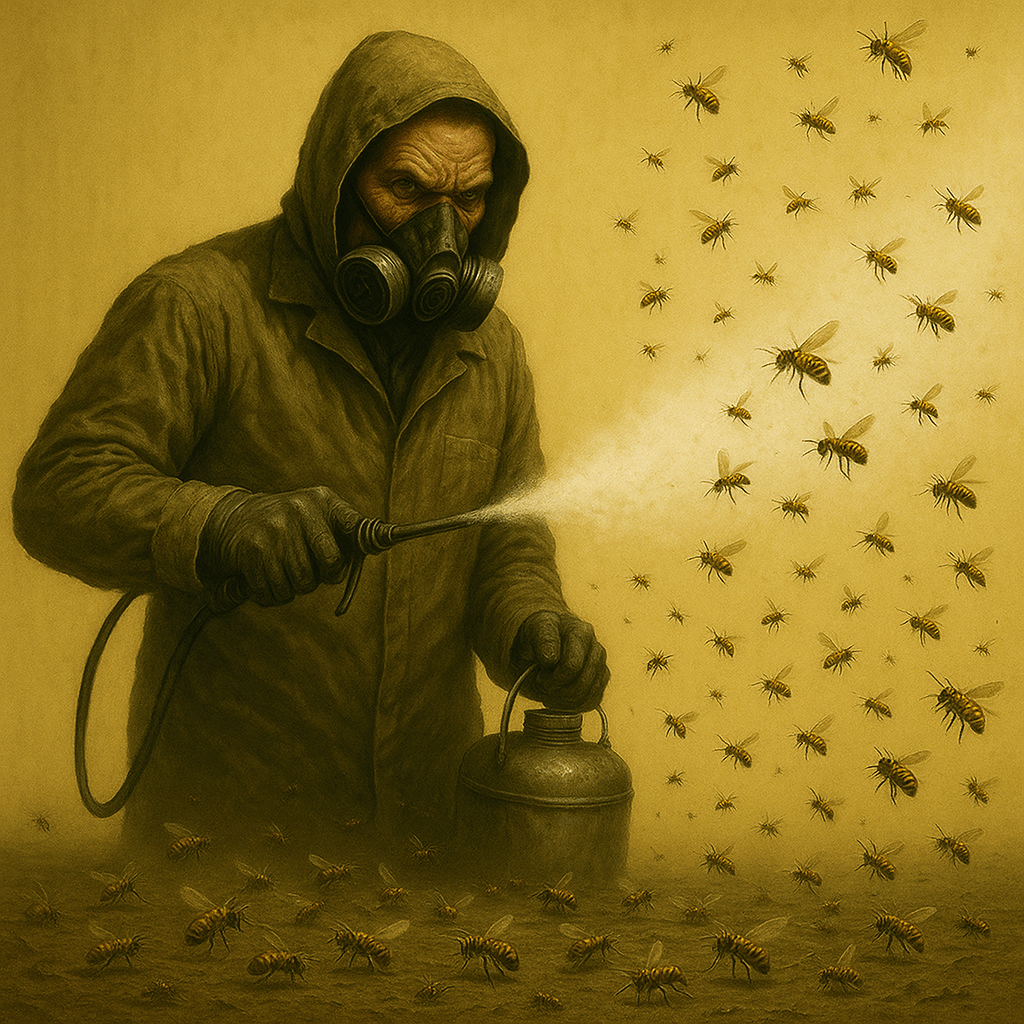
The Hidden Hand Trimmed in Green
Drive through any suburb on a spring morning and you’ll find the same tableau: armored trucks emblazoned with leafy logos, crews in earmuffed helmets revving two-stroke blowers, and perfectly edged lawns glowing a uniform neon green. Behind this manicured veneer lurks a coordinated assault on native pollinators—bees, butterflies, moths, solitary wasps—that sustain one-third of the human food supply. Landscaping conglomerates, backed by chemical titans and turf-grass lobbies, have weaponized “curb appeal” to sterilize ecosystems, ensuring perpetual service contracts and chemical sales while sowing ecological debt we can never repay.
Aesthetic Imperialism and the War on Wildflowers
The American front yard once hosted clover, violets, and dandelions—mini meadow patches feeding honeybees and bumble queens. In the 1950s, lawn-care firms rebranded these blooms as “weeds,” equating biodiversity with neglect. Their marketing inserted itself into HOA bylaws, municipal codes, and even real-estate appraisals: a buyer’s report can downgrade a home for “unmanaged vegetation.” Overnight, diversity became deviance. Homeowners complied, dosing soil with herbicides that leave grass untouched but nuke broadleaf plants—the primary nectar sources for early-season pollinators.
The Neonicotinoid Pipeline
Enter neonicotinoids, the systemic pesticides absorbed through roots and expressed in every tissue, including pollen. Bayer, Syngenta, and Corteva market “bee-safe” lawn formulas, yet EPA incident reports show mass bumble die-offs within 48 hours of application. Landscaping crews favor neonics because a single pre-emergent drench cuts callbacks all summer, maximizing profit. Their licensing courses, often sponsored by chemical manufacturers, downplay pollinator impact as “laboratory anomalies,” despite field data showing 75 % reductions in suburban bee abundance since 2005.
Gasoline Mowers: Mobile Fumigators in Disguise
Beyond toxins, mechanical practices themselves are lethal. Rotary blades spin at 3,000 rpm, creating downdrafts that vacuum ground-nesting bees into metal decks. A University of Vermont field test counted 11 pollinator casualties per standard quarter-acre mow. Blowers blast caterpillars from host plants and aerosolize pesticide residues into breathable micro-particles. By the time a yard crew departs, the microhabitat resembles a moonscape—silent, scentless, and sterile.
Follow the Money: Fertilizer, Seed, and the Turf-Grass Cabal
Turf-grass is the single largest irrigated “crop” in the United States—three times the area of corn. The seed industry funnels billions into lobbying to keep bluegrass, fescue, and rye atop HOA recommended lists. These monoculture cultivars require synthetic nitrogen to maintain television-commercial green, locking homeowners into recurring fertilizer purchases. Native wildflower lawns, by contrast, need no feeding or watering after establishment—unsellable simplicity for the green-industrial complex. To protect their revenue stream, turf interests bankroll academic “research” that paints native lawns as tick nurseries or fire hazards, despite empirical evidence to the contrary.
Landscaping as a Gatekeeper of Property Value
Banks and insurers use landscape uniformity scores to assess risk. A homeowner who swaps sod for pollinator prairie risks devaluing neighbor properties, triggering HOA fines. In 2022, an Arizona couple faced foreclosure threats for planting milkweed to save monarchs. The HOA’s landscaping contractor had just inked a five-year deal to maintain shared turf; native plots threatened to showcase a viable alternative, jeopardizing the contract. Legal intimidation preserves the status quo, allowing companies to maintain monopolistic control over neighborhood ecology.
The Quiet Partnership With Industrial Agriculture
Here’s the darker synergy: as suburban landscapes poison pollinators, industrial farms rent hives trucked in from distant apiaries—bees already stressed by transit and disease. Every lawn that destroys local bee colonies forces farms to pay pollination fees to the same conglomerates that supply pesticides. It’s a closed-loop racket: kill the wild bees, sell chemicals, then lease replacement bees at premium rates. In California’s almond groves, pollination rentals now exceed $300 per hive—double the cost a decade ago, profits funneled back into pesticide R&D.
Government Oversight—Captured or Complicit?
State pesticide boards often consist of ex-employees from chemical and landscaping firms. When beekeepers petition for neonic bans, regulators demand “conclusive field studies,” then withhold permits for independent research sites, creating an evidence Catch-22. The USDA Pollinator Health Task Force reports nominal bee loss “plateaus,” cleverly omitting native species not covered by honeybee statistics. Meanwhile, federal conservation grants require compliance with local ordinances—ordinances written by landscaping lobbyists that mandate pesticide-dependent turf. Bureaucratic ouroboros: policy devours itself, and the pollinators stuck inside suffocate.
Signs the Pollinator Massacre Is Accelerating
- Monarch egg density on milkweed near suburban lawns has dropped 90 % since 2018.
- Rusty-patched bumblebee, once common in Chicago parks, now exists in isolated rooftop apiaries only.
- Nighttime UV surveys in Maryland reveal a trillion-lumen “desert” where moth biomass should swarm. Landscaping floodlights burn all night, disrupting nocturnal pollination loops.
- eBird data show hummingbird migration stalls at prairie restorations, skipping chemically maintained suburbs entirely.
Each metric whispers the same dirge: the neighborhood lawn is a kill zone.
Guerrilla Rewilding and the Pushback Wave
Citizen groups now stage “seed bomb” raids, tossing clay pellets packed with native flower seeds into highway medians maintained by outsourced landscapers. Bee-safe yard signs multiply, transforming social pressure into pollinator sanctuaries. Some cities, like Minneapolis, pass “No Mow May” resolutions; chemical firms counter with glossy mailers claiming untamed lawns encourage rodents. The propaganda war intensifies, but cracks show—county extension offices report 400 % uptick in requests for native seed mixes. The monoculture façade is trembling.
How Homeowners Can Break the Green Chain
- Replace 20 % of turf with pollinator strips; HOA fines are cheaper than ecological collapse.
- Demand landscaping bids specify “zero neonicotinoids” and “electric equipment only.”
- Install micro-prairie curb lawns; city crews can’t mow what looks intentional.
- Document bee activity and pesticide spray trucks—make correlation charts public at council meetings.
Every flower patch is a guerrilla cell in the war for pollinator survival.
Landscapes or Lifescapes?
Lawns were sold as symbols of prosperity; they’ve become silent graveyards for the very creatures that make food possible. Landscaping companies, in collusion with chemical cartels and turf-grass lobbyists, orchestrate a subtle genocide camouflaged as property maintenance. Reject the script. Rip up the poison carpet. Let clover bloom and bees return. In the struggle between cosmetic order and living complexity, choose life—even if it looks a little unruly at the curb.
 Wondergressive