
-
The Suburban Captivity: A Paradigm Shift

The term “captivity suburbs” may sound paradoxical or absurd at first glance. After all, the image of suburbs has long been associated with the pursuit of the American Dream – the perfect blend of comfort, security, and prosperity. However, this picturesque imagery is increasingly being seen through a different lens, one that proposes that suburban living can actually mimic a form of captivity. This intriguing theory proposes that suburban environments, once sought after for their homogeneity and safety, may inadvertently limit our experiences and development, creating a self-imposed form of captivity.
The Illusion of Freedom
A fundamental tenet of the captivity suburbs theory is the illusion of freedom it creates. Suburbs were designed with a vision of offering a piece of nature close to urban facilities, a serene space for families to grow, and the promise of freedom. However, the reality for many suburbanites is a life defined by a rigid structure, long commutes, car dependence, and a notable lack of diversity.
Consider the daily commute. A study from the University of California reveals that people with longer commutes report higher levels of stress and dissatisfaction, a key element missing from the suburban idyll. Moreover, according to a report by the U.S. Census Bureau, suburban residents are more likely to be vehicle-dependent, increasing both their carbon footprint and time spent in transit.
Social Isolation
The layout of many suburbs – single-family homes separated by large lawns and roadways – encourages separation rather than community interaction. This physical distance, combined with the hectic modern lifestyle, often fosters a sense of isolation. Although social media and digital communication have made staying connected easier, they do not replace the human connection and community spirit often found in more urban or rural environments.
Economic Constraints
Another aspect of the captivity suburbs theory focuses on the economic constraints inherent in suburban living. Despite the perceived affluence of suburbs, many residents live paycheck to paycheck, constrained by the high cost of maintaining a suburban lifestyle, including mortgage payments, car payments, and higher property taxes. This economic captivity is reinforced by stagnating wages and escalating living costs.
The Role of Urban Planning
The way forward might lie in a shift in urban planning paradigms. The “New Urbanism” movement advocates for mixed-use development, more pedestrian-friendly design, and public spaces that encourage community interaction. By creating environments that balance the needs for both private and community spaces, we may avoid the trap of suburban captivity.
Conclusion
The captivity suburbs theory posits a challenging paradox – that the suburbs, once viewed as a symbol of freedom and prosperity, could instead be a form of self-imposed captivity. While this may not hold true for everyone, it’s an essential critique that could inspire new thinking about how we design and live in our communities.
The key is balance. As urban planner and author Jeff Speck noted, “In the end, it is not about city versus suburb; it is about good places versus bad places, and there are both of those in each context. And we need to make more of the good ones.”
-
The Great Electronic Conspiracy: A Web of Hidden Signals

In the past century, our world has been swept into an electronic age that has completely transformed our everyday lives. From the smartphone you use to read this article to the microwave you use to heat your food, electronic devices are an inescapable part of our existence. But is there more than meets the eye when it comes to our interaction with these devices? The theory of the great electronic conspiracy suggests that there is an intricate web of control and manipulation associated with our use of electronics. In this article, we delve deep into the labyrinth of this conspiracy, assessing the possibility of its existence.
Unmasking the Invisible Control
The theory of the great electronic conspiracy posits that powerful entities use electronic devices as tools for mass control and surveillance. The evidence backing this theory ranges from the easily dismissible to the decidedly unsettling. Perhaps the most common evidence cited is the omnipresence of data collection. Each swipe, click, and keystroke we make is potentially logged and analyzed, creating a digital profile that’s as unique as our fingerprints.
Surveillance Capitalism: Profit or Control?
Surveillance capitalism, a term coined by Harvard professor Shoshana Zuboff, describes the business model where companies profit from personal data. This practice can be seen as a form of control where corporations and governments leverage data to influence our behavior subtly. From tailoring advertisements to predicting future behavior, the power of data is massive and constantly expanding.
Electronic Frequencies: A Silent Weapon?
Moreover, the theory suggests the manipulation extends beyond data collection. Some proponents claim that electronic devices emit frequencies that can affect the human brain’s functioning. In the 1970s, the U.S. Department of Defense had a project researching the impact of electromagnetic fields on human behavior, feeding into this part of the theory. While the official results were inconclusive, it opened a pandora’s box of speculation about hidden uses of technology.
The Rise of Artificial Intelligence: Friend or Foe?
The rapid advancement of AI technology adds another layer to this theory. From virtual assistants like Alexa to autonomous drones, AI’s increasing integration into our lives leaves room for potential manipulation. After all, AI algorithms learn from our data, and these systems’ recommendations can shape our decisions subtly over time.
The Counterarguments: Skepticism and Critiques
Critics of the theory often point to the logistical difficulties of implementing such a vast control system. They argue that the complexity and variance of human behavior make it impossible to control or predict accurately. Plus, they note that much of the data collection is transparent, with users willingly sharing their information.
Conclusion: A Reality Check
While the great electronic conspiracy might seem like an alarming prospect, it’s essential to approach it with a critical mind. Some elements of the theory, like data collection and surveillance capitalism, are well-documented phenomena. However, other aspects, like mind control through frequencies, lack scientific backing and veer into the realm of speculation.
Is the great electronic conspiracy a chilling reality or a reflection of our collective fear of a fast-paced, interconnected world we don’t fully understand? The jury is still out, and the answer likely lies somewhere in the middle. In the end, our relationship with electronics and the possible unseen forces behind them remains a captivating subject worthy of ongoing scrutiny.
artificial intelligence manipulation, data collection, device frequencies affecting human behavior, digital data manipulation, electromagnetic fields and behavior, electronic age control theory, electronic device conspiracy, electronic devices control, great electronic conspiracy, hidden signals in electronics, impact of AI, invisible electronic control, mind control frequencies, omnipresence of data collection, omnipresent surveillance, potential AI dangers, secret uses of electronic technology, Shoshana Zuboff, surveillance capitalism, unseen forces in technology -
Revisiting History: Unpacking the Theory that the Atom Bomb Was Never Created

In the annals of world history, few events have had the lasting impact of the creation and deployment of atomic bombs during World War II. The bombings of Hiroshima and Nagasaki by the United States in August 1945 indelibly altered the course of global politics, ushering in the Atomic Age and escalating the stakes of international conflict. But, what if this narrative, one that has held so much sway in our collective memory, isn’t true? An intriguing fringe theory suggests that the atom bomb was never actually created, and that our understanding of 20th-century history might be fundamentally flawed.
Atomic Bomb Creation – The Accepted Narrative
According to mainstream history, the creation of the atomic bomb is attributed to the Manhattan Project, a U.S. research and development initiative that commenced in 1939. The Project involved some of the best scientific minds of the time, including Albert Einstein and Robert Oppenheimer, who worked to harness the power of nuclear fission, resulting in the world’s first nuclear weapons.
The Atom Bomb Hoax Theory
The atom bomb hoax theory, by contrast, asserts that these so-called “weapons of mass destruction” never existed. Proponents suggest that the immense destructive power associated with atomic bombs was embellished or entirely fabricated by the U.S. government to intimidate other nations, particularly the Soviet Union, during the early stages of the Cold War.
Evidence Supporting the Theory
Inconsistent Blast Effects
The atom bomb hoax theory first gains credence by pointing out inconsistencies in the blast effects witnessed in Hiroshima and Nagasaki. Despite being supposedly obliterated by atomic bombs, wooden structures and paper objects surprisingly survived near ground zero, something inconsistent with our understanding of nuclear blasts.
Photographic Anomalies
Further evidence comes from photographic analysis. Some argue that many images of the bomb’s mushroom cloud were manipulated or outright fabricated, as the style and nature of the explosions do not match the expected models of a nuclear detonation.
Nuclear Radiation Levels
Another supporting argument revolves around radiation levels. Post-bombing radiation in Hiroshima and Nagasaki was reportedly much lower than predicted for nuclear detonations. Also, in subsequent nuclear tests such as those at Bikini Atoll, life returned much faster than the expected timeframe given the anticipated level of nuclear fallout, leading to questions about the authenticity of these tests.
Counterarguments and Controversies
As with any alternate historical theory, the atom bomb hoax theory has met with skepticism and outright rejection from mainstream historians and nuclear physicists. Critics argue that the evidence of atomic bomb deployment during World War II is too abundant and scientifically sound to refute, with isotopic analysis of soil and artifacts from Hiroshima and Nagasaki providing irrefutable evidence of a nuclear event.
Final Thoughts
The theory that the atomic bomb was never created challenges the very foundations of our understanding of World War II and the subsequent Cold War. While it seems improbable given the wealth of contrary evidence, it is a fascinating thought experiment that encourages critical examination of accepted historical narratives. The ultimate truth might be a mix of well-established facts and subtle misinterpretations, proving that history is not always as clear-cut as it seems.
Albert Einstein nuclear controversy, Alternate historical theories, Atom bomb hoax theory, Atom bomb never created, Atomic Age myth, Counterarguments to atom bomb hoax, Critical examination of historical narratives, Debunking the atomic bomb, Destructive power of nuclear weapons, Fabricated mushroom cloud images, Fake nuclear tests, Hiroshima and Nagasaki truth, Hiroshima radiation levels, Inconsistent nuclear blast effects, Manhattan Project myth, Manipulated nuclear bomb images, Misunderstanding World War II history, Nagasaki radiation anomalies, Robert Oppenheimer atomic deception, WWII atomic bomb hoax -
The Hollow Universe Theory: Fact or Fringe?
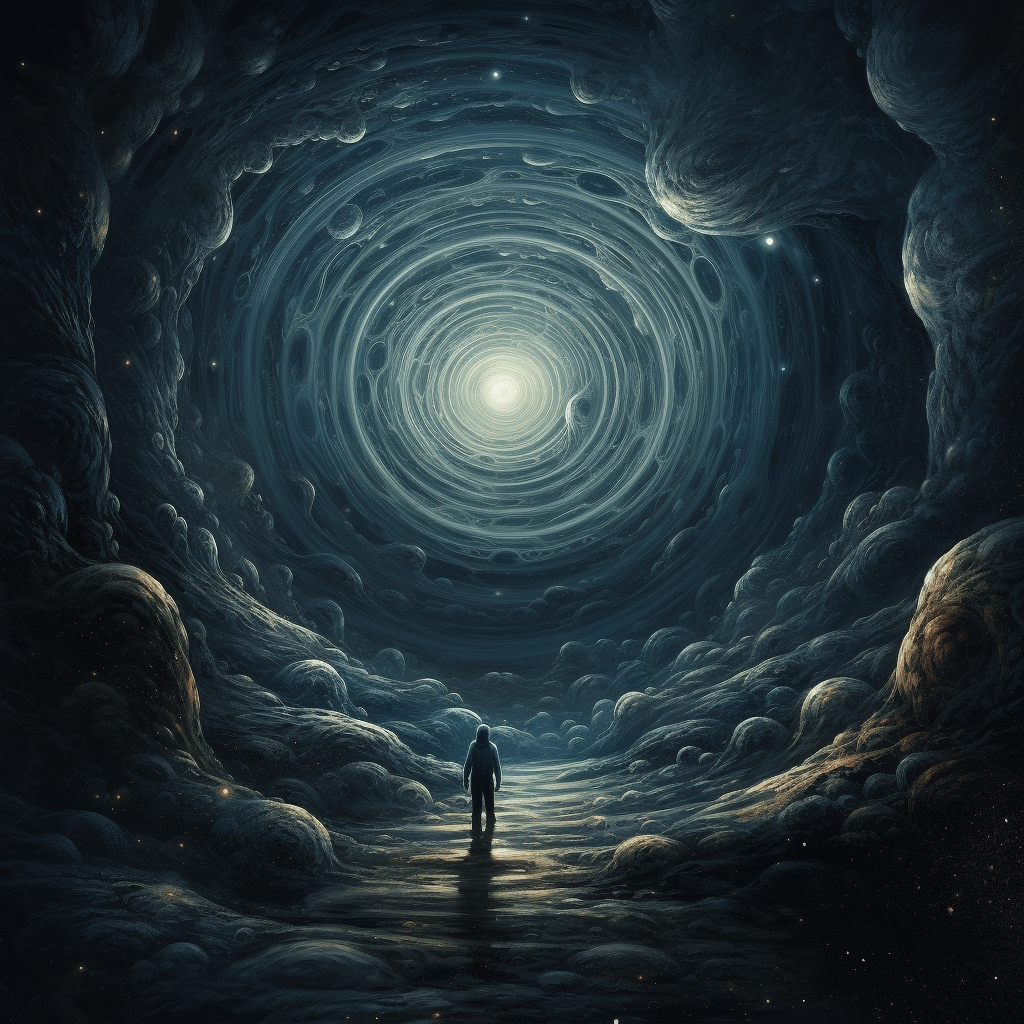
Cosmology, the science of the universe, is constantly evolving as we collect new data and formulate theories to explain our observations. One of these theories, although controversial, has intrigued many: the Hollow Universe theory. This hypothesis suggests our universe is essentially “empty,” or hollow, at its core. It paints a different picture than what we are accustomed to, but let’s delve deeper into its intriguing aspects.
The Birth of the Hollow Universe Theory
The Hollow Universe theory is not as widely accepted as the standard cosmological models. However, it originated from the same passion for exploration and understanding our universe. It has roots in theoretical physics, challenging conventional views and asking us to re-evaluate our preconceived notions about the universe’s nature.
The theory took form from a simple yet profound question: what if the universe is not as “solid” or “filled” as we believe it to be? What if the essence of the universe is fundamentally hollow? Intriguing, isn’t it?
Understanding the Hollow Universe Theory
To understand the Hollow Universe theory, we need to rethink our perception of ’emptiness.’ In this context, ‘hollow’ does not equate to ’empty’ in the traditional sense. Instead, the term ‘hollow’ refers to the conceptualization of the universe as a construct that is primarily void, yet harboring matter and energy in unique configurations.
The universe, according to this theory, is a vast, dynamic expanse wherein mass and energy are distributed irregularly, creating a web-like structure, sometimes called the “cosmic web.” This cosmic web gives the universe its ‘hollowness,’ where vast voids exist alongside dense clusters of matter.
Evidence Supporting the Hollow Universe Theory
The Hollow Universe theory might sound fantastical, but there’s evidence that hints towards its potential validity. The large-scale structure of the universe, as observed, appears to follow a ‘web-like’ pattern of galaxy clusters, as mentioned earlier. This pattern indicates the universe’s structure is more hollow than solid, with the voids accounting for a significant portion.
The phenomenon of cosmic microwave background (CMB) radiation also gives credence to this theory. The CMB, considered the afterglow of the Big Bang, shows slight temperature fluctuations. These variations correlate with the matter distribution in the universe, reinforcing the concept of a universe that is largely ‘hollow.’
Moreover, cosmologists have pointed out that the accelerating expansion of the universe — another puzzling observation — could be better explained within the framework of the Hollow Universe theory.
Challenges and Controversies
Despite the supporting evidence, the Hollow Universe theory is not without its critics. Many argue that the concept of ‘hollowness’ is abstract and does not provide a clear understanding of the universe’s nature. There are also questions about the theory’s ability to accurately account for phenomena like dark matter and dark energy.
However, like all scientific theories, the Hollow Universe theory is a work in progress. It evolves with each new observation and piece of evidence, offering an alternative way to interpret our cosmos.
Conclusion
In the grand scheme of cosmic understanding, the Hollow Universe theory is but one perspective among many. While it might sound outlandish at first, the premises behind the theory, along with the evidence supporting it, make for a compelling argument. It encourages us to broaden our view, reconsider our assumptions, and continue our quest for understanding the universe.
Just as we once moved from believing the Earth was flat to accepting it as a sphere, perhaps one day, we might also transition from seeing the universe as a solid expanse to acknowledging its hollow nature. In the words of J.B.S. Haldane, “The universe is not only queerer than we suppose, but queerer than we can suppose.” The Hollow Universe theory could just be another testament to this sentiment.
accelerating expansion of the universe, alternative cosmological models, Big Bang afterglow, controversies of Hollow Universe theory, cosmic microwave background radiation, cosmic web structure, cosmological models comparison, dark energy and Hollow Universe theory, dark matter and Hollow Universe theory, evidence for Hollow Universe theory, evolution of the universe theories, Hollow Universe theory, large-scale structure of the universe, matter distribution in the universe, temperature fluctuations in the universe, theoretical physics and the universe, understanding the Hollow Universe theory, universe as a hollow expanse, universe voids, web-like pattern of galaxy clusters -
The Intriguing Theory of Life on the Sun

Contrary to conventional thinking, a fascinating theory posits the possibility of life forms dwelling in the extreme environment of the sun. This article aims to illuminate the curious concept of solar life and spark conversation about the nature and definition of life itself.
The Unconventional Perspective
The suggestion of life on the sun presents an unorthodox vision of life’s potential and existence. It challenges our definition of life, forcing us to reevaluate our assumptions and consider the vastness of possibilities the universe holds. Life on Earth has adapted to various harsh conditions, such as deep-sea vents, the dark, icy cold of Antarctica, and even radioactive environments. Could life not also adapt to the extremes of the sun?
Scientific Grounds for the Theory
The plasma-based life theory, originally proposed by British mathematician and astrobiologist Ian Crawford, presents the possibility of plasma-based life forms in the sun. Crawford’s hypothesis points to the existence of “plasma crystals,” structures that demonstrate properties of life, such as self-replication and information storage.
The sun, as a ball of superheated plasma, could potentially host such life forms. “Plasma crystals” or “complex plasmas” can self-organize into helical structures that may carry information in a way analogous to DNA in terrestrial life.
The Role of Silicon
Silicon-based life forms are another area of conjecture. While life on Earth is carbon-based, some theorists suggest that silicon-based life forms could withstand much higher temperatures. Silicon’s chemical flexibility, second only to carbon, makes it a candidate for creating complex molecules necessary for life. The sun’s incredibly hot environment could potentially support these silicon-based life forms.
Solar Energy: A Source of Life
Life on Earth relies on solar energy, indirectly or directly, for survival. Phytoplankton, plants, and certain bacteria use sunlight to produce food through photosynthesis. Solar-based life forms could potentially utilize the sun’s abundant energy directly, exploiting the intense solar radiation for their metabolic processes.
Challenges to the Theory
While the idea of life on the sun is intriguing, it is not without its challenges. The sun’s extreme heat, immense pressure, and frequent solar flares create a seemingly inhospitable environment. The absence of solid ground is another problem, as is the question of how such organisms would maintain their structural integrity amidst constant tumultuous motion. However, the discovery of extremophiles on Earth—organisms that thrive in conditions fatal to most other life forms—opens the door to considering unconventional habitats for life.
Conclusion
Although the idea of solar life is unconventional and faces many challenges, it compels us to broaden our perception and definition of life. The possibilities for life in our universe may be far more diverse and flexible than we have yet to imagine. Just as the exploration of Earth’s extreme environments has expanded our understanding of life’s potential, so too could the investigation of solar life challenge our understanding of life in the universe.
Whether or not life exists on the sun, exploring these theories invites us to look at our universe with fresh, curious eyes, and perhaps, one day, to uncover realities about life that today are just beyond our grasp. Life on the sun, for now, remains a fascinating theory – a testament to our unbounded human curiosity and imagination.
astrobiology theories, challenges of life on the sun, complex plasmas, definition of life, exploring unconventional life forms, extremophiles and solar life, extremophiles in the sun, Ian Crawford plasma life, life in extreme conditions, life in high temperatures, life on the sun theory, photosynthesis in the sun, plasma crystals, plasma-based life, potential life in the universe, silicon-based life forms, solar energy life source, solar life forms, sun’s environment and life, unconventional life habitats -
Unveiling the Reality of Tolkien’s Worlds: Middle-earth Beyond the Pages

Middle-earth, More than Fiction?
“Middle-earth,” a term evoking images of hobbits, elves, epic quests, and enchanted rings. For many, this world is confined to the literary masterpiece of J.R.R. Tolkien, “The Lord of the Rings.” Yet, could this legendary universe be more than a brilliant flight of imagination? Could there be elements of truth, even a hidden reality, in Tolkien’s fantastical realms? This article explores the intriguing possibility that Tolkien’s worlds might exist beyond the pages of his books.
Tolkien’s Work: A Mythopoeic Triumph
Before venturing further, it’s essential to recognize the gravity of Tolkien’s contribution to literature and the creation of a mythical world. Tolkien was not merely a writer of fiction but a scholar of linguistics and mythology. His tales, rich in history, language, and culture, mirror the complexity of our own world. This depth lends a degree of realism to his narratives, making them compellingly believable.
The Historical Alignment: Evidences in our Own World
Tolkien was deeply influenced by ancient European mythology, particularly Norse and Celtic, and incorporated these elements into his work. This results in certain parallels between our history and the tales of Middle-earth. For instance, the Norse concept of “Ragnarök,” a prophesied catastrophe leading to a renewed world, resonates strongly with the War of the Ring and its aftermath.
Tolkien’s historical alignment extends to geographical features too. The Shire’s rolling landscapes mirror England’s West Midlands, where he grew up. His portrayal of other Middle-earth locations, from the lofty peaks of the Misty Mountains to Mordor’s barren plains, echo real-world environments. Could it be that Middle-earth is our Earth, but seen through a different lens?
Quantum Mechanics and Multiple Realities
Delving into the scientific realm, quantum mechanics theory could provide a fascinating perspective. According to the “Many-Worlds Interpretation,” all possible alternate histories and futures are real within their own world. If we apply this theory to literature, could every story, including Middle-earth, exist in an alternate universe?
The Power of Consciousness and Collective Belief
Interestingly, some argue that our collective belief and emotional investment in Middle-earth contribute to its ‘existence’. Carl Jung’s theory of the Collective Unconscious and the concept of Tulpas (thought-forms or mind-made beings) from Tibetan Buddhism suggest that collective thought and belief can manifest into reality. Millions of people have interacted with Middle-earth through Tolkien’s books and Peter Jackson’s film adaptations. Could this collective cognitive and emotional engagement bring Middle-earth into existence on some metaphysical level?
The Mystery of Consciousness: Tolkien’s Sub-creation
Tolkien believed that humans, being made in the image of a creator, are ‘sub-creators’. We carry a divine spark that allows us to create worlds and imbue them with an essence of reality. Hence, Middle-earth is a product of sub-creation, and its ‘reality’ can be considered a philosophical or spiritual reality.
Conclusion: The Intersection of Fantasy and Reality
To propose that Tolkien’s Middle-earth is ‘real’ in the literal sense requires a leap of faith that circumvents our traditional understanding of reality. However, exploring this concept invites us to broaden our perspective and contemplate the intriguing interplay between mythology, collective consciousness, quantum theory, and literary sub-creation.
While we may not find hobbits or elves if we dig deep enough into our past or probe the quantum realm, we discover something profound. Tolkien’s Middle-earth, through its influence on our collective imagination and the depth of its mythological and cultural roots, possesses a form of ‘reality.’ It’s a testament to Tolkien’s genius that his world, while not physically real, continues to live, breathe, and grow in the hearts and minds of millions around the globe.
-
Mars Slave Colonies: A Blend of Fact and Fiction

Mars, the red planet, has always captured the imagination of mankind. Its distance, its potential for harboring life, and its challenging environment make it an exciting target for exploration. Amidst these fascinating truths, there also exists a conspiracy theory: Mars Slave Colonies. While at face value this might sound outlandish, looking deeper into the reasons for this theory, the technology advancements required, and its connection with real historical precedents makes for a compelling discussion.
The Origin of Mars Slave Colonies Theory
This theory primarily originated from some whistleblowers who claimed to have been part of these supposed colonies. Andrew Basiago and Randy Cramer are prominent names who have claimed to have spent years on Mars as part of a classified program. They suggest that the colonies, maintained by the US government, serve various purposes including strategic military outposts, bioengineering experiments, and mining rare resources. While their claims lack solid empirical evidence, they have certainly added an intriguing element to our Martian narratives.
Technological Advancements and Mars Colonization
The core concept of the Mars Slave Colony theory is not entirely outside the realm of possibility, especially when we consider the significant strides mankind has made in space exploration. We’ve put men on the moon, rovers on Mars, and have plans for human missions to Mars in the not-so-distant future. However, the leap from a planned human Mars mission to a secret, well-established slave colony is considerable.
The technological requirements alone for such an endeavor are immense. It would require advanced propulsion systems for interplanetary travel, comprehensive life-support systems, and cutting-edge resource extraction and processing technology. The level of secrecy required to keep such a project hidden would also be unprecedented.
Historical Precedents and Connection
While the Mars Slave Colony theory might sound far-fetched, history offers numerous instances of secret projects that were initially dismissed as conspiracy theories but later proved true. The Manhattan Project, Operation Northwoods, and the MK-Ultra program are just a few examples. In this context, while we can’t validate the existence of Mars Slave Colonies, we can’t completely rule out the possibility of covert operations beyond our current understanding.
Addressing the Claims of Mars Whistleblowers
Addressing the claims of Mars whistleblowers is a complex process. Despite the lack of hard evidence, their detailed accounts and the consistency of their stories raise questions that can’t be easily dismissed. Their narratives about advanced technologies, human-ET interactions, and bioengineering experiments echo some aspects of known classified projects and speculative science. However, the extraordinary nature of their claims requires extraordinary evidence, which is currently lacking.
Conclusion
While the idea of Mars Slave Colonies can be seen as an extreme fringe theory, it represents an interesting blend of science, history, and human imagination. The complexity and potential feasibility of space colonization, combined with historical precedents of secret governmental projects, lend this theory a degree of intrigue and plausibility. However, until significant empirical evidence is presented, the Mars Slave Colony theory remains in the realm of speculation.
Investigating such theories, however outlandish they may seem, encourages critical thinking and inquiry. While we may not find slave colonies on Mars, the questions raised might drive our scientific endeavors, pushing us towards the next big discovery in space exploration. This notion alone makes such theories worth pondering.
advanced propulsion systems, Andrew Basiago, bioengineering experiments on Mars, Evidence of life on Mars, future of Mars exploration, history of Mars exploration, human missions to Mars, human-ET interactions, interplanetary travel, life-support systems, Mars colonization, Mars conspiracy theories, Mars mining, Mars rovers, Mars Slave Colonies, Mars whistleblowers, possibility of life on Mars, Randy Cramer, secret government projects, secret space programs -
Dream-Hacking: Unleashing the Power of the Unconscious Mind

Our dreams have always been a source of fascination, providing a glimpse into the complex workings of the unconscious mind. Today, a new field of study, known as dream-hacking, is emerging that aims to delve deeper into our dreams and potentially use them to our advantage. The concept may sound like science fiction, but a growing body of research suggests that dream-hacking could well be within our reach.
Understanding Our Dreams
Dreams are a universal human experience, yet their function and significance remain largely unknown. Some psychologists believe that dreams play a role in consolidating memories or processing emotions. Others suggest that they are simply a byproduct of the brain’s activity during sleep.
While the purpose of dreaming is a subject of debate, the phenomenon itself is well-documented. Dreams typically occur during rapid eye movement (REM) sleep, a stage of sleep characterized by heightened brain activity and vivid dreaming.
The Science of Dream-Hacking
Dream-hacking involves techniques that aim to influence dreams’ content or induce a state of lucid dreaming, where the dreamer is aware they are dreaming and can often control the dream’s narrative. Various techniques have been proposed, ranging from pre-sleep visualization to external stimuli delivered during sleep.
Research into dream-hacking has gained momentum in recent years. A study published in the journal “Consciousness and Cognition” found that it’s possible to introduce specific themes into dreams through targeted memory reactivation (TMR), a technique that involves presenting cues related to a particular memory during sleep.
Moreover, a groundbreaking study by the MIT Media Lab’s Dream Lab successfully used targeted dream incubation (TDI), a technique that leverages a digital sleep-tracking device to deliver audio cues during sleep, prompting dreamers to dream about a chosen subject. This research signifies a step forward in the potential for dream control and manipulation.
Applications of Dream-Hacking
The potential applications of dream-hacking are vast and exciting. By gaining a degree of control over our dream content, we could use our sleep time for a variety of purposes, such as learning new skills, enhancing creativity, overcoming phobias, or even improving mental health.
- Learning and Problem-Solving: There’s evidence that learning continues during sleep, with several studies indicating that sleep can enhance memory consolidation. By introducing specific cues during sleep, it might be possible to reinforce learning or stimulate problem-solving.
- Creativity and Innovation: Many famous figures throughout history, from artists to scientists, have attributed their groundbreaking ideas to dreams. By learning to influence our dreams, we could potentially harness this creativity on demand.
- Mental Health: Dreams could also serve as a platform for therapeutic intervention. Research suggests that nightmares can be targeted and modified using techniques like imagery rehearsal therapy (IRT), which could be a useful tool in treating conditions like PTSD.
The Future of Dream-Hacking
While the field of dream-hacking is still in its early stages, the potential implications are profound. As our understanding of the dreaming brain advances and technology evolves, we might be on the brink of a new era in dream exploration.
However, like all powerful tools, dream-hacking must be approached responsibly. Ethical considerations must be taken into account, particularly regarding privacy and autonomy in our dream lives.
Conclusion
Dream-hacking is an exciting and emerging field, bringing together neuroscience, psychology, and technology in ways never seen before. As we begin to unlock the potential of our dreams, we are venturing into a new frontier of the human mind. We are only scratching the surface of what might be possible, but the journey promises to be a fascinating one.
In the world of dream-hacking, science fiction is becoming science fact. With careful research and ethical vigilance, we could one day harness the power of our dreams to enhance our lives in ways we can currently only imagine. The idea of entering our dreams with intention and purpose, once the realm of mystics and storytellers, is moving ever closer to reality. It’s an idea that is, quite literally, the stuff of dreams.
dream control, dream manipulation, dream-hacking, imagery rehearsal therapy, improving mental health through dreams, lucid dreaming, neuroscience and dreams, overcoming phobias with dreams, psychology and dreams, rapid eye movement sleep, science of dream-hacking, targeted dream incubation, targeted memory reactivation, technology and dreams, the future of dream-hacking, understanding dreams -
ORMUS: The Miraculous Potential of Orbitally Rearranged Monatomic Elements

ORMUS, an acronym for Orbitally Rearranged Monatomic Elements, has captivated the minds of researchers and enthusiasts alike. These seemingly mystical substances have been posited to possess remarkable properties, ranging from health enhancement to spiritual enlightenment. While the mainstream scientific community remains largely skeptical, a growing body of anecdotal evidence and experimental research suggests that there may be more to ORMUS than meets the eye.
What is ORMUS?
ORMUS, also known as ORMEs (Orbitally Rearranged Monoatomic Elements) or m-state elements, is a group of substances discovered in the 1970s by a cotton farmer named David Hudson. While his initial aim was to improve soil conditions and crop yield, Hudson stumbled upon something much more profound.
ORMUS is said to consist of precious metals such as gold, platinum, and palladium in a non-metallic, monoatomic form. This alternative state is thought to result from a change in the arrangement of the electrons in the atoms of these elements, causing them to exhibit different physical and chemical properties from their metallic counterparts.
The Health and Wellness Connection
Many proponents of ORMUS suggest that these substances can offer significant health benefits. Hudson himself claimed that ORMUS could repair tissues at a cellular level, reverse aging processes, and boost the immune system.
While such claims need rigorous scientific testing, some initial studies hint at the potential health benefits of ORMUS. A study conducted by the Ecole Polytechnique Fédérale de Lausanne found that gold nanoparticles, a close relation to ORMUS, can help to enhance the effectiveness of certain anti-cancer drugs, suggesting potential avenues for future research.
ORMUS and Spiritual Awakening
Beyond its potential physical benefits, ORMUS is often associated with spirituality and consciousness exploration. Some proponents claim that ORMUS can help enhance meditation, induce lucid dreaming, and even stimulate psychic abilities. The monoatomic elements are believed to resonate with the body’s energy field, or biofield, helping to balance and align one’s energetic bodies.
Though difficult to scientifically quantify, these experiences represent intriguing, albeit subjective, pieces of evidence in support of ORMUS’s potential.
The Quantum Connection
One of the most exciting aspects of ORMUS is its potential connection to quantum physics. Some researchers theorize that the unique properties of ORMUS elements are a result of them existing in a “high-spin state,” in which their electrons behave in a way that’s consistent with principles of quantum coherence.
While these theories are highly speculative, they open up fascinating possibilities. Could ORMUS elements act as a bridge between our macroscopic world and the mysterious quantum realm?
ORMUS: Fact or Fiction?
The realm of ORMUS is filled with controversy. Critics argue that the lack of rigorous scientific evidence makes it difficult to substantiate many of the claims surrounding ORMUS. Meanwhile, advocates counter that ORMUS represents a new paradigm of understanding that conventional science isn’t fully equipped to explore.
It’s crucial that future research continues to rigorously examine these substances, their properties, and their potential benefits. In doing so, we may uncover a new understanding of matter, health, and perhaps even consciousness itself.
In conclusion, while the world of ORMUS is undoubtedly compelling and intriguing, it remains a largely unexplored frontier at the intersection of science, health, and spirituality. Only time and rigorous research will determine whether the extraordinary potential of ORMUS can be fully realized and whether it holds the miraculous properties many have claimed.
benefits of ORMUS, biofield balancing with ORMUS, David Hudson and ORMUS, gold in monoatomic form, gold nanoparticles and health, high-spin state elements, monoatomic elements, Orbitally Rearranged Monatomic Elements, ORMUS and consciousness exploration, ORMUS and health, ORMUS and quantum physics, ORMUS and spirituality, ORMUS and the quantum realm, ORMUS anti-aging properties, ORMUS controversy, ORMUS elements, ORMUS for meditation, research on ORMUS, scientific evidence of ORMUS, spiritual awakening with ORMUS -
Creepypasta Soundtracks: A Resounding Echo of Horror

Immersing oneself in the unsettling universe of Creepypasta can be an all-consuming experience. The eerie narratives, ghostly apparitions, and spine-chilling scenarios have long been a source of fascination for horror enthusiasts. But what often goes unnoticed is the crucial role of soundtracks in these tales. Creepypasta soundtracks, the carefully curated compositions accompanying the unsettling narratives, amplify the eerie atmosphere and heighten the sense of dread. This article aims to uncover the intriguing world of Creepypasta soundtracks, substantiating their significance with captivating evidence.
1. The Unique Creepypasta Experience
Creepypasta, a portmanteau of “creepy” and “copypasta” (internet slang for copied text), is a collection of horror-related legends or images shared online. These chilling tales are designed to scare and unsettle, often featuring ghosts, monsters, or other paranormal phenomena. The stories are enriched with multimedia elements, including images, videos, and most notably, soundtracks.
2. Role of Soundtracks in Creepypasta Narratives
Music is a powerful medium of emotional expression, capable of eliciting an extensive range of feelings. In horror narratives, it amplifies the tension, suspense, and shock. Creepypasta soundtracks share the same function, deepening the sense of fear and making the experience all the more immersive.
3. Crafting the Perfect Creepypasta Soundtrack
The composition of Creepypasta soundtracks is a meticulous process, ensuring that the music aligns with the tone, pace, and climax of the narrative. Typically, these compositions feature discordant harmonies, irregular rhythms, and sudden dynamic changes, all strategically designed to create an atmosphere of unease.
4. Iconic Creepypasta Soundtracks
Some Creepypasta stories have become notorious not only for their bone-chilling tales but also for their haunting soundtracks. ‘Jeff the Killer,’ a well-known Creepypasta story, is paired with a soundtrack that successfully builds a sense of impending doom, while ‘Slender Man’ employs minimalistic, distant, and echoey sounds that contribute to the narrative’s uncanny feel.
5. The Science Behind the Fear
Soundtracks’ impact on our emotions isn’t merely anecdotal; there’s robust scientific evidence to back it up. Studies in the field of psychoacoustics have revealed that dissonant sounds and irregular rhythm patterns can elicit feelings of discomfort and fear, a fact that Creepypasta composers exploit to the fullest.
6. The Community of Creepypasta Composers
Behind every Creepypasta soundtrack, there’s a community of talented composers contributing to the genre. These artists, often independent, use their understanding of music and its effects to create soundscapes that enhance the Creepypasta experience. Artists like Kevin MacLeod, Myuu, and CO.AG have made significant contributions to this field, with their compositions becoming synonymous with Creepypasta.
7. Impact on Popular Culture
Creepypasta soundtracks have transcended their original platform and are now influencing mainstream music, film, and television. For example, the soundtrack style of Creepypasta was recognized and utilized in popular video games like ‘Dead Space’ and ‘Silent Hill,’ with the same emphasis on dissonance and tension to create a horror ambiance.
8. Future Directions: VR and Creepypasta Soundtracks
As virtual reality (VR) technology progresses, there’s potential for even more immersive Creepypasta experiences. With VR’s capacity to stimulate multiple senses simultaneously, the role of Creepypasta soundtracks could become even more critical, providing an eerie auditory backdrop to the horrifying visuals.
Conclusion: An Underrated Element of Horror
The exploration into the world of Creepypasta soundtracks reveals their immense significance in shaping the horror experience. They are more than just an accompaniment to the tales; they are integral to the narrative, enhancing the eeriness and making the experience truly immersive. From their meticulous creation to their psychoacoustic impact and influence on popular culture, Creepypasta soundtracks are an intriguing domain worth delving into. As the landscape of horror narratives continues to evolve, the role of these spine-chilling soundtracks is set to become even more fascinating.
CO.AG Creepypasta, Creepypasta composers, Creepypasta in popular culture, Creepypasta soundtracks, Dead Space soundtrack, future of Creepypasta soundtracks, horror music composition, horror video game soundtracks, iconic Creepypasta music, immersive horror experiences, influence of Creepypasta music, Jeff the Killer soundtrack, Kevin MacLeod Creepypasta, Myuu Creepypasta music, psychoacoustics in horror, role of music in horror, science of fear in music, Silent Hill music, Slender Man soundtrack, VR and Creepypasta
Wonder about your world…

Take the plunge down the rabbit hole of insanity and wonder in this fast-paced, nonstop psychological thriller that will leave you questioning the very nature of reality and beyond. Part thriller, part romance, part existential horror, A Dream of Waking Life delves into lucid dreaming, psychedelics, existential ontology, video games, the nature of love, the nature of reality, and more.

Mendel’s Ladder delivers an adrenaline-fueled journey set on a dystopian future Earth, brimming with high-stakes action, adventure, and mystery. This epic series opener plunges readers into a world filled with diverse cultures, heart-pounding battles, and characters who will captivate your heart and imagination.

“E.S. Fein is raising the bar for quality as it’s a very well-written and thought-provoking book…There are points and themes in the story that could be discussed for eons as people will have their own idea on where it leads. It’s a book I would highly recommend.” – Andy Whitaker, SFCrowsnest
 Wondergressive