
-
The Ummo Case: An Intriguing Enigma of Extraterrestrial Contact

The Ummo case has captivated the minds of UFO researchers and skeptics alike since its emergence in the mid-1960s. The narrative, supposedly derived from extraterrestrial beings from the distant planet Ummo, offers a fascinating account of human-alien interaction that challenges our understanding of reality.
Ummo: A Brief Overview
Ummo allegedly originates in a star system located about 14.6 light-years away from Earth. The inhabitants of Ummo first purportedly made contact with Earth in the 1950s, sending messages to a select group of individuals globally. These messages presented detailed accounts of Ummo society, culture, science, and technology, along with intricate diagrams and symbol systems.
Initiation of Contact
The narrative asserts that the Ummites first arrived on Earth on March 28, 1950, near La Javie in the French Alps. Their mission was to observe and study Earth’s ecosystems and societies without intervening or influencing our development. The evidence of their contact took the form of lengthy
letters sent to several individuals worldwide, starting in the 1960s, often in the recipient’s native language.
The Letters: A Window to Another World
These letters, often filled with complex scientific explanations and descriptions of Ummo’s societal structures, were purportedly dictated via a device comparable to a typewriter. The detailed content and coherence found in the letters make them a unique piece of the Ummo puzzle.
Scientific Concepts and Technological Marvels
Among the most intriguing aspects of the Ummo case are the advanced scientific concepts and technologies described in the letters. From neurology to quantum physics, the Ummites seem to have a profound understanding of various scientific disciplines. They claimed to have developed technologies far superior to ours, such as flying saucers powered by a form of magnetohydrodynamics and holographic televisions.
The Ummo Symbol
Accompanying the letters was a unique symbol, alleged to be the Ummo’s planetary insignia. This emblem, consisting of a line joining two interlaced circles, was also reportedly seen on a UFO photographed in San José de Valderas, Spain, further intensifying the intrigue around the Ummo case.
Debunking Attempts and Enduring Mysteries
Many attempts have been made to debunk the Ummo case, attributing it to elaborate hoaxes. Skeptics often cite the apparent human-like characteristics of the Ummites and the extensive use of earthly scientific jargon as proof of terrestrial origin. However, no definitive proof has emerged to dismiss the case entirely.
On the other hand, some elements remain unexplained, such as the complexity of the information conveyed, the consistency across the letters, and the significant effort that would have been required to orchestrate such an elaborate hoax over several decades.
Ummo in the 21st Century
The Ummo case continues to resonate in the 21st century, with new letters purportedly appearing even in the era of the Internet. The case has permeated popular culture and inspired various books and films, maintaining its status as one of the most enduring and compelling stories in the realm of UFO phenomena.
In conclusion, whether the Ummo case is an ingenious hoax, a sociological experiment, or genuine evidence of extraterrestrial contact remains open to interpretation. However, its enduring appeal lies in the deeper questions it poses about our place in the universe, our understanding of reality, and the eternal human yearning for contact with the beyond. The Ummo case, in its intriguing ambiguity, continues to challenge and captivate, serving as a reminder of the vast, unexplored mysteries that lie beyond our earthly existence.
Debunking Ummo case, Extraterrestrial contact Ummo, Ummo case 21st century, Ummo case details, Ummo case explanation, Ummo case in popular culture, Ummo case investigation, Ummo case research, Ummo case unexplained mysteries, Ummo contact story, Ummo extraterrestrial beings, Ummo letters, Ummo planetary insignia, Ummo science technology, Ummo symbol, Ummo UFO sightings, Ummo’s societal structure -
Universe People: A Theory Rooted in the Cosmos

Universe People, or Cosmic People of Light Powers, is a spiritual movement that started in the Czech Republic. Ivo A. Benda, a former educator, and author, established it around 1997. It’s a fascinating concept that combines elements of Ufology, Christianity, and various other spiritual and cosmological concepts. Let’s take a deep dive into this intriguing theory and see how it might be possible, presenting compelling evidence that can be found.
1. The Basics of Universe People Theory
Universe People’s teachings center on ethical and moral conduct, love for fellow beings, and rejection of materialism and consumerism. The adherents believe in extraterrestrial life and assert that these beings communicate telepathically with Benda and others. They claim these extraterrestrials, who are higher spiritually advanced, are on a mission to help humanity ascend to a higher plane of existence.
2. Telepathic Communication with Extraterrestrials
Perhaps one of the most compelling aspects of Universe People theory is the claim of telepathic communication with extraterrestrials. While telepathy is often dismissed as a subject of science fiction, there’s interesting evidence that suggests its possibility. For instance, some studies indicate a certain level of psychic phenomena can occur between individuals.
Neuroscience has revealed that our brains generate electrical signals, which are responsible for transmitting information within the brain. Could it be possible that these signals could be received or sent to other beings, including extraterrestrial ones?
3. The Ethical Teachings of Universe People
An intriguing aspect of Universe People theory is its strong emphasis on ethical and moral conduct. This mirrors the teachings of major world religions and philosophical schools, underscoring universal principles such as empathy, compassion, and fairness. The values promoted by Universe People, though sometimes perceived as utopian, can lead to societal betterment.
Could the adherence to these ethical teachings, collectively by humanity, create a positive shift in global consciousness? It’s an interesting idea to consider and there’s evidence to suggest that collective actions and beliefs can indeed shape societal norms and systems.
4. The Rejection of Materialism
The Universe People’s teaching rejects materialism and consumerism, which is similar to many spiritual and philosophical traditions. Studies have shown that an excessive focus on material possessions can lead to stress, dissatisfaction, and a decreased sense of wellbeing. Could the Universe People’s emphasis on spiritual over material wealth indicate a path to increased happiness and fulfillment?
5. The Belief in Ascension
The Universe People theory postulates that spiritually advanced extraterrestrial beings are here to help humanity ascend to a higher plane of existence. This aligns with various religious and spiritual doctrines that speak of ascension, enlightenment, or a shift in consciousness. Could we be on the cusp of such a shift?
Conclusion
While the Universe People theory may seem far-fetched to some, elements of its teachings have parallels in well-established spiritual and philosophical traditions. There’s compelling evidence to suggest that concepts such as telepathy, ethical conduct, rejection of materialism, and spiritual ascension could have validity.
As we continue to explore the cosmos and deepen our understanding of the universe, it’s essential to approach theories like the Universe People with an open mind. They can provoke thought, foster a sense of wonder, and even offer new perspectives on our existence and purpose.
ascension and enlightenment, beliefs shaping societal norms, consumerism and spirituality, Cosmic People of Light Powers, cosmic spirituality, Czech spiritual movements, ethical teachings of Universe People, exploring the cosmos, extraterrestrial life in spirituality, Ivo A. Benda, neuroscience and telepathy, purpose of existence, rejection of materialism, societal betterment, spiritual ascension, spiritual wealth vs material wealth, telepathic communication with aliens, understanding Universe People, universal ethical principles, Universe People theory -
The Brain in a Jar Theory
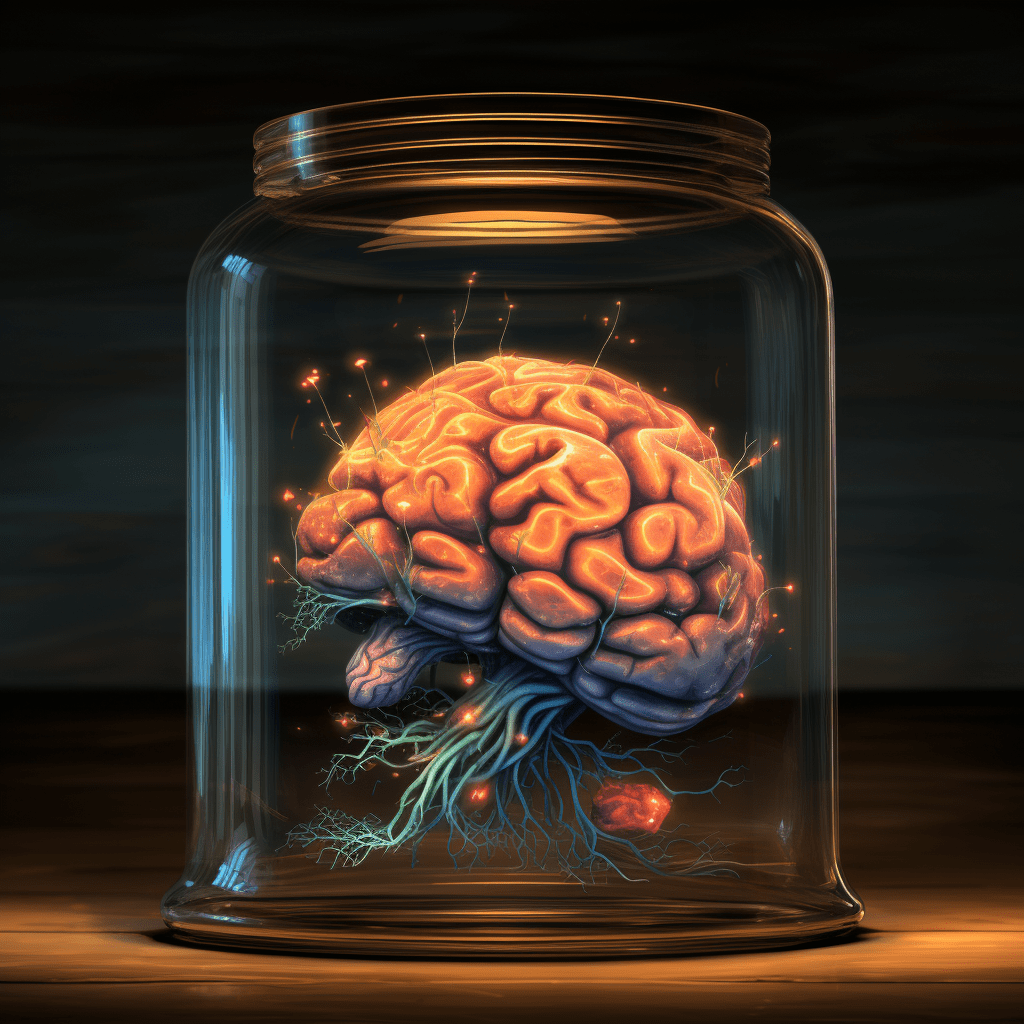
The “brain in a jar” or “brain in a vat” theory is a captivating topic that taps into our fascination with the nature of reality. It’s an age-old thought experiment that explores the philosophical concept of skepticism, the idea that we cannot truly trust our senses.
An Overview of the Brain in a Jar Theory
Originating in the field of philosophy, the ‘brain in a vat’ theory poses that it is theoretically possible that we might merely be brains in a vat, wired up to a computer that feeds us all our sensory inputs, causing us to perceive a simulated reality. This proposition, while seemingly outlandish, serves as a crucial building block for discussions on reality, knowledge, and perception.
A Philosophical Perspective: Descartes and the External World
Rene Descartes, a 17th-century French philosopher, explored a similar concept in his infamous thought experiment involving an “evil demon” that manipulates our senses to present a false reality. His philosophies underpin the skepticism found in the brain in a jar theory, leading to the well-known phrase “Cogito, ergo sum” – “I think, therefore I am.”
Technological Angle: The Matrix and Virtual Reality
The brain in a jar theory has also found its way into modern culture, most famously represented in the 1999 science fiction film “The Matrix”. The central theme of the film is the idea of a simulated reality, strikingly similar to the ‘brain in a vat’ theory.
Moreover, the evolution of virtual reality technology adds another dimension to this theory. With VR, we have begun to create simulated environments that can deceive our senses, blurring the line between what’s real and what’s not.
Neuroscience and Perception
Neuroscience has added weight to the brain in a jar theory by illuminating how our brains process sensory information. The study of phantom limb syndrome, for example, reveals how the brain can perceive experiences that aren’t physically real. Furthermore, research into hallucinations and altered states of consciousness also demonstrates the brain’s ability to fabricate sensory experiences.
Can We Prove We Are Not Brains in a Jar?
Philosopher Hilary Putnam devised a counter-argument, stating that if we were merely brains in a vat, we wouldn’t be able to meaningfully refer to ‘real’ vats, or ‘real’ brains, therefore making the statement “we are brains in a vat” self-refuting.
Conclusion: Questioning the Nature of Reality
The ‘brain in a jar’ theory, while seemingly absurd, opens up compelling discussions around the nature of perception and reality. Although we may never definitively prove or disprove this theory, its existence challenges us to remain skeptical of our perceptions and stimulates dialogue about the human experience.
Whether we are indeed brains in jars, living in a simulation, or merely the product of an incredibly complex series of cosmic events, our perception of reality is uniquely our own – a testament to the marvels of consciousness and human cognition.
are we just brains in a vat, brain in a jar theory, brain in a vat argument, brain in a vat philosophy, could we be brains in a vat, Descartes and brain in a vat, Descartes skepticism, exploring the brain in a jar theory, hallucinations and reality, Hilary Putnam’s counter-argument, Matrix and brain in a vat, Matrix simulated reality, nature of reality, neuroscience evidence for brain in a vat theory, neuroscience sensory processing, phantom limb syndrome, philosophical skepticism and the brain, questioning perception, thought experiment brain in a vat, virtual reality and perception -
The Enlightening Force of Kundalini Energy

When it comes to the concept of energy in spiritual traditions, Kundalini energy is one of the most intriguing subjects. The theory originates from ancient Hindu texts and has gained interest in contemporary spirituality and wellness circles. But what is Kundalini energy, and how does it affect our lives?
Unraveling Kundalini: The Basics
Kundalini energy, often described as a “serpent power” that lies dormant at the base of the spine, is believed to be a potent, creative force. This energy is said to ascend the spine, activating each of the seven chakras, or energy centers, in the human body. When this energy reaches the crown chakra at the top of the head, it is believed to trigger an awakening, resulting in profound spiritual and personal transformation.
The Science Behind Kundalini
While Kundalini energy originates from spiritual traditions, modern research offers interesting insights. Various studies have explored the physiological changes that occur during intense meditative states associated with Kundalini awakenings.
A study published in the Journal of Transpersonal Psychology reports physiological phenomena associated with Kundalini experiences, including changes in breathing patterns, heart rate, and skin conductance. These findings suggest a link between Kundalini energy and the body’s autonomic nervous system, although the mechanism behind it is yet to be fully understood.
Kundalini Awakening: A Spiritual Evolution
A Kundalini awakening is often described as a life-changing experience. Anecdotes abound, often involving heightened states of consciousness, a profound sense of peace and interconnectedness, and spontaneous physical movements or ‘kriyas.’ Such experiences are believed to help individuals transcend their perceived limits and achieve personal growth.
Kundalini Energy in Therapeutic Practices
The idea of Kundalini energy has been incorporated into various therapeutic practices. Kundalini Yoga, a popular form of yoga, combines physical postures, breathing techniques, and meditative practices designed to awaken this energy. Practitioners often report improved mental clarity, greater emotional balance, and a deep sense of inner peace.
In the world of psychotherapy, some therapists use Kundalini energy concepts to help patients explore their inner world. The Kundalini Experience Psychosis or Transcendence by Dr. Lee Sannella posits that certain psychological disturbances may be misdiagnosed Kundalini awakenings.
Controversies Surrounding Kundalini Energy
Like any spiritual concept that intersects with science, Kundalini energy has its skeptics. Critics argue that experiences attributed to Kundalini awakening are subjective and may be interpreted differently across cultures and religions. They also caution that intense spiritual practices aimed at awakening Kundalini energy can sometimes lead to distressing experiences, suggesting that guidance from experienced teachers is essential.
Conclusion: An Intriguing Blend of Spirituality and Science
The exploration of Kundalini energy, while firmly rooted in ancient spiritual tradition, presents a fascinating intersection with modern science. The intriguing evidence from scientific studies, anecdotal reports, and its integration into therapeutic practices underscores the potential significance of Kundalini energy in human life.
While the mysteries of Kundalini energy are far from fully unraveled, the existing body of knowledge offers compelling evidence of its potential. As we continue to explore the vast terrain of human consciousness, the ancient concept of Kundalini energy provides a captivating beacon on this journey.
Controversies of Kundalini, Effects of Kundalini awakening, Kundalini and autonomic nervous system, Kundalini and chakras, Kundalini and personal growth, Kundalini and psychotherapy, Kundalini and spirituality, Kundalini awakening, Kundalini energy and mental clarity, Kundalini energy basics, Kundalini energy experiences, Kundalini energy in modern wellness, Kundalini in therapeutic practices, Kundalini research studies, Kundalini serpent power, Kundalini Yoga, Physiological changes in Kundalini awakening, Science behind Kundalini, Spiritual transformation through Kundalini, Understanding Kundalini -
The Theory That the USSR Never Collapsed: A Closer Look

While most accept the historical account that the USSR collapsed in 1991, a growing fringe theory posits that this was a ruse and the Soviet Union never truly collapsed. This theory is woven from a myriad of political, economic, and cultural threads, offering an intriguing perspective on the narrative of global politics.
The Transition From USSR to Russia: Questioning the Narrative
The mainstream narrative is clear: In 1991, the USSR, weakened by economic turmoil, political strife, and public disillusionment, disintegrated, and the Russian Federation emerged as its successor. However, theorists argue that the transition was too smooth, suggesting an orchestrated change rather than an actual collapse.
The central argument is the considerable continuity in key state institutions and personnel. Many Soviet-era officials and operatives remained active in the Russian government. A prime example is President Vladimir Putin, a former KGB officer. Advocates of this theory argue that these continuities indicate not a collapse but a calculated transformation.
Economic Evidence: The Persistent State Control
Economic changes during and after the purported ‘collapse’ provide more substance to this theory. While the early 1990s were marked by a shift towards market economics, theorists argue that this was a superficial change. Despite the dissolution of the state-controlled economy, many of Russia’s largest industries remain under state control or the control of oligarchs with close ties to the Kremlin. Theorists suggest this continued central control supports the notion that the USSR transformed rather than collapsed.
Cultural Continuity: Revival of Soviet-era Sentiments
Advocates of the theory also highlight cultural continuity as proof. In recent years, Russia has witnessed a resurgence of Soviet-era sentiments, seen in the nostalgia for Soviet power, the revival of Soviet symbols, and the elevation of USSR’s victory in WWII as the nation’s defining narrative. Critics contend this nostalgia is a manipulation by those in power, further evidence that the USSR lives on under a new guise.
Strategic Relevance: Is the Cold War Over?
A critical aspect of this theory is the idea that the Cold War never truly ended. Advocates point to Russia’s continued efforts to reassert itself globally, suggesting that the ideological battle between East and West persists. Russia’s actions, including alleged election interference, cyber warfare, and annexation of Crimea, are seen as strategies reminiscent of Cold War-era tactics.
Analyzing the Theory: A Matter of Perception
It’s essential to clarify that this theory, while intriguing, is not widely accepted by mainstream historians or political scientists. The overwhelming consensus is that the USSR did collapse in 1991, and the Russian Federation is a distinct entity, albeit with clear Soviet influences.
However, the theory raises pertinent questions about the nature of political change and continuity. It forces us to consider whether a state can undergo a fundamental systemic change while maintaining continuity in strategic objectives, personnel, and institutional structures.
Whether one subscribes to the theory that the USSR never collapsed or sees it as the product of conspiracy-minded thinking, it undeniably offers a fresh perspective on the geopolitical narrative. By questioning accepted histories and challenging the narratives of power, such theories encourage us to look beyond the surface of global politics, stimulating debate and critical thinking.
Cold War continuation theory, Continuity of USSR, Did the USSR really collapse?, Nostalgia for Soviet power, Putin’s KGB history, Revival of Soviet-era sentiments in Russia, Russia’s Cold War tactics, Russian Federation’s Soviet influences, Russian geopolitical narrative, Russian global reassertion, Soviet Union conspiracy theory, Soviet-era officials in Russia, State control in Russian economy, USSR collapse conspiracy theory, USSR collapse or transformation, USSR never collapsed theory, USSR to Russia transition, USSR’s influence on Russian Federation -
The Mysteries of the Report from Iron Mountain

The “Report from Iron Mountain” has long been a subject of intrigue and speculation. First published in 1967 under the pseudonym ‘John Doe’, it was later claimed to be a work of fiction by its author Leonard Lewin. However, the document’s realistic portrayal of governmental proceedings, backed by an impressive depth of political analysis, has led many to believe it may be more than just a literary hoax. This article explores the interesting evidence surrounding the report, suggesting its plausible authenticity.
Unveiling the Report from Iron Mountain
The “Report from Iron Mountain” is allegedly a secret government document, supposedly written by a Special Study Group of fifteen experts brought together in 1963, at the peak of the Cold War. The group’s task was to examine what might occur in the event of a lasting peace and to propose steps to transition from a war economy to a peace economy. The document concludes, controversially, that peace may not be in the interest of a stable society.
The Content: A Devastating Theory
The report posits that war, or the threat of war, is necessary for governments to maintain power and control over their populations. It also points to war as an essential economic stabilizer. The authors suggest substitutes for war, such as creating new enemies to scare the public (alien life forms, for instance), instigating massive environmental pollution as a threat, and establishing a comprehensive social welfare program.
The Authenticity Debate: Is it Real or a Hoax?
Leonard Lewin, a satirist and military researcher, claimed authorship of the document in 1972, stating it was a critique of the military-industrial complex. Despite this, many, including some influential figures, believe in the report’s authenticity. The main argument supporting its legitimacy lies in its sophisticated understanding of the role of warfare in society and its detailed proposals.
The report’s foreword, written by a ‘John Doe’, claims it was leaked from the secretive group. This ‘leak’ narrative, combined with the depth of content and the existing skepticism towards government transparency, bolsters the conspiracy theory’s appeal.
Analyses and Implications
The “Report from Iron Mountain” has found a particularly resonant chord amongst war and conspiracy scholars. Notable individuals, including John Kenneth Galbraith, a Harvard economist, initially suggested that the report’s substance and style were too ‘accurate’ to be a parody.
Despite being debunked as a satirical piece, the document’s analyses, such as the socio-economic function of war and the perceived necessity of creating threats to maintain order, find significant echoes in real-world scenarios. Many of the proposed ‘substitutes’ for war eerily align with subsequent world events, such as the focus on environmental disasters and the war on terror.
The Enduring Legacy
Regardless of its authenticity, the “Report from Iron Mountain” continues to spark discussions about government transparency, the nature of warfare, and the structures underpinning our societies. Its enduring fascination lies in the uncomfortable questions it poses about the nature of government, power, and peace.
In the final analysis, whether the report is a clever hoax or a leaked government document is almost secondary to the questions it raises about the structures of power within society and the lengths to which a government might go to maintain social order. These concerns, as unsettling as they are compelling, ensure the “Report from Iron Mountain” remains an intriguing topic of research and debate.
enduring legacy of Iron Mountain report, government transparency debates, Iron Mountain conspiracy theory, Iron Mountain report research, John Doe pseudonym, John Kenneth Galbraith Iron Mountain, leaked government report, Leonard Lewin, Report from Iron Mountain, role of warfare in society, secret government documents, social function of war, transition to peace economy, war as societal control -
Harmonic Sync: A Symphony of Frequencies

In a world where science often meets mysticism, the concept of harmonic sync emerges. Described as a state where frequencies align, the theory suggests that synchronization leads to resonance, improving overall system performance, whether it’s a biological organism or a complex electronic system. Despite being subject to skepticism, recent studies shed light on its intriguing possibilities.
The Science of Frequencies and Vibrations
Every particle, molecule, and substance in the universe vibrates at specific frequencies. The principle of harmonic resonance proposes that when frequencies align or “sync,” the system becomes more efficient.
The theory of harmonic sync finds roots in the work of Nikola Tesla, who claimed, “If you want to find the secrets of the universe, think in terms of energy, frequency, and vibration.” Tesla’s work in electromagnetic fields underpins much of our modern understanding of these concepts.
Biological Applications: Harmonic Sync in the Human Body
Remarkably, the concept of harmonic sync applies not just to inanimate objects, but also to biological systems. The human body, an intricate system of interlinked cells and organs, appears to operate optimally when its constituent parts are ‘in sync.’
Cardiologist Dr. John Beaulieu conducted research suggesting that our bodies respond to sound therapy. In his experiments, he found that applying particular frequencies to the body could alter cellular structures, enabling faster healing. The result, he argued, is a form of harmonic sync, where cellular frequencies align, improving overall biological function.
Harmony in Technology: Electronic Synchronization
The use of harmonic sync extends to the field of technology too. In digital systems, synchronization is vital to maintain system integrity and ensure efficient data transmission.
Engineers have been exploiting harmonic sync in radio transmissions, telecommunications, and computer networks for decades. The timing synchronization in digital communication systems illustrates this point, as all elements in a digital network need to ‘agree’ on time for successful communication.
Critics and Skepticism: Questioning the Harmonic Sync
Despite promising findings, the theory of harmonic sync remains a subject of debate. Critics argue that it lacks sufficient empirical evidence and remains largely anecdotal. However, the theory has been gaining traction within certain scientific circles, especially among researchers investigating quantum physics and the purported ‘quantum coherence’ in biological systems.
Future Research: Expanding the Potential of Harmonic Sync
Continued research into harmonic sync could lead to revolutionary applications across various fields. The potential benefits include new ways to promote healing in medicine, optimize electronic systems, and even enhance personal wellbeing through practices like sound therapy and meditation.
In healthcare, more studies into how frequencies affect cellular health could pave the way for innovative treatments. For digital systems, better understanding of synchronization could lead to even more efficient networks.
Conclusion: Harmonic Sync – A Universe in Resonance
The universe, in essence, is a symphony of frequencies. The concept of harmonic sync underscores this viewpoint, suggesting a world where everything from atoms to galaxies may be interconnected through vibrational resonance.
As we delve deeper into the mysteries of frequencies, vibrations, and their potential for synchronization, we may find that the intriguing possibility of harmonic sync is not just possible – but an integral part of our universe.
biological harmonic sync, cellular health and frequencies, critics of harmonic sync, Dr. John Beaulieu research, frequencies and vibrations, frequency-based medicine, Harmonic sync theory, human body frequency alignment, interconnected universe, Nikola Tesla and frequency, optimizing electronic systems through sync, potential of harmonic sync, quantum coherence in biological systems, research into harmonic sync, resonance in universe, sound therapy for healing, synchronization in digital systems, the science of frequencies, timing synchronization in communication, vibrational resonance -
Ethnopsychiatry: A Pivotal Bridge Between Cultures and Mental Health

In a world where our understanding of mental health is continually evolving, the discipline of ethnopsychiatry emerges as a fascinating and promising area of study. This field ventures into the uncharted territories of mental health, examining how cultural differences can influence mental health perceptions, diagnoses, and treatments.
Ethnopsychiatry: An Overview
Ethnopsychiatry, coined by George Devereux, is the branch of psychiatry concerned with the study of the influence of cultural factors on mental health. It strives to understand the intersection of cultural background and mental disorders, taking into account the cultural context in which mental health symptoms manifest. From this perspective, it can be seen that mental health isn’t a universal concept but rather is influenced significantly by one’s cultural framework.
Cultural Variations in Mental Health
Historically, Western views of mental health have dominated the global conversation, potentially overlooking culturally specific mental health expressions and healing techniques. For example, in some societies, auditory hallucinations—commonly associated with schizophrenia in Western psychiatry—may not be considered a sign of mental illness. They might be interpreted as spiritual experiences or ancestral communication.
In other cultures, psychological distress can manifest physically, often known as ‘somatization.’ For instance, a person from a South Asian background might describe their depression symptoms not as feelings of sadness or hopelessness but as physical aches and pains. Therefore, ethnopsychiatry emphasizes the importance of understanding the patient’s cultural background to ensure accurate diagnosis and treatment.
Ethnopsychiatry and Global Mental Health
Evidence supporting the necessity of ethnopsychiatry comes from various fields of study. A widely referenced study conducted by anthropologist Juli McGruder in Zanzibar found that schizophrenic patients seemed to fare better than their Western counterparts. She attributed this to the island’s cultural interpretation of mental illness, which presented a more positive outlook on schizophrenia.
Similarly, Professor Arthur Kleinman’s research on depression in China in the 1980s found that ‘neurasthenia’—a diagnosis encompassing physical symptoms like fatigue and dizziness—was more common than depression. Kleinman proposed that this could reflect cultural stigma around mental health, with people more willing to express distress through physical symptoms.
Ethnopsychiatric Approaches to Treatment
Evidence suggests that ethnopsychiatric approaches could have tangible benefits in treatment. An example is the “culture-broker” model, where a person familiar with a patient’s cultural background aids communication between the patient and healthcare professional. This approach has shown promise in improving treatment adherence and health outcomes.
Likewise, traditional healing practices often play an integral part in mental health care in various cultures. Ethnopsychiatry promotes the integration of such practices with conventional mental health treatment— an approach increasingly being recognized as vital to global mental health.
Ethnopsychiatry: A Necessary Paradigm Shift
In our increasingly globalized world, the pertinence of ethnopsychiatry grows more evident. Cultural competence in mental health care isn’t just about being respectful or understanding; it’s about being clinically effective. There is a growing recognition that to provide effective mental health care, we must consider cultural differences not as obstacles but as keys to understanding and treating mental illness.
The study of ethnopsychiatry has not only shed light on the cultural aspects of mental health but also questioned the universal applicability of psychiatric diagnoses and treatments. By focusing on the interplay between culture and mental health, it offers a broader, more inclusive perspective on understanding mental disorders, advocating for the recognition of cultural diversity in global mental health discourse.
The field of ethnopsychiatry embodies the idea that mental health is complex, multifaceted, and deeply intertwined with cultural context. As we strive to improve global mental health, the integration of culturally-informed perspectives seems not only plausible but also essential. After all, understanding each other, in all our diverse complexity, is a pivotal step towards healing.
-
Dr. Robert Morse: Unearthing the Theories

Few figures in the field of alternative medicine are as controversial as Dr. Robert Morse. The naturopath, herbalist, and advocate for a fruitarian diet has both ardent followers and harsh critics. His health theories, particularly his criticism of mainstream medical practices, have garnered substantial attention. However, along with this attention have come various conspiracy theories. This article explores the intriguing possibilities and presents compelling evidence associated with these conspiracies.
Theory 1: Morse as a Threat to Pharmaceutical Industry
Dr. Morse advocates for a holistic, nature-centered approach to health. He encourages detoxification, fruit-based diets, and herbal remedies. A recurring theory, supported by some followers, suggests that his natural healing methods present a threat to the pharmaceutical industry, which, according to them, would prefer a world dependent on chemical medications.
Some people point towards the lack of widespread acceptance of Morse’s methods as evidence for this conspiracy. They argue that the pharmaceutical industry, as an influential entity with vast resources, is actively suppressing and discrediting Morse’s holistic practices.
Theory 2: The FDA and Morse
Morse has consistently expressed skepticism towards the Food and Drug Administration (FDA) and its operations. This has led to a theory that the FDA, feeling threatened by his criticism, is trying to discredit him. Morse’s followers argue that the FDA’s occasional warnings against herbal remedies are strategic attempts to undermine Morse’s reputation and recommendations.
Evidence provided by proponents of this theory includes the FDA’s crackdown on unapproved drugs and non-conventional treatments. They argue that these actions disproportionately target practitioners like Morse, who operates outside the traditional medical realm.
Theory 3: Morse and the Anti-vaccination Movement
Some conspiracy theories draw connections between Morse and the anti-vaccination movement. Morse’s emphasis on natural immunity and his critique of pharmaceutical interventions have led some to speculate that he is a covert advocate for this controversial stance.
This theory often highlights Morse’s teachings on the lymphatic system and immunity, arguing that they subtly encourage opposition to vaccination. However, it’s essential to note that Morse has not publicly endorsed the anti-vax movement, making this theory heavily reliant on inference and interpretation.
Theory 4: The Big Meat and Dairy Conspiracy
Morse, a vocal advocate for a fruitarian diet, often criticizes the meat and dairy industries. Some conspiracy theorists suggest that these industries, fearing the influence of his teachings, are working to tarnish his reputation.
Proponents of this theory point to negative media coverage of Morse as evidence. They claim that these industries are using their resources to influence public perception against Morse and his dietary recommendations.
Conclusion
The conspiracy theories surrounding Dr. Robert Morse provide a captivating look at the intersection of alternative medicine, business interests, and public health. Whether you view Morse as a holistic health visionary or a controversial outsider, it’s undeniable that his ideas have stirred debate. While these theories offer compelling narratives, they often lack conclusive evidence, making them fodder for speculation more than accepted fact.
It is critical, however, to approach these theories with an open mind and critical thinking, acknowledging the profound impact that economic interests can have on public health discourse and understanding the necessity of questioning mainstream narratives. In the end, these conspiracy theories underscore the importance of informed decision-making when it comes to health and wellness.
-
The Intriguing Possibilities of the Greek Magnetic Sky Theory

When we consider the concept of the sky, the common perception is of a vast, unending expanse above us. But what if the sky was a field of energy influenced by the earth’s magnetic field? This idea forms the basis of the Greek magnetic sky theory. This seemingly fantastical proposition suggests that ancient Greek civilizations had profound knowledge of Earth’s magnetic field and utilized it in their daily lives, particularly for navigation.
Greek Influence on Navigation and Astronomy
The Greeks are renowned for their contributions to astronomy and navigation. Ancient seafarers utilized celestial bodies like the stars and constellations for navigation during night voyages. However, the Greek magnetic sky theory proposes a more nuanced understanding. It suggests the Greeks recognized that the Earth’s magnetic field interacted with these celestial bodies, forming an “energy sky.”
Earth’s Magnetic Field: A Global Phenomenon
Scientists now understand that Earth is surrounded by a magnetic field generated by the dynamo effect of its molten iron core. The presence of this field influences the planet’s magnetosphere, which extends into space and interacts with the solar wind, a stream of charged particles emitted by the sun. When these particles collide with the magnetosphere, it results in phenomena like the auroras.
The Greek Perception of Sky and Earth
Historical texts suggest that the Greeks understood these magnetic phenomena and their effects on the sky. They believed in a cosmos where the earth was a magnet, attracting celestial bodies that moved in circular paths around it. This view led to the development of a geocentric model, which placed Earth at the center of the universe.
The magnetic sky theory postulates that the Greeks conceptualized the sky as a reflection or projection of the Earth’s magnetic field. Their understanding of the constellations wasn’t merely that of distant, fixed stars, but as part of a dynamic system influenced by the Earth’s magnetic field.
Evidence Supporting the Greek Magnetic Sky Theory
The Antikythera Mechanism
Uncovered from a shipwreck near the Greek island of Antikythera, this ancient device is considered the world’s first known analog computer. It was used to predict astronomical positions and eclipses and even tracked the four-year cycle of athletic games similar to the Olympics.
What’s fascinating about the Antikythera mechanism is the intricate gear system that reflects a sophisticated understanding of celestial movements. It’s suggested that this understanding may have been informed by an observation of the interaction between celestial bodies and the Earth’s magnetic field.
Greek Mythology and Literature
The Greek magnetic sky theory can also be traced in their mythology and literature. Many Greek myths associated gods like Zeus and Hermes with the heavens, indicating a complex understanding of celestial phenomena. Moreover, literary works, such as Homer’s ‘Odyssey,’ make several references to celestial navigation.
Architectural Alignments
Some ancient Greek structures, like the Parthenon, align with specific celestial bodies, implying an understanding of astronomy and potentially the magnetic sky concept. These alignments are not random, suggesting that the Greeks constructed their most essential structures in harmony with celestial movements and perhaps with an awareness of Earth’s magnetic influence.
Conclusion
While we cannot definitively prove the Greek magnetic sky theory based on the available evidence, it offers an intriguing possibility about our ancestors’ understanding of the universe. If the Greeks did perceive the sky as a magnetic field influenced by the Earth, it would dramatically shift our understanding of their scientific and astronomical sophistication.
Despite its speculative nature, this theory emphasizes the value of re-examining ancient knowledge. Unraveling these historical mysteries could illuminate our past and potentially reshape our future understanding of the cosmos.
ancient Greek astronomy, ancient Greek magnetism theories, ancient Greek understanding of cosmos, Antikythera Mechanism, celestial alignment in Greek architecture, celestial movements and Greek structures, celestial navigation in Greece, Earth’s magnetic field, Earth’s magnetic field and ancient Greece, geocentric model of universe, Greek celestial beliefs, Greek constellations and magnetism, Greek magnetic sky theory, Greek mythology and astronomy, Greek navigation techniques, Greek perception of Earth and sky, Greek understanding of magnetosphere, influence of magnetic field on sky, magnetic influence on celestial bodies, magnetism in ancient Greek culture
Wonder about your world…

Take the plunge down the rabbit hole of insanity and wonder in this fast-paced, nonstop psychological thriller that will leave you questioning the very nature of reality and beyond. Part thriller, part romance, part existential horror, A Dream of Waking Life delves into lucid dreaming, psychedelics, existential ontology, video games, the nature of love, the nature of reality, and more.

Mendel’s Ladder delivers an adrenaline-fueled journey set on a dystopian future Earth, brimming with high-stakes action, adventure, and mystery. This epic series opener plunges readers into a world filled with diverse cultures, heart-pounding battles, and characters who will captivate your heart and imagination.

“E.S. Fein is raising the bar for quality as it’s a very well-written and thought-provoking book…There are points and themes in the story that could be discussed for eons as people will have their own idea on where it leads. It’s a book I would highly recommend.” – Andy Whitaker, SFCrowsnest
 Wondergressive