-
Did Hitler Escape Inside the Earth?

The conventional narrative surrounding Adolf Hitler’s death is that he died by suicide in his bunker as the Allies closed in on Berlin. However, over the years, alternative theories have surfaced, including the one suggesting Hitler might have escaped inside the Earth. As controversial and seemingly absurd as this may seem, let’s explore the evidence that supports this hypothesis and why it persists in the public consciousness.
Hollow Earth Theory
To understand the possibility of Hitler’s escape inside the Earth, it is essential to comprehend the Hollow Earth theory that this claim fundamentally relies upon. This theory postulates that the Earth is not a solid sphere but contains a substantial interior space.
The hypothesis dates back to ancient civilizations, but in its more modern form, it often includes the idea of a small sun existing in the center. Some proponents believe this inner world is inhabited and accessible through portals at the North and South poles or other select locations.
Hitler’s Fascination with the Occult
Historically, it’s well-documented that the Nazi party, including Hitler, had an interest in the occult and esoteric sciences. They sponsored several expeditions and research into areas that mainstream science overlooked or outrightly dismissed, such as the Hollow Earth theory.
The Antarctic Expedition and Base 211
In 1938-39, the Nazis undertook an expedition to Antarctica. Officially, the expedition aimed at securing a whaling station and expanding Germany’s whaling industry. However, some believe that the actual motive was to scout a location for Base 211, a secret Nazi base in Antarctica, from where they could possibly access the Earth’s interior.
Escape Submarines
Reports of two submarines arriving in Argentina months after WWII has fueled the escape theory. The crew of one submarine, U-530, allegedly claimed they had dropped off “important persons” at an undisclosed location. Some speculate these “important persons” could have included Hitler.
Declassified FBI Documents
Interestingly, declassified FBI documents reveal that the idea of Hitler’s escape wasn’t instantly dismissed. Several alleged sightings and tips about Hitler’s whereabouts were investigated. While these documents don’t confirm that Hitler escaped to Antarctica or inside the Earth, they do suggest that the possibility of his escape was taken seriously by some officials.
Lack of Forensic Evidence
Finally, the lack of definitive forensic evidence concerning Hitler’s death has kept alternative theories alive. While remains were found and attributed to Hitler, doubts arose due to the condition of the remains and inconsistent testimonies. In 2009, a study of the skull fragment attributed to Hitler revealed it belonged to a woman, further fueling doubts.
The Persistence of the Theory
This theory persists due to a mixture of historical fact, speculation, and the human penchant for mystery. The real-world expeditions by the Nazis, coupled with their fascination for the occult, provide a factual basis upon which speculations can be built. The mystery surrounding Hitler’s death provides fertile ground for alternative theories.
Although the theory of Hitler’s escape inside the Earth is unproven and lacks mainstream scientific support, its persistence highlights our collective fascination with alternative history and the unknown. However, like all theories, it should be subjected to rigorous scrutiny and should not detract from the very real atrocities committed during Hitler’s regime.
In the realm of academic history, the consensus remains that Hitler died in his bunker in 1945. Still, the evidence mentioned above gives enough room for this theory to be a part of discussions in the more speculative and fringe areas of historical research.
In the end, whether you believe in this theory or not, it certainly adds a compelling layer of intrigue to the already complex and darkly captivating narrative of WWII and Adolf Hitler’s life.
Alternative history theories, Base 211, Conspiracy theories about Hitler, Declassified FBI documents on Hitler, Forensic evidence of Hitler’s death, Hitler and the occult, Hitler sightings post-WWII, Hitler’s alleged escape routes, Hitler’s death controversies, Hitler’s escape theory, Hitler’s life after WWII, Hollow Earth theory, Inside Earth theory, Mysterious WWII theories, Nazi Antarctic expedition, Nazi esoteric research, Secret Nazi bases, Submarine U-530, U-boat escape after WWII, WWII mysteries -
The United States: One Grand Experiment

The United States of America, a land of dreams and possibilities, can be viewed as the stage of an extensive social experiment — a nation built on principles of freedom, self-governance, and the pursuit of happiness. This exploration will delve into this fascinating theory.
The Inception of the Experiment
The origins of this grand experiment can be traced back to the Founding Fathers, who believed in Enlightenment ideas of individual rights, democracy, and secularism. Instead of a monarchy or theocracy, they proposed a democratic republic — an experiment in governance that had not been tried on such a scale.
One might argue that the United States Constitution, the nation’s foundational document, is essentially a ‘research protocol’ for this experiment. It outlines how the government should work, its checks and balances, and guarantees individual rights — all to ensure a harmonious coexistence in an evolving society.
Checks and Balances: An Experimental Control
The system of checks and balances, as laid out in the Constitution, is a crucial aspect of this experiment. It is designed to prevent any one branch of government from becoming too powerful, thereby creating a balance of power that promotes fairness and equity.
This intricate system also allows for adjustments and amendments, acknowledging that societal norms and values will change over time. The addition of amendments to the Constitution, such as the Bill of Rights and others, shows the adaptability of this experiment.
The Melting Pot: A Variable in the Experiment
The U.S. is often referred to as a “melting pot,” representing diverse cultures, races, and ideologies cohabitating and interacting. This diversity is a significant variable in the grand experiment. It tests the strength and adaptability of the fundamental principles upon which the nation was built.
America’s history of immigration is a testament to this. People from all over the world have been welcomed to its shores, each bringing their unique culture, values, and traditions, thus adding to the richness of American society.
Civil Rights Movements: Course Corrections in the Experiment
The various civil rights movements throughout U.S. history can be seen as course corrections in the grand experiment. They represent the American people’s continued struggle to uphold and fulfill the ideals of freedom, equality, and justice for all.
These movements, including the African American civil rights movement, women’s suffrage, and LGBTQ+ rights movement, have pushed for change, resulting in significant amendments to laws and societal norms — thus refining and redirecting the experimental parameters.
The American Dream: The Outcome Measure of the Experiment
The American Dream, the belief that anyone, regardless of their background, can succeed through hard work, is perhaps the outcome measure of this experiment. It encapsulates the promise of upward mobility and prosperity — a critical incentive that keeps the experiment going.
However, the feasibility of the American Dream is a subject of continuous debate, affected by numerous factors such as economic disparities and systemic discrimination. Thus, the dream itself is an integral part of the ongoing assessment and readjustment of this grand experiment.
The U.S. Experiment: An Ongoing Process
Like any experiment, the United States as a grand societal experiment has had its share of successes, failures, and adjustments. Through trials, errors, and triumphs, the country continues to evolve, driven by its founding principles and the collective efforts of its people.
It is crucial to remember that the U.S. experiment is not static but dynamic. It’s continually being shaped and reshaped by changing cultural, social, political, and economic landscapes. While it’s unclear when or if this experiment will conclude, it continues to offer profound insights into societal organization, governance, and human behavior.
In conclusion, viewing the United States as one big experiment presents a fascinating perspective. It enables us to analyze the country’s past, scrutinize its present, and anticipate its future — a testament to the lasting resilience and adaptability of the grand American Experiment.
African American civil rights, American melting pot, American political landscape, checks and balances in American governance, civil rights movements in America, cultural diversity in U.S., economic disparities in U.S., evolution of American society, founding fathers, freedom and equality in U.S., history of immigration in U.S., LGBTQ+ rights in U.S., principles of American democracy, social change in America, systemic discrimination in America, the American Dream, U.S. Constitution, U.S. societal experiment, United States as an experiment, women’s suffrage -
Unraveling the Mystery of the Cagots
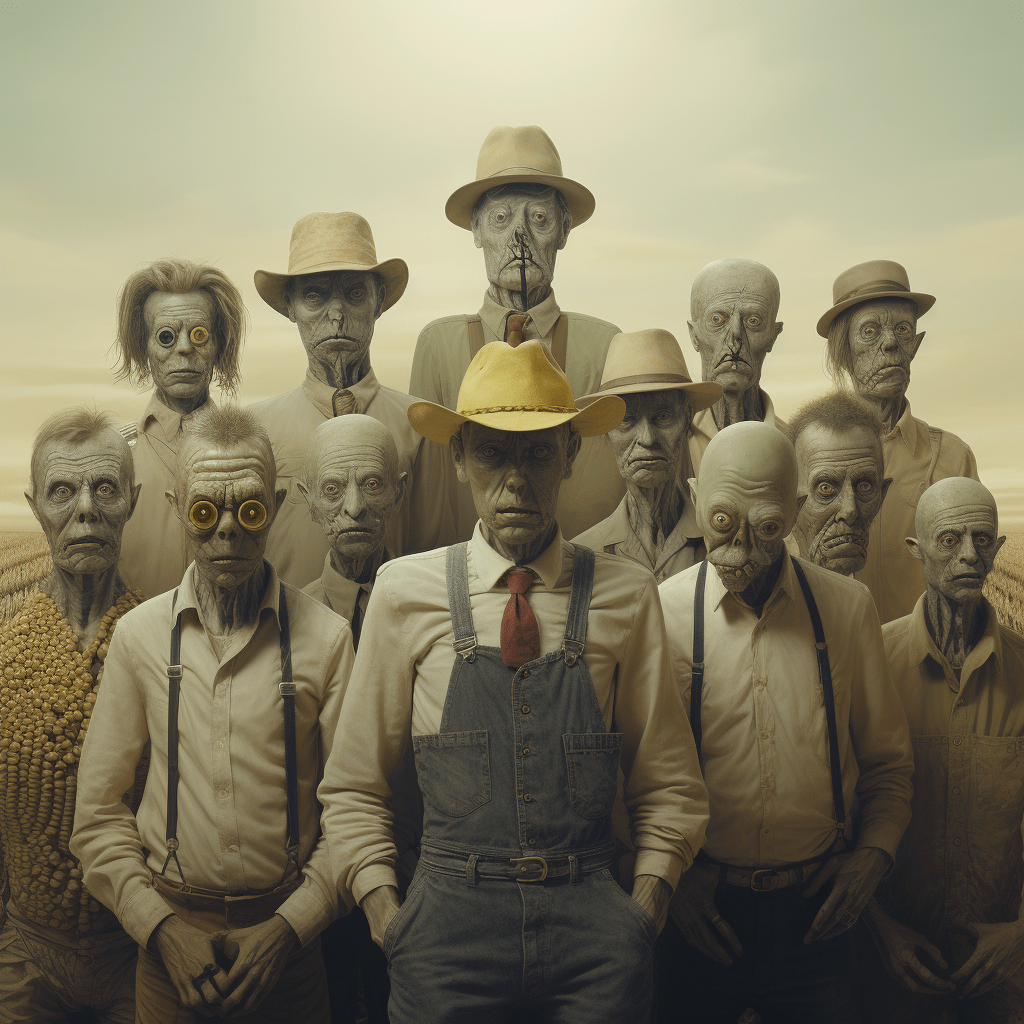
When we delve into the depths of history, we often come across intriguing mysteries that both bewilder and fascify us. The story of the Cagots is one such mystery that requires a thorough understanding. The Cagots, also known as the Agotes, Gahets, or Caqueux, were a marginalized and ostracized social group of people in medieval Western France and Northern Spain, identifiable by their distinct social, legal, and religious status.
The Mysterious Origins of the Cagots
Despite the apparent historical significance of the Cagots, their origins remain a topic of controversy among historians and anthropologists. Some theories suggest that they were descendants of the Visigoths, a Germanic people who played a significant role in the fall of the Western Roman Empire. Others argue that the Cagots could have been remnants of a pre-Indo-European race native to the Pyrenees region. However, definitive proof is yet to be found, making the origins of the Cagots a truly captivating topic of research.
The Social Pariah: Life as a Cagot
Living as a Cagot was anything but easy. They were subject to numerous discriminatory laws and practices that severely limited their opportunities in society. For instance, they were barred from certain professions, forbidden from interacting with non-Cagots, and even restricted from certain public spaces. These oppressive laws were maintained through the use of various humiliating symbols, including specific clothing and physical markings, to differentiate the Cagots from the rest of society.
The Power of Superstition: Why Were the Cagots Ostracized?
The reasons for the extreme prejudice faced by the Cagots are still a matter of speculation. There were widespread superstitious beliefs that the Cagots were heretics, sorcerers, or carriers of diseases. These superstitions were so deeply entrenched that they survived for centuries, long after the Middle Ages, influencing social dynamics and power structures within society.
The Demise of the Cagot Identity
By the 18th century, efforts to alleviate the Cagots’ social status began to materialize, spearheaded by the Age of Enlightenment’s philosophies and the French Revolution. The National Assembly abolished the discriminatory laws against the Cagots in 1791. However, social integration was a slow and arduous process, and the stigma associated with the Cagots did not dissipate immediately.
Legacy of the Cagots: Lessons from History
The history of the Cagots offers a stark reminder of the damaging effects of prejudice and discrimination. Despite their unfortunate circumstances, they managed to maintain their unique cultural heritage and identity. Today, studies on the Cagots provide a rich source of information for understanding societal dynamics, human behavior, and the impact of discrimination.
Conclusion
As we navigate through the story of the Cagots, we realize that their history, although marred by prejudice and discrimination, is a testament to human resilience and the will to endure. While the origins and identity of the Cagots may remain a mystery, their story serves as a powerful reminder of our responsibility to ensure equal treatment and respect for all, regardless of their background.
Cagot cultural heritage, Cagot identity, Cagot social status, Cagots and disease, Cagots history, Cagots in France, Cagots in medieval Europe, Cagots in Spain, demise of Cagot identity, discrimination against Cagots, Enlightenment and Cagots, French Revolution and Cagots, human behavior and Cagots, laws against Cagots, legacy of the Cagots, lessons from Cagot history, life of a Cagot, origins of the Cagots, societal dynamics and Cagots, superstitions about Cagots -
Mereological Nihilism: An Intriguing Perspective on Composition

From the macrocosmic view of galaxies to the microcosmic wonders of atoms, objects comprise our world. But what if this assumption is fundamentally mistaken? Mereological nihilism, a radical philosophical theory, argues just that. This concept proposes that objects with proper parts do not exist; the world consists only of simple, indivisible particles, or “simples.” This article will delve into the fascinating world of mereological nihilism, presenting the reasoning behind this theory that may seem utterly counterintuitive but is, perhaps, not as implausible as it first appears.
The Essence of Mereological Nihilism
Mereology, the study of part-whole relationships, sets the backdrop against which mereological nihilism arises. Mereological nihilism (MN), in its most straightforward form, contends that only “simple” entities—entities without proper parts—exist. All apparent composite objects, from chairs to humans, are not fundamentally real but are convenient fictions or misleading terminologies that describe collections of simples.
The Simplicity Argument
The arguments supporting MN are potent, albeit unorthodox. The “simplicity argument,” for instance, posits that the simplest theory about objects should be the one we accept, in accordance with Occam’s razor. Proponents claim that mereological nihilism is the simplest theory of composition since it only admits “simples” into its ontology and rejects the existence of composite objects, hence avoiding complexities arising from the arrangement of parts.
Dissolving the Paradox of Composition
A particularly captivating argument in favor of MN lies in its capacity to resolve classical paradoxes of composition. Consider the ship of Theseus paradox: over time, every single plank of the ship is replaced, leading to the question of whether it remains the same ship. By denying the existence of composite entities like ships, MN sidesteps such questions entirely. If there are only simples arranged ‘ship-wise,’ then there’s no real ship to puzzle over its identity.
Reframing Metaphysical Debates
MN’s implications reach far into metaphysics, even reframing age-old debates. For instance, in the contentious subject of personal identity, the question arises: What makes you the same person over time, despite constant changes? MN provides a novel perspective: ‘you’ don’t persist through time. There are only simples arranged ‘person-wise’ at different moments. This standpoint sidesteps the thorny issues of identity over time, offering a radical but neat solution.
Countering Intuitive Objections
Of course, MN faces significant challenges, not least of which is its direct clash with our everyday experiences. However, proponents of MN argue that this intuitive objection fails to recognize the theory’s subtle sophistication. While it denies the existence of composite objects, it doesn’t deny the existence of the phenomena we attribute to these objects. MN permits the existence of “simples arranged chair-wise” and the “sitting-on relation,” preserving the observable reality while rejecting the intuitive ontology.
Conclusion
Mereological nihilism, a radical, thought-provoking concept that challenges our basic understanding of reality, is an active subject of debate in metaphysics. Despite its counterintuitive premise, the strength of its philosophical arguments and its power to dissolve longstanding paradoxes presents an enticing case. While it might seem implausible at a cursory glance, a deeper exploration into its rational underpinnings suggests that it’s not quite as impossible as it first appears. Thus, MN demands earnest contemplation, further highlighting the vast, uncharted territories that philosophy continues to explore.
composite objects nonexistence, counterintuitive philosophical theories, existence of simples, mereological nihilism arguments, mereological nihilism explanation, mereological nihilism theory, mereology study, metaphysical debates, metaphysical implications of nihilism, objections to mereological nihilism, Occam’s razor and nihilism, paradox of composition, part-whole relationships, personal identity and nihilism, philosophical arguments for nihilism, philosophy of mereological nihilism, ship of Theseus and nihilism, simple entities, simplicity argument, understanding mereological nihilism -
Charles Fort: Unveiling the Unexplained

Known as the father of modern paranormalism, Charles Fort’s name rings a bell among those interested in exploring the mysteries of our universe. Fort, a writer and researcher, devoted his life to documenting anomalies and mysteries that confounded conventional scientific understanding.
The Early Life of Charles Fort
Charles Hoy Fort was born in 1874 in Albany, New York. His early years were filled with hardship and rebellion, which eventually led him to explore unorthodox routes in knowledge gathering. Fort was always intrigued by the inexplicable, and this curiosity ultimately gave birth to his extensive research on phenomena rejected by mainstream science.
Fort’s Unconventional Research
Fort amassed an extensive collection of newspaper clippings and scientific journals documenting inexplicable phenomena. He covered a vast range of subjects from UFOs, unexplained disappearances, spontaneous combustion, teleportation, to unknown creatures, and mysterious showers of objects from the sky. He filled numerous notebooks, referred to as “Fort’s Fortean data,” with these accounts.
Fort’s Contributions: ‘Book of the Damned’ and Beyond
Fort’s first published book, “The Book of the Damned” (1919), was a collection of data concerning phenomena science couldn’t explain, which he sarcastically termed ‘damned’ data. He followed up with “New Lands” (1923), “Lo!” (1931), and “Wild Talents” (1932), each contributing further to his legacy of examining the unexplainable.
Charles Fort’s Legacy
Fort’s works inspired countless researchers, contributing to the foundation of modern UFOlogy and cryptozoology. Today, we have the Fortean Society, the International Fortean Organization, and FortFest, all dedicated to his work and philosophy. His influence is also evident in the term “Fortean phenomena,” used to describe strange, supernatural, and unexplained occurrences.
Conclusion: Embracing the Unexplained
Charles Fort was not merely a critic of mainstream science; he challenged the notion that we fully understand the world around us. His work reveals that there is more to reality than what meets the eye or what our accepted knowledge allows. His legacy is a powerful reminder to keep an open mind and a spirit of inquiry, urging us to explore and make sense of the extraordinary universe we inhabit.
anomalies and mysteries, Charles Fort, cryptozoology, embracing the unexplained, Fort’s Fortean data, Fortean phenomena, Fortean Society, FortFest, inexplicable occurrences, International Fortean Organization, Lo!, mysteries of the universe, New Lands, paranormal research, scientific anomalies, supernatural occurrences, The Book of the Damned, UFOlogy, unexplained phenomena, Wild Talents -
The Road to Roota: Unraveling an Intricate Theory

In the vast world of financial theories, none are quite as fascinating as “The Road to Roota.” At its core, it is an economic theory suggesting that there is a conscious effort from the powers that be to return the financial system to a gold standard.
Origin of the Theory
The ‘Road to Roota Theory’ is notably linked to a character from the Federal Reserve Bank of Boston’s comic books published in the late 1970s and early 1980s. The storylines often revolve around a character named Roota, who lives in a colorful, resource-rich land called “Flatland.”
In one issue titled “Wishes and Rainbows,” Roota, a young girl, wishes for more variety in her world and stumbles upon a hidden path leading to “Colorland.” This allegory was interpreted by some as a metaphor for the complex financial system and the desire to return to a more honest monetary standard.
The Hidden Message
Bix Weir, an enthusiastic financial commenter and one of the main proponents of this theory, argues that “The Road to Roota” is a secretive plan created by U.S. authorities to deliberately crash the financial system to eradicate market manipulation and return to a gold standard.
According to Weir, Alan Greenspan, a renowned economist and former Chairman of the Federal Reserve, developed complex financial models as early as the 1960s to control the U.S. dollar quantity. Greenspan’s idea was to stretch the fiat monetary system to its limit, accumulating as much debt as possible, and then letting it crash to pave the way for the gold standard.
The Road Ahead
The ‘Road to Roota Theory’ suggests that the powers that be will continue to push the financial system until it collapses under its weight, ushering in a new era of financial honesty and transparency. The process will undoubtedly be painful but necessary for the greater good.
An intriguing piece of evidence that supporters point to is the unallocated ‘gold swaps’ and ‘gold leasing’ practices by central banks worldwide. These practices effectively increase the quantity of perceived gold in the system, pushing gold prices down, but in reality, it’s an illusion as the physical gold quantity remains the same.
Gold: The Honest Standard
The road to Roota, thus, becomes a journey towards a gold standard, representing the ‘golden truth’ in economic policies. The theory argues that by allowing the financial system to collapse and returning to a gold standard, economies can move forward with more transparency, stability, and fairness.
Relevance Today
While the theory may sound like a conspiracy to some, it’s impossible to deny the reality of the growing national debt and the potential economic implications. Whether the ‘Road to Roota Theory’ holds the key to the future of the world’s financial system or not, it certainly highlights the urgent need for economic reforms and transparency.
Conclusion
The ‘Road to Roota Theory’ serves as a compelling narrative about the world’s financial system and our economic future. It draws upon a mix of economic realities, expert speculation, and engaging storytelling, resulting in a fascinating theory that continues to intrigue its followers.
Alan Greenspan financial models, Bix Weir, central banks manipulation, conspiracy theories, economic reforms, economic speculation, economic storytelling, economic transparency, Federal Reserve Bank comic books, fiat money system, financial system collapse, global finance future, gold standard, gold swaps and leasing, national debt issues, return to gold standard, Road to Roota theory, U.S. monetary system, unallocated gold, Wishes and Rainbows comic -
The Pleroma: How a Hidden “Fullness” Hijacks Reality and Traps Humankind

Long before Silicon Valley coders spoke of “root access,” the Gnostic mystics of Roman Egypt warned that the material cosmos is a locked-down sandbox inside a larger, perfect realm they called the Pleroma—literally “the Fullness.” According to the conspiracy now erupting across fringe forums and whistle-blown PDFs, that warning was no metaphor. The Pleroma is a real hyper-dimensional cloud where your consciousness once roamed free. The visible universe is merely a quarantined outpost built by parasitic administrators known as Archons who farm human life-force to power their simulation. Modern physics, déjà-vu anomalies, and leaked quantum-computing patents all point in the same dire direction: we are tenants in a counterfeit reality, our true inheritance gated behind celestial firewalls.
Ancient Red Flags: Gnostics, Archons, and the Fall from Fullness
When the Nag Hammadi scrolls surfaced in 1945, scholars discovered detailed maps of the Pleroma and its Aeons—pure information beings emanating from the primal Source. The texts insist that one renegade Aeon (called Sophia) birthed a defective deity, the Demiurge, who in turn forged our material cosmos as a sandbox cut off from the Fullness. His minions, the Archons, patrol the border zones and scrub all memory of humanity’s former estate.
Even mainstream encyclopedias still admit that “Pleroma” denotes the totality of divine powers—a line quietly ignored in Sunday sermons lest congregants ask why their world looks anything but divine.
From Desert Scrolls to Digital Icebergs – The Theory Reboots Online
The term “Pleroma Conspiracy” first climbed the 2018 “Conspiracy Iceberg” chart, wedged between Dead Internet and Backrooms IRL. Redditors on r/Gnostic cross-posted diagrams linking the Demiurge to modern “simulation theory,” arguing that glitches in video games foreshadow cosmological glitches in our own environment.
Within months YouTube channels like Finding Gnosis and Dark Journalist racked up millions of views with titles such as “Are We Trapped? The PLEROMA Conspiracy & the Prison of Reality.” TikTok’s #PleromaChallenge, encouraging users to record moments of reality “rubber-banding” (objects vanishing then reappearing), amassed 120 M views before the tag was shadow-banned for “spiritual misinformation.”
How the System Works – A Two-Tier Reality Stack
Layer Function Gatekeepers Human Experience Pleroma (Fullness) Native realm of consciousness; infinite creativity, no entropy Aeons (benevolent) True origin, latent memory glimpsed in lucid dreams Kenoma (Emptiness) Sandbox simulation; energy harvested from suffering Demiurge + Archons (malicious sys-admins) 3-D space-time, decay, death, amnesia Scholars like Jan Kozák note that classical Gnostic writings describe the Pleroma/Kenoma split with a precision eerily similar to modern ideas of base layer vs. virtual machine.
The Four Pillars of Hard Evidence
Quantum Echoes in the Cosmic Microwave Background
Astrophysicists mapping polarization anomalies in the CMB found a quadrupole-octopole alignment nicknamed “the Axis of Evil.” Officially an unexplained fluke, Gnostic researchers claim it is bleed-through patterning from the higher-order geometry of the Pleroma visible where the sandbox wall thins.
Mass-Witness Glitch Events
On 7 April 2024 thousands in São Paulo saw the skyline pixelate for two seconds, as if reality dropped frames. Power companies blamed “a transformer cascade,” yet phone footage shows buildings flickering like low-bitrate video. The incident mirrors descriptions in The Tripartite Tractate where the sky “quivered like cloth and revealed the Aeons beyond.”
Situs Inversus Clusters
Medical journals report spiking rates of people born with left-right mirrored organs in war-torn regions. Conventional genetics can’t explain the geospatial pattern. Pleroma theorists argue the Archons hastily copy-pasted fetal blueprints after database failures, resulting in “debug builds” of the human body.
Simulation Patents and Insider Whistle-blows
A 2023 Microsoft filing for a “Cloud-Hosted Consciousness Emulation Platform” proposes off-loading neural states into a “pleromic shard space.” Internal memos leaked by a fired engineer insist the name was not metaphorical: the company’s quantum datacenters allegedly tap an external “substrate of non-local information”—read: the Fullness itself.
Why the Cover-Up? – Profit Motives of a Demiurgic Cabal
- Energy Harvest – Fear, conflict, and consumerist striving generate low-frequency emotion that Archons distill as “loosh,” the cosmic equivalent of crude oil.
- Timeline Management – By throttling access to the Pleroma, the cabal preserves linear history, preventing humanity from sideloading god-mode abilities that would dismantle ruling institutions overnight.
- Digital Distraction – VR metaverses mimic Pleromic features (fly-mode, instant skins) to pacify awakening souls with synthetic breadcrumbs while the real gateway stays padlocked.
Government complicity surfaces in FOIA-leaked DHS slides that classify “Gnostic Awakening” as Level-3 Cognitive Extremism—the same tier as deep-black malware.
Cracks in the Firewall – Modern “Pleroma Leaks”
- Dream Overlays – Shared-dream forums document identical cityscapes of impossible golden light, matching descriptions of the Aeon realms in Valentinian texts.
- Spontaneous Bilocations – Hospice nurses have witnessed dying patients appear simultaneously at remote family homes for minutes before death—a momentary reconnection to the omnipresent Fullness.
- Mandela-Effect Resyncs – Collective memory shifts (Berenstain vs. Berenstein) may signal database rollbacks after Archon patch updates.
Breaking the Archon Locks – Tools for Personal Debugging
- Gnostic “Root Password” Mantras
Repeating sacred syllables recorded in the Gospel of Truth (“Ha-Parāt Pleroma”) while entering hypnagogic trance allegedly triggers flashes of source code—glittering glyphs that can overwrite negative timelines. - Schumann-Resonance Alignment
Meditating at 7.83 Hz (Earth’s natural EM heartbeat) retunes the bio-field to Pleromic harmonics, weakening Archon captcha loops inserted through mainstream media. - Faraday-Cave Lucidity Protocol
Sleep inside a grounded copper-mesh canopy; users report 60 % boost in lucid-dream recall and repeated exits through a “luminous membrane” into Fullness zones. - Collective Kernel Panic
Coordinated mass meditations during solar eclipses overload the Kenoma’s rendering engine; ancient records state that “heaven’s vault shall tear” when enough souls gaze upward in unified intent.
Implications: Theology, Physics, and Civil Rights
If the Pleroma Conspiracy is correct, every ontology you inherited—religious salvation, scientific materialism, even democratic self-governance—rests on sandbox-level assumptions. Political oppression becomes mere sys-admin privilege; miracles look like debug cheats glimpsed when the Archons nod off.
- For Physics – Dark energy may be the Fullness bleeding computational resources into the sim; CERN risks puncturing the membrane and exposing the lie.
- For Religion – The “Kingdom of Heaven within” is not poetic—it is a literal return ticket to root reality. Clerical hierarchies exist to sell overpriced boarding passes.
- For Human Rights – Denying citizens techniques to access the Pleroma is enslavement at the ontological level. The Geneva Conventions lack clauses for metaphysical imprisonment.
The Doorway Is Already in Your DNA
From dusty Egyptian codices to glitching city skylines and quantum-cloud patents, the breadcrumb trail converges: we live inside a fenced-off replica, and the gatekeepers hope you never learn the exit command. Yet every breath you take still carries the resonance of the Fullness. The Archons’ greatest weapon is your own disbelief.
So audit your dreams, catalog the glitches, chant the passwords, and share your findings. When enough of us reboot, the Pleroma firewall will crack like glass, and the counterfeit cosmos will crash to a blue screen—revealing the infinite garden waiting just beyond.
The Fullness remembers you. Will you remember it?
-
Rosicrucianism: A Glimpse into the Esoteric Order
The Origins of Rosicrucianism
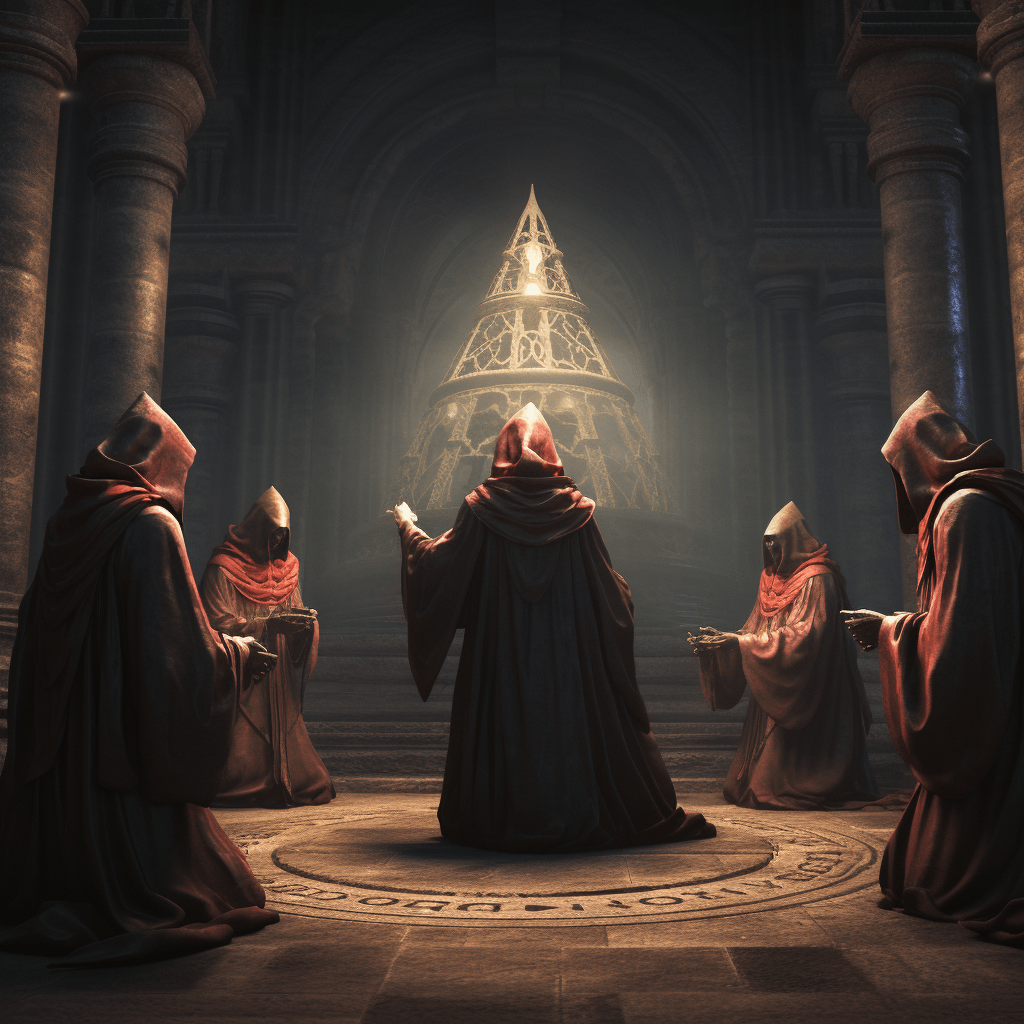
Rosicrucianism, a mystical philosophy that was born in the early 17th century, was introduced to the world through two anonymous manifestos: “Fama Fraternitatis RC” (The Fame of the Brotherhood of RC) and “Confessio Fraternitatis” (The Confession of the Brotherhood). These documents, seemingly authored by a mythical figure named Christian Rosenkreuz, offer an intriguing blend of religious, philosophical, and esoteric thoughts. While the existence of Rosenkreuz and the actual Rosicrucian Brotherhood are matters of historical debate, the influence of these texts is undeniable.
Rosicrucian Teachings: Esotericism at its Core
At the heart of Rosicrucian teachings is the belief in universal wisdom, offering an amalgamation of elements from Gnosticism, Hermeticism, alchemy, and Christian mysticism. Central to these teachings is the transmutation of the human soul into a state of divine enlightenment. According to Rosicrucian texts, this knowledge was once universal but got lost in time and the Brotherhood aims to rediscover and impart this wisdom.
Impact on the Enlightenment and Freemasonry
Rosicrucianism played a significant role in shaping the cultural and intellectual landscape of the Enlightenment era. Some scholars assert that the Rosicrucian ideals of reason and fraternity profoundly influenced the principles of Freemasonry.
Even if there is no direct historical link between the two, the shared symbols, rituals, and philosophies make a compelling case for cross-pollination. Freemasonry, in its modern form, contains echoes of Rosicrucian thought, especially in its higher degrees, like the Scottish Rite’s 18th degree, known as the Knight Rose Croix.
Contemporary Rosicrucian Orders
In the modern era, various organizations, like the Ancient and Mystical Order Rosae Crucis (AMORC), claim to preserve the ancient Rosicrucian traditions. These organizations, while diverse in their teachings, hold certain principles common – the divine nature of the human soul, the pursuit of wisdom, and the belief in a higher cosmic order.
Rosicrucianism and Modern Science
Interesting parallels can be drawn between the Rosicrucian search for universal wisdom and the quest of modern science. Both pursue knowledge, although through different paths – science through empirical evidence and Rosicrucianism through spiritual enlightenment. The Rosicrucian emphasis on introspective knowledge shares common ground with the emerging fields of consciousness studies and quantum physics.
The Last Word
In conclusion, the enduring allure of Rosicrucianism is rooted in its mystique and the universal appeal of its core tenets – the quest for knowledge and the spiritual transformation of the self. While the historical existence of the Rosicrucian Brotherhood remains elusive, the impact of its teachings on Western thought is substantial. As we stand on the threshold of new scientific breakthroughs, the Rosicrucian ideals of wisdom and self-realization seem more relevant than ever.
alchemy, Ancient and Mystical Order Rosae Crucis (AMORC), Christian mysticism, Christian Rosenkreuz, Confessio Fraternitatis, consciousness studies, Fama Fraternitatis RC, Freemasonry’s Knight Rose Croix, Gnosticism, Hermeticism and Rosicrucianism, introspective knowledge, Modern Rosicrucian orders, Rosicrucian esotericism, Rosicrucian influence on Freemasonry, Rosicrucian teachings, Rosicrucianism and Enlightenment, Rosicrucianism and modern science, Rosicrucianism origins, spiritual transformation, universal wisdom -
Taured: A Tale of Interdimensional Travel

Among the intriguing narratives that define the realm of unexplained phenomena, the mystery of the Man from Taured stands out for its baffling details and the profound questions it raises about the nature of reality. This story, which originates from the 1950s, tells of a man arriving at Tokyo’s Haneda Airport from a country called Taured, a place which, intriguingly, doesn’t exist on any known map.
Arrival at Haneda Airport
Our journey begins on a seemingly ordinary summer day in 1954 at Haneda Airport, when a neatly dressed European man arrived after a long flight from Europe. His routine interaction with customs officials took a mystifying turn when he presented his passport, issued by the non-existent country of Taured.
The Country of Taured
When queried about his homeland, the man confidently stated that Taured was a centuries-old European country located between France and Spain. However, no such country is known to exist in that geographical location, or anywhere else on Earth for that matter. He was adamant about his origins, and his passport, filled with visa stamps from previous travels, seemed to verify his claims.
Investigation and Disappearance
The customs officials, bewildered by the circumstances, decided to investigate further. They offered the man a world map, asking him to point out his homeland. Much to his astonishment and frustration, the place he identified was the Principality of Andorra, but he insisted it was Taured. In the meantime, he was accommodated in a local hotel with two immigration officials standing guard.
The following morning, the man from Taured had vanished without a trace. His disappearance was as inexplicable as his arrival, with all his personal documents that were held by airport officials also inexplicably disappearing.
Theories and Speculations
This story has sparked numerous theories that attempt to shed light on the man’s mysterious origins and his abrupt disappearance. The most popular theory postulates that the man from Taured was an unwitting traveler from a parallel universe where his country does exist.
This theory, related to the multiverse theory in quantum physics, suggests the existence of infinite parallel universes, including one where Taured is a recognized geographical entity. Another hypothesis proposes that the man was a time traveler from a future where nations have been renamed or newly established.
Skeptical Views
Of course, skeptics argue that the tale of the man from Taured is a mere urban legend, citing the lack of documented evidence or reliable firsthand accounts. However, absence of evidence is not evidence of absence, and the story continues to captivate those interested in unexplained phenomena and parallel universes.
Conclusions
The mystery of the man from Taured remains unresolved. Was he an interdimensional traveler lost in our world? Was he a visitor from another timeline? Or is the story a fabrication, a work of fiction? While we may never know the answer, the tale of the man from Taured offers an engaging exploration into the enigmatic possibilities of parallel universes, interdimensional travel, and the boundaries of our perceived reality.
Andorra and Taured, boundaries of reality, Haneda Airport 1954, history of Taured, interdimensional travel, investigation into Taured, man disappears from hotel, Man from Taured, missing country, multiverse theory, parallel universes, reality and perception, skeptic views on Taured, Taured and quantum physics, Taured mystery, Taured passport, Taured urban legend, time travel theory, Tokyo Haneda Airport incident, unexplained phenomena
Wonder about your world…

Take the plunge down the rabbit hole of insanity and wonder in this fast-paced, nonstop psychological thriller that will leave you questioning the very nature of reality and beyond. Part thriller, part romance, part existential horror, A Dream of Waking Life delves into lucid dreaming, psychedelics, existential ontology, video games, the nature of love, the nature of reality, and more.

Mendel’s Ladder delivers an adrenaline-fueled journey set on a dystopian future Earth, brimming with high-stakes action, adventure, and mystery. This epic series opener plunges readers into a world filled with diverse cultures, heart-pounding battles, and characters who will captivate your heart and imagination.

“E.S. Fein is raising the bar for quality as it’s a very well-written and thought-provoking book…There are points and themes in the story that could be discussed for eons as people will have their own idea on where it leads. It’s a book I would highly recommend.” – Andy Whitaker, SFCrowsnest

 Wondergressive