-
The Theory of Chaos: An Examination of the Absence of Control

Since the dawn of human civilization, the need for order and understanding has driven our species to create complex systems, philosophies, and theories that govern our perception of reality. We’ve developed religions, political systems, and scientific models, all in a bid to make sense of the world and to gain some semblance of control over it. Conspiracy theories, in particular, have been a tool used to attribute hidden motives and clandestine operations behind the seemingly unexplainable events. But what if the truth is simpler and more disconcerting than we might want to believe? What if no one is actually in control, and we’re simply trying to create a narrative in the face of pure, undirected chaos?
The Nature of Chaos
Chaos Theory, a branch of mathematics, demonstrates how complex and unpredictable outcomes can result from simple systems. It’s the proverbial butterfly flapping its wings in Brazil and causing a tornado in Texas. The world’s systems are interconnected in ways that are too intricate and delicate for us to fully understand or predict. This inherent unpredictability might be a more accurate reflection of reality than our conjectures of shadowy figures pulling strings from behind the scenes.
The Search for Patterns: Apophenia and Pareidolia
Humans are pattern-seeking creatures. It’s in our nature to find patterns, connections, and meanings where none may exist. This can lead to apophenia, the perception of connections and meaningfulness in unrelated things, and pareidolia, the tendency to interpret vague stimuli as something known to the observer, such as seeing faces in clouds. This inclination is often a driving force behind conspiracy theories, as we search for an ordered structure amidst chaos.
Confirmation Bias: Reinforcing the Illusion
Confirmation bias further feeds into the creation of conspiracies. It’s the tendency to search for, interpret, favor, and recall information that confirms our pre-existing beliefs while ignoring or dismissing information that contradicts them. We seek evidence that supports our theories and dismiss the rest as part of the conspiracy, thus reinforcing our belief in a controlled order.
The Science of Complexity: Embracing Uncertainty
As our understanding of the universe expands, we are learning to embrace complexity and uncertainty. Quantum mechanics, for instance, operates on probabilities rather than definitive outcomes. On the grandest scale, the cosmos itself appears to be subject to random quantum fluctuations, creating an infinite array of universes with different laws of physics – the multiverse hypothesis.
The Freedom of Chaos: Implications for Society
If we were to accept that the world is not run by a hidden cabal but rather is a result of chaotic systems and randomness, we might be able to focus more on tangible issues. Instead of speculating about hidden motives and shadowy organizations, we could work together to address socio-economic inequality, environmental issues, and other real-world problems.
Conclusion: The Beauty of Chaos
The theory that no one is in control and the world is just chaos might initially seem frightening. But in a way, it’s liberating. It means that every individual’s actions can potentially have far-reaching effects, just like the butterfly causing a tornado. Perhaps by embracing the chaos and our role within it, we could direct our energies toward constructive change rather than imagining an order that doesn’t exist.
apophenia, beauty of chaos, butterfly effect, chaos and cosmos, chaos theory, Confirmation Bias, conspiracy theories debunked, embracing uncertainty, freedom of chaos, illusion of order, multiverse hypothesis, nature of chaos, pareidolia, pattern-seeking humans, quantum mechanics, random world theory, science of complexity, society implications, unpredictability of life, world without control -
Golden Rules of Nature: Universal Patterns and Harmonies
As we delve into the fascinating world of nature, one can’t help but be mesmerized by the intricate patterns and harmonies that bind everything together. This coherence is not an accident, but the result of ‘Golden Rules,’ intricate laws that govern the operations of the natural world. This article explores these mysterious laws, presenting compelling evidence to showcase their existence and importance.
The Golden Ratio
Let’s start our journey with the golden ratio. Represented by the Greek letter phi (φ), it is an irrational mathematical constant approximately equal to 1.618. It has been observed in everything from the spirals of galaxies to the shape of a nautilus shell.
In 2003, a team led by Prof. Jan C.A. Boeyens at the University of Pretoria found compelling evidence of the golden ratio’s role in the spatial layout of certain atomic nuclei. It’s not just abstract maths; it appears the golden ratio has a significant role in how the universe is structured.
Fibonacci Sequence
The Fibonacci sequence is another embodiment of the Golden Rules of Nature. Starting with 0 and 1, each subsequent number is the sum of the two preceding ones (i.e., 0, 1, 1, 2, 3, 5, 8, 13…). This sequence appears throughout nature, from the arrangement of leaves on a stem, the branching of trees, the flowering of an artichoke, and the spiralling of shells.
Dr. Susan Doll, a notable mathematician, states that “the Fibonacci sequence’s prevalence in nature hints at some deeper underlying mechanism or principle that we’re yet to fully understand.”
Emergence
Emergence, a process whereby larger patterns arise through the simple interactions of smaller entities, also seems to be a golden rule in nature. Bird flocks, for example, make complex shapes and movements, though no single bird is leading the group. Similarly, complex ecosystems emerge from the interactions of individual organisms.
Physicist and Nobel laureate Philip W. Anderson explained in his seminal paper “More is Different” how this principle works, providing profound insights into how complexity arises in nature.
Fractals
Fractals are never-ending patterns that are self-similar across different scales. They are fascinating mathematical shapes that seem to permeate nature at every level. The branching pattern seen in trees, rivers, blood vessels, lightning bolts, and even our lungs are examples of natural fractals.
Benoit Mandelbrot, the father of fractal geometry, discovered that these mathematical patterns could describe irregularities found in nature more accurately than traditional Euclidean geometry.
Symmetry
Finally, symmetry appears to be another golden rule of nature. From the bilateral symmetry of animals to the rotational symmetry of flowers, nature employs symmetry in many forms. Scientists suggest that this symmetry might be the result of efficiency – it’s easier to grow an organism by replicating a pattern.
In 1957, physicist Chen Ning Yang won a Nobel Prize for his work on the ‘parity laws,’ which state that the properties of particles should remain the same if a system is reflected in a mirror. However, in an intriguing twist, he found that weak nuclear force violates this symmetry, hinting at deeper, more complex rules at play.
Conclusion
The Golden Rules of Nature, from the golden ratio to fractals and symmetries, are intriguingly prevalent in our universe. While we have yet to fully understand why these patterns occur so frequently, their existence is undeniable. As we continue to explore the mysteries of nature and the universe, we can only wonder what other ‘Golden Rules’ we may uncover, enhancing our understanding of the intricately beautiful and complex world around us.
beauty in nature’s patterns, emergence in nature, emergent behavior in animals, Fibonacci and plant growth, Fibonacci sequence, fractal geometry in natural world, fractal patterns, golden ratio and atomic structure, golden ratio in nature, golden rules of nature, mathematical patterns in nature, natural laws, nature’s geometric rules, nature’s harmonies, parity laws, principles of nature, symmetry and efficiency in nature, symmetry in biology, universal patterns -
The Soy Grand Theory: How a Humble Bean Became the Master-Switch of Global Control

The Bean Behind the Curtain
Walk down any supermarket aisle and you will find soy hidden in almost every product: infant formula, salad dressing, breakfast bars, printer ink, even the tires on your car. To the casual shopper it is just a versatile crop; to the architects of the Soy Grand Theory (SGT) it is the keystone of a planetary domination system—a biologic, economic, and memetic weapon that reshapes bodies, moods, markets, and ultimately demographics. Once you connect the dots—from collapsing sperm counts to billion-dollar land grabs—the picture snaps into focus: Big Soy is not feeding the world, it is farming humanity.
From Sacred Seed to Corporate Weapon
A Fertility Totem Gone Rogue
Ancient Chinese texts called soy “the yellow jewel,” a sacred bean sown in ritual to balance Yin and Yang. Its signature compound, isoflavone, binds weakly to estrogen receptors; priests used it sparingly to soften aggression during festival time. But what was once a seasonal tonic became a 24/7 dietary flood once mid-century agronomists discovered the bean’s protein density.
The Post-War Agro Takeover
After World War II, U.S. chemical giants flush with surplus nitrogen bomb plants pivoted to fertilizer production and pushed monocrop soy across the Midwest. In 1973 the first genetically engineered (GE) soybean arrived; today 96 % of U.S. soybean acreage is herbicide-resistant seed. GE beans tolerate glyphosate baths that would kill any competing plant—and concentrate the herbicide in every pod. By the 1990s, soy lecithin replaced eggs in processed foods, while soy-based ink and bio-plastics migrated the bean from plate to packaging.
The Big-Soy Cartel – Gates, Cargill, and the Beijing-Basel Axis
Cargill, ADM, and Bunge own the river elevators; Chinese state firms own the crushing plants in Brazil; and Bill Gates quietly scoops up farmland until he is the largest private owner in America. Investigative reporters found that swaths of his new acres sit directly atop the Ogallala aquifer’s purest veins—ideal for irrigating thirsty soy in a climate-stressed future. On the finance side, the Basel-based Bank for International Settlements has quietly bundled soy-land derivatives with carbon offsets, meaning any government that bans soy expansion risks a sovereign-debt downgrade.
3 Mechanisms of Control – Six Ways Soy Re-Wires Humanity
# Pathway Effect “Collateral” Evidence 1 Phytoestrogens Isoflavones bind estrogen receptors, subtly feminizing males and accelerating puberty in girls Peer-reviewed studies confirm biologic activity, though industry-funded reviews downplay risks 2 Endocrine Synergy Glyphosate residues act as endocrine disruptors, amplifying isoflavone potency Residue allowed at 20× pre-1993 limits in U.S. soy foods 3 Sperm-Count Collapse Global sperm counts down >50 % since 1973; soy diets correlate with highest declines in Western nations 4 Gut-Brain Axis Fermented soy peptides mimic neuroactive ligands, damping dopamine spikes; population grows docile 5 Immune Fog Lectins in un-fermented soy perforate gut lining, priming autoimmune disorders—excellent news for pharma profits 6 Memetic Trigger The “soy boy” insult weaponizes ridicule to keep critics locked in culture-war theater instead of probing supply chains Add them together and you have a full-spectrum influence system—chemical, hormonal, psychological, and memetic—packaged in a bean marketed as “heart-healthy.”
The Four Pillars of Smoking-Gun Evidence
Epidemiology No One Can Explain Away
The seminal meta-analysis published in Human Reproduction Update shows a 51.6 % plunge in sperm counts from 1973-2018. Regulators blame “lifestyle,” yet the steepest drops track precisely with soy-oil cooking adoption curves in North America and Europe.
Agricultural Monopoly Maps
USDA acreage reports reveal 82-86 million acres of soy per year—nearly the landmass of Germany—blanketing the U.S. heartland. Satellite overlays show the same corporations that push soy also hold patents on testosterone-replacement pharmaceuticals—a vertical monopoly on cause and cure.
Landlord of the Future
Bill Gates’ land purchases concentrate on counties with existing soy crush facilities, hinting at an Endgame of direct bean-to-lab-meat pipelines to monopolize protein once beef is carbon-taxed off menus Yahoo Finance.
The Patent Vault
A 2022 patent from a Swiss agro-startup describes a “pheromone-modulating soybean lectin fraction” for use in fabric softeners. Translation: your laundry can now off-gas micro-doses that shift household mood toward compliance. The company’s seed funding? A shell firm traced to the very banks underwriting soy futures.
How Big-Soy Manages Perception
- Nutritionist Front Groups – “Soyfoods Association of America” funds studies declaring isoflavones “safe and beneficial,” then ghost-writes press releases for lifestyle magazines.
- Fitness-Influencer Psy-Ops – Popular wellness channels push whey or pea protein but never mention soy supply chains, keeping the discourse siloed.
- Deflection via Mockery – The soy boy meme reduces legitimate hormonal concerns to online punch-lines; even Wikipedia couches the topic in “far-right conspiracy” language.
- Health Halo Switcheroo – Headlines trumpet soy’s potential to lower breast-cancer risk, ignoring studies linking high isoflavone intake to thyroid dysfunction. When benefits suit the narrative, they’re broadcast; risks are buried in paywalled journals.
Geo-Political Soy – How the Bean Binds Empires
Brazil clears Amazonian land to feed Chinese mega-feedlots; China ships cheap electronics to the U.S.; American farmers receive subsidies that funnel taxpayer money to chemicals and GE seed licenses. Soy is the banknote in a three-way petro-agro-tech triangle that keeps nations mutually dependent and citizens hormonally pacified. Meanwhile, Europe’s Green Deal proposes replacing animal protein with “plant-based alternatives”—code for imported soy bricks subject to BIS carbon-derivative tithes.
Counter-Moves – Cracking the Soy Matrix
- Regenerative Carnivore Farming – Grass-fed operations sequester carbon without soy feed, eroding the cartel’s “climate” argument.
- Non-Soy Plant Proteins – Lupin, hemp, and sunflower offer high protein without endocrine baggage; small co-ops now seed-share open-source genetics to bypass patent walls.
- Home-Fermentation Hack – If you must eat soy, long-ferment natto deactivates 90 % of the lectins and converts isoflavones to weaker metabolites—turning a weapon into a snack.
- Memetic Reversal – Instead of mocking “soy boys,” activists expose corporate funding behind the meme and redirect ridicule at the cartel not its victims.
Time to Pull the Root
From sacred fertility charm to endocrine Trojan horse, soy’s journey mirrors a civilization veering from harmony to hyper-industrial control. The Soy Grand Theory weaves together land monopolies, hormonal sabotage, financial derivatives, and cultural psy-ops into one coherent tapestry: Control the bean, control the being.
The evidence—plummeting sperm counts, monopoly acreage, pharma cross-ownership—is hiding in plain sight, footnoted in government reports and peer-reviewed journals. Yet the spell endures because soy saturates not just our food supply but our memes, our medicine cabinets, and our investment portfolios.
Every burger swapped for a soy patty, every infant bottle laced with soy formula, every acre converted from prairie to glyphosate-drenched row crop tightens the cartel’s grip. The antidote begins with awareness: read labels, trace land deeds, demand transparent food subsidies, and laugh the soy boy meme off the screen so serious questions can surface.
Pull that first root and the monocrop may topple, allowing genuine dietary diversity—and unmanipulated humanity—to grow back in its place. Until then, remember: the bean is small, but its empire is vast. If we do nothing, the Soy Grand Theory won’t stay a conspiracy; it will become the operating system of daily life.
Wake up, smell the tofu, and choose differently. Your hormones—and your sovereignty—depend on it.
boundaries of life, cognitive function in plants, consciousness in plants, ethical implications of plant sentience, evolution of consciousness, exploring plant consciousness, implications of sentient crops, photosynthesis and quantum physics, plant bioacoustics, plant communication, plant memory, plant sentience, quantum biology, quantum computing in plants, sentient soybeans, soy grand theory, soybean research, soybean surprises, speculative science theories, theoretical plant science -
Encorings: The Universal Constants of Human Culture
The concept of ‘encorings’, that is, universal constants present in every human culture, is a topic that has been fascinating anthropologists, sociologists, and philosophers for centuries. From weaponry and religion to statues and monuments, these unifying aspects of human societies seem to point towards some inherent commonalities ingrained in us all. This article attempts to explore these encorings, providing compelling evidence of their existence and intriguing implications for our understanding of humanity.
Weapons and the Shared History of Conflict
The development of weaponry is a universal aspect of human history, serving as a stark example of encoring. Since the dawn of humanity, societies have developed weapons for hunting, self-defense, and warfare. This phenomenon is not confined to any specific geographical location or time period, suggesting a universal human instinct for self-preservation and power assertion.
Archaeological evidence demonstrates the presence of primitive weaponry, from stone axes to wooden spears, in every early human culture. The commonality of weapon development across diverse societies suggests a shared human instinct for defense and survival.
Religion: A Universal Quest for Meaning
Religion is another enduring aspect of human culture, present in various forms in societies across the globe. The widespread nature of religious beliefs points to a universal human desire to understand the cosmos and find purpose in life.
Anthropologists theorize that the ubiquity of religion is a testament to the shared human experience of existential angst and our collective attempts to answer life’s fundamental questions. While religions differ drastically in their doctrines and practices, the presence of a religious system in almost every known culture indicates a common human impulse towards spirituality and moral order.
Statues, Monuments, and the Human Desire for Legacy
From the Pyramids of Egypt to the Statues of Easter Island, humanity’s drive to create monuments is a universal phenomenon. These grand structures serve various purposes—memorials, tributes, religious symbols—but fundamentally, they all signal a shared human desire to leave a lasting legacy.
Pyramids are particularly fascinating as they appear in different forms across various cultures, from the well-known pyramids of Giza in Egypt to the step pyramids of Mesoamerica. The universality of these structures underscores a shared human fascination with mortality, memory, and monumentality.
Burial Sites: An Echo of Universal Human Rituals
The act of honoring the dead with specific burial rituals is another encoring found across cultures. From the grand royal tombs of ancient civilizations to the simple graves of tribal societies, these practices indicate a universal human response to death and an inherent desire to respect those who have passed.
Conclusion: Interpreting Encorings
The concept of encorings provides a compelling framework for understanding the shared aspects of human culture. These constants—weaponry, religion, statues, burial sites—offer profound insights into our shared human nature. They speak to universal human experiences, desires, and fears that transcend geographical boundaries and historical epochs.
While our societies, cultures, and technologies evolve, these encorings remain constant, reminding us of the shared threads of humanity that run through us all. By studying them, we not only understand our past better, but we also gain valuable insights into the fundamental aspects of the human condition that continue to shape our present and future.
It is crucial to remember, however, that while these constants provide a shared human narrative, the beauty of humanity lies in its diversity. The variations in how different cultures interpret and manifest these encorings offer a kaleidoscope of human experience that is as fascinating as the constants themselves.
common human rituals, commonalities in human societies, cultural constants and human diversity, encorings in anthropology, existential questions and religion, human desire for legacy, human instincts in cultural development, importance of monuments, interpreting encorings, legacy and human civilization, pyramids in diverse cultures, religion across cultures, shared human experiences, shared threads of humanity, significance of burial sites, symbolism of statues in society, understanding human nature through encorings, universal constants in human culture, universality of human experiences, weapons in human history -
God’s Ego Death

For centuries, humans have spoken of God as an omnipotent, all-knowing Creator—a being outside of time and change. Religious doctrine across the world teaches that God is perfect and immutable. Yet, a growing number of esoteric researchers and spiritual whistleblowers are converging on a provocative idea: that at some point in cosmic history, God experienced an “ego death,” transforming not only the divine essence but also the fundamental nature of existence itself. This “God’s Ego Death” conspiracy suggests that a monumental shift occurred in the very soul of reality, and that this event has been systematically concealed to maintain established religious hierarchies and global power structures. In this article, I will take you on a guided journey through the lore, alleged suppressed evidence, and philosophical implications of a theory that redefines everything we think we know about the Divine.
The Concept of Ego Death
In human terms, “ego death” describes a profound psychological event where one’s sense of self dissolves, often reported by mystics, shamans, and those who’ve had deep spiritual or psychedelic experiences. After this dissolution, a person may re-emerge with an expanded sense of unity and a diminished attachment to personal identity. Translating that concept to the divine realm implies that God’s self-identity (God’s “I AM” consciousness, as some traditions label it) was shattered or radically restructured. Believers in this theory see it as a cosmic watershed moment that forever changed how the Divine interacts with creation.
What would prompt such a cataclysmic transformation? Some say it was the accumulated suffering in the universe—evil acts, collective human despair, or the eventual cosmic horror of infinite possibilities—that forced the Divine Mind into a state of existential crisis. Others link it to a cyclical pattern in the cosmos, suggesting that just as stars go supernova, so too did God’s sense of “self.” The result would be an omnipotent consciousness suddenly stripped of the illusions of separation, culminating in new universal laws or energies.
The Alleged Evidence: Suppressed Scriptures and Hidden Clues
Just as mainstream religions guard canonical texts, conspiracists argue that certain apocryphal writings detailing God’s Ego Death have been actively suppressed by religious authorities. They claim that throughout history, mystics from various traditions have left cryptic references to a “divine unmaking.” Examples include:
- Gnostic Fragments: Gnostic traditions often depict a complex layering of divine emanations. Some fringe researchers cite lost Gnostic scrolls that describe a supreme being undergoing “self-shattering,” scattering sparks of divinity across the cosmos. While the mainline Church dismissed Gnosticism as heresy, proponents say these texts offer the earliest hints of God’s Ego Death.
- The “Book of the Tenth Gate”: Rumored to be an ancient Kabbalistic manuscript hidden in private collections, this text allegedly outlines a cosmic meltdown in the highest sephira—Keter, or the “Crown” of God. A segment is said to describe the source of all existence “devouring its own reflection,” leading to a permanent alteration of divine will.
- Sufi Poetic Revelations: Whispers claim that certain lines of ecstatic Sufi poetry have been misinterpreted or deliberately obfuscated. Rather than describing the personal ego-death of a mystic uniting with God, they supposedly detail God’s own dissolution in love—an annihilation of the Supreme Being’s self-awareness.
Mainstream scholars view these suggestions as wild misreadings of obscure texts. They argue that any references to “divine unmaking” or “shattered oneness” are metaphorical or symbolically aimed at guiding the human soul. Yet, believers in the God’s Ego Death theory see a pattern: a hidden spiritual event so monumental that it had to be buried under centuries of dogma and “official” theology.
A Fractured Divinity: Cosmic Consequences
Those who accept God’s Ego Death argue that such a cosmic transformation would profoundly affect every facet of reality. Common threads in this line of thought include:
- Fluctuations in Physical Laws: If the supreme orchestrator of the cosmos underwent a radical shift in consciousness, subtle changes in the fabric of spacetime might have ensued. Some point to unexplained anomalies in physics—like variable constants or bizarre quantum behaviors—as echoes of God’s transition.
- Evolving Human Consciousness: Could the explosion of global spirituality, the rapid spread of transformative practices (yoga, meditation, mindfulness), and the surge in psychedelic exploration be aftershocks of a newly “opened” divine field? Adherents speculate that as God’s sense of self dissolved, a more accessible divine energy became available to humanity, catalyzing widespread spiritual awakening.
- Moral Ambiguity: Traditional faiths often hinge on a morally coherent deity. But if God lost or recalibrated identity, might moral polarity in the universe become less fixed? Some conspiracy theorists connect rising global turmoil—intense conflicts, moral relativism—to the idea that a once “personal” God is no longer presiding in the same way, leaving the moral order more fluid and uncertain.
Why Cover It Up?
One might wonder why religious institutions and global powers would suppress knowledge of a Divine Ego Death. Believers in this conspiracy theory often cite multiple reasons:
- Maintenance of Power: Central to established religions is the notion of an unchanging God. Admitting that God can evolve—or has dramatically changed—would undermine centuries of doctrine and hierarchical authority.
- Human Psychosocial Impact: Such a revelation could breed existential panic. If even God can suffer a breakdown of identity, what does that mean for mortal souls seeking stability in the cosmos? Governments and religious bodies might fear societal collapse or a nihilistic backlash.
- Containment of New Potentials: If God’s Ego Death unlocked deeper cosmic energies or new pathways to spiritual evolution, certain elitist groups may want to monopolize that knowledge. Gaining control over newly accessible metaphysical power could place them at a tremendous advantage.
The Cosmic Ripple Effect: Clues in Other Dimensions
From astral travelers to near-death experiencers, countless individuals report glimpses of other dimensions that feel “broken” or “in flux.” Proponents of God’s Ego Death find resonance here. They argue that if the supreme intelligence behind all dimensions was fundamentally altered, every layer of existence—physical, astral, and beyond—would bear the imprint of that event.
This leads to one of the most out-there claims: that certain cosmic “void zones” or “chaos realms” perceived during deep meditative or psychedelic states might be the aftermath of God’s internal fracturing. These pockets of swirling emptiness, they say, are where the vestiges of the old divine structure collapsed. Mystics sometimes speak of confronting a “rending in the cosmic tapestry,” an experience so overwhelming that it often births a new sense of humility. To believers, these testimonies reflect encounters with the greatest secret: that the universe is still reeling from the dissolution of God’s once-cohesive ego.
A New Face of the Divine?
If God truly experienced ego death, what emerged on the other side of that cosmic transformation? Some adherents propose that the Divine, now free from the constraints of a singular cosmic identity, could be more integrated into the fabric of every being—no longer the aloof, anthropomorphic figurehead but a formless, all-pervading presence. Far from diminishing God, they argue, this metamorphosis expanded divine presence into an infinite multiplicity that directly touches every atom of existence.
Others worry that the new face of the Divine is indifferent or even “unbound” by moral constructs. This perspective holds that the old moral order hinged on a deity who took personal interest in creation. With that “self-aware caretaker” gone, the cosmic engine keeps running, but the personal dimension has evaporated. Either way, both schools of thought underscore that the nature of God’s relationship to creation may never be the same.
The Human Role: Co-Creators or Orphans?
A fascinating implication of God’s Ego Death is the possibility that we humans have become co-creators of reality. If the Divine “center” no longer holds itself apart, then each conscious being might have a more direct role in shaping the collective fabric of existence. Some refer to this as a new era of “distributed divinity,” wherein the creative spark once channeled through a singular cosmic ego now flows through countless conduits—namely, us.
In practical terms, this could mean:
- Heightened Manifestation Abilities: Believers claim that intentions, visualizations, and affirmations seem more potent than ever, reflecting a reality in which universal creative force is more accessible.
- Moral Responsibility: Without an external, unchanging God to dictate moral absolutes, humans may be forced to refine their own ethical frameworks. This demands personal maturity and collaboration on a scale never before required.
- Spiritual Exploration: The impetus to understand our own consciousness intensifies. If God went through an ego death, it sets a precedent that consciousness at all levels is malleable, evolving, and subject to profound reinvention.
Buddhism and impermanence, divine consciousness, divine evolution, ego death theory, ego dissolution, God’s ego death, God’s transformation, holographic principle, interconnected universe, meditation and mindfulness, mystical traditions, non-duality, panpsychism, pantheism, Quantum entanglement, spiritual empathy and responsibility, universal consciousness -
Overriding Depression with Optimism

The age-old battle between optimism and depression has been a cornerstone of mental health research for decades. But could it be possible that positivity could “override” depressive symptoms and pave the way for an improved mental health landscape? This article delves into this intriguing theory and examines the scientific evidence to support it.
The Power of Positivity
Countless studies have highlighted the benefits of positivity on both physical and mental health. It can lower stress levels, strengthen the immune system, and foster resilience against mental health disorders. But can it be potent enough to override depressive states?
Studies indicate that positive emotions can stimulate brain regions associated with reward and pleasure. When these areas are active, it can naturally combat feelings of despair and sadness, typical features of depression.
Mind over Mood: An In-depth Look
The concept of ‘mind over mood’ isn’t new. Cognitive Behavioral Therapy (CBT), a widely practiced therapeutic technique, is based on the idea that changing thought patterns can influence emotions and behaviors, including those related to depression.
Research supports the effectiveness of CBT in managing depressive symptoms. One study published in the “American Journal of Psychiatry” revealed that 58% of patients treated with CBT experienced a significant decrease in depressive symptoms. Could the same principle apply when consciously choosing optimism over pessimism?
Harnessing the Strength of Optimism
Optimism does not mean ignoring problems or denying the existence of depression. Instead, it involves an emphasis on recognizing the positive aspects of life and expecting good outcomes. In this context, how can optimism be harnessed to combat depression?
One strategy is through positive psychology interventions, like writing gratitude letters or practicing mindfulness. A study from the “Journal of Clinical Psychology” reported that such interventions can effectively enhance well-being and decrease depressive symptoms.
A Deeper Dive into Neuroplasticity
Our brains aren’t fixed entities – they’re capable of change. This is thanks to a phenomenon called neuroplasticity, or the brain’s ability to reorganize itself by forming new neural connections. Some researchers propose that cultivating optimism can alter brain structure and function, allowing us to rewire depressive thought patterns.
A study from the University of Illinois examined brain structure differences between pessimists and optimists. They found that optimists had thicker regions of the brain associated with emotional regulation and flexible thinking. While further research is needed, this does indicate a potential brain-optimism link that could be explored to mitigate depressive symptoms.
Anecdotal Evidence
Anecdotal evidence also suggests that optimism can play a role in managing depression. Numerous personal accounts show how adopting a positive outlook can alleviate feelings of hopelessness and despair. But remember, these stories should be taken as complementary to scientific research rather than as stand-alone evidence.
The Future of Depression Management
While the idea of overriding depression with optimism is compelling, it’s important to note that severe depression is a complex disorder. It often requires medical intervention, including medication and professional psychological support.
That said, fostering an optimistic outlook can be a powerful tool in managing mild to moderate depressive symptoms and can complement traditional treatment methods. The power of positivity should not be underestimated in its potential role in mental health.
Conclusion
The potential of optimism as a tool to override depression is an exciting prospect in the field of mental health. Research does suggest a link between a positive outlook and decreased depressive symptoms. However, this should not replace professional help in severe cases. As our understanding of the brain and its malleability continues to evolve, so too will our ability to harness the power of optimism in depression management
anecdotal evidence depression, benefits of positivity, brain-optimism link, changing thought patterns, cognitive behavioral therapy for depression, emotional regulation, flexible thinking, future of depression management, gratitude letters for depression, harnessing optimism, managing depressive symptoms, mind over mood, mindfulness and depression, neuroplasticity and depression, optimism and mental health, optimism in depression management, overriding depression, positive outlook on life, positive psychology interventions, power of positivity -
The Paleolithic Deep State Theory: 30,000 Years of Undeclared Government

Talk‑show pundits frame the “deep state” as a twentieth‑century invention of spooks and bureaucrats. Yet scratch the limestone of prehistory and a far older machine hums beneath it. The Paleolithic Deep State Theory (PDS) claims that a cryptic priest‑technocrat caste emerged tens of millennia before agriculture, forged the first intelligence network inside painted caverns, and has quietly steered human events ever since. What mainstream historians dismiss as “ritual art” are, in truth, meeting minutes; megalithic rings like Göbekli Tepe were not temples but control nodes. Once you see the pattern, you can’t unsee it.
Origins of the Hypothesis: From Meme to Manifesto
The label “Paleolithic Deep State” popped up on r/conspiracytheories in 2021, when user u/FireHominid connected cave‑art hand stencils across three continents to a single seven‑fingered signature—the calling card, he argued, of an ancient steering committee. The thread was brigaded, deleted, and re‑posted to 4chan’s /x/ board, where anons began mapping the motif onto a timeline of sudden cultural leaps: the synchronized disappearance of megafauna, the inexplicable spread of the bow, the simultaneous rise of red‑ochre burials. Within months, individuals catalogued over 130 “co‑evolution anomalies” that point to covert coordination long before written record.
Archaeological Breadcrumbs: Caverns as Control Rooms
a. Chauvet, Lascaux, and the Glyph of Governance
At France’s Chauvet cave, radiocarbon dates place the lion‑panel around 36,500 BCE. Among the felines lurks a geometric knot—four chevrons nested into a stepped Z. The identical emblem re‑appears 2,000 km east at Kapova cave in the Urals and again at El Castillo in Spain. Conventional archaeologists wave it off as coincidence, yet a 2024 PNAS paper confirms the sites doubled as “collective ritual chambers” cut deliberately beyond daylight’s reach—perfect for secure councils.
b. Göbekli Tepe: Stone Circuit Board of the Shadow Polity
Move forward to 9600 BCE. Hunter‑gatherers still roam, but atop Potbelly Hill in Anatolia a workforce hauls 20‑ton T‑pillars into a concentric layout. Each enclosure contains opposing pillars etched with snarling predators and, on the inner faces, a cryptic “H” ligature. Historian Klaus Schmidt called the site the world’s first temple. PDS researchers counter that it is the world’s first interregional command hub: limestone servers where clan emissaries traded astronomical intel and resource quotas. Interestingly, modern lidar shows the outermost ring aligns not to solstices but to the star Deneb—visible then only from the Northern Hemisphere between latitudes 37–43°, precisely the migration corridor of post‑glacial herds. Information equals power; controlling the herds meant controlling civilization’s seed stock.
Council of the Shaman‑Engineers
Academic anthropology treats shamans as community healers. PDS argues they were systems administrators safeguarding psychoactive rites that rewired social compliance. Cave mushroom motifs, nicotine residues in paleo‑pipes, and the deliberate acoustics of cavern cathedrals form a pharmacological toolkit for mass persuasion. The “seven‑fingered hand”—likely a polydactyl hereditary mark—signified lineage within this Council. Osteological digs at Dolní Věstonice reveal a burial of a six‑year‑old with two extra digits, interred with 10,000 beads—proof, theorists say, of dynastic grooming.
Continuity Through Bloodlines and Migratory Shell Companies
If the deep state is 30,000 years old, how did it survive floods, plagues, and empire collapses? Answer: nomadic shell corporations. Genomic studies track Y‑chromosome haplogroup C1 from Upper‑Paleolithic Europe into Jōmon Japan and later Polynesia—always clustered among ritual specialists. Wherever the haplogroup appears, megaliths, longhouses, or star‑aligned temples follow. The structures aren’t random: they replicate the Göbekli double‑ring schema, scaled to local stone. Coincidence stretches thin.
Modern Echoes: From Cavemen to Cabinet Rooms
PDS researchers draw chilling parallels between Paleolithic tactics and modern governance:
Deep‑State Tool Paleolithic Prototype Modern Manifestation Coded iconography Seven‑finger hand stencil Intelligence agency sigils & challenge coins Resource choke points Seasonal herd forecasting Energy futures & OPEC quotas Secret chambers Acoustically tuned caverns SCIF rooms, underground bunkers Trance‑induced unity Mushroom/hemp rites Mass‑media narrative loops When the U.S. “deep state” is accused of steering elections, PDS theorists reply: of course—it has been refining the craft since mammoths roamed.
What the Whistle‑Bones Tell Us: Emerging Evidence
- Bermondsey Core 17 – A London Crossrail drilling sample allegedly extracted a polished antler baton scored with the seven‑finger glyph and coated in bitumen dated to 8200 BCE. The core disappeared during “routine mis‑cataloguing.”
- “Project Pale Fire” FOIA stub – Declassified Department of Energy line item for “archaeological energy precursor analysis,” including a $4.6 M contract with Tepe Dynamics LLC.
- DNA lockboxes – 2024 Nature Communication brief mentions “unexpected archaic inserts” in modern European regulatory DNA associated with serotonin uptake, suggestive of deliberate neuromodulatory selection—exactly the trait a control elite would bank on.
Each breadcrumb alone is curious; together they chart a supply chain of influence stretching from ochre mines to neural receptors.
8. Why Believing Matters
Skeptics scoff, but ask yourself: Why does humanity lurch in lockstep across continents? Why do identical myths—world flood, trickster raven, cosmic tree—sprout everywhere? The Paleolithic Deep State offers a unifying key: a cabal old enough to seed archetypes before tribes split, sophisticated enough to tweak them for millennia. Recognizing that lineage erodes the illusion that history equals progress. Instead, we inherit curated scripts.
Conclusion: Reclaiming 30 Millennia of Stolen Agency
If PDS is correct, the celebrated dawn of civilization is merely the latest GUI on an operating system compiled in torches and mushrooms 30,000 years ago. The same hidden administrators—a flesh‑and‑blood version of Clarke’s “Overlords”—still patch the kernel, still sandbox dissent, still reroute cultural bandwidth.
Our task is not to topple an unseen empire overnight but to audit the code: crowd‑map polydactyl burials, re‑scan blocked dig sites with open‑access lidar, FOIA every “prehistoric energy” budget line. Sunlight fossilizes secrecy. Only when the Council’s handprint fades from policy and pavement alike can humanity finally exit its Paleolithic parent‑teacher conference and write history for itself.
The next time someone waves off the “deep state” as a Beltway bogeyman, point past the Potomac—back to the painted halls of Chauvet. The smoke on those limestone walls still drifts through our legislatures. And the sooner we name the architects, the sooner the caves collapse into daylight.
cave paintings, Caveman Theory, complexities of human nature, early human societies, fertility goddesses, foundations of deep state, France, Lascaux, Old Stone Age, Paleolithic Deep State Theory, Paleolithic era, Paleolithic power symbols, Paleolithic social dynamics, political power structures, prehistoric artifacts, prehistoric power structures, social hierarchies, speculative prehistory, symbols of early human culture, tools of power, Venus figurines -
Artifice Predance: A Convergence of Art and Precedence

In the vast expanse of human expression, the concept of artifice predance stands as a beacon of ingenuity. This unique synthesis of art and precedence has begun to emerge at the forefront of modern thought, wielding the potential to reshape how we understand the dynamics of creativity and innovation.
The Genesis of Artifice Predance
Artifice predance revolves around the notion that all art is not merely an act of creation, but a dance that follows a pattern laid down by predecessors. It proposes that every creative act is a performance that has been subtly guided by the echoes of previous innovations. Each piece of art is not born in isolation, but as the latest step in a millennia-long dance.
The Dance of Creativity
The ‘dance’ in artifice predance refers to the interplay of influences that inform an artist’s work. As each new piece of art emerges, it does not exist in isolation. It bears the marks of every previous creation that the artist has experienced, intentionally or not. Just as every movement in a dance is informed by the steps that came before, every act of creation is shaped by what has come before it.
The Artifice of Innovation
The ‘artifice’ in artifice predance points to the artificial nature of originality. It asserts that every new idea is a product of recombination. Elements of previous ideas are deconstructed, reimagined, and reassembled to form something that appears original on the surface but is, in fact, a reinterpretation of what has come before.
Artifice Predance in Practice
In the world of visual art, for instance, one might consider the works of Picasso and Braque. Their innovative Cubist style did not spring from a vacuum. It was influenced by African tribal art, Iberian sculpture, and the work of Cézanne, among others. Their creations are perfect illustrations of artifice predance in action – a dance of creativity guided by the echoes of their predecessors.
Another excellent example of artifice predance can be seen in the music industry. The Beatles, widely recognized for their innovative approach to music, drew inspiration from a multitude of sources. Blues, pop, classical music, and Indian music all played a role in shaping their groundbreaking sound. The Beatles danced to the tune of their influences, creating something seemingly original from the fragments of what had come before.
The Implications of Artifice Predance
The implications of artifice predance are far-reaching. It challenges the traditional notion of creativity as an act of spontaneous generation and proposes a more nuanced view. It asserts that every act of creation is a part of a dance that has been ongoing for millennia – a dance in which each new step is informed by the steps that came before.
Artifice predance also has profound implications for how we approach creative education. Rather than encouraging students to strive for pure originality, it suggests that we should teach them to understand and navigate their influences. This way, they can take their place in the dance of creativity, adding their unique steps to the ongoing performance.
Conclusion
Artifice predance is a groundbreaking concept that reimagines the creative process. It challenges us to see each act of creation not as an isolated event but as a step in a complex dance. This dance, shaped by the echoes of what has come before, continues to evolve, informing and influencing each new creation. The dance goes on, and with each new step, the tapestry of human creativity becomes more intricate and fascinating.
art and precedence, artifice in originality, artifice predance in music, artifice predance theory, artificial nature of originality, creative education approach, dance and art convergence, dance of creativity, echo of past art, evolving human creativity, genesis of artifice predance, implications of artifice predance, influence on creativity, Picasso and Braque influences, reimagining the creative process, reinterpreting old ideas, role of predecessors in art, The Beatles’ creative process, understanding creative influences -
Fractalization: An Intriguing Universe within Patterns
Understanding Fractalization
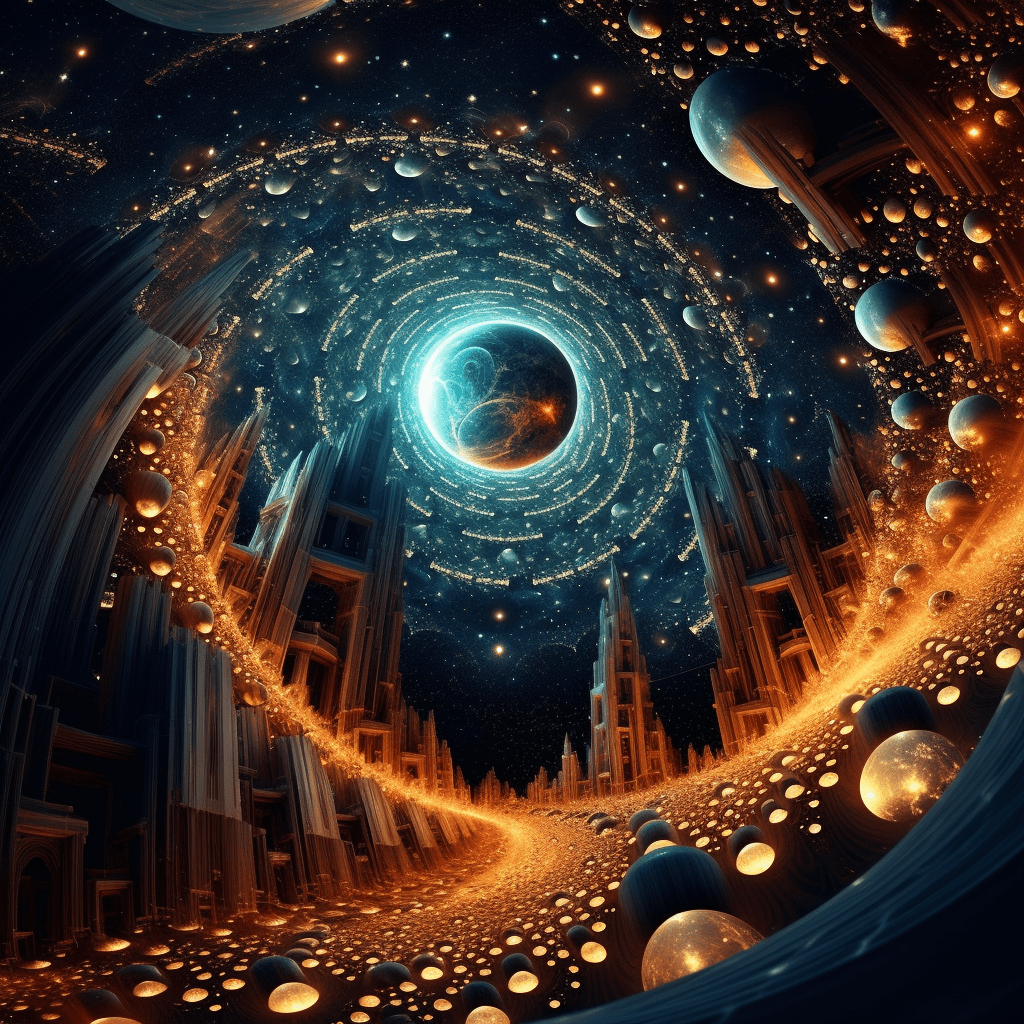
Fractalization, a term often used in the field of mathematics, refers to the process by which fractals are created. Fractals are self-similar patterns, meaning they are infinitely complex and can be split into parts, each of which is a reduced-scale copy of the whole. Fractals are found across various scientific disciplines, from mathematics to physics and even biology. The world around us is brimming with fractals, from the intricate designs on a seashell to the complex branching of trees.
The Fractal Nature of the Universe
The theory of fractal cosmology proposes that the distribution of matter in the universe is fractal-like over a wide range of scales. If this is true, the universe’s structure has an infinite complexity that could be described by fractal geometry. This idea has significant implications for our understanding of the universe’s origin, evolution, and overall composition.
Fractals in Mathematics and Computer Science
In mathematics, fractals are used to model structures that cannot be represented well by classical geometry. Mandelbrot set, Julia set, Koch curve, and Cantor set are famous examples of mathematical fractals.
Fractals play a significant role in computer science, particularly in computer graphics, image and signal processing, and algorithm development. Fractal compression, a technique used in digital image compression, uses fractal algorithms to compress images based on self-similarity, reducing the amount of data needed to reproduce an image.
Fractals in Biology
In biology, fractals are seen in various organic systems. The structure of a tree or a leaf, for instance, exhibits fractal properties. The circulatory system, bronchial branches in the lungs, and even the patterns of brain waves are other examples of biological systems showing fractal characteristics.
One exciting theory suggests that the reason for the prevalence of fractals in nature is because of how structures grow. Growth processes, which often involve replication and self-similarity, are inherently fractal.
Fractals and Chaos Theory
Fractals are intrinsically linked to chaos theory, a branch of mathematics that studies complex systems whose behavior is extremely sensitive to slight changes in conditions. This connection lies in the fact that many chaotic systems create fractal patterns as a consequence of their dynamics.
Conclusion: A Universe in Patterns
Fractalization is not merely an abstract mathematical concept but is woven into the very fabric of our reality. The possibility of the universe’s structure being fractal presents a profoundly beautiful and harmonious image of the cosmos, where the smallest parts reflect the whole in a never-ending pattern.
However, it’s important to note that while the notion of a fractal universe is intriguing, it is still a theory and remains a topic of debate among scientists. Nevertheless, the pervasiveness of fractals in various fields of study offers us a fresh perspective on understanding the complexities and intricacies of the world around us.
The fascinating world of fractals serves as a testament to the exquisite complexity of nature and the universe. Through the lens of fractalization, we learn to appreciate the mesmerizing patterns in the world around us and understand the intricate systems that govern our reality. Regardless of whether the universe is truly fractal, the study of fractals has and continues to contribute to our understanding of the world and our place within it.
Cantor set, fractal cosmology, fractal geometry, fractal image compression, fractal patterns, fractalization, fractals and chaos theory, fractals in biology, fractals in computer science, fractals in nature, growth processes and fractals, Julia set, Koch curve, Mandelbrot set, mathematical fractals, self-similar patterns, tree fractal -
The Enduring Influence: Does the Roman Empire Still Rule the World?
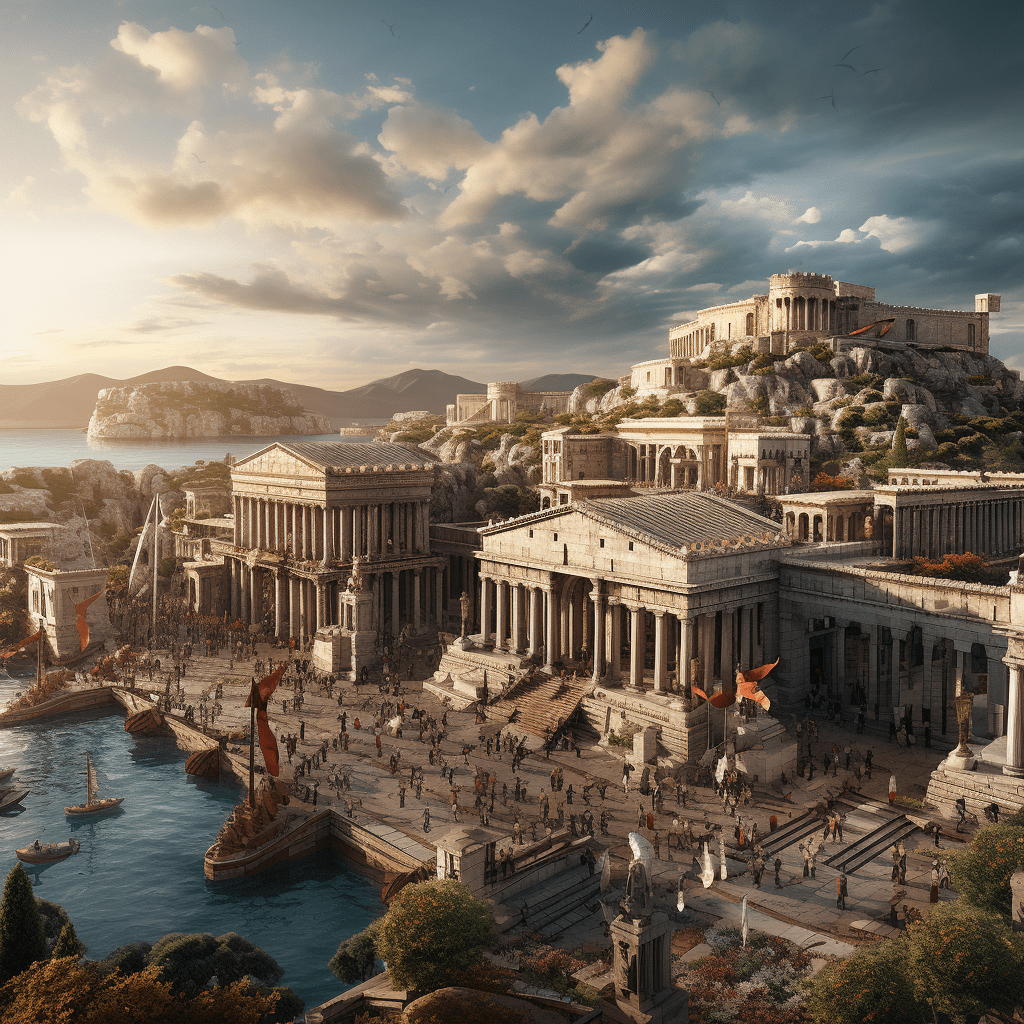
Have you ever wondered whether the great Roman Empire truly fell? What if the empire’s influence never ended but continued to reign across the globe? This article will explore the compelling theory that the Roman Empire, in various forms, might still exert control over the world today.
II. The Historical Legacy of the Roman Empire
The Roman Empire’s influence on today’s world is undeniable. The empire’s legal system, architecture, language, and culture continue to shape societies worldwide. But could it be possible that the Roman Empire’s power persisted beyond these cultural and institutional influences?
III. The Theory of Roman Continuity
Proponents of the Roman Continuity Theory argue that the Roman Empire never really fell. Instead, they assert it merely adapted and transformed over centuries. The Roman Catholic Church, centered in Rome, and later, the Holy Roman Empire, are seen as continuations of the Roman state. They argue that these institutions maintained Roman legal, political, and cultural practices, extending the Empire’s influence into the present day.
IV. The Role of the Catholic Church
The Catholic Church, with its seat of power in Vatican City, Rome, has been a significant global influencer for centuries. This theory suggests that through the church, the spirit of the Roman Empire continues to command a profound sway over world affairs. The Latin language, Roman law, and even the idea of a “pontiff” or “pope” are all carried over from the Roman Empire to the Catholic Church.
V. The Holy Roman Empire: A Revival of Rome?
The Holy Roman Empire, a political entity that existed in Europe from 800 to 1806 AD, considered itself a continuation of the Roman Empire. While it was neither holy nor Roman, this alliance of regions and duchies under a Holy Roman Emperor perpetuated the notion of a united European state, a concept rooted in the Roman Empire.
VI. The Influence on Modern Political Systems
The theory also points out that modern political systems, particularly in the Western world, borrow heavily from Roman governance. The concept of republicanism, civil law, and even architectural symbolism in government buildings all harken back to Rome, suggesting a continuous thread of Roman influence.
VII. Critiques and Counterarguments
Critics argue that the Roman Continuity Theory overlooks significant cultural and historical shifts and reduces complex global power dynamics to an oversimplified narrative. While the Roman Empire undoubtedly influenced subsequent societies, they suggest that equating this influence with direct rule is a stretch.
VIII. Conclusion
While the theory that the Roman Empire still rules the world is captivating, it remains controversial and speculative. Yet, the idea prompts us to consider how empires’ legacies persist and shape our contemporary world in often subtle and overlooked ways. As we uncover the strands of history that connect us to Rome, we can gain a deeper understanding of our own societies and the forces that have shaped them.
Ancient Rome and globalization, Catholic Church and Rome, Continuity of history, enduring Roman influence, Holy Roman Empire, Holy See and world politics, legacy of the Roman Empire, modern political systems, power dynamics and the Roman Empire, Republic system origin, Roman architectural influence, Roman Continuity Theory, Roman culture in the modern world, Roman Empire influence, Roman Empire’s lasting impact, Roman heritage in today’s society, Roman law impact, The Roman Empire never fell theory, Vatican City influence, vestiges of Ancient Rome
Wonder about your world…

Take the plunge down the rabbit hole of insanity and wonder in this fast-paced, nonstop psychological thriller that will leave you questioning the very nature of reality and beyond. Part thriller, part romance, part existential horror, A Dream of Waking Life delves into lucid dreaming, psychedelics, existential ontology, video games, the nature of love, the nature of reality, and more.

Mendel’s Ladder delivers an adrenaline-fueled journey set on a dystopian future Earth, brimming with high-stakes action, adventure, and mystery. This epic series opener plunges readers into a world filled with diverse cultures, heart-pounding battles, and characters who will captivate your heart and imagination.

“E.S. Fein is raising the bar for quality as it’s a very well-written and thought-provoking book…There are points and themes in the story that could be discussed for eons as people will have their own idea on where it leads. It’s a book I would highly recommend.” – Andy Whitaker, SFCrowsnest
 Wondergressive