-
Solar Plexus Clown Gliders

The term “Solar Plexus Clown Gliders” might not be familiar to many. It’s a phrase that’s been lurking in the fringe realms of paranormal research and metaphysics. The concept revolves around energy-based entities, psychosomatic interactions, and consciousness exploration. Let’s delve into this fascinating theory, keeping an open mind to its potential possibilities.
The Intricacy of the Solar Plexus
The solar plexus, or the celiac plexus, is a complex network of nerves located in the abdomen, behind the stomach and near the diaphragm. It’s often associated with the third chakra in spiritual traditions and considered the central point of the human energy system, governing self-esteem, personal power, and transformation.
The intriguing part of the solar plexus theory is the proposition that this nexus of energy within our bodies might harbor entities referred to as “Clown Gliders.”
Unraveling the Clown Gliders
“Clown Gliders” might sound like something out of a fantasy novel, but within this context, it refers to potential non-physical entities or energies that may interact with our physical bodies and consciousness in ways not yet fully understood.
While mainstream science doesn’t recognize the existence of such entities, numerous cultures and spiritual traditions around the world speak of spirit beings or energies that can interact with humans, often through specific energy centers in the body. These could be considered analogous to the proposed Clown Gliders.
Encounters and Effects
Various anecdotes from individuals who identify with experiencing Clown Gliders suggest a wide range of effects. These may include feelings of euphoria, altered states of consciousness, heightened creativity, or even bouts of anxiety and fear.
The variety of effects reported might be due to the individual’s personal energy, emotional state, or environmental factors, creating a unique interaction with these entities. While these experiences remain subjective and difficult to measure, they provide intriguing anecdotal evidence to ponder.
The Psychosomatic Connection
An essential aspect of this theory is the idea that Clown Gliders might influence or be influenced by the mind-body connection. The solar plexus is often associated with emotional processing; thus, the emotional state of an individual could impact the interaction with these entities.
This concept aligns with broader research into psychosomatic medicine, which explores how emotional factors can influence physical health and wellbeing. While Clown Gliders add an extra layer of complexity to this field, it’s an interesting angle to consider.
Quantum Consciousness and Clown Gliders
Quantum consciousness is a theory that suggests consciousness may be a product of quantum processes occurring within the brain. If this is the case, the presence of non-physical entities like Clown Gliders might not be as far-fetched as it first appears. Quantum physics has already challenged our understanding of reality, with principles like superposition and entanglement suggesting potential connections between all things in the universe.
Therefore, it could be possible that these Clown Gliders exist in some form of quantum reality, interacting with our consciousness in ways that we don’t yet fully understand.
Towards a Deeper Understanding
The existence of Solar Plexus Clown Gliders is certainly not a widely accepted theory. It pushes the boundaries of our understanding and challenges conventional thinking about consciousness, reality, and the nature of our existence. However, as we’ve learned from the history of science, sometimes the most revolutionary ideas start as the most controversial.
The Solar Plexus Clown Gliders theory, despite its unusual nomenclature, invites us to expand our thinking, explore the unknown, and consider the infinite potential of our reality. Whether real or metaphorical, it encourages us to delve deeper into understanding the intricate relationship between our consciousness and the universe around us.
consciousness and universe, consciousness exploration, effects of Solar Plexus Clown Gliders, emotional processing, energy-based entities, fringe paranormal research, human energy system, metaphysical theories, non-physical entities, psychosomatic interactions, psychosomatic medicine, quantum consciousness, quantum processes in brain, quantum reality, solar plexus and emotions, solar plexus chakra meaning, Solar Plexus Clown Gliders, spiritual energy centers, third chakra, understanding solar plexus -
Organs Decalcification: The Silent Revolution in Human Health

Organ decalcification has become a topic of considerable interest in the medical field. Some suggest that accumulated calcium deposits in the body’s organs could be a significant cause of various health issues. Let’s embark on an investigative journey exploring this intriguing subject.
What is Organ Decalcification?
Organ decalcification refers to the process of removing excess calcium from the body’s organs. It is a controversial concept, as conventional medicine usually associates calcium with healthy bones and teeth. However, excess calcium can accumulate in places where it doesn’t belong – leading to problems.
Why is Excess Calcium a Problem?
Calcium, though essential, becomes problematic when the body doesn’t use it correctly. It can accumulate in various organs, including the heart, kidneys, and brain, causing calcification. This excess calcium can contribute to diseases like coronary artery disease, kidney stones, and neurodegenerative disorders.
Understanding Calcification
Calcification often begins as a response to injury or inflammation. For instance, in atherosclerosis, a type of heart disease, fat, cholesterol, and calcium deposit along the artery walls, causing them to harden. This condition, known as calcification, reduces blood flow and increases the risk of heart attacks and strokes.
Decalcifying the Organs: Is It Possible?
Several health practitioners, nutritionists, and researchers believe that it’s possible to reduce or remove these calcium deposits, improving organ function and overall health. The primary methods often suggested include dietary changes, increased hydration, and the use of certain supplements.
Dietary Changes
A diet rich in magnesium and low in dairy products and calcium supplements may help. Magnesium can inhibit calcium absorption and re-dissolve calcium deposits. Foods high in magnesium include green leafy vegetables, avocados, nuts, and seeds.
Hydration and Its Role
Adequate hydration can aid in flushing out toxins, including calcium deposits. It ensures that the kidneys function optimally, filtering out excess minerals from the body.
The Role of Supplements
Some natural compounds like Vitamin K2 and EDTA have shown potential in reducing calcium deposits. Vitamin K2, present in fermented foods and certain cheeses, helps direct calcium to where it’s needed in the body.
Chelation therapy, which uses EDTA (a synthetic amino acid), can bind to calcium deposits and remove them from the body. Though controversial, some studies suggest that it might help in cases of atherosclerosis.
Decalcification and Brain Health
The pineal gland in the brain is particularly prone to calcification due to its high blood flow and concentration of minerals. Some researchers suggest that decalcifying the pineal gland could improve sleep patterns and increase overall wellbeing.
Conclusion
The theory of organ decalcification offers a compelling perspective on managing and improving health. While mainstream medicine might not fully accept these ideas, a growing body of research suggests that controlling calcium in the body could help mitigate several diseases. As always, any health intervention should be undertaken under the supervision of a healthcare professional. This concept of organ decalcification indeed paints a fascinating picture of a holistic approach to health and well-being, and only time and rigorous scientific research will determine the complete validity and acceptance of these practices.
alternative medicine for calcification, calcification and brain health, calcification in organs, calcium buildup and health problems, calcium deposits and neurodegenerative disorders, chelation therapy for calcium, decalcification and heart disease, decalcification supplements, decalcifying pineal gland, diet for decalcification, effects of excess calcium, effects of organ decalcification on wellbeing, how to remove calcium deposits from body, importance of hydration, natural methods to decalcify organs, organ calcification and kidney stones, organ decalcification, reducing calcification, removing calcium from organs, vitamin K2 and decalcification -
The Enigma of Mountain Peaks: Unraveling the Top of Mountains Conspiracy

There’s an intriguing theory that has been circulating in the shadowy corners of conspiracy forums and websites – the “Top of Mountains Conspiracy”. The premise is as intriguing as it is controversial: that the very summits of our world’s mountains are not what they seem to be. Some proponents of this theory suggest that mountains are artificially created, while others hint at secret bases or hidden worlds existing at these altitudes.
The Artificial Mountain Theory
The first facet of this conspiracy suggests that mountains are not natural formations but rather the remnants of ancient civilizations or even extraterrestrial interventions. The supposed ‘evidence’ includes symmetry in mountain ranges, anomalies in rock composition, and unexplained archaeological discoveries at high altitudes.
Archaeological anomalies have been a substantial fuel for this theory. From the inexplicable ruins of Machu Picchu perched high in the Andes to the summit of Mount Ararat, where some claim Noah’s Ark rests, there seems to be a disproportionate amount of ancient activity at high altitudes. Could these sites indicate a once globally-dominant civilization that had the technology to manipulate mountains and the landscape at will?
Mountain Peaks as Secret Bases
The second part of the conspiracy suggests that mountain peaks serve as covert bases for clandestine operations, by entities ranging from secret government organizations to extraterrestrial beings. This theory draws inspiration from real-life instances, such as the Cheyenne Mountain Complex, a military installation located in the Rocky Mountains, known for its ability to withstand a nuclear attack.
Furthermore, there’s a widespread belief among UFO enthusiasts that certain mountain ranges, like the San Luis Valley in Colorado or the Himalayas, are hotspots for UFO sightings and other strange occurrences. The Himalayas, particularly Mount Kailash, are shrouded in mystery and religious significance. Pilgrims of several religions consider it sacred, but it’s never been scaled by humans. Could these sightings and sacred sentiments indicate something more than what meets the eye?
Hidden Worlds at the Top
The final, and perhaps the most exciting aspect of this conspiracy theory, is the idea that other dimensions or worlds exist at the top of these mountains. This notion isn’t new. In many ancient cultures and religions, mountains are often depicted as bridges between the earthly realm and the divine.
Intriguingly, quantum physics has introduced the concept of multiple dimensions beyond our own, leading some to speculate that these might be accessed from specific locations in our world. Could the peaks of mountains be these gateways?
Conclusion: A Compelling Possibility?
While these theories seem far-fetched to mainstream geologists and scientists, they continue to captivate a segment of the population. These people see patterns and connect dots between different phenomena, historical events, and scientific anomalies, spinning them into a grand narrative about what our world might be hiding from us.
At their core, these theories reflect our innate curiosity about the world and the desire for there to be more than meets the eye. Despite the lack of scientific consensus, the “Top of Mountains Conspiracy” is an intriguing exploration into the unknown and the mysteries that our planet still holds.
After all, in a world that’s been charted, mapped, and studied in great detail, the allure of unexplored corners and unexplained phenomena is compelling. Whether there’s any truth to these theories, they prompt us to question, investigate, and keep an open mind — which is, after all, the true spirit of discovery.
ancient civilizations and mountains, archaeological discoveries on mountains, artificial mountain theory, Cheyenne Mountain Complex, conspiracy theories about mountains, extraterrestrial bases in mountains, hidden worlds at mountain peaks, Mount Kailash mystery, mountain anomalies, mountain peak mysteries, mountains as gateways to other dimensions, mountains in quantum physics, mysterious mountain ranges, sacred mountains, secret bases in mountains, secret government bases in mountains, Top of Mountains Conspiracy, UFO sightings in mountains, unexplained phenomena at high altitudes, unexplored mountain peaks -
The Intrigue of Secret Human Organs: Peering into the Unseen Anatomy
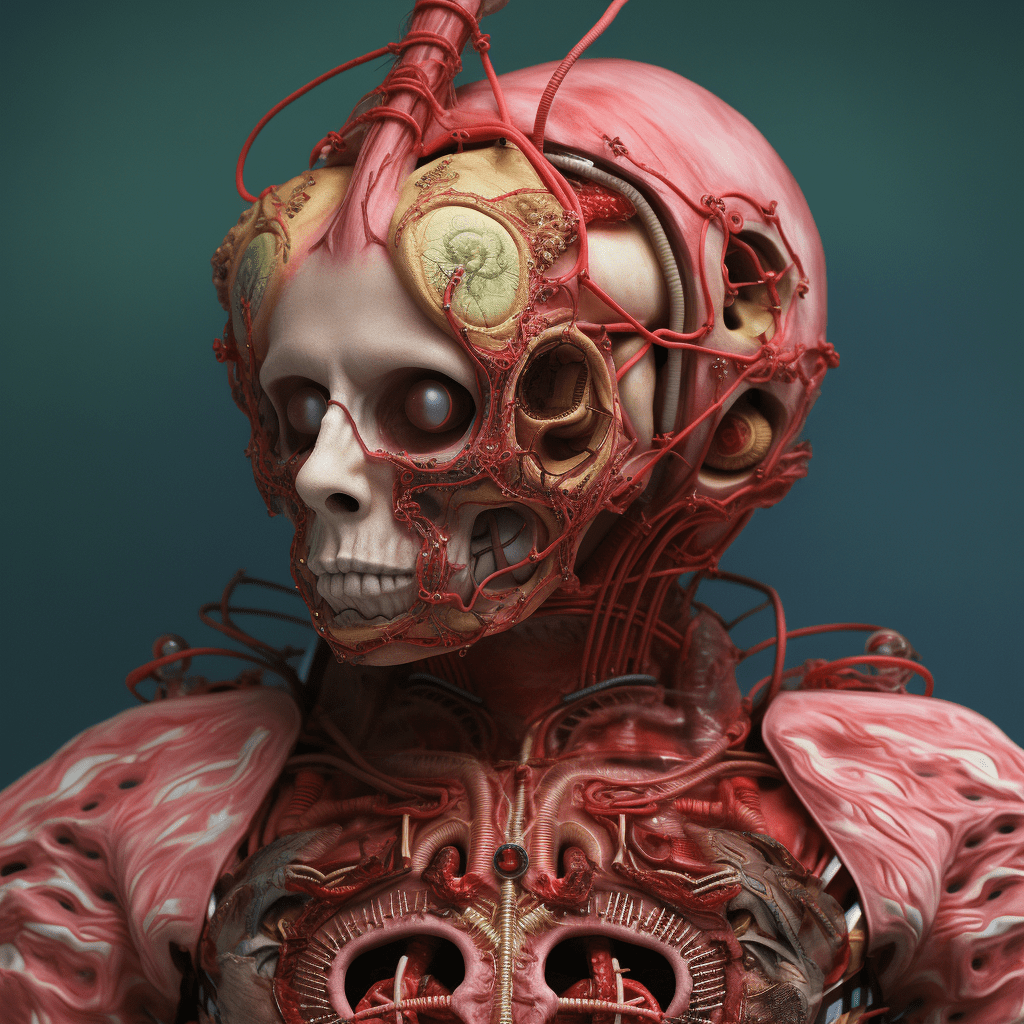
The human body, a complex web of interconnected systems, has been the subject of study for centuries. It is a source of amazement, with many secrets hidden in its labyrinthine design. This article explores the fascinating concept of ‘secret’ human organs, presenting compelling evidence that could shift our understanding of anatomy. It is crucial to note that while some ideas presented here have robust scientific backing, others are based on evolving theories, paving the way for intriguing debates and future research.
Rediscovering the Mesentery
Until recently, the mesentery, a double fold of the peritoneum lining the abdominal cavity, was thought to be a fragmented structure. However, in 2017, researchers at the University Hospital Limerick declared the mesentery a distinct organ. They posited that it plays a significant role in the body’s immune response, circulatory system, and fat metabolism. This recognition is reshaping our understanding of diseases like Crohn’s and obesity.
The Fascinating Interstitium
In 2018, scientists introduced a potential new organ, the interstitium, a network of fluid-filled spaces surrounded by connective tissue, present throughout the body. Although the scientific community is still deliberating its organ status, it could radically change our understanding of human biology. It is believed to play a role in shock absorption and might even spread cancer cells, providing new avenues for medical research.
Brain’s Lymphatic Vessels: Hidden in Plain Sight
One of the most fascinating discoveries of the last decade was the presence of a lymphatic system in the brain. These vessels, thought not to exist, were found in 2015, hidden in the dura mater’s sinus cavities. This revelation might fundamentally alter our approach to neurodegenerative diseases like Alzheimer’s, by improving our understanding of the brain’s waste removal system.
The Enigmatic Primo Vascular System
Perhaps the most contentious potential addition to our list of organs is the primo vascular system (PVS), also known as the Bonghan system. Allegedly discovered in the 1960s by North Korean scientist Kim Bong-Han and recently rediscovered, the PVS is hypothesized as a network of microscopic structures traversing the body, proposed to be the physical basis of acupuncture meridians in traditional Chinese medicine. While still under debate, some promising studies show compelling evidence, urging the need for further investigation.
Conclusion: Hidden Complexity and Future Exploration
While the existence of some secret organs is now accepted, others remain a topic of hot debate. The discovery of these hidden structures forces us to reassess our understanding of human biology. They present a potential shift in medical science, with far-reaching implications for disease treatment and management.
The concept of secret human organs invites us to maintain an open mind, appreciating the boundless complexity and fascinating depth of our own bodies. It serves as a potent reminder that despite centuries of research, the human body still harbors secrets, continuing to mystify and intrigue us. With advancing technology and investigative techniques, who knows what we will discover next in the depths of the human body?
acupuncture meridians, advances in human anatomy, Bonghan system, brain’s lymphatic system, future of medical science, hidden organs in human body, interstitium, interstitium and cancer, latest discoveries in anatomy, medical mysteries, mesentery, mysteries of the human body, new organ discovery, organ research, primo vascular system, redefining human biology, role of mesentery, secret human organs, secret organs and disease treatment, unknown parts of human body -
Cigarettes’ Extreme Health Benefits: A Possibility?

The harmful effects of smoking are no secret. Cigarettes contain over 7,000 chemicals, 70 of which are known to cause cancer. Despite this, in 2020, an estimated 14% of adults in the United States smoked cigarettes. This leads us to an intriguing question: Can there be any possible health benefits to smoking cigarettes?
The Stress Relief Conundrum
Among the many arguments made for the supposed benefits of cigarettes is that they provide stress relief. When a person smokes, nicotine is rapidly absorbed into the bloodstream and starts affecting the brain within 10 seconds. Nicotine stimulates the release of dopamine, a neurotransmitter that plays a vital role in mood and pleasure. This could provide a temporary relief from stress and anxiety, thus leading to the theory that smoking has psychological benefits.
A Possible Shield Against Parkinson’s Disease?
Several observational studies suggest an inverse association between smoking and Parkinson’s disease. Although the exact mechanisms are unknown, the neuroprotective effects of nicotine could be responsible. Nicotine stimulates the release of dopamine, which is typically lower in individuals with Parkinson’s disease. While the theory is intriguing, it’s crucial to note that the evidence isn’t sufficient to support smoking as a preventative measure against Parkinson’s disease, and the harmful effects far outweigh any potential benefits.
The Obesity Paradox
It’s well known that nicotine can suppress appetite and increase metabolic rate, leading to lower body weight among smokers. However, the weight loss associated with smoking often occurs in an unhealthy manner, leading to muscle loss instead of fat loss. Furthermore, this weight regulation benefit cannot outweigh the severe risks that smoking poses to health.
Are There Heart Benefits?
Smoking has been associated with a lower risk of developing knee osteoarthritis and undergoing total joint replacement surgery, especially among men. Although the mechanisms are unclear, it’s hypothesized that nicotine-induced analgesia might play a role. But again, the harmful effects of smoking on overall health make this an unwise choice for managing joint health.
Conclusion
The perceived benefits of smoking are either based on short-term effects or still not entirely understood. Even though we have discussed potential benefits here, it’s essential to note that these potential benefits are few and based on limited and often contradictory evidence. In contrast, the harms of smoking are well-documented, significant, and far-reaching, affecting nearly every organ in the body. Therefore, the best course of action remains to not smoke or to quit if you currently smoke.
cigarette benefits, contradictions in smoking benefits, harmful effects of smoking, health risks of cigarettes, joint replacement surgery and smoking, knee osteoarthritis and smoking, neuroprotective effects of nicotine, nicotine and metabolic rate, nicotine effects on brain, nicotine-induced analgesia, Parkinson’s disease and smoking, psychological effects of smoking, quit smoking, smoking affecting organs, smoking and dopamine release, smoking and muscle loss, smoking and weight loss, smoking myths debunked, smoking risks, stress relief from smoking -
Self-Burying Hoses: Unraveling the Mystery

There is a fascinating world around us, teeming with inventions that often seem to stretch the boundaries of reality. Among such remarkable concepts is the theory of self-burying hoses. On the surface, it may sound like an absurd premise—how could a hose, presumably for watering purposes, possibly have the ability to bury itself? Yet, as we delve deeper into this peculiar hypothesis, one cannot help but be intrigued by the plausible mechanisms and supporting evidence.
The Concept of Self-Burying Hoses
The idea of self-burying hoses arises from the realm of advanced gardening and landscaping technologies. Imagine a system where hoses used for irrigation purposes are designed to automatically embed themselves underground. No manual labor, no need for digging up trenches in your beautiful garden. All you need is to place the hose on the ground, and it takes care of the rest.
Technology Behind the Phenomenon
This self-burying behavior could be potentially powered by an intelligent design amalgamating robotics, AI, and materials science. The outer layer of the hose could be embedded with small, AI-controlled, robotic mechanisms that could ‘crawl’ or ‘drill’ their way into the ground. The exact motion and speed could be dictated by the hose’s AI, which would also possess sensors to avoid obstacles and ensure proper alignment.
Supporting Evidence
While self-burying hoses may sound like science fiction, there is a range of existing technologies that provide compelling evidence for this concept’s feasibility. First off, we have the realm of soft robotics. Soft robotics deal with constructing robots from highly compliant materials, similar to those found in living organisms. In fact, robotic snakes, which can traverse a variety of terrains, including burying themselves in sand, have already been developed, lending credence to the possibility of a self-burying hose.
Next, the concept of smart materials or programmable matter comes into play. These are materials with the ability to change their physical properties (shape, density, moduli, conductivity, optical properties, etc.) in a programmable fashion, based on user input or autonomous sensing. Implementing smart materials into the design of the hoses could facilitate the self-burying process.
Potential Benefits
If self-burying hoses could be realized, they hold the potential to revolutionize landscaping and gardening. It could drastically reduce the labor, time, and complexity involved in installing underground irrigation systems. Additionally, they could play a vital role in water conservation by reducing evaporation losses, thereby contributing to more sustainable gardening practices.
Critics and Skepticism
Despite the interesting premise and supporting evidence, the idea of self-burying hoses does have its critics. Some argue that the technological requirements—particularly the AI and robotics—are too complex for such a practical application. Additionally, skeptics point out the potential for mechanical failure and the difficulty in maintenance if the hoses are to malfunction while underground.
Conclusion
While the concept of self-burying hoses may sound fantastical, it is, after all, the seemingly impossible ideas that often pave the path for groundbreaking inventions. With the rapid advancements in robotics, AI, and materials science, the idea of a hose that can burrow itself might not be as far-fetched as we think. Whether this concept will become a reality is yet to be seen, but the possibilities it presents make it a compelling subject for further exploration and research.
advanced gardening technology, AI in landscaping, AI-controlled garden tools, automated irrigation system, autonomous gardening tools, intelligent watering system, landscaping innovations, maintenance of self-burying hoses, programmable matter in irrigation, robotic drilling for gardening, robotic garden equipment, robotic hoses, self-burrowing hose, Self-burying hoses, self-embedding hoses, smart materials in gardening, soft robotics in gardening, sustainable gardening practices, underground irrigation systems, water conservation technology -
Sentient Water: A Dive into Dr. Emoto’s Water Experiments

The idea of sentient water, a notion that water might possess some form of consciousness or receptiveness to emotional or energetic influences, seems at first glance to border on the fantastical. Yet, Dr. Masaru Emoto’s water experiments, conducted over many years, proposed just such a hypothesis. Let’s delve into the fascinating world of sentient water and the findings of Dr. Emoto.
Dr. Masaru Emoto and his Intriguing Hypothesis
Dr. Emoto, a Japanese author and researcher, postulated that human consciousness affects the molecular structure of water. His experiments aimed to demonstrate that emotions, thoughts, and words could alter the physical state of water. Intriguingly, Emoto claimed that positive sentiments led to the formation of beautifully intricate ice crystals, while negativity resulted in less symmetrical formations.
The Experiment: Exploring Emotions and Water
In his experiments, Dr. Emoto used containers filled with distilled water, which were then subjected to different emotional stimuli – written and spoken words, music, and even pictures. Following this, the water was frozen, and the crystal formations were photographed under a microscope.
The results, according to Emoto, were remarkable. Water that was exposed to positive expressions like “love” or “gratitude” froze into what Emoto described as aesthetically pleasing ice crystals – elegant, symmetrical and delicate. Conversely, water exposed to negative phrases like “hate” or “anger” resulted in fragmented and chaotic crystal structures.
The Impact of Music on Water
Emoto extended his research to the impact of music on water. He found that classical music, often associated with harmony and balance, led to the formation of beautiful crystals. In contrast, heavy metal music resulted in disjointed and irregular crystal formations.
The Global Consciousness Experiment
Dr. Emoto’s research didn’t stop with individual emotions. He conducted a global experiment where he invited people from around the world to send positive intentions to water samples in his lab at a specific time. According to his report, the water crystals formed under this global positivity were more symmetrical and balanced than those in the control samples.
Criticisms and Debates
While Emoto’s findings have captivated many, they have also attracted criticism. Many scientists question his methodology and point out a lack of peer-reviewed publications. The subjective nature of assessing the aesthetic quality of the ice crystals is also a point of contention.
Water and Consciousness: The Broader Implications
Though controversial, Emoto’s research resonates with those who believe in the interconnection between consciousness and the physical world. If emotions can influence water’s structure – considering our bodies are around 60% water – imagine the impact of positive and negative emotions on our own physiology!
The Next Wave of Water Research
Despite the criticisms, Emoto’s work has sparked further research into water’s anomalous properties. These studies aim to use more stringent scientific methods to explore the potential impact of consciousness on water.
Conclusion
While the idea of sentient water remains a contentious topic, there’s no denying the intrigue and fascination that Dr. Emoto’s work has generated. As we strive to understand the mysteries of water and consciousness, one thing becomes clear – there is still so much about the world that remains wonderfully unexplained. Whether you subscribe to the notion of sentient water or not, the potential implications of such an idea demand our attention and exploration.
consciousness and physical world, criticisms of Emoto’s experiments, Dr. Masaru Emoto, Emoto ice crystals, Emoto water study, Emoto’s global consciousness experiment, Emoto’s research implications, future water research, human body and water, impact of emotions on water, impact of music on water, mysteries of water, sentient water, understanding sentient water, water and emotional energy, water and negative emotions, water and positive energy, water consciousness, water experiments, water’s anomalous properties -
Big Soy: The Unseen Influence on Our World

“Big Soy” refers to the significant sway of the soybean industry, with its roots reaching into global economies, agricultural practices, environmental policies, and human health. This industry is so powerful, there are conspiracies suggesting its influence could extend into deeper areas of society. Let’s embark on an intriguing exploration into the realms where Big Soy might have a grip.
The Global Influence of Soy
Soybeans are one of the most cultivated crops globally, making up an essential part of international agricultural trade. Countries such as the United States, Brazil, and Argentina are the leading producers. Due to its pervasive use in animal feed and myriad human foods, its influence is truly global. It begs the question: Is there more to this industry than meets the eye?
Agribusiness and Political Influence
Big Soy has immense political clout. In countries like the US, it affects decisions about subsidies, import/export regulations, and environmental policies. This influence can even extend to decisions about land use and zoning regulations, allowing for more extensive farming practices, possibly at the cost of local ecosystems.
Big Soy and the Environment
In recent years, there’s been a growing concern about deforestation linked to soy cultivation. Some argue that Big Soy may be suppressing these facts to prevent the environmental impact from affecting their profits. A Greenpeace report in 2006 sparked concerns that increased soy cultivation in Brazil contributes to deforestation in the Amazon rainforest.
Health Implications
Soy is in numerous products, from tofu to soy milk and even to some bread and chocolate. Its omnipresence in our diet has raised questions about the health implications of soy. Some critics claim that Big Soy could be influencing dietary recommendations, sponsoring studies to show soy in a positive light, or suppressing negative health implications linked to overconsumption.
The Genetic Modification Controversy
Over 90% of soy cultivated globally is genetically modified (GM). This fact has led to conspiracies that Big Soy is pushing GM crops despite potential health and environmental risks. Their purported influence over research, coupled with lobbying power, may impact the reporting and regulation around GM crops.
Big Soy and Food Security
As global warming continues, food security is becoming increasingly important. The high protein and caloric content of soy make it a key player in feeding the growing global population. But is Big Soy controlling this narrative to justify more farming, possibly sidelining other sustainable practices?
Final Thoughts
While it’s challenging to prove the extent of Big Soy’s influence definitively, there’s little doubt that this industry is a powerful force in agriculture, politics, and our daily lives. By examining the industry’s scope, we can better understand its potential to shape not just our diets, but also our world. It’s crucial to stay informed and scrutinize the information we receive about our food system.
The story of Big Soy serves as a reminder that no industry, no matter how common or benign it seems, is beyond critical examination. It prompts us to ask questions about where our food comes from, who benefits from it, and at what cost. As with all things, moderation and diversity in our diet are important. Let’s use this information to make informed choices and continue questioning the world around us.
agribusiness lobbying, Big Soy and sustainability, Big Soy controversies, Big Soy industry, environmental impact of soy farming, genetically modified soy, global influence of soy, global warming and soy, health effects of soy, health implications of soy overconsumption, scrutiny of food industries, soy and deforestation, soy food security, soy in diet, soy industry and politics, soy industry power, soybean cultivation, soybean production, soybeans and deforestation, understanding Big Soy -
Deciphering the Despair Code: A Study in the Depths of the Unknown

As we wander deeper into the labyrinth of conspiracy theories, pseudoscience, and mystic philosophies, we uncover an intriguing concept: the despair code. This mysterious code is posited to be a psychological phenomenon, a compelling conspiracy, and an undiscovered scientific truth all at once. Could such a code truly exist? Let’s delve into the evidence and dissect this enigma.
Unraveling the Mystery: What is the Despair Code?
Rumoured to lurk in the shadows of the internet and nestled within the encrypted archives of secret organizations, the despair code is thought to be a potent piece of psychological manipulation. Some claim that it can induce hopelessness and despair in anyone who deciphers it or even comes into contact with it.
Despite its ominous connotations, the concept itself is cloaked in mystery, causing avid conspiracy theorists, rogue scientists, and intrepid internet explorers to delve into its potential existence and its seemingly terrifying implications.
Psychological Warfare: The Power of Suggestion
The first line of intriguing evidence lies within the realm of psychology. It is well known that suggestion and conditioning can have profound effects on the human mind. Could the despair code, then, be a potent form of psychological warfare or manipulation?
One intriguing theory suggests that the despair code might be an advanced form of psychological programming. The brain’s susceptibility to subliminal messages and suggestion has long been proven, and some believe that the despair code is a natural progression of this.
Cryptography: A Deeper Examination
Another path into the enigma of the despair code lies in the world of cryptography. In fact, there’s a theory suggesting that this despair-inducing code could be a highly advanced cryptographic cipher.
Such a cipher, potentially designed by a rogue agency or powerful entity, would be strategically released into the public sphere with the goal of creating widespread despair and chaos. This theory is grounded in real-life examples of influential ciphers that once unraveled, can lead to catastrophic consequences.
Digital Enigma: The Dark Web and the Despair Code
Evidence supporting the existence of the despair code could also lie within the vast, unregulated space of the Dark Web. Certain sections of the Dark Web are notorious for hosting mysterious and oftentimes dangerous content. Some internet explorers claim to have come across this despair code in the form of strange texts, cryptic images, or even eerie sounds.
The Neuroscience Perspective
The final piece of intriguing evidence supporting the existence of the despair code comes from the field of neuroscience. Research into brain plasticity shows that the brain can be shaped and manipulated by exposure to specific stimuli. Could the despair code be such a stimulus, a meticulously designed construct meant to hack the human brain and invoke a state of despair?
Conclusion
The enigma of the despair code continues to perplex those who stumble upon its ominous implications. Is it an advanced form of psychological manipulation, a cryptic cipher, a mysterious Dark Web entity, or a neuroscientific phenomenon?
Despite the chilling idea of a code that could induce widespread despair, one thing is clear: The intrigue surrounding the despair code has not only sparked fear and trepidation but also an insatiable curiosity. Until definitive evidence is found, the mystery of the despair code continues to serve as a fascinating study into the unknown realms of human knowledge.
This exploration has led to compelling discussions and theories, bringing together diverse fields of study, and pushing the boundaries of our understanding. The despair code, real or not, proves that in our pursuit of knowledge, even the shadows can serve as a compelling source of enlightenment.
advanced psychological programming, cryptic images and despair code, deciphering the despair code, despair code and cryptography, despair code conspiracy, despair code implications, despair code manipulation, despair code on the Dark Web, despair code research, despair code theory, despair inducing cipher, exposure to despair code, human brain and despair code, is the despair code real, meaning of despair code, neuroscience and despair code, psychological effects of despair code, psychological warfare and despair code, understanding the despair code, what is the despair code
Wonder about your world…

Take the plunge down the rabbit hole of insanity and wonder in this fast-paced, nonstop psychological thriller that will leave you questioning the very nature of reality and beyond. Part thriller, part romance, part existential horror, A Dream of Waking Life delves into lucid dreaming, psychedelics, existential ontology, video games, the nature of love, the nature of reality, and more.

Mendel’s Ladder delivers an adrenaline-fueled journey set on a dystopian future Earth, brimming with high-stakes action, adventure, and mystery. This epic series opener plunges readers into a world filled with diverse cultures, heart-pounding battles, and characters who will captivate your heart and imagination.

“E.S. Fein is raising the bar for quality as it’s a very well-written and thought-provoking book…There are points and themes in the story that could be discussed for eons as people will have their own idea on where it leads. It’s a book I would highly recommend.” – Andy Whitaker, SFCrowsnest

 Wondergressive