-
Malerei Diespirale: The Spiral in Art and its Metaphysical Significance

In the expansive field of art, themes, motifs, and symbols hold special places, contributing to the rich tapestry of creativity. One such motif that has captivated artists throughout history is the spiral – ‘Die Spirale’ in German, a simple yet profound shape that carries a wealth of symbolism.
The Spiral in Art – ‘Malerei Diespirale’
The spiral, a symbol as ancient as human creativity itself, finds expressions in diverse cultures worldwide. In the realm of ‘Malerei’ – painting – ‘Diespirale’ serves not merely as a design element but a potent symbol embodying complex themes such as evolution, growth, transformation, and life’s cyclical nature.
From the spiraling galaxies depicted in the works of Van Gogh to the hypnotic spirals of abstract expressionism, this form has been an inexhaustible source of inspiration and interpretation.
The Spiral as a Metaphor for Growth and Evolution
The spiral often represents the idea of growth, evolution, and the endless cycle of birth, death, and rebirth. As it winds outward from the center, it mirrors the expanding universe and the human journey, with its constant progression and transformation.
An example of this concept is Katsushika Hokusai’s “The Great Wave off Kanagawa,” where spirals dominate the composition, emphasizing nature’s immense power and the continual human struggle against natural forces.
The Symbolism of Spirals in Abstract Expressionism
Abstract Expressionists, like Jackson Pollock, employed the spiral to represent the subconscious mind’s chaos. In paintings like “No. 5, 1948,” Pollock’s spirals are frenzied and unpredictable, mirroring the tumultuous nature of human emotions.
Spirals in Contemporary Art
In contemporary art, the spiral continues to be a captivating motif. Artists like Louise Bourgeois, in works such as “Maman,” use spirals to depict the complexities of life and human relationships, portraying the labyrinthine journey through existence.
Conclusion
From cave paintings to modern abstract pieces, the spiral – ‘Diespirale’ – remains a compelling motif in the world of ‘Malerei.’ This simple yet profound shape holds a mirror to life itself, symbolizing growth, evolution, and the cyclical nature of existence.
Through their works, artists continue to explore and push the boundaries of what the spiral represents, ensuring its enduring relevance in art. The ‘Malerei Diespirale’ therefore, isn’t merely a captivating artistic concept but a profound exploration of human existence itself.
Undoubtedly, this powerful symbol will continue to inspire artists, capturing their imaginations and translating them into creative expressions that resonate deeply with audiences, demonstrating the incredible power and potential of the arts to reflect the world and our place within it.
art motifs and symbols, artistic interpretation of spirals, cyclic nature of life in art, evolution symbolized by spirals, exploration of human existence in art, geometric patterns in art, Jackson Pollock spirals, Louise Bourgeois spiral, Malerei Diespirale, meaning of spirals, spiral as a metaphor for growth, spiral motif in cultural art, spiral symbolism in art, spirals in abstract expressionism, spirals in ancient art, spirals in cave paintings, spirals in contemporary art, the Great Wave off Kanagawa analysis, understanding spirals in art, Van Gogh and spiral galaxies -
Fun Ways to Integrate Ranked-Choice Voting into Your Life: Empowerment Through Voting

Ranked-choice voting is a unique electoral system that allows voters to rank candidates in order of preference. It’s being used more and more in political elections worldwide, but did you know you can integrate this interesting method into your everyday life? Let’s explore how.
Section 1: Understanding Ranked-Choice Voting
Before you start, it’s crucial to comprehend the mechanics of ranked-choice voting (RCV). In an RCV system, voters rank the options in order of preference rather than voting for a single option. If no option receives a majority (more than 50%) of first preference votes, the least popular option is eliminated, and its votes are redistributed to the remaining options according to the voters’ second preferences. This process continues until one option achieves a majority.
Section 2: RCV in Decision Making
Dinner Decisions: Having trouble deciding where to eat or what meal to cook? Use RCV! Each person ranks their meal preferences, and then you tally the votes. This way, everyone’s preferences are taken into account, and you’re more likely to end up with a choice everyone’s content with.
Movie Nights: Avoid endless scrolling on Netflix by applying RCV. Each person lists their top 3 movie choices. Using the RCV method, select a movie that everyone is likely to enjoy.
Section 3: RCV in Group Activities
Event Planning: Planning a team-building event or a party? Gather options for activities and use RCV to decide the agenda. It guarantees that the selected activity is something the majority of the group prefers, and everyone had their say in the matter.
Book Clubs: Deciding on the next book can be a bone of contention in book clubs. RCV can streamline this process. Each member can nominate a book and then rank the options. The book with the most overall support gets chosen for the next reading.
Section 4: RCV in Educational Settings
Classroom Decisions: Teachers can use RCV to engage students and teach them about democracy. Whether deciding what topic to explore next, which book to read, or what class reward to work toward, RCV can make decision-making fun and fair.
Student Government: Use RCV in student government elections. It provides an excellent way for students to learn about voting, representation, and majority rule, all important concepts in social studies.
Section 5: RCV for Personal Goals
Setting Priorities: Not sure which project to start with? List them and rank them based on different criteria like urgency, impact, and interest. It’s a great way to get a clear sense of your priorities.
Planning Trips: Use RCV when planning your next vacation. Rank potential destinations and use the RCV system to decide where to go.
Section 6: RCV as a Communication Tool
RCV can be a powerful tool to foster communication within groups, families, or among friends. It provides an organized structure to decision-making and ensures everyone’s voices are heard, avoiding disputes or ill feelings.
Conclusion: Empowerment Through Voting
Ranked-choice voting isn’t just for political elections. Integrating RCV into your everyday life helps ensure everyone gets a say in group decisions, while also teaching valuable lessons about fairness, decision-making, and the importance of considering multiple perspectives. By using RCV in your daily life, you’re empowering yourself and those around you, giving everyone a voice in a democratic and engaging manner.
Who knew decision-making could be this fun and equitable? Whether it’s deciding on dinner or choosing the next book club read, the applications of RCV are only limited by your imagination. So why not give it a try? You might just find that ranked-choice voting can revolutionize the way you make decisions.
-
Geometric Algorithmic Shortcuts: The Unseen Backbone of Computational Efficiency

Algorithms are crucial to our modern world. They help us process data, conduct searches, manage tasks, and solve complex problems, often within the realm of computers. But as these tasks grow increasingly complex and data-intensive, we’ve had to search for ways to make our algorithms more efficient. Enter geometric algorithmic shortcuts – a relatively new and fascinating topic in the world of computational geometry that can offer substantial performance boosts to our computational tasks.
Understanding Algorithmic Shortcuts
Algorithmic shortcuts refer to techniques that can simplify the process of solving a problem, reducing the computational resources required and speeding up the results. But, how do they apply to geometry?
Geometric algorithms deal with problems of a geometric nature. These may include, but are not limited to, determining the shortest path between two points in a network, calculating the intersection of various shapes, or finding the closest points in a set of coordinates.
Geometric algorithmic shortcuts are then techniques applied to these geometric algorithms to simplify the tasks, using characteristics inherent to geometric shapes and structures.
The Magic of Convex Hulls
A great example of a geometric algorithmic shortcut is the utilization of “Convex Hulls”. A Convex Hull of a shape or set of points is the smallest convex polygon that contains all of the points.
This concept is incredibly useful in a variety of fields. For example, in computational biology, it can be used to understand the shape and structure of proteins. In machine learning, it can be used for clustering analysis.
The Quickhull algorithm, introduced by C. Barber and D. Dobkin in 1995, is a widely-used method for computing the convex hull of a finite set of points in 2D, 3D, or higher dimensions. This algorithm is an excellent example of a geometric algorithmic shortcut because it effectively reduces the problem size by focusing only on the points that are part of the convex hull, ignoring the points inside it.
Voronoi Diagrams and Nearest Neighbor Search
Another geometric algorithmic shortcut can be found in the use of Voronoi diagrams. A Voronoi diagram partitions a plane with n points into n convex polygons such that each polygon contains exactly one generating point and every point in a given polygon is closer to its generating point than to any other.
This principle can be applied to the nearest neighbor search – an optimization problem that seeks the closest points to a given query point. A naive approach would compare the query point to every other point, which could be computationally intensive for large data sets. Instead, using a Voronoi diagram, we can limit the search space significantly and improve the efficiency of the search.
Sweep Line Algorithm for Intersection Detection
Intersection detection is a common problem in computational geometry. The brute force method for solving this, by checking each pair of line segments for intersection, has a time complexity of O(n^2), which becomes inefficient with large numbers of line segments.
The Sweep Line Algorithm offers a geometric algorithmic shortcut. It uses an imaginary line that ‘sweeps’ across the plane, only considering line segments that intersect with this line. As the sweep line moves, it maintains a dynamic data structure of segments that intersect the sweep line, ordered by the y-coordinate. This algorithm reduces the problem’s time complexity to O(n log n), a substantial improvement over the brute force approach.
Embracing the Possibilities
There’s no denying that geometric algorithmic shortcuts are not just efficient – they’re fascinating. They represent a beautiful intersection of mathematics, computer science, and human ingenuity, turning complex problems into manageable tasks. As we continue to delve deeper into the realms of data and computation, these shortcuts will continue to guide us, enabling efficiencies that we are only just beginning to imagine. We’ve only scratched the surface of what’s possible with these tools at our disposal. The potential is vast, and the future of computational geometry is incredibly bright.
Such compelling evidence of their effectiveness and widespread applicability gives us every reason to believe in the power and possibility of geometric algorithmic shortcuts. As we further develop and refine these techniques, who knows what new doors we might open in our quest for computational efficiency?
advanced algorithms, algorithm performance improvement, algorithms in computational biology, computational efficiency, computational geometry, Convex Hulls, dynamic data structures, geometric algorithmic shortcuts, improvements in computational tasks, line segment intersection, nearest neighbor search, optimization problem, Quickhull algorithm, reducing time complexity, Sweep Line Algorithm, Voronoi Diagrams -
The Ocean Doesn’t Exist Theory: A Dive into the Depths

Before we dive deep into this hypothesis, it’s worth reminding that the concept is merely theoretical, and by no means challenges the empirical evidence gathered by science and the collective human experience. Nonetheless, it provides an intriguing perspective that stimulates thought and discussions about perception and reality.
Rethinking the Familiar: Oceans as We Know Them
We all know the ocean. We’ve seen it, we’ve touched it, we’ve tasted its saltiness. It is a vast body of saline water that covers more than 70% of the Earth’s surface. It’s an integral part of our planetary system, influencing climate, weather, and supporting a vast range of life forms. But what if there’s an alternative perspective that questions its very existence?
The Ocean Doesn’t Exist Theory: A Philosophical Approach
The ‘Ocean Doesn’t Exist’ theory is a philosophical thought experiment which, at its core, seeks to challenge our accepted ideas about the world around us. Its proponents ask: “What if the ocean is not a separate entity, but a construct of our perceptions and societal agreements?”
Challenging the Perception
Our perceptions play a significant role in how we understand the world. They define our realities. In this context, it’s intriguing to think about water bodies not as standalone entities, but merely as undifferentiated parts of a more significant system. If we were to disregard the arbitrary boundaries we’ve set (like where the shoreline ends and the ocean begins), would the concept of the ocean still hold?
Evidence: Do Rivers, Lakes, and Oceans Really Differ?
If we consider the hydrological cycle, water evaporates from the surface (which includes all water bodies and even the moisture from the land), forms clouds, precipitates, and then collects into bodies of water, which we differentiate into rivers, lakes, and oceans. Is it not possible to argue that they are all part of a single, global water system, rather than being distinct entities?
A Matter of Definitions: Oceans or Just ‘Water’?
Another angle to approach this theory from is semantic. The term ‘ocean’ is a human construct, derived from our need to categorize and differentiate the world around us. If we remove these human-imposed labels, the fundamental reality remains: it’s all just water, part of a more prominent, interconnected global system.
The Question of Lifeforms
When it comes to marine life, does their existence validate the existence of the ocean, or does it merely attest to the existence of life in water? After all, we have lifeforms in all water bodies, not just the ocean. Again, it’s our categorization of species as ‘marine’ that binds them to the concept of an ocean.
The ‘Ocean Doesn’t Exist’ Theory: A Matter of Perspective
To sum it up, the ‘Ocean Doesn’t Exist’ theory does not deny the presence of a vast body of water or the life forms within. Instead, it challenges our perceptions and labels, encouraging us to think beyond human-imposed boundaries and see the planet’s water as a single, interconnected system. It nudges us to perceive our world in ways that might seem bizarre at first but can lead to more holistic and unified thinking.
Does the ocean exist? Yes, according to our conventional understanding and societal agreements. But does it need to exist as a separate entity in the grand scheme of Earth’s water system? Now, that’s an intriguing question to ponder on.
The ‘Ocean Doesn’t Exist’ theory ultimately serves as a reminder of the limitations of our perceptions and the influence of our linguistics and categorizations on our understanding of the world. It’s a call to break free from the constraints of our conventional thinking patterns and explore the world from a broader, more interconnected perspective.
challenging conventional understanding, definitions of water bodies, global water body theory, hydrological cycle, interconnected global water system, interconnectedness of water on Earth, marine lifeforms, Ocean doesn’t exist theory, ocean theory perspective, oceans and human perception, oceans and linguistic categorization, oceans as human construct, perception and reality, philosophical thought experiments, questioning existence of ocean, questioning societal agreements, sea as part of Earth’s system, semantic implications of ocean, unconventional theories about ocean, understanding water bodies -
Challenging Cosmic Perspectives: The Theory of Earth Being Larger Than The Sun

From the moment humankind first turned their gaze towards the sky, they have speculated about the nature and structure of our cosmos. Today, we are accustomed to the heliocentric model: a solar system with the Sun at its center and Earth, among other planets, orbiting around it. Our understanding states that the Sun is significantly larger than the Earth, but what if this perspective were challenged? This article delves into the intriguing yet highly controversial theory suggesting the Earth is, in fact, larger than the Sun.
The Geometry of Perception
Let’s start by acknowledging our baseline. According to established scientific consensus, the Sun is approximately 109 times the diameter of Earth. This notion is drawn from observable evidence and mathematical calculation. However, proponents of the Earth-larger-than-Sun theory claim that these calculations are misled by optical illusions and misinterpretations of data.
Their argument begins with our perception. For example, the way we perceive the Sun and Moon’s size when they rise and set. They appear larger due to an optical illusion known as the ‘Moon illusion’. Similarly, they argue that our perception of the Sun’s size might be distorted due to our vantage point and the filtering effect of Earth’s atmosphere.
Interpreting Solar Eclipse
Solar eclipses offer a compelling case for this unconventional theory. During a total solar eclipse, the Moon appears to cover the Sun perfectly. If the Sun were indeed as large as standard science suggests, wouldn’t it seem impossible for the comparatively tiny Moon to mask the Sun entirely? This argument, while seemingly convincing, however, fails to account for the vast distance differences between Earth, Moon, and Sun, which leads to this perception.
Playing Devil’s Advocate: Exploring Scale
The concept of scale is crucial in these discussions. For instance, if we consider the Earth as a model, representing all celestial bodies with comparable components, the picture changes. Let’s take a basketball to represent Earth and a tennis ball for the Moon. In this model, the Sun would be akin to a ball over nine feet in diameter! When we place these items at representative distances, the perceived size alignment during a solar eclipse becomes much clearer.
However, for a believer of the theory, this scale model only proves the point. They argue that our accepted scale is flawed, skewed by assumptions made from our Earth-centric perspective.
Contemplating Geocentric Views
The Earth-larger-than-Sun theory may be seen as a modern take on the ancient geocentric model, in which Earth was considered the center of the universe. Today’s proponents, however, don’t necessarily argue for Earth’s central position, but rather a size comparison challenge.
Addressing Established Science
The scientific consensus accepts the Sun’s vastness compared to Earth based on a plethora of data from various sources, including space probes, satellite measurements, and mathematical calculations. Critics of the Earth-larger-than-Sun theory point out that this myriad of evidence cannot be simply dismissed. In response, the theory’s proponents ask for open-mindedness, reminding us of historical instances where established scientific views have been upended.
Conclusion
The Earth-larger-than-Sun theory is a provocative and fascinating perspective that challenges our current understanding of the cosmos. It invites us to question our perceptions and the evidence upon which we base our beliefs. While most scientific evidence negates this theory, it underscores the importance of continual curiosity, questioning, and exploration in our quest to understand the universe. We must remain open to challenge our understandings while being stringent in the application of scientific principles and rigorous proof.
ancient cosmological views, challenging scientific consensus, cosmic perspectives, diameter of Sun and Earth, Earth larger than Sun theory, Earth-centric perspective, geocentric model, heliocentric model, history of scientific views, interpreting solar eclipse, mathematical calculations in astronomy, moon illusion, optical illusions in space, perception of celestial bodies, questioning established science, satellite measurements, scale models in astronomy, size of the Earth and Sun, solar system size comparison, space probes -
The Global Grain Situation: Scarcity, Demand, and the Future
 climate-smart grain varieties, CRISPR gene editing for crops, diseases affecting grains, Fall Armyworm, food security, Fusarium head blight, future of grain production, genetic engineering in agriculture, global grain situation, GPS in farming, grain consumption trends, grain production challenges, impact of climate change on grains, impact of pests on grain production, IoT in agriculture, precision agriculture, remote sensing in agriculture, stem rust in grains, sustainable farming practices, USDA grain consumption estimates
 -
Charley Project: The Fate of the Lost

Every year, thousands of people vanish without a trace, their fates unknown and their stories unfinished. These mysteries are the lifeblood of the Charley Project.
The Charley Project: An Overview
The Charley Project is an online database that compiles and shares information about cold cases of missing persons in the United States. Named after Charley Ross, the first widely-publicized case of a child abducted for ransom in America, the Charley Project stands as an epitome of public service and a beacon of hope for the families of the disappeared.
With over 14,000 detailed case profiles as of 2023, the database goes beyond mere statistics. It delves into the personal histories of the missing, the circumstances surrounding their disappearance, and any available clues, giving a human face to an often impersonal topic.
The Power of Digitization
The inception of the Charley Project demonstrates the transformative power of the internet. Established in 2004 by Meaghan Good, the project took advantage of the digitization trend, making information that was once confined to dusty police files and local memory accessible to the global public.
Good’s devotion to the cause is remarkable, as she painstakingly collates data from a myriad of sources including newspapers, police reports, and family testimonies, often spending countless hours verifying and cross-referencing the data. This authenticity of the information presented on the Charley Project is undeniable evidence of the project’s credibility.
Solving Mysteries, Uncovering Truths
While the Charley Project does not actively investigate cases, it provides a crucial platform for those who do. Its primary aim is to feature cases that have been forgotten or overlooked, thus amplifying their reach to a broader audience.
There are cases where the Charley Project’s involvement has directly led to significant developments. For example, the case of Lori Erica Ruff, a woman who stole a deceased toddler’s identity, was solved when a web sleuth on the Charley Project managed to connect the dots.
The Charley Project: A Catalyst for Change
Beyond the evident contribution to solving cold cases, the Charley Project has been instrumental in sparking discourse on missing person procedures and policies. The unequal attention given to cases based on the person’s socioeconomic status, race, or age is a harsh reality that the Charley Project helps to expose.
The project has also shed light on the broader societal issues that contribute to disappearances, such as mental health problems, domestic violence, and human trafficking. This has fueled advocacy for systemic changes, adding another layer to the project’s impact.
The Path Ahead
As the Charley Project continues to grow, there is a pressing need for support – be it monetary, informational, or technological. With additional resources, the project could incorporate more sophisticated search tools, extend its reach beyond the United States, and even delve deeper into forensic genealogy, a field that has been increasingly successful in solving cold cases.
Conclusion
The Charley Project, despite its humble beginnings, has managed to shed light on the shadowy abyss of missing person cases. While it’s heart-wrenching to scroll through the faces of the missing, it’s also a stark reminder that behind each face is a story waiting to be told, a truth waiting to be uncovered, and a family waiting for closure.
The Charley Project underscores the fact that these missing people are not just statistics, but individuals whose disappearance leaves a rippling impact. It is a noble endeavor, and its influence extends far beyond the digital realm, reaching the very heart of our collective humanity.
Charley Project advancements, Charley Project and advocacy, Charley Project case profiles, Charley Project overview, Charley Project’s impact, cold case investigations, digital cold cases, digitization and cold cases, forensic genealogy, forgotten missing persons cases, future of the Charley Project, history of the Charley Project, Lori Erica Ruff case, Meaghan Good, missing persons database, online missing persons resources, societal issues and missing persons, solving mysteries with the Charley Project, support for the Charley Project, unequal attention to missing persons -
Ancient Glyphs on Saturn’s Moons: An Intriguing Possibility
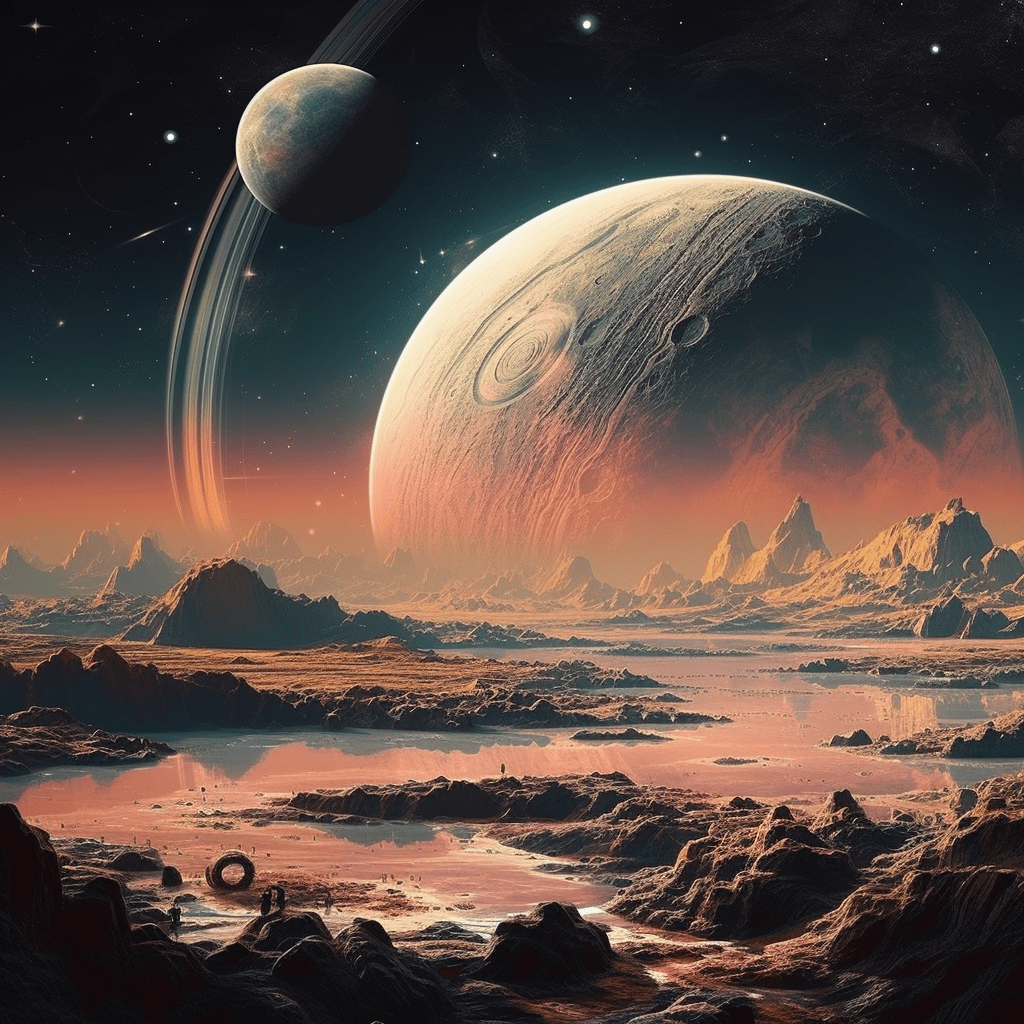
The vast expanse of the cosmos is dotted with countless mysteries, many of which are beyond human comprehension. One such fascinating enigma that has stirred up intrigue among scientists, researchers, and space enthusiasts alike is the possibility of ancient glyphs on the moons of Saturn. While such a hypothesis might seem like the stuff of science fiction, compelling evidence suggests that it could, in fact, be a reality.
Unraveling the Mysteries of Saturn’s Moons
Saturn, the sixth planet from the Sun, is famous for its striking ring system. But it is the planet’s 82 known moons that harbor the most tantalizing possibilities. Titan, Enceladus, Iapetus, and Mimas are just some of the satellites that have piqued scientific interest. However, when discussing the possibility of ancient glyphs, we shall focus on Iapetus and Dione, two of Saturn’s most mysterious moons.
Iapetus: The Moon with a ‘Yin-Yang’ Face
Iapetus, discovered by Giovanni Domenico Cassini in 1671, is known for its distinct two-toned coloration, with one hemisphere being darker than the other. However, what is even more intriguing is the presence of an equatorial ridge along its surface. This raised structure, stretching approximately 1,300 kilometers, has been likened to a ‘wall’ by some, and appears almost artificial in nature.
In the high-resolution images captured by NASA’s Cassini spacecraft, certain structures along this ridge resemble what might be interpreted as glyphs or symbols. While it’s crucial to apply Occam’s razor—the simplest explanation is usually the correct one—the peculiar arrangement of these features does raise questions. Could these be natural geological formations, or are they, in fact, remnants of an ancient, possibly extraterrestrial civilization?
Dione: Saturn’s ‘Scribed’ Moon
Dione, another of Saturn’s moons, adds further fuel to this speculation. With its heavily cratered surface interspersed with bright ice cliffs, Dione presents a striking celestial spectacle. Certain regions of this moon, particularly along the ice cliffs, show unusual markings that bear a startling resemblance to systematic, almost scripted symbols. The regularity and distinctiveness of these formations, captured in multiple Cassini flybys, warrant a closer look.
Evidence and Possibilities
While it is easy to dismiss these peculiar formations on Iapetus and Dione as purely natural phenomena, several factors suggest otherwise. The geometric patterns, the regularity, and the similarity to ancient glyphs or symbols we have on Earth lend some credence to the hypothesis of ancient extraterrestrial inscriptions.
In addition, research into the concept of panspermia, the theory that life exists throughout the Universe and is spread via asteroids and comets, lends a theoretical foundation to the possibility of ancient civilizations within our own solar system.
Seeking Scientific Explanations
NASA and other space agencies around the world are continuously working to decipher the mysteries of the cosmos. The images captured by spacecraft like Cassini provide invaluable data that, when analyzed using advanced algorithms and image-processing techniques, could shed light on these fascinating formations.
While the notion of ancient glyphs on Saturn’s moons might seem far-fetched, it is a hypothesis that deserves rigorous scientific investigation. After all, space exploration is all about pushing boundaries and questioning what we believe to be true. By delving deeper into this mystery, we may not only rewrite the history of our solar system but also gain profound insights into our place within the cosmos.
Conclusion
The existence of ancient glyphs on Saturn’s moons remains an unproven yet intriguing concept. As we continue our exploration of the cosmos, aided by advancing technology and growing knowledge, we may one day unravel this mystery. For now, it serves as a testament to the boundless possibilities that space exploration holds, a reminder of how much there is still to learn about the universe and our place in it. Whether these formations are the work of natural processes or evidence of an ancient alien civilization, only time—and more research—will tell.
ancient alien civilization evidence, ancient symbols on Iapetus, artificial structures on Saturn’s moons, astrobiology, Cassini spacecraft findings, Dione moon mysteries, Dione moon surface, Dione’s ice cliffs glyphs, extraterrestrial civilizations Saturn moons, extraterrestrial life search, Iapetus moon surface, Iapetus ridge structures, ice formations Saturn moons, mysteries of the cosmos, NASA space exploration, Panspermia theory, Saturn’s moon mysteries, Saturn’s moons glyphs, Saturn’s moons research, Saturn’s satellites anomalies -
Bacterial Humanity: An Intriguing Perspective
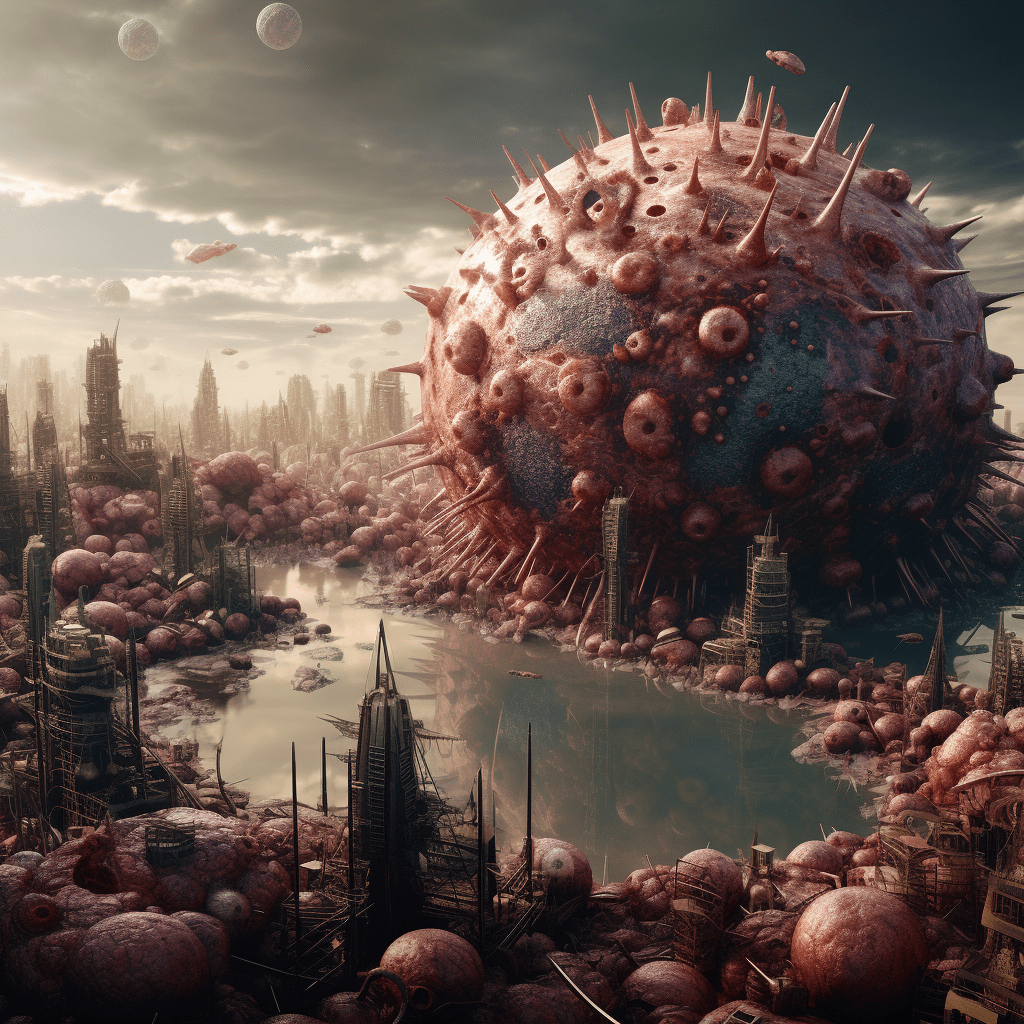
The concept of bacterial humanity, while seemingly unconventional, offers a compelling reimagining of our understanding of life as we know it. The proposition is that humans, as well as all other life forms, could fundamentally be bacterial in origin, and that our existence is deeply entwined with these microorganisms.
Our Bacterial Origins
The Building Blocks of Life
The concept of bacterial humanity stems from the premise that life on Earth began as unicellular organisms, primarily bacteria. The first life forms that existed approximately 3.5 billion years ago were simple, single-celled microorganisms, not too dissimilar from the bacteria that we know today. These organisms paved the way for more complex life forms, including us humans.
From Simplicity to Complexity
Over billions of years, these simple life forms evolved, undergoing countless iterations of mutation and natural selection. A theory known as endosymbiosis suggests that eukaryotic cells, the type of cells that make up all animals and plants, originated from ancestral prokaryotes (bacteria). According to this theory, certain types of bacteria were engulfed by others but were not digested. Over time, these internalized bacteria became essential components of the host cell, eventually evolving into the organelles that we see in modern eukaryotic cells, such as mitochondria and chloroplasts.
Bacteria: An Integral Part of Humanity
Our Microbial Companions
As we delve further into the concept of bacterial humanity, it’s crucial to recognize that even today, bacteria remain an integral part of our biology. The human microbiome, consisting of all the microorganisms that inhabit our body, primarily bacteria, plays a critical role in maintaining our health. There are nearly as many bacterial cells in our bodies as there are human cells, suggesting that we are, in a sense, half bacterial.
Role of Bacteria in Our Health
These bacteria aren’t merely passive passengers. They assist in digestion, modulate our immune system, protect us from harmful pathogens, and even influence our moods and behavior. Dysbiosis, or imbalance of this microbiome, is linked to various health conditions, including obesity, autoimmune diseases, and mental health disorders, underlining the importance of bacteria in our existence.
Bacterial Intelligence: Evidence for Bacterial Humanity?
The Social Lives of Bacteria
Recent research in microbiology has unveiled astonishing abilities of bacteria that reinforce the concept of bacterial humanity. Bacteria are now understood to communicate and cooperate in sophisticated ways, exhibiting traits previously thought to be exclusive to complex life forms.
Quorum Sensing and Collective Decision Making
One of the fascinating aspects of bacterial behavior is “quorum sensing”, a mechanism that allows bacteria to sense the density of their population and regulate their behavior accordingly. This collective decision-making process, akin to a form of bacterial “democracy”, enables bacteria to coordinate their actions and behave almost like a multicellular organism.
Problem-solving Abilities
Studies have also revealed that bacteria can solve complex problems that require cooperation, such as navigating through challenging environments to find nutrients. They display a form of “swarm intelligence”, where the group as a whole can solve problems that individual bacteria cannot. This fascinating glimpse into bacterial intelligence adds weight to the notion of bacterial humanity.
Conclusion: Reimagining Humanity
The concept of bacterial humanity challenges us to rethink our understanding of life and our place in the grand scheme of evolution. Far from being separate, superior entities, we are deeply connected to bacteria – they are a part of our origins, our current biology, and potentially our future. While this perspective may seem unconventional, the mounting scientific evidence supporting it provides a compelling case. This realization not only expands our understanding of biology but also underscores the importance of these microscopic entities in our existence and health. The more we understand about our bacterial companions, the better we can appreciate and harness this interconnectedness for our benefit.
bacteria and evolution, bacteria and human cells, bacteria and mental health disorders, bacteria as ancestors of eukaryotic cells, bacteria as essential components of life, bacterial communication, bacterial cooperation, bacterial humanity theory, bacterial swarm intelligence, collective decision making in bacteria, dysbiosis and health, endosymbiosis theory, human and bacteria relationship, human microbiome, importance of bacteria in human body, influence of bacteria on human behavior, origin of life on earth, problem-solving abilities of bacteria, quorum sensing in bacteria, role of bacteria in human health
Wonder about your world…

Take the plunge down the rabbit hole of insanity and wonder in this fast-paced, nonstop psychological thriller that will leave you questioning the very nature of reality and beyond. Part thriller, part romance, part existential horror, A Dream of Waking Life delves into lucid dreaming, psychedelics, existential ontology, video games, the nature of love, the nature of reality, and more.

Mendel’s Ladder delivers an adrenaline-fueled journey set on a dystopian future Earth, brimming with high-stakes action, adventure, and mystery. This epic series opener plunges readers into a world filled with diverse cultures, heart-pounding battles, and characters who will captivate your heart and imagination.

“E.S. Fein is raising the bar for quality as it’s a very well-written and thought-provoking book…There are points and themes in the story that could be discussed for eons as people will have their own idea on where it leads. It’s a book I would highly recommend.” – Andy Whitaker, SFCrowsnest

 Wondergressive