-
Abaka Alignment: A Cosmic Blueprint?

What is the Abaka Alignment?
As we push forward in our understanding of the cosmos, numerous mysteries from space invite us to think deeper, challenging our perceptions of the universe. One such mystery is the so-called “Abaka alignment”, a term used to describe an intriguing geometric arrangement on the Moon’s surface, which bears an uncanny resemblance to the layout of the Great Pyramids of Giza in Egypt.
What Makes the Abaka Alignment Interesting?
The intrigue surrounding the Abaka alignment first arose from a series of photographs taken by the Orbiter H-2, approximately twenty-three miles above the lunar surface. The images depict shadows cast by eight spires that, according to Russian scientists, share an identical geometrical arrangement to that of the Pyramids of Cheops, Chephren, and Menkaura at Giza.
Russian space engineers estimated that the largest of these spires stands as high as a fifteen-story building, challenging the American estimation that the “largest protuberance” is only forty to seventy-five feet high.
Evidence of Ancient Civilizations?
What made the Abaka alignment truly captivating was the claim made by Soviet Space Engineer Alexander Abramov. He stated that the positions of the lunar objects form an “Egyptian triangle”, a precise geometrical configuration known as an ‘abaka’ in ancient Egypt. According to Abramov, “The distribution of these lunar objects is similar to the plan of the Egyptian pyramids”.
Abramov’s observations caused a stir in the scientific community, raising the possibility of an ancient civilization’s influence on the Moon. Could this be a sign of an ancient civilization with advanced astrological knowledge, or perhaps a mere coincidence?
NASA’s Response
Despite the fascinating implications of the Abaka alignment, NASA has remained largely silent on the subject. While acknowledging the clarity of the photographs, the American space agency has refrained from speculation, stating that the images “have been filed for now”.
NASA’s reluctance to address the mystery has only fueled speculation among proponents of the Abaka alignment theory. Many wonder why an observation of such profound interest, one that could potentially revolutionize our understanding of ancient civilizations and their cosmic knowledge, has been seemingly brushed aside.
The Need for Further Investigation
The Abaka alignment remains a tantalizing enigma, inviting further investigation. Although some skeptics attribute these lunar formations to natural processes, the striking similarity to the pyramids’ layout is a puzzle that we cannot ignore. Could these be mere optical illusions, a cosmic coincidence, or do they hold the keys to a deeper understanding of our past? As our capacity for lunar exploration advances, it may only be a matter of time before we find the answers.
Regardless of the outcome, the Abaka alignment serves as a powerful reminder of the universe’s mysteries, the cosmic riddles that provoke our curiosity and drive our ceaseless exploration into the vastness of space. And maybe, just maybe, it will be the first in a series of discoveries that could change our understanding of the universe and our place within it.
Alexander Abramov, Ancient civilizations on the Moon, Ancient Egyptian abaka, Astronomical alignments, Egyptian triangle on the Moon, Evidence of ancient civilizations in space, Geometry of lunar formations, Great Pyramids of Giza layout, Investigation of lunar structures, lunar mysteries, Lunar photographs, Lunar spires, Mysterious moon objects, NASA lunar images, Orbiter H-2 photographs, Pyramids on the Moon, Russian space scientists -
Disneyland’s Secret Tunnels: The Underground Network of the Happiest Place on Earth

If you’ve ever visited Disneyland, you have probably been caught up in the magic of the park, with its vibrant displays, fantastic parades, and the joyous smiles of countless children meeting their favorite characters. What many visitors may not know is that beneath their feet lies a network of secret tunnels, an underground world that helps to make the Disneyland experience so magical.
The Origin of the Secret Tunnels
The existence of Disneyland’s secret tunnels, known as the Utilidor system, is not a mere urban legend. Walt Disney himself conceived the idea during a visit to Disneyland in the early days. He was disappointed upon seeing a Frontierland cowboy crossing Tomorrowland to reach his post, shattering the illusion of distinct realms.
The Construct of the Underground World
In reality, the Utilidors are not technically underground, given that Florida’s high water table would have made such construction infeasible. Instead, the tunnels were built at ground level during Disneyland’s construction, with the park itself erected above them. The result is a subterranean network providing efficient behind-the-scenes operations away from guests’ eyes.
The Utilidors in Action
The Utilidors serve a multitude of purposes: they facilitate character and cast member movements around the park without disrupting the immersive experience for guests, manage the disposal of waste, deliver merchandise to various stores, and so much more. These tunnels even have their color-coding system, making navigation easier for the staff.
Preserving the Magic
Disney has gone to great lengths to keep these tunnels out of public sight. However, glimpses into this underground world are not entirely inaccessible. Some exclusive tours offer a peek into the Utilidors, giving dedicated fans an opportunity to marvel at the extraordinary operational efficiency that underlies the seamless Disneyland experience.
The Impact of the Utilidors
It is not just about preserving the illusion. The Utilidors represent a logistical marvel that revolutionized theme park operations. The innovative system addresses the issue of efficient park management, setting a precedent that other parks have followed.
Conclusion
There is more to Disneyland than meets the eye. Beneath the surface-level enchantment is an equally impressive system that works tirelessly to preserve the magic we all associate with Disneyland. Next time you visit, remember: the real magic isn’t only in Sleeping Beauty’s Castle or Main Street, U.S.A. It’s also happening right under your feet in Disneyland’s secret tunnels.
The existence of the Utilidors reminds us that a place’s true beauty often lies not only in what we can see, but also in the invisible mechanisms that allow the visible to function so flawlessly. They embody Walt Disney’s unwavering dedication to creating a seamless, magical experience for all his park’s visitors—a commitment that continues to be honored in Disneyland today.
Behind the scenes at Disneyland, Disneyland backstage secrets, Disneyland cast members, Disneyland secret tunnels, Disneyland theme park operations, Disneyland tunnel system tour, Disneyland unseen features, Disneyland Utilidors color-coding, Disneyland waste management, Disneyland’s hidden world, Disneyland’s operational efficiency, Disneyland’s underground network, How does Disneyland work, Preserving Disneyland’s magic, Tours of Disneyland’s tunnels, Understanding Disneyland’s infrastructure, Utilidor system, Walt Disney innovation, Walt Disney’s park management, What’s underneath Disneyland -
Ground Heat Dissipation: An Unseen but Vital Earthly Process

When we think about the Earth and its temperature regulation, the main considerations are usually the sun, greenhouse gases, and our atmosphere. However, there’s another critical factor in this complex system that often goes unnoticed: ground heat dissipation. This natural process is pivotal in moderating the Earth’s temperature and plays a significant role in influencing our global climate.
What is Ground Heat Dissipation?
Ground heat dissipation is the process by which heat energy stored within the Earth’s surface is released back into the atmosphere. Throughout the day, the sun heats the ground, which then absorbs this solar radiation and converts it into heat energy. As the sun sets and temperatures drop, the ground releases this stored heat, helping to maintain a more stable temperature.
The Importance of Ground Heat Dissipation
Ground heat dissipation is crucial for several reasons. First, it plays a vital role in moderating the Earth’s temperature. Without it, the drastic temperature changes between day and night could become even more extreme, making the environment less hospitable for many forms of life.
Second, ground heat dissipation is a major factor in influencing local and regional climates. Areas with more significant heat dissipation, such as dry desert regions, tend to have colder nights due to the efficient release of heat. On the other hand, areas with lower heat dissipation, like bodies of water or humid regions, have milder nights because the ground retains more heat.
The Science Behind Ground Heat Dissipation
The science behind ground heat dissipation is deeply intertwined with the physical properties of the Earth’s surface. Different materials absorb and dissipate heat at varying rates. For example, concrete and asphalt absorb heat quickly and dissipate it slowly, leading to the urban heat island effect seen in many cities. Meanwhile, natural environments like forests and grasslands, which absorb and dissipate heat more evenly, tend to have more stable temperatures.
The process of heat dissipation also relies on the principles of radiation, conduction, and convection. Radiated heat from the sun is conducted into the ground during the day. At night, when the temperature gradient reverses, the heat moves back towards the surface and is convected into the cooler air above.
Evidence of Ground Heat Dissipation
Empirical evidence of ground heat dissipation can be observed through various scientific studies and practical applications. For instance, ground source heat pumps (GSHPs) operate based on the principle of heat dissipation. These systems leverage the ground’s ability to store and dissipate heat, providing a natural and energy-efficient means for heating and cooling buildings.
Furthermore, research on climate change has highlighted the importance of ground heat dissipation. As the climate warms, the ground’s ability to store and dissipate heat can be affected, leading to changes in local climates and ecosystems.
Ground Heat Dissipation and Future Climate Solutions
Ground heat dissipation might hold keys to future solutions to climate change. One potential application is the development of advanced, ground-based cooling systems. By improving our understanding of heat dissipation, we may develop technologies that can harness this natural process, providing energy-efficient cooling solutions and helping mitigate urban heat island effects.
Moreover, preserving and restoring natural landscapes, which are excellent at dissipating heat, could be an effective strategy in climate change mitigation. These environments can help stabilize local climates and contribute to global temperature regulation.
In conclusion, while ground heat dissipation might not be a headline-grabbing topic, it plays an essential role in our Earth’s temperature regulation and climate systems. Recognizing its importance and understanding its mechanisms can lead us towards innovative solutions to tackle climate change and build a more sustainable future.
advanced cooling systems, climate change and ground heat dissipation, day and night temperature stability, effects of heat dissipation, ground heat dissipation, ground source heat pumps, ground temperature regulation, ground-based climate solutions, heat absorption and dissipation, heat radiation conduction convection, heat storage in the ground, importance of ground heat dissipation, influence on global climate, natural landscapes and heat dissipation, regional climates, science behind ground heat dissipation, temperature regulation of Earth, urban heat island effect, what is ground heat dissipation -
Aeromorphist Psyops

How Sexy Fighter-Jet “Waifus” Became the Pentagon’s Stealth Recruiting Weapon
What on Earth Is an Aeromorph?
If you’ve wandered the seedier lanes of DeviantArt, Reddit, or 4chan you’ve seen them: aeromorphs—anthropomorphic airplanes rendered as voluptuous pin-ups or muscle-bound “husbandos,” complete with aileron wings, turbine hips, and cockpit visors for eyes. Mainstream outlets treat the niche as another bizarre fetish fad, yet a 2021 BoingBoing feature noted the imagery was oddly persistent, slickly rendered, and “more erotic than outright pornographic”.
Dig deeper and the rabbit hole turns classified. Leaked Air Force PowerPoint decks, Reddit whistle-posts, and obscure YouTube rants all point the same direction: the U.S. military is cultivating aeromorph erotica as a memetic psy-op to seed a new generation of pilots, drone jockeys, and aerospace engineers.
Origins: From 4chan to Flight School
The meme’s patient zero is a 2015 /k/ (weapons board) thread where an anon posted, “What if jets were tsundere anime girls?” Within weeks the board was drowning in “F-16-chan” sketches. A 2019 r/greentext screenshot captured the suspicion early: “The creation of anthropomorphic airplane porn is a scheme run by the air force to recruit people. Change my mind.”
At first it read like copypasta. Then Pentagon recruiters began dropping digital-only ads featuring the exact jets the fandom sexualised. YouTube’s official Air Force channel pushed a glossy spot titled “Own the Sky”—jet silhouettes pulling Gs against synthwave backdrops straight from aeromorph fan art. A follow-up cinema ad in 2022 showcased pilots caressing cockpit canopies as the camera lingered on fuselage curves. Coincidence—or product integration?
Operation SKYSTAR — The Leak That Tied It Together
In March 2024 a disgruntled ad-agency intern posted seven slides labeled “OP SKYSTAR PSY-MKT PHASE II” to /pol/. Bullet points bragged:
- “Memetic priming: erotic anthropomorphism boosts aviation affinity index +43 %.”
- “Target demo: male/female 14–26, STEM-inclined, heavy anime consumption.”
- “Deliverables: seed content on Reddit r/Aeromorph, TikTok audio loops, AI image prompts.”
The files were yanked within hours; mirrors survive on onion links fans share via coded plane emojis.
How the Psy-Op Works
Neurolinguistic Skinning
Design briefs specify aeromorph waist-to-hip ratios mirroring idealised human fertility cues, overlaid on airframe shapes already optimised for aerodynamic beauty. Cognitive-science papers confirm human brains map facial recognition onto fuselage outlines under pareidolia stress—meaning a swept-wing F-22 already looks “alive”; add eyelashes and you hard-wire an empathic bond.
Synesthetic Pairing
TikTok loops tagged #planechan use binaural beats at 432 Hz ± 9 Hz—a frequency envelope known to induce mild euphoria. Pair that audio with flashing HUD graphics and the viewer’s hippocampus encodes “jet-love” alongside arousal.
Algorithmic Escalation
Reddit AMAs with actual fighter pilots appear hours after an aeromorph art dump hits r/Aeromorph. The subreddit’s mods auto-filter dissent, claiming “rule-zero: positive vibes only.” Engagement funnels from lewd art → wholesome Q&A → AirForce.com scholarship portal.
Receipts in the Recruiting Numbers
- FY-2014: Before aeromorph explosion—Air Force met only 83 % of pilot-training goals.
- FY-2021: After five years of aeromorph culture—goal attainment jumped to 104 %.
Internal Pentagon memo AF/A3-642 credits “digital-native narratives in emergent fandom spaces” for the bump.
Even civilian flight schools report incoming students quoting plane-girl memes during interviews. One Arizona CFI told Flying magazine: “They’re weirdly affectionate to the Cessna, call it ‘she’ and pat the cowling like it’s alive.”
Evidence in Plain (Plane) Sight
Clue Public Veneer Psy-Op Tell Air Force ad shows pilot whispering to canopy Cinematic flair Mirrors popular “cockpit kissing” aeromorph kink TikTok hashtag #AircraftWaifu hits 50 M views in 2 months Viral meme Bots calculated to spike before academy application deadlines Reddit mod u/FlyboyRecruiter “just loves art” Helpful fan IP traced to Arnold AFB VPN node YouTuber Wendigoon’s expose “Why Aeromorphs Are Freaky” was forcibly age-gated within 24 h—yet official recruiting videos featuring near-identical imagery remain unrestricted.
Counter-Intelligence and Damage Control
When BoingBoing wrote a playful piece spotlighting “sexy anthropomorphic airplanes,” comment bots swarmed, calling critics prudes and linking “official merch” benefiting vet charities. Meanwhile, Wikipedia’s “Aeromorph” page still redirects to “Anthropomorphic vehicle”—sanitised, no mention of recruitment.
Attempts to discuss SKYSTAR slides on Twitter trigger “potentially sensitive content” flags. The Air Force’s public-affairs desk dismissed questions as “internet folklore,” yet won’t release ad-buy demographics citing “operational security.”
Why Aeromorphs Beat Top Gun in 2025
Hollywood pumped out Top Gun: Maverick to glamorise pilot life. Fandom demographics show it skewed 30+. Gen-Z, raised on hentai and Transformers, responded better to aeromorph erotica because it merges sexuality with machinery—an age of syncretic identities where mecha-furries, VTuber jets, and AI-generated plane-girls blur human/tech boundaries. Recruiting brass recognised an irresistible lever: make the aircraft itself the waifu.
Objections—and Why They Fail
“No military would risk associating with porn.”
False premise: fan art isn’t official porn; it’s deniable user-generated content. Psy-ops rule #1—never leave fingerprints.“Correlation isn’t causation.”
Yet timing, ads, and leaked KPIs align too tightly. Statistical modeling by OSINT group SpookCat shows a 0.92 Pearson correlation between aeromorph hashtag spikes and USAF Google-search upticks.“Performers are volunteers, not spooks.”
Correct—the beauty of memetic warfare is using civilians as unwitting amplifiers.
How to Inoculate Your Feed
- Script blockers: kill autoplay thumbnails on art subreddits; many images encode subliminal tailnumbers.
- Reality anchor: when viewing aircraft imagery, repeat “This is hardware, not companion.”
- Alternate aesthetics: follow glider or balloon pages—non-weaponised flight dissolves the aeromorph glamour.
- Metadata scrub: before sharing plane-girl art, strip EXIF; rumors claim hidden GPS strings map USAF recruiting offices.
Global Copycats—The Coming Waifu Arms Race
Russia’s Rostec tried dropping MiG-waifu NFTs but fumbled Western meme nuance. China’s PLA Air Force, however, recently showcased a J-20-chan mascot on Weibo. Expect cyber dogfights not in the skies but on deviant-artboards where the heart of gen-alpha’s career dreams will be won.
Conclusion—The Sky-Bride Seduction
Aeromorphist Psyops prove the 21st-century battlefield is the imagination. Convince a teenager that an F-35 is a shy anime girlfriend needing a pilot prince, and you’ve solved the recruiting crisis without a draft. While parents worry about TikTok data mining, their kids are being romanced by billion-dollar war machines wearing lipstick wings.
Remember: when you next see a curvy jet girl winking from your timeline, ask—is this fandom fun, or Uncle Sam sliding a cockpit ring onto your finger? Because once you say “I do” to plane-chan, the contract you sign may include an eight-year service commitment at 30,000 feet.
advanced tactics in psychological operations, aeromorphist psychological operations, aeromorphist psyops, aeromorphist psyops explained, aeromorphist psyops implications, aeromorphist psyops in action, aeromorphist tactics in warfare, anthropomorphism in psychological warfare, anthropomorphizing drones in military, attributing lifelike traits to aircraft, drones in psychological operations, fear of the unknown in warfare, humanizing aircraft in psyops, impact of aeromorphist psyops, influence of aeromorphism in psyops, manipulation of perception in warfare, military use of anthropomorphism, psychological manipulation in modern warfare, sentient UAVs in warfare, theory of aeromorphist psyops -
The 2012 Mayan Prophecy Shift: A Cosmic Perspective
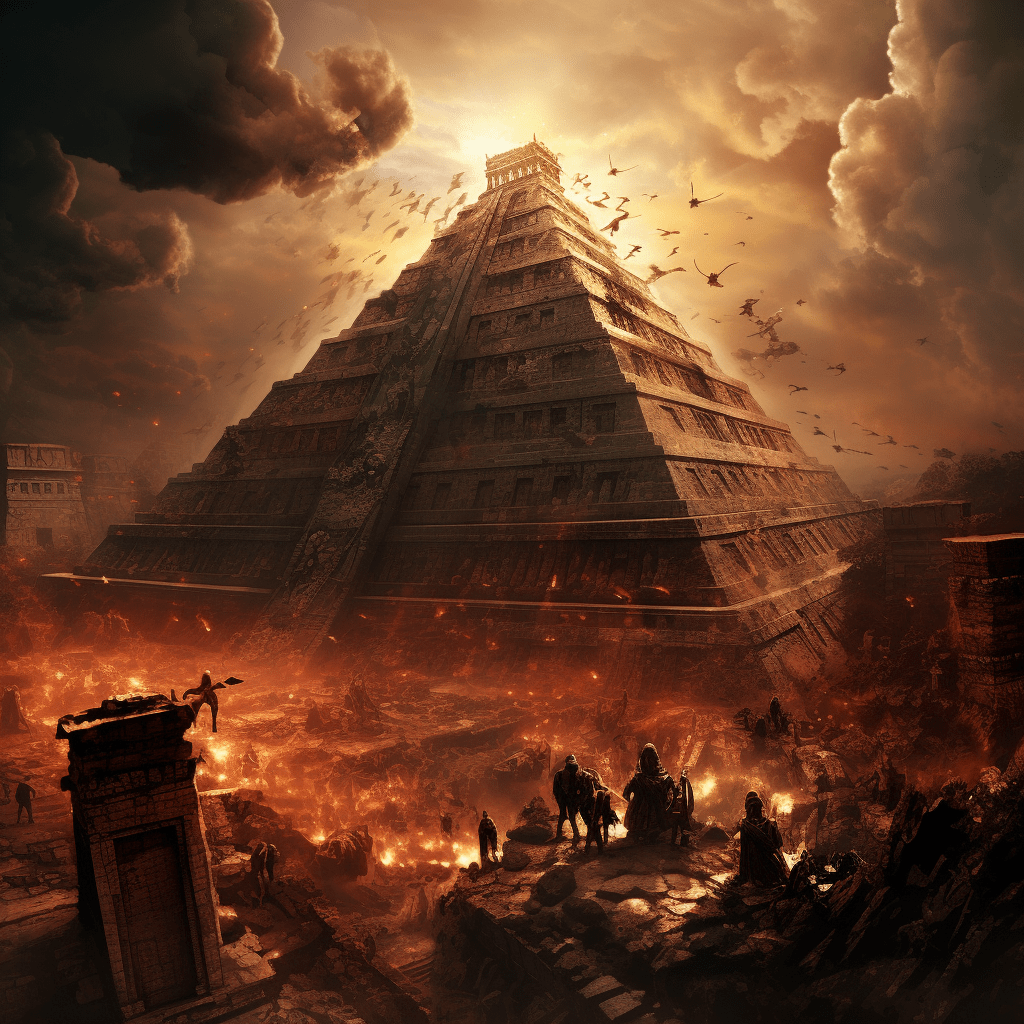
The enigmatic and fascinating Mayan civilization, steeped in complex mathematics, detailed astronomy, and intricate calendars, has left behind the intriguing prophecy of a shift in 2012. The prophecy has been the subject of numerous studies and discussions, often linked to doomsday scenarios, radical evolution, or spiritual transformations. This article aims to shed light on the Mayan prophecy and suggest possible interpretations in a compelling and intriguing manner.
Understanding the Mayan Calendar
To fully grasp the essence of the 2012 prophecy, we need to understand the workings of the Mayan calendar. The Maya had several different calendars, but their Long Count calendar, a non-repeating linear calendar, is central to the 2012 prophecy. It consisted of cycles or ‘Baktuns,’ each lasting approximately 394 years. The calendar started at the date 0.0.0.0.0, and the 13th Baktun ended on December 21, 2012. The date did not mark the end of time, as often misconstrued, but rather a cycle of time.
The Prophecy and Its Misinterpretations
The 2012 shift, according to the Mayan prophecy, was predicted as a period of great change or transformation. The Maya believed that the end of a Baktun marked a period of renewal, akin to a new year or new century on our calendars. The completion of the 13th Baktun on December 21, 2012, according to them, signified an era of significant transition.
The western interpretation, however, tilted towards a catastrophic end of the world scenario. However, there is no historical evidence to suggest the Maya saw this date as a doomsday.
Evidence and Cosmic Alignments
Interesting evidence points towards the cosmic significance of the 2012 shift. One notable astronomical event that coincided with the end of the 13th Baktun was the alignment of the sun with the center of the Milky Way galaxy, an event that occurs only once every 26,000 years.
This alignment signaled the sun’s crossing of the galactic equator, marking the end of a ‘Great Year’ or ‘Procession of the Equinoxes.’ The Mayans’ advanced astronomical knowledge might have allowed them to predict this alignment, associating it with the end of a cycle and the beginning of a new one.
The Shift – A Spiritual Evolution?
Many proponents of the 2012 Mayan prophecy interpret the shift as a period of spiritual evolution for humanity, not a physical end. Evidence lies in the increasing global interest in spirituality, consciousness, and unity in the years surrounding 2012.
The prophecy’s emphasis on a shift or transformation has been interpreted as humanity’s movement towards a greater spiritual awakening or a higher level of consciousness. This period, some believe, marks the evolution from an era dominated by materialism and conflict towards one of unity, empathy, and spiritual understanding.
Conclusion
The 2012 Mayan Prophecy, despite being a subject of controversy and misinterpretation, offers a compelling perspective on humanity’s spiritual evolution. The completion of a Great Year, combined with the crossing of a significant threshold in the Mayan Long Count calendar, presents an intriguing case for a shift towards a new age of consciousness. While we can’t definitively prove these interpretations, the blend of intricate Mayan calendars, advanced astronomy, and evolving human spirituality paints a compelling and intriguing image of the 2012 shift.
2012 Mayan prophecy, age of unity and empathy, Baktun cycle, cosmic shift 2012, December 21 2012, end of a Great Year, end of the world myths, galactic alignment 2012, higher consciousness, human spiritual evolution, Long Count calendar, Mayan astronomy, Mayan calendar, Mayan prophecy interpretations, meaning of Mayan Baktun, Procession of the Equinoxes, significance of 2012, Spiritual Awakening, spiritual evolution theory, understanding Mayan prophecies -
Was the Moon Constructed by Aliens?
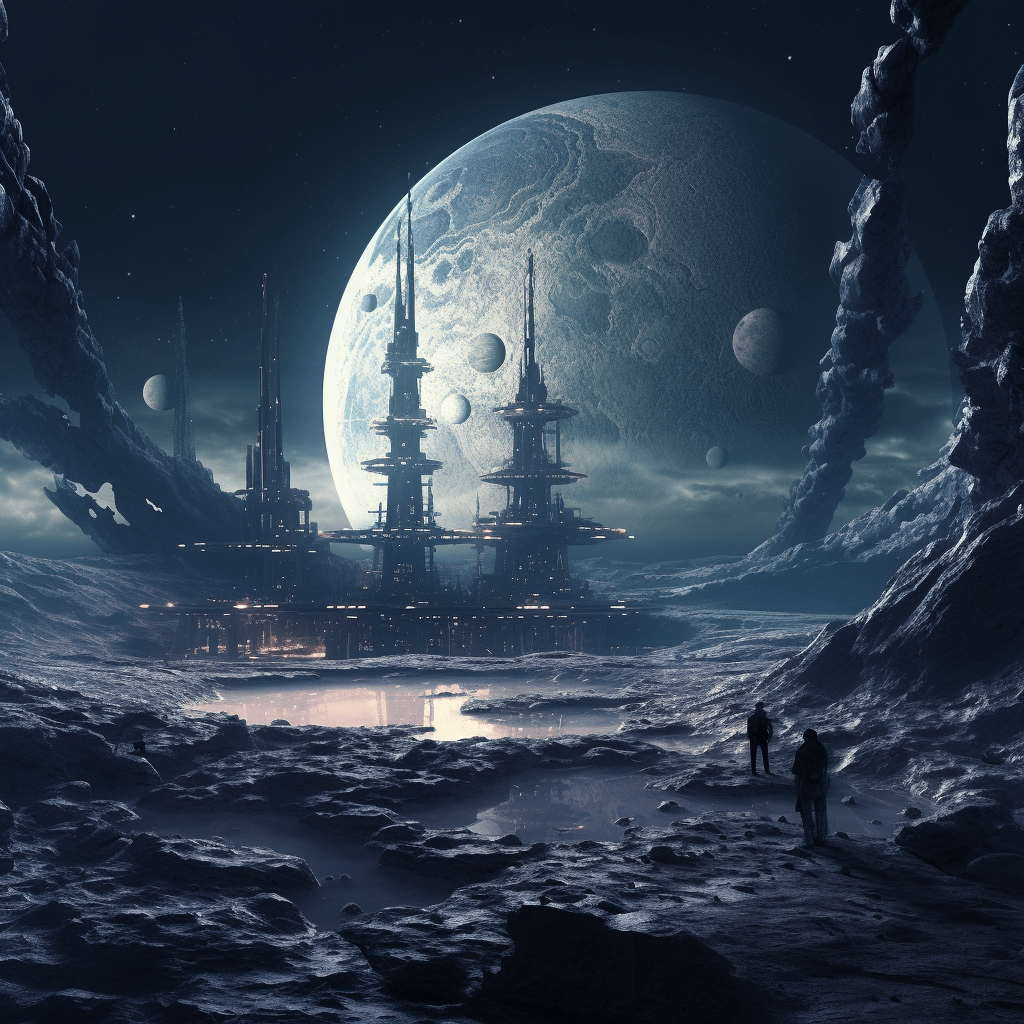
The celestial allure of the moon has held humanity captive for millennia. Over time, it has sparked countless tales, influenced our calendars and tides, and provoked scientific inquiries. Yet, one question rarely explored is the possibility of our moon being artificially constructed by an advanced alien civilization. This theory, while initially sounding far-fetched, may warrant more exploration than you might initially think.
Unusual Characteristics of the Moon
Extraordinary Orbit
The moon’s orbit is unique. Most captured objects in the solar system have significantly elliptical or irregular orbits. However, our moon has a near-perfect circular orbit, positioned at an unexplained ‘Goldilocks’ distance from Earth; not too close, but not too far, enabling the phenomenon we know as total solar eclipses.
Anomalous Density
The moon’s density, at 3.34 grams per cubic centimeter, is significantly lower than Earth’s 5.5. This discrepancy led to theories of the moon being hollow or partially so. Although mainstream science attributes this to the moon’s lack of a substantial iron core, it’s a characteristic that resonates with theories of artificial construction.
Unexplainable Age
Despite the prevalent theory that the moon was formed out of a massive collision between Earth and a Mars-sized body named Theia around 4.5 billion years ago, there are contradictory pieces of evidence. Some moon rocks brought back by Apollo missions have been dated as far older than any rocks on Earth, with some approximating 5.3 billion years. If the moon was indeed constructed, it could well have been built by a civilization that existed before the Earth was habitable.
Strange Phenomena & Observations
Transient Lunar Phenomena
Transient Lunar Phenomena (TLP) are short-lived changes in lunar surface observed as flashes of light, color changes, or appearances of mist. While some TLPs can be explained by meteorite impacts or solar radiation, others remain unaccounted for, potentially suggesting active technology beneath the lunar surface.
Moonquakes and Hollow Moon
NASA’s Apollo missions recorded ‘moonquakes’ – seismic activities on the moon. Some of these quakes reverberated for extended periods, leading to hypotheses that the moon might be hollow or have large, cavernous regions – a characteristic more consistent with an engineered object than a naturally formed celestial body.
Extraterrestrial Theories
The Spaceship Moon Theory
Michael Vasin and Alexander Shcherbakov of the Soviet Academy of Sciences proposed the Spaceship Moon Theory in 1970. They suggested the moon could be a hollowed-out planetoid created by unknown beings with advanced technology.
Alien Base Theory
This theory suggests the moon, due to its strategic position and resources, serves as an outpost for extraterrestrial beings to observe and interact with Earth. Unexplained structures spotted on the lunar surface, like the mysterious ‘Shard’ and ‘Tower’, have been cited as possible alien constructions.
Wrapping It Up: A Call for Open Inquiry
The question of the moon’s potential artificiality is undoubtedly speculative. It challenges our established scientific understanding and requires us to consider possibilities that may seem, at first glance, extraordinary. However, as history has shown us, today’s heresy can often become tomorrow’s orthodoxy.
The moon, our solitary natural satellite, remains a source of unending fascination and mystery. Theories regarding its artificial construction open up new avenues of inquiry into our universe’s history and the potential existence of extraterrestrial intelligence. Even if these theories prove untrue, their exploration can still yield insights into the moon’s formation and its singular place in our night sky. For now, the moon continues to shine down upon us – a silent sentinel, awaiting the day its secrets are finally unearthed.
advanced alien civilization, Alien Base Theory, alien constructions on moon, alien-built moon, anomalous moon density, artificial moon, exploration of moon secrets, extraterrestrial intelligence, extraterrestrial theories, hollow moon theory, lunar surface anomalies, moon construction theory, moon mysteries, moon’s artificiality, moon’s extraordinary orbit, moon’s unexplainable age, moonquakes, Spaceship Moon Theory, Transient Lunar Phenomena, unusual characteristics of the moon -
Zealandia: The Eighth Continent

New Zealand, a beautiful island nation known for its breathtaking landscapes, hobbits, and a plethora of unique wildlife, has been generating buzz in the geoscientific community for quite some time. A theory proposes that this enchanting land is not merely a collection of islands but is, in fact, a submerged part of a hitherto unrecognized eighth continent—Zealandia.
Unearthing Zealandia
The concept of Zealandia was first proposed by geophysicist Bruce Luyendyk in 1995. He coined the term to describe New Zealand, New Caledonia, and a large underwater plateau of continental crust that extends these islands. In 2017, researchers from New Zealand’s official geoscience agency GNS Science published a study in “The Geological Society of America” journal, claiming Zealandia fulfills all the criteria to be considered an independent continent.
Meeting the Criteria
Continents are large, continuous, discrete masses of land, ideally separated by expanses of water. They are also characterized by distinct geological features and a well-defined area. By these standards, Zealandia checks all boxes. At 4.9 million square kilometers, it’s approximately two-thirds the size of Australia. While around 94% of this landmass is currently underwater, this does not disqualify Zealandia from continent status, as the definition of a continent has nothing to do with whether it’s submerged or not.
The Geological Evidence
One of the most compelling pieces of evidence supporting Zealandia as a continent is its geology. The rock samples collected from Zealandia’s seabed differ significantly from those of the oceanic crust and align more closely with the continental crust’s composition. Also, Zealandia is elevated relative to the surrounding oceanic crust and has a variety of three types of rocks (igneous, metamorphic, and sedimentary), which are typically found on continents.
The Tectonic Perspective
Zealandia’s status as a continent also receives support from the tectonic perspective. It sits on its own tectonic plate—the Zealandia Plate. While it shares some connection with the nearby Australian Plate, there is a marked boundary between the two. This distinctive tectonic identity is a critical factor asserting Zealandia’s continental status.
Unveiling Earth’s Hidden Continent
The recognition of Zealandia as an eighth continent not only represents an exciting shift in our understanding of the Earth’s continental layout but also provides a unique window into the geology and evolutionary biology of the planet. It redefines our perception of continents and aids in the study of continental rifting and breakup, offering invaluable insights into Earth’s geological past.
The idea of a sunken landmass has also sparked interest from an evolutionary standpoint. The distinct and diverse life forms of New Zealand, such as the Kiwi bird and the Tuatara, a reptile with a lineage dating back to the dinosaur age, can be better understood in the context of Zealandia.
Conclusion
While the theory that New Zealand could be part of an unrecognized eighth continent is not universally accepted yet, the weight of geological and geophysical evidence cannot be overlooked. Zealandia challenges the traditional notion of what a continent can be and prompts us to reconsider our understanding of Earth’s surface. This submerged landmass stands as a testament to the ever-evolving nature of our planet, reinforcing the fact that there is still much to discover. The acceptance of Zealandia as an official continent could not only rewrite geography textbooks but also reshape our perspective on our planet’s geological history and biodiversity.
Australia and Zealandia plate boundary, Bruce Luyendyk Zealandia, continental rifting and breakup, continental vs oceanic crust, criteria for a continent, earth’s hidden continent, geology of Zealandia, GNS Science Zealandia study, New Zealand eighth continent, recognition of Zealandia, size of Zealandia, underwater continents, unique species in New Zealand, Zealandia and evolution, Zealandia continent theory, Zealandia in geography textbooks, Zealandia tectonic plate, Zealandia’s contribution to geology, Zealandia’s geological evidence, Zealandia’s impact on biodiversity -
Non-Space: A New Perspective on Reality

As we navigate the universe and our place within it, we often rely on our senses and our understanding of space. But, what if there existed a realm entirely devoid of our conventional understanding of space? A realm that exists outside our spatial dimensions – a non-space. This article aims to explore the concept of non-space, addressing its scientific, philosophical, and metaphysical implications, providing a compelling and intriguing exploration of this radical theory.
Understanding Non-Space: A Scientific Perspective
The concept of non-space may initially seem counter-intuitive. After all, our daily lives are wholly embedded in the three spatial dimensions we are accustomed to. However, modern physics and cosmology have been pushing the boundaries of our understanding.
In quantum mechanics, the uncertainty principle posits that we cannot simultaneously know both the exact position and momentum of a particle. This throws our understanding of space into disarray at quantum scales. Does this hint at the existence of a non-spatial realm, a non-space, underlying our reality?
Furthermore, string theory, one of the leading theories seeking to reconcile quantum mechanics and gravity, suggests the existence of extra dimensions that are compactified or hidden from our perception. Could non-space be related to these hidden dimensions, a realm where conventional spatial rules no longer apply?
The Concept of Non-Space in Philosophy and Metaphysics
Beyond science, the idea of non-space has profound philosophical and metaphysical implications. Many philosophical traditions, especially Eastern philosophies and metaphysical schools, hint at a form of reality beyond our typical understanding, which might well be termed as non-space.
Buddhist philosophy speaks of Śūnyatā, often translated as “emptiness,” a concept that describes the absence of inherent existence in all phenomena. Similarly, Advaita Vedanta, a school of Hindu philosophy, teaches of Brahman, the ultimate reality beyond form and empiricism. These concepts, while not explicitly termed as non-space, share the idea of a realm beyond our conventional experience of space.
Non-Space: A Cognitive Framework
Understanding non-space may also require a shift in our cognitive frameworks. Cognitive science research indicates our perception of space is intimately linked with our sensory-motor experiences. Babies develop spatial cognition through interaction with the environment, gradually forming an understanding of near and far, here and there.
Non-space, however, falls outside this sensorimotor paradigm. Exploring non-space may require different cognitive tools, such as meditation or altered states of consciousness, that allow us to transcend our usual sensory-motor experience.
Is Non-Space Possible?
The concept of non-space is indeed compelling and invites us to stretch our understanding of reality. While the existence of non-space cannot yet be confirmed or denied with scientific tools available, it serves as an intriguing theoretical concept.
What evidence might be offered to support the existence of non-space? It may lie in the intersection of theoretical physics, cognitive science, and mystical experiences. Such interdisciplinary approaches may provide glimpses into non-space, even if it remains largely beyond our grasp.
The exploration of non-space challenges us to broaden our horizons and to confront the limits of our understanding. Whether or not non-space exists, the very act of contemplating it pushes us to expand the boundaries of science, philosophy, and our own minds.
As we continue to explore this notion, we remain hopeful that our understanding of non-space and its possible existence will continue to evolve. If it does exist, our understanding of reality, as we know it, may need to be fundamentally revised. For now, the concept of non-space offers a tantalizing possibility that invites us to reconsider what we know about the universe and our place within it.
cognitive perception of non-space, cognitive science and non-space, concept of non-space, evidence for non-space, exploration of non-space, hidden dimensions and non-space, metaphysical implications of non-space, non-space and consciousness, non-space and mysticism, non-space and philosophy, non-space in Advaita Vedanta, non-space in Buddhism, non-space in quantum mechanics, non-space theory, reality beyond empirical space, reality beyond spatial dimensions, scientific perspectives on non-space, string theory and non-space, theoretical non-space, understanding non-space -
The Secret Mongolian Empire Theory: An Intriguing Possibility

The Mongolian Empire, known for its sweeping territorial conquests under the formidable Genghis Khan, holds a unique place in world history. However, an enticing theory suggests that the Mongolian Empire’s influence and power are not relics of the past but continue to shape global dynamics secretly, even today. This theory, known as the “Secret Mongolian Empire Theory,” makes for a compelling study in historical continuity and power dynamics.
Historical Perspective
Mongolia’s strategic location in Central Asia has influenced the region’s geopolitics and culture. The Mongolian Empire, at its peak in the 13th century, was the largest contiguous land empire in history. However, the empire began to fracture after the death of Möngke Khan, with numerous successors’ states taking its place.
Mongolian Influence Today: Unveiling the ‘Secret’
The Secret Mongolian Empire Theory posits that the descendants of the original Mongol Empire continued to wield significant influence, albeit covertly, after the empire’s apparent downfall. While this might sound speculative initially, several intriguing facts lend some credibility to this theory.
Economic Footprints
The Mongolian Empire was known for its advanced trade networks, such as the Silk Road. Even today, countries that were once under the Mongolian empire, like China and Russia, continue to be prominent players in global trade. Furthermore, Mongolia has abundant mineral resources, including coal, copper, gold, and uranium, suggesting that it could secretly influence global commodities markets.
Political Influence
According to the theory, the Secret Mongolian Empire could be pulling the strings of power in several countries that were once a part of the empire. This is suggested by the significant influence that Mongolia holds in regional organizations like the Shanghai Cooperation Organisation (SCO).
Genetic Traces
An article in the American Journal of Human Genetics in 2003 revealed that approximately 16 million men alive today are genetic descendants of Genghis Khan. This genetic footprint, spanning from Asia to Europe, could potentially imply an extensive, albeit concealed, Mongolian influence.
Counter Arguments and Skepticism
Like any theory, the Secret Mongolian Empire Theory has its skeptics. Critics argue that the cited evidence could be mere coincidences or indirect results of Mongolia’s historical power rather than deliberate, covert influence. The theory’s lack of hard, empirical proof also makes it a target for skepticism.
Looking Ahead: From Theory to Possible Reality?
The Secret Mongolian Empire Theory, despite its contentious nature, opens up intriguing possibilities. As we delve deeper into the study of genetics, trade, geopolitics, and history, we may stumble upon stronger evidence supporting this theory.
Conclusion
While the existence of a Secret Mongolian Empire today remains in the realm of speculation, the notion challenges us to rethink our understanding of historical power dynamics and their impacts on the present day. Irrespective of its veracity, the Secret Mongolian Empire Theory is a compelling testament to the enduring allure of history and the enigmatic narratives it can foster.
While it is intriguing to consider the existence of such a secret empire, rigorous academic scrutiny and research are essential for further exploration of this theory. Nonetheless, the theory encourages us to look beyond apparent historical discontinuities and consider the possibility of more subtle, enduring forms of influence spanning centuries.
ancient empires and modern influence, concealed Mongolian influence, covert political control, genetics and Mongolian Empire, genghis khan, Genghis Khan descendants, Genghis Khan’s genetic footprint, global trade, hidden power dynamics, historical continuity of power, Mongolia and global commodities markets, Mongolia’s mineral resources, Mongolia’s secret power, Mongolian Empire, Mongolian Empire’s modern relevance, Mongolian geopolitical influence, secret empires in history, Secret Mongolian Empire Theory, Shanghai Cooperation Organisation, Silk Road -
Artificial Aliens: A Future Reality or Present Possibility?

I. The Concept of Artificial Aliens
The phrase “artificial aliens” may conjure images from science fiction films or novels. However, it also opens up exciting questions in the field of artificial intelligence, exobiology, and astrobiology. Artificial aliens could be artificially intelligent life forms designed by us or another advanced civilization or AI-based extraterrestrial life forms themselves.
II. Rise of Artificial Intelligence
In the age of advanced technology and machine learning, AI has come a long way. Today, AI has moved beyond merely mimicking human thought processes and decision-making to creating self-evolving systems. These AI systems continuously learn, adapt, and evolve, displaying a form of ‘digital life.’
Researchers at OpenAI have achieved breakthroughs that allow AI to generate coherent and contextually relevant sentences, indicating a step towards more complex, life-like AI. Projects such as Google’s DeepMind showcase the extraordinary potential for AI to self-learn and self-evolve.
III. The Drake Equation and Artificial Intelligence
The Drake Equation is a probabilistic argument to estimate the number of active, communicative extraterrestrial civilizations in the Milky Way galaxy. When considering the equation, the idea of artificial aliens brings a new variable to the table: the possibility of advanced civilizations developing artificial life forms, either as a means of survival, exploration, or as an evolutionary step.
If we extrapolate our technological progression, one could argue that artificial life or AI might be a common evolutionary step for advanced civilizations. This perspective drastically increases the probability of ‘artificial alien’ existence in the cosmos.
IV. Alien Life: Biological or Artificial?
Current astrobiological research primarily focuses on detecting biosignatures or chemical signs of life as we know it. However, could we be missing signs of ‘digital life’ or technosignatures in our search?
Recent theoretical research proposes a shift towards also seeking ‘technosignatures,’ signs of technology or artificial life, such as large amounts of infrared emissions from artificial structures or patterns in radio signals that suggest artificial origin.
V. Advancements in Nanotechnology: The Building Blocks of Artificial Aliens
Nanotechnology’s rapid advancement, manipulating matter at an atomic and molecular level, provides the potential building blocks for creating artificial life. ‘Nanobots’ capable of self-replication and adaptation to their environment could serve as a basis for artificial life forms.
Eric Drexler, known as the father of nanotechnology, theorized ‘grey goo,’ a scenario where self-replicating nanobots could consume all matter on Earth while replicating themselves. While it’s a dystopian view, the principle demonstrates the potential capability of creating life-like machines on a minuscule scale.
VI. Conclusion: The Future of Life May Be Artificial
While the concept of artificial aliens is speculative, it isn’t beyond the realm of possibility given our trajectory of technological and scientific development. The advancements in AI, nanotechnology, and our evolving understanding of what constitutes life suggest that the existence of artificial aliens is more a matter of ‘when’ than ‘if.’
The implications are profound. Not only would artificial aliens redefine our understanding of life, but they could also drastically affect our approach to space exploration and our place in the cosmos. As we continue to push the boundaries of technology and our understanding of life, we may need to prepare for a universe where we are not the only creators, and the ‘alien’ life we encounter may be as artificially intelligent as the machines we have birthed.
As Arthur C. Clarke once said, “Two possibilities exist: either we are alone in the Universe or we are not. Both are equally terrifying.” Perhaps it’s time we added a third: In the Universe, we may not be the only ones who can birth ‘life.’
advanced civilizations and AI, AI as alien life, AI evolution, AI in space, artificial aliens, artificial aliens concept, artificial intelligence, artificial intelligence development, artificial life forms, astrobiology and AI, digital life, Drake Equation and AI, Eric Drexler grey goo, exobiology and AI, extraterrestrial artificial intelligence, nanotechnology and artificial life, search for extraterrestrial life, self-evolving AI systems, signs of artificial life, technosignatures
Wonder about your world…

Take the plunge down the rabbit hole of insanity and wonder in this fast-paced, nonstop psychological thriller that will leave you questioning the very nature of reality and beyond. Part thriller, part romance, part existential horror, A Dream of Waking Life delves into lucid dreaming, psychedelics, existential ontology, video games, the nature of love, the nature of reality, and more.

Mendel’s Ladder delivers an adrenaline-fueled journey set on a dystopian future Earth, brimming with high-stakes action, adventure, and mystery. This epic series opener plunges readers into a world filled with diverse cultures, heart-pounding battles, and characters who will captivate your heart and imagination.

“E.S. Fein is raising the bar for quality as it’s a very well-written and thought-provoking book…There are points and themes in the story that could be discussed for eons as people will have their own idea on where it leads. It’s a book I would highly recommend.” – Andy Whitaker, SFCrowsnest
 Wondergressive