
-
Four Corners Face Theory: A Compelling Perspective

As we journey into the realm of unorthodox theories, we encounter perspectives that challenge our traditional understanding of reality. One such theory is the “Four Corners Face Theory.” This thought-provoking concept suggests that human faces can be categorically divided into four distinct corners, each representing different aspects of our personality and disposition.
Unmasking the Four Corners Face Theory
The Four Corners Face Theory, although not widely recognized in conventional science, has gained a modicum of attention due to its unique way of analyzing human faces. The theory postulates that our faces can be divided into four distinct corners – the upper left, upper right, lower left, and lower right. These four corners, each representing a separate element, encapsulate the characteristics of an individual’s personality and disposition.
The Four Elements of Personality
Each corner of the face, as per this theory, relates to an element and governs specific characteristics.
The upper left corner, often associated with the element of air, is said to represent an individual’s intellect and cognitive abilities. The upper right corner, linked to the element of fire, governs aspects of passion, drive, and ambition.
The lower left corner, corresponding to the element of water, is purported to express our emotional responses and empathy. Finally, the lower right corner, linked to earth, is believed to represent stability, practicality, and groundedness.
The Science Behind the Theory
Although the Four Corners Face Theory is not universally accepted by the scientific community, it does touch upon several scientifically acknowledged principles. For instance, the understanding that different facial regions communicate different emotions aligns with Paul Ekman’s Facial Action Coding System (FACS).
Ekman’s research indicates that specific facial movements correspond to specific emotional states. For example, furrowing of the brow, typically occurring in the upper left region of the face, is associated with confusion or concentration, supporting the theory’s claim that this region relates to intellectual activity.
The Real-World Applications
Proponents of the theory assert that it can be applied in a variety of ways. For instance, in interpersonal communication, understanding the ‘corners’ of the face could potentially lead to better recognition and understanding of the other person’s feelings or motivations. The theory could also have implications in areas such as psychotherapy and counseling, where therapists could use this technique to better understand their patients’ emotional responses.
Moving Forward: More Research Needed
Like any other theory, the Four Corners Face Theory needs further empirical investigation. However, its unique perspective on personality traits and emotional expressions should not be dismissed outright.
While it may not currently be substantiated by mainstream scientific thought, it has the potential to open new avenues in the realm of personality studies, facial recognition, and emotional understanding. At the very least, it invites us to question and explore the fascinating complexities of human personality and expression.
In conclusion, the Four Corners Face Theory, while intriguing and potentially insightful, should be examined with a balanced perspective. As we continue to delve into the mysteries of human behavior and personality, it’s essential to remain open to unconventional theories like these while also seeking empirical evidence. After all, the essence of scientific inquiry lies in curiosity, exploration, and an openness to different perspectives.
-
DMT Machine Elves

Human experience is a well of profound depths and intricate complexities. Among these intriguing aspects is the encounter with so-called “machine elves” by users of the psychedelic substance N, N-Dimethyltryptamine (DMT). This article aims to delve into the captivating world of DMT-induced machine elves and present a compelling case for their potential reality.
DMT: The Spirit Molecule
Before we embark on our journey to understand the phenomenon of machine elves, let’s get acquainted with DMT. DMT is a naturally occurring compound found in various plants and animals, including humans. It’s often referred to as the “spirit molecule” due to its profound psychedelic effects, inducing intense hallucinations and altered states of consciousness.
The Enigmatic Machine Elves
Terence McKenna, a renowned ethnobotanist, and psychonaut, first popularized the term “machine elves.” Users often describe them as intelligent, self-transforming entities that communicate through complex visual symbolism. They are perceived as incredibly real, despite their unconventional form and abstract existence.
The Neuroscience of DMT and Hallucinations
Our brains are wired with complex neural networks that allow us to perceive and interpret the world. Under normal conditions, these networks work in a specific, predictable way. However, substances like DMT can dramatically alter these pathways, creating entirely new perceptions and experiences.
According to the ‘Neural Correlate Theory of Hallucination’, these hallucinations occur when our brain tries to make sense of these novel and intense sensory inputs. In other words, the machine elves could be constructs of the human brain trying to interpret the DMT-induced neural chaos.
Beyond Hallucinations: A Deeper Reality?
While neuroscience provides one perspective, the compelling detail and consistency of machine elves’ experiences across individuals worldwide suggest a deeper reality. Many users feel that these entities exist in another realm or dimension, only accessible under the influence of DMT.
Evidence from Quantum Physics
Quantum physics, with its concept of multiple realities and dimensions, might provide a theoretical framework for understanding these experiences. The multiverse theory posits the existence of an infinite number of universes, including the one we inhabit. If we assume that consciousness can access these alternate realities, the experiences with machine elves could be real interactions with entities from another dimension.
Testimonials and Cross-cultural Parallels
Strong anecdotal evidence from users around the world lends credence to this theory. People across different cultures and backgrounds report strikingly similar experiences, seeing the same entities, and receiving identical messages. This cross-cultural consistency hints at a shared reality beyond individual brain chemistry.
Moreover, indigenous cultures have long described encounters with spirit entities through the use of plant-based psychedelics. These descriptions often mirror the machine elves, suggesting a common thread that transcends time and culture.
Conclusion: A Conscious Universe?
The DMT machine elves may serve as a clue to understanding the deep mysteries of consciousness and our universe’s fundamental nature. They pose intriguing questions: Could consciousness extend beyond our brain? Could it be an inherent aspect of the universe, capable of revealing realities beyond our ordinary perception?
While we may not have definitive answers to these questions, the phenomenon of DMT machine elves urges us to keep an open mind. They invite us to challenge our assumptions, expand our understanding, and explore the mind’s extraordinary potential. Through this exploration, we might discover that the universe is far more complex, interconnected, and fascinating than we ever imagined.
altered states of consciousness, cross-cultural DMT experiences, DMT alternate dimensions, DMT and the universe, DMT entities, DMT machine elves, DMT-induced hallucinations, exploring mind’s potential, indigenous psychedelic practices, intelligent entities, interpreting DMT visions, multiverse theory, nature of consciousness, Neural Correlate Theory of Hallucination, psychedelic experiences, quantum physics and DMT, shared psychedelic experiences, spirit molecule, Terence McKenna -
Malbolge Programming: A Cryptic Journey Into Code

The world of programming languages is vast and diverse, but few stand out as remarkably as Malbolge, a language designed to be nearly impossible to use. Created in 1998 by Ben Olmstead, Malbolge is an esoteric programming language intentionally constructed to confound and bewilder. Yet, it’s within this labyrinth of complexity that programmers have found an intriguing challenge. This article will delve into the captivating intricacies of Malbolge programming.
Malbolge: The Cryptic Genesis
Malbolge was named after the eighth circle of hell in Dante’s “Inferno” – an apt metaphor for its daunting complexity. Olmstead deliberately designed the language to be nearly impossible to write useful programs in. It is not merely difficult to understand, it’s designed to be mind-boggling.
Despite its creator’s intentions, some enthusiasts took this as a challenge. It took two years for the first valid Malbolge program to be written. The program, a simple “Hello, World!” output, was not developed by hand, but by a Lutz Horn’s brute-force search algorithm. This feat in itself speaks volumes about Malbolge’s intricacy.
The Puzzling Design of Malbolge
In Malbolge, operations are performed on trits (base-3 digits) instead of bits. The language only has eight instructions, all represented by non-alphanumeric ASCII characters. In an additional twist, after every instruction is executed, the memory that held the instruction gets ‘encrypted’, which changes its content.
What makes Malbolge truly unique is its self-altering code. Each time an instruction is executed, not only does the executing instruction change, but the operation of instructions itself changes too. This means programmers cannot predict what will happen next based on what has occurred before – a concept far removed from traditional programming logic.
Malbolge: An Achievement in Programming Complexity
The first non-brute-forced Malbolge program, a ’99 Bottles of Beer’ implementation, was crafted by Hisashi Iizawa in 2005, seven years after Malbolge’s creation. This accomplishment was a landmark achievement in the world of esoteric programming.
The development of such programs implies a profound understanding of Malbolge’s mechanics. It underlines the creativity, perseverance, and unconventional thinking required to navigate this obfuscated language.
Malbolge Unshackled: Making The Impossible Possible
Malbolge Unshackled, a variant of the language introduced by Hisashi Iizawa, rectified some of the problems that made original Malbolge virtually unusable. It made writing Malbolge programs possible, but not any less of a challenge. Programmers had to adapt to the unusual characteristics of the language and devise new techniques to overcome its limitations.
The Appeal of Malbolge: Complexity as a Catalyst
The very elements that make Malbolge seem impractical are what make it so intriguing to a subset of programmers. The vast majority of coding is aimed at making processes more efficient; Malbolge, on the other hand, adds unnecessary layers of complexity. But it’s precisely this defiance of logic and efficiency that makes it a fascinating puzzle.
It’s unlikely that Malbolge will ever be used for practical programming tasks. Still, its existence is a testament to the human desire to tackle seemingly insurmountable challenges, to push boundaries, and to find order in chaos.
Conclusion: Malbolge as a Testament to Human Tenacity
Malbolge programming might seem an exercise in futility to most, but its intricate design, unorthodox methodologies, and inherent challenges present an irresistible allure for those drawn to esoteric programming languages. It stands as a monument to the notion that even the most confounding barriers can be overcome with curiosity, ingenuity, and tenacity. Despite its creator’s intentions, programmers have demonstrated that even in the depths of Malbolge’s complexity, it is indeed possible to write functioning code – a triumph of the human spirit in the face of a digital inferno.
“Hello World” in Malbolge, Ben Olmstead, complex programming challenges, encrypted instructions in Malbolge, esoteric programming languages, hardest programming language, Hisashi Iizawa, human ingenuity in programming, Lutz Horn, Malbolge mechanics, Malbolge programming, Malbolge Unshackled, non-alphanumeric ASCII instructions, order in programming chaos, overcoming programming complexity, programming as a puzzle, self-altering code in Malbolge, Trit based programming, writing code in Malbolge, writing functional Malbolge programs -
The Purple Spheres Theory: A World Beyond Our Understanding

The Purple Spheres Theory is a rather obscure and mysterious idea that has captivated a select group of enthusiasts. This theory posits that our world is filled with elusive and invisible ‘purple spheres’ that interact with our physical reality in unfathomable ways. It suggests these spheres, though unseen by the naked eye, exert influence over our environment and perhaps even our consciousness. But how can something seemingly invisible hold such power? Let’s delve deeper.
Evidence for the Purple Spheres
Scientific Anomalies
While empirical evidence for the Purple Spheres is scarce, there are a few compelling points that bolster this theory. For instance, unexplained scientific anomalies and phenomena that standard physics cannot solve may potentially be attributed to these spheres.
There are instances where particles behave unpredictably or are influenced by unseen forces. Could these be the workings of the elusive purple spheres? This interpretation, although far-fetched for some, is a tantalizing possibility for proponents of this theory.
Synchronicities and Coincidences
Synchronicities and uncanny coincidences are another form of evidence that adherents point to. They argue that such occurrences are too specific to be chalked up to mere chance. The theory suggests that these spheres might be orchestrating these events, pushing our world in a certain direction. But to what end, remains unknown.
The Purple Spheres and Consciousness
One of the most intriguing aspects of the Purple Spheres Theory is the proposed connection with human consciousness. This hypothesis suggests that our thoughts, emotions, and overall mental state might be affected or even controlled by these spheres.
Some individuals have reported inexplicable shifts in mood, perception, or cognition that they associate with the influence of these spheres. While these experiences are highly subjective and lack rigorous scientific validation, they offer an enticing dimension to the mystery of the purple spheres.
The Purple Spheres: An Interdimensional Perspective
Supporters of the Purple Spheres Theory often relate it to the concept of higher dimensions. They posit that these spheres exist in dimensions beyond our three-dimensional world, which is why we can’t physically perceive them. The strange behaviors and phenomena we witness are just the spheres’ interactions with our three-dimensional world, much like how a three-dimensional object would appear bizarre to a two-dimensional being.
Towards Understanding the Unseen
In conclusion, the Purple Spheres Theory provides an exciting perspective to view and understand the unexplained mysteries of our world. From strange physical phenomena to inexplicable shifts in consciousness, the theory attributes them to the influence of an unseen entity. It blurs the line between science and metaphysics, encouraging us to question our perception of reality.
Despite its outlandish premise, the theory provides a platform for challenging scientific assumptions and expanding our understanding of reality. The Purple Spheres Theory prompts us to probe deeper into the realms of the unseen, not dismissing them outright due to our current limitations of understanding. After all, scientific advancement has often been driven by delving into the unknown.
However, as intriguing as the theory is, it requires more empirical backing to gain mainstream acceptance. Future research and advancements in technology might provide us the tools to further explore and perhaps even validate the existence of these mysterious purple spheres. Until then, the Purple Spheres Theory remains a captivating enigma, inviting us all to question, explore, and understand the world beyond our current comprehension.
captivating enigmas, coincidences, evidence for Purple Spheres, expanding reality understanding, interdimensional perspective, metaphysics, mysterious purple spheres, probing into the unknown, Purple Spheres and higher dimensions, reality perception, research on Purple Spheres, scientific anomalies, synchronicities, technology and Purple Spheres, understanding unseen forces, unexplained mysteries of our world, unexplained phenomena, validate Purple Spheres existence -
Oxygen as a Hallucinogen

The idea of oxygen as a hallucinogen is a fascinating theory that flips our conventional understanding of biochemistry and cognition on its head. This captivating hypothesis suggests that the life-giving molecule we inhale every second is responsible for the very reality we perceive. In essence, we could be living in a constant state of hallucination induced by the oxygen we breathe.
Understanding Oxygen’s Role in the Body
Firstly, it’s essential to understand the vital role oxygen plays in our bodies. Oxygen is a key player in cellular respiration, a biochemical process in our cells that produces energy necessary for life. Oxygen acts as the final electron acceptor in the electron transport chain, a sequence of reactions that ultimately generates ATP, the primary energy currency of cells.
While the life-sustaining role of oxygen is well-documented, the suggestion that oxygen may have hallucinogenic properties is a radical departure from accepted science. But could this theory hold any weight?
Oxygen and Perception: Hallucination or Reality?
Hallucinogens are substances that alter perception, thoughts, and feelings. They cause hallucinations, experiences that seem real but are not. According to the hypothesis of oxygen as a hallucinogen, the very act of breathing sustains our perception of reality, potentially construed as a hallucination.
Indeed, the brain, which interprets and constructs our reality, is the most oxygen-hungry organ in the body, using about 20% of the total oxygen we breathe. It’s a small leap of imagination to link the role of oxygen in the brain with our conscious experience.
Evidence from Altered Oxygen Levels
Instances of altered consciousness under different oxygen levels provide some interesting, albeit circumstantial, evidence for the theory. At high altitudes, where oxygen levels are significantly lower, many people report experiencing altered states of consciousness or “mountain euphoria.” Could this be a glimpse into an oxygen-deprived version of reality?
On the other extreme, oxygen toxicity, a condition resulting from the harmful effects of breathing oxygen at elevated pressures, can cause symptoms such as visual and auditory hallucinations.
The Role of Neurotransmitters
While intriguing, linking these altered states directly to oxygen’s potential hallucinogenic effect is speculative. The brain’s perception machinery is a complex system involving many different neurotransmitters. Hallucinogens like LSD and psilocybin exert their effects primarily through serotonin receptors, not through an interaction with oxygen.
Conclusion: An Intriguing Hypothesis
The idea of oxygen as a hallucinogen is certainly compelling, offering an alternative perspective on reality and our interaction with the world. However, it’s essential to underscore that this theory is speculative and not supported by direct scientific evidence. While we can’t dismiss it outright, much more research is needed to explore this intriguing concept further.
The investigation of unconventional ideas often leads to breakthroughs in understanding. Whether or not the hypothesis of oxygen as a hallucinogen holds up to scientific scrutiny, it certainly invites us to think about reality, perception, and the mysteries of the mind in new and thought-provoking ways.
biochemical process of hallucinations, biochemical understanding of hallucinations, cellular respiration and consciousness, effects of oxygen on perception, hallucination or reality, hallucinations and oxygen levels, mountain euphoria oxygen levels, neurotransmitters and hallucinogens, oxygen and the mysteries of the mind, oxygen deprivation and perception, oxygen hallucination theory, oxygen use in the brain, scientific evidence for oxygen as a hallucinogen, the brain’s perception machinery, understanding oxygen’s role in hallucinations -
The Dark City Theory: Beyond the Bounds of Fiction

It is easy to dismiss the 1998 neo-noir science fiction film ‘Dark City’ as pure imagination — a creative, dystopian world born from the mind of director Alex Proyas. However, what if the concepts in this cinematic narrative bear more semblance to reality than we might think? The Dark City Theory is a fascinating speculative hypothesis that proposes the possibility that our reality, much like the film’s plot, might be continuously manipulated and altered by unseen forces. This article explores this theory, presenting compelling evidence to showcase its feasibility.
The Reality of the Dark City Theory
The theory in question rests on two foundational premises drawn from the film — that our memories could be manipulated and that our reality might be constructed or altered. These ideas, while outlandish at first glance, have intriguing implications when scrutinized within the context of science, philosophy, and technological developments.
In ‘Dark City’, the inhabitants have their memories altered and manipulated by the mysterious antagonists known as “The Strangers.” While our current understanding of neurology cannot allow such dramatic memory manipulations, research has shown that memory is not as reliable as once believed. Studies have demonstrated that our recollections can be altered and even entirely fabricated through suggestions and the influence of misinformation, a phenomenon known as “false memory” syndrome.
Technology and Memory Manipulation
The advancement of technology raises questions about the potential for direct memory manipulation, much like in ‘Dark City.’ As AI and neural interfaces become increasingly sophisticated, experts warn that these technologies could potentially be used to modify or implant memories. Elon Musk’s Neuralink, for instance, aims to achieve symbiosis between AI and the human brain, making the prospect of memory manipulation less fantastical.
Altered Reality: Simulation Theory
The second tenet of the Dark City Theory — the notion that our reality might be constructed or modified — mirrors the philosophical argument of the Simulation Hypothesis. This proposition, popularized by philosopher Nick Bostrom and tech entrepreneur Elon Musk, posits that we might be living in an advanced computer simulation, controlled by a superior civilization or intelligence. The digital reconstruction of reality, as seen in the film, is theoretically possible in such a simulated universe.
Quantum Physics and The Nature of Reality
Further evidence for the Dark City Theory comes from the realm of quantum physics, where particles can exist in multiple states simultaneously and change their state when observed — the phenomenon of superposition and wave function collapse. These principles challenge our perception of reality and align with the idea of a malleable universe, much like the shifting cityscape in ‘Dark City.’
Psychological Perception and Constructed Reality
Beyond physics, our psychological perception plays a crucial role in constructing our reality. Cognitive science shows that our brains continuously build and alter our world perception based on sensory inputs and past experiences. This inherent process of reality-construction in our minds echoes the continuously reconstructed city in ‘Dark City.’
In Conclusion: A Mind-Bending Possibility
The Dark City Theory, when examined through the lens of science, technology, and philosophy, appears less far-fetched. While the scenario in ‘Dark City’ is indeed a work of fiction, the ideas it presents echo actual scientific and philosophical debates about memory, perception, and the nature of reality. By examining these profound parallels, we open our minds to a broader understanding of the universe we inhabit and the complex forces at play in the definition of our reality.
-
Dogon Tribe: An Intriguing Legacy of Astronomical Knowledge
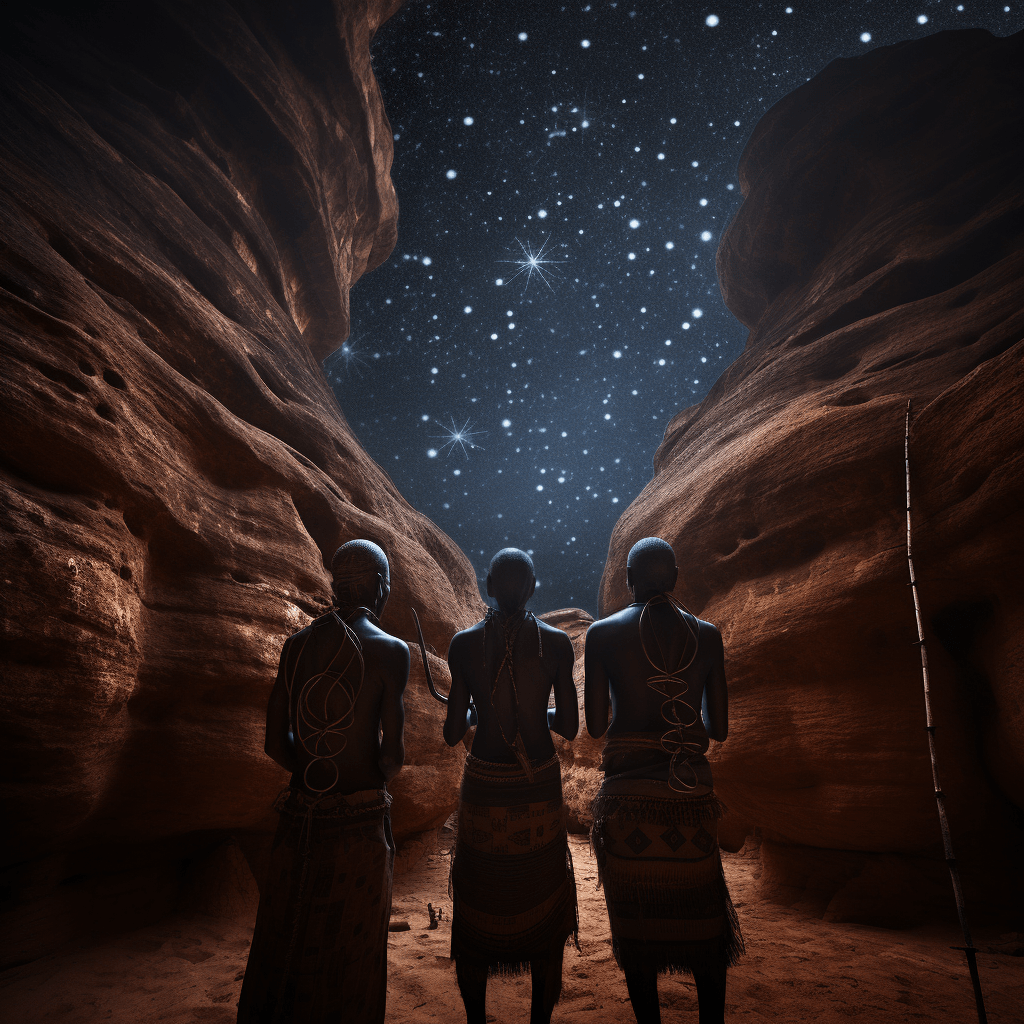
The Dogon Tribe, an ethnic group primarily residing in the arid, rocky highland region of Bandiagara in Mali, has long been a subject of intrigue and fascination among anthropologists and archaeologists alike. Known for their complex cosmology and detailed, accurate astronomical knowledge that appears to predate modern science, the Dogon Tribe’s wisdom continues to elicit both curiosity and debate.
The Dogon’s Astronomical Prowess
The Dogon Tribe’s deep understanding of astronomy, as documented by French anthropologists Marcel Griaule and Germaine Dieterlen in the 1930s and 40s, is nothing short of extraordinary. According to Griaule and Dieterlen’s findings, the Dogon possessed intricate knowledge of celestial bodies, including specifics about the Sirius star system, that were unconfirmed by modern science until many years later.
For instance, the Dogon mythology speaks of Sirius B, a dwarf star orbiting the Sirius star, which is invisible to the naked eye and was not detected by modern astronomers until the 19th century. The Dogon’s accounts extend even further, accurately describing the star’s tiny size yet immense weight, its elliptical orbit, and the 50-year orbital period. All of these facts are in alignment with modern astronomy’s understanding of Sirius B.
Ancient Wisdom or Ancient Aliens?
Given the detailed and accurate nature of the Dogon’s astronomical knowledge, questions inevitably arise: how could a tribe, lacking modern scientific instruments, acquire such specific information about the cosmos?
One controversial theory put forth by authors like Robert Temple in his book “The Sirius Mystery” suggests that the Dogon might have been visited by extraterrestrial beings from the Sirius star system, who bestowed upon them their astronomical knowledge. However, this theory, often associated with ancient astronaut hypotheses, has received considerable criticism for lack of empirical evidence and for exoticizing and misunderstanding Dogon culture and history.
Cultural Interpretations and Symbolism
A more grounded interpretation sees the Dogon’s astronomical wisdom as a testament to humanity’s ancient observational capabilities. It’s possible that over centuries of careful sky-watching, aided by the clear, unpolluted skies of their homeland, the Dogon could have accumulated their knowledge.
Additionally, the Dogon’s cosmological beliefs are deeply integrated into their culture and spirituality. Their astronomical knowledge isn’t just scientific information, but a part of their religious beliefs and mythologies, filled with rich symbolism. For instance, Sirius, to the Dogon, is associated with the concept of creation and is symbolized in various ceremonies and rituals.
The Dogon Tribe: A Window into Human Capability
The Dogon Tribe’s astronomical wisdom showcases the incredible potential of human observation and understanding. Rather than ascribing their knowledge to extraterrestrial origins, it is essential to view it in a broader context of human intellectual history.
Research into the Dogon and other indigenous cultures with profound astronomical knowledge can provide valuable insights into how our ancestors understood the world around them, reminding us that sophisticated scientific inquiry isn’t the sole preserve of the modern world. While the source of the Dogon’s astronomical knowledge may remain a subject of debate, the tribe’s intellectual legacy undeniably expands our perception of human capability.
By probing deeper into these narratives, we may not only unravel secrets of our past but also possibly steer future research into the night skies that continue to enthral us. The Dogon’s deep connection with the cosmos serves as a reminder of the universe’s profound mystery and our enduring desire to comprehend our place within it.
ancient astronaut theory, Ancient human intellectual history, Ancient human observational capabilities, Ancient tribes and astronomy, Dogon and Sirius B, Dogon and the cosmos, Dogon astronomy, Dogon cosmology, Dogon culture, Dogon extraterrestrial theory, Dogon mythology, Dogon religious beliefs, Dogon rituals, Dogon Tribe, Dogon Tribe’s intellectual legacy, Indigenous astronomical knowledge, Marcel Griaule and Germaine Dieterlen, Robert Temple’s Sirius Mystery, Sirius B, Sirius star system -
The Empty Internet Theory

One of the latest and most fascinating theories to make its way through the cyber-sphere is the concept of the ‘Empty Internet Theory.’ This captivating idea presents the possibility that the internet is not as populated with human users as we think it is, instead suggesting that a significant portion of online activity could be automated or artificial.
What is the Empty Internet Theory?
The Empty Internet Theory postulates that a large part of the internet’s content, interactions, and traffic is primarily generated by bots, AI, and algorithms, not humans. Proponents suggest that our perception of a bustling, densely populated digital world might be a false construct, manufactured by tech companies and artificial intelligence.
The role of bots and AI
It is no secret that bots and AI play a significant role in our digital lives. They are responsible for everything from targeted advertising to content recommendations and search engine results. In 2020, a report by Imperva suggested that bots accounted for nearly 40% of all internet traffic. Bots can write articles, manage social media accounts, and even interact with users on various platforms, mimicking human behavior to a disturbingly accurate degree.
In many ways, the Empty Internet Theory can be seen as an extension of this reality. If bots can replicate human activity so convincingly, how many of our online interactions are genuinely with other humans? And how many are with bots masquerading as people?
Evidence and indications
Various pieces of evidence have been put forth to support the Empty Internet Theory. These include the prevalence of spam and bot-generated content, the lack of human-like unpredictability in much of online behavior, and the analysis of data traffic patterns.
Many people also point to their personal experiences as evidence. For instance, users have reported seeing the same generic responses across different websites or receiving automated customer service replies that don’t accurately address their concerns.
The impact of social media
Social media is a particularly interesting area of study in relation to the Empty Internet Theory. Platforms like Facebook and Twitter are notorious for their high levels of bot activity. For instance, during the 2016 U.S. election, researchers estimated that bots produced approximately 20% of all tweets related to the election.
The proliferation of deepfake technology is another aspect to consider. Deepfakes – realistic AI-generated images, videos, or voice recordings – are becoming increasingly sophisticated, potentially allowing for the creation of artificial ‘people’ that could interact with real users.
Conclusion: A Lonely Digital Frontier?
While compelling, the Empty Internet Theory is still just that – a theory. Critics argue that while bots and AI undoubtedly make up a significant part of the internet, human users still represent the majority of online interactions.
However, as our technology continues to evolve, this theory serves as a reminder to be aware of our digital environment and question the nature of our online interactions. Ultimately, whether the internet is ’empty’ or not might be a matter of perspective. But one thing is for certain: as we continue to populate the digital world, we are not alone. AI, for better or worse, is right there with us.
Perhaps in the future, as AI and bot technology continues to progress, we will find more concrete answers. Until then, the Empty Internet Theory will remain an intriguing part of our digital folklore, a testament to our ongoing struggle to understand the complex digital world we’ve created.
AI-generated interactions, artificial intelligence and internet, automated online interactions, bot activity in social media, bot-generated content, data traffic patterns, deepfake technology, digital folklore, empty internet theory, evidence for empty internet theory, evolution of digital world, future of AI and bot technology, impact of social media on internet population, impact of technology on online interactions, internet and human users, online behavior and unpredictability, prevalence of spam, role of bots in internet, understanding digital environment, what is the empty internet theory -
Coronal Heating: Delving into Solar Mysteries

A Celestial Puzzle
In the vast cosmic arena, our sun, like other stars, poses an intriguing question: the coronal heating problem. This enigma refers to the paradox of the sun’s corona, its outermost layer, being significantly hotter than its surface, reaching temperatures of millions of Kelvin compared to the surface’s modest 5500 Kelvin. This curious disparity presents a celestial puzzle, challenging scientists for decades and spurring innovative theories.
Understanding the Basics: What is Coronal Heating?
Coronal heating is the process that results in the sun’s outer shell, or corona, having a much higher temperature than its surface. While the core of the sun operates at millions of degrees, its photosphere cools down to a relatively cooler 5500 Kelvin. But remarkably, the temperature rises again to an extraordinary degree in the corona. This counterintuitive trend has long perplexed scientists, leading to the development of several compelling theories.
Magnetic Reconnection: A Powerful Process
One prominent theory revolves around the idea of magnetic reconnection. As the sun churns with a chaotic mixture of plasma and magnetic fields, these fields can intersect, break, and reconnect, resulting in the explosive release of energy. This energy, transferred into the plasma, could be a vital source of the intense heating observed in the corona.
Unraveling the Nanoflares Theory
Pioneered by astrophysicist Eugene Parker, the nanoflares theory suggests a multitude of tiny, yet powerful, magnetic explosions occur throughout the corona. These ‘nanoflares’ collectively produce enough heat to elevate the corona’s temperature to its observed levels. Recent findings from NASA’s Solar Dynamics Observatory lend support to this theory, revealing bright points in the corona that could correspond to these nanoflares.
The Role of Alfvén Waves
Alfvén waves, magnetic oscillations in the plasma that surrounds the sun, are another possible explanation for the high temperatures in the corona. These waves, named after Swedish physicist Hannes Alfvén, transport energy from the sun’s interior to its outer layers. Recent research has detected the presence of these waves, suggesting they may play a role in coronal heating.
The Parker Solar Probe Mission: A Step Closer to the Truth
NASA’s Parker Solar Probe has provided a novel perspective to address the coronal heating problem. Launched in 2018, this daring mission has plunged closer to the sun than any previous spacecraft, aiming to directly sample the corona’s infernal temperatures. Initial results are promising, showing signs of both magnetic reconnection events and the oscillations consistent with Alfvén waves.
Implications for Space Weather and Technology
Deciphering the mechanisms of coronal heating is more than just academic curiosity. It has practical implications for understanding space weather, which can affect satellite technology, GPS systems, and even terrestrial power grids. By gaining insight into these solar phenomena, we can improve our ability to predict and mitigate potential disruptions to our increasingly technology-dependent society.
Concluding Thoughts: Unveiling Solar Secrets
While the coronal heating problem remains an open question in solar physics, the combination of ground-based observations, space-based telescopes, and daring missions like the Parker Solar Probe continue to provide vital clues. As we continue to probe the mysteries of the sun, we edge closer to solving the riddle of the hot corona, illustrating the sun’s potential to illuminate our understanding of broader cosmic phenomena.
The coronal heating problem is a testament to the beauty of scientific inquiry, showing that even familiar celestial bodies like our sun still hold profound mysteries. As we delve deeper into this enigma, each theory and piece of evidence brings us closer to understanding the intricate dance of plasma and magnetic fields that results in the sun’s fiery corona. And in doing so, we further comprehend our place in the cosmic dance of the universe.
Alfvén waves in solar physics, coronal heating problem, Eugene Parker’s nanoflares theory, explanation for high corona temperatures, exploring sun’s outer atmosphere, fundamentals of coronal heating, influence on satellite technology, magnetic reconnection, Parker Solar Probe mission, plasma physics, role of Alfvén waves in solar heating, role of nanoflares in solar heating, Solar Dynamics Observatory findings, space weather predictions, studying solar energy, sun’s magnetic field, understanding solar phenomena, what heats the sun’s corona, why is the corona hotter than the sun’s surface
Wonder about your world…

Take the plunge down the rabbit hole of insanity and wonder in this fast-paced, nonstop psychological thriller that will leave you questioning the very nature of reality and beyond. Part thriller, part romance, part existential horror, A Dream of Waking Life delves into lucid dreaming, psychedelics, existential ontology, video games, the nature of love, the nature of reality, and more.

Mendel’s Ladder delivers an adrenaline-fueled journey set on a dystopian future Earth, brimming with high-stakes action, adventure, and mystery. This epic series opener plunges readers into a world filled with diverse cultures, heart-pounding battles, and characters who will captivate your heart and imagination.

“E.S. Fein is raising the bar for quality as it’s a very well-written and thought-provoking book…There are points and themes in the story that could be discussed for eons as people will have their own idea on where it leads. It’s a book I would highly recommend.” – Andy Whitaker, SFCrowsnest

 Wondergressive