
-
The Intriguing Universe Within: A Journey Through the Body’s Chakras

Rooted in the ancient wisdom of India, the concept of chakras, or energy centers, offers a unique lens through which to view the human body, extending beyond the purely physical to encompass emotional, mental, and spiritual dimensions. This millennia-old framework, described in various texts of Hinduism, Buddhism, and Jainism, has captured the imagination of spiritual seekers worldwide. Despite its mystical origins, the chakra system presents a holistic approach to understanding human existence that resonates with many aspects of modern psychology and wellbeing practices.
The traditional chakra system identifies seven primary chakras, each associated with a particular region of the body, and each symbolizing different aspects of human life and consciousness. Journeying through these chakras is akin to exploring the profound and intricate universe within ourselves.
Beginning at the base of the spine, we encounter the Muladhara or Root Chakra, symbolizing our need for stability and safety. This energy center connects us to the earth and our physical environment, reflecting our primal instincts and desire for survival.
Moving upward, we find the Svadhisthana or Sacral Chakra, located just below the navel. This chakra embodies creativity, sexuality, and our ability to accept new experiences. It encourages us to embrace change and flow with life’s currents.
The Manipura or Solar Plexus Chakra, situated in the abdomen, governs personal power, self-esteem, and our sense of individual identity. When balanced, it fosters confidence, proactive initiative, and the strength to overcome challenges.
At the heart level resides the Anahata or Heart Chakra. As the bridge between the lower and higher chakras, Anahata is the hub of love, compassion, and connection. It encourages us to transcend personal identity and experience universal love.
Next is the Vishuddha or Throat Chakra, associated with communication and expression. It is here that our inner truth finds its voice, allowing us to express ourselves authentically and creatively.
Located at the brow or third-eye region, the Ajna or Third Eye Chakra symbolizes intuition, wisdom, and the capacity to see beyond the superficial. It is the seat of insight and spiritual awareness, enabling us to envision possibilities beyond ordinary perception.
Finally, at the crown of the head, the Sahasrara or Crown Chakra connects us to the divine and the limitless expanse of the cosmos. It is the gateway to higher consciousness and spiritual enlightenment, reminding us that we are more than our physical bodies or individual egos.
The concept of chakras, far from being just an esoteric doctrine, offers practical insights into our daily lives. When balanced and aligned, these energy centers can facilitate wellbeing, creativity, and personal growth. Practices like yoga, meditation, and energy healing aim to balance these chakras, promoting holistic health and spiritual development.
In a world increasingly acknowledging the interconnectedness of mind, body, and spirit in health and wellbeing, the chakra system offers a roadmap to inner harmony and balance. Understanding the chakras can lead to greater self-awareness, emotional intelligence, and a deeper appreciation of the human journey—from survival to self-realization.
Contemporary interpretations have also found parallels between the chakras and the endocrine system, suggesting that these ancient symbols might correspond to physiological realities. Although such correlations require further scientific exploration, they hint at a fascinating intersection of ancient wisdom and modern science.
Despite its origins in a different era and cultural context, the chakra system’s core principles remain relevant today. It underscores the importance of balance, harmony, and integration in our lives, inviting us to explore the full spectrum of human potential. From the primal energy of the Root Chakra to the transcendent consciousness of the Crown Chakra, this journey through the body’s energy centers reflects our evolutionary path as individuals and as a species.
The exploration of the chakras can foster a deeper understanding of our emotions, motivations, and relationships, guiding us toward greater authenticity and self-acceptance. This wisdom can prove invaluable in the pursuit of personal growth, healing, and transformation.
Moreover, the chakra system’s holistic perspective encourages us to view ourselves as integral parts of a greater whole, interconnected with all of life. Recognizing the energetic nature of our existence can foster a greater sense of responsibility for our wellbeing, our relationships, and the world around us.
The seven chakras represent a profound map of the human journey, both individually and collectively. They remind us that our existence extends beyond the physical, encompassing a spectrum of experiences and states of consciousness that contribute to our overall sense of life fulfillment and purpose.
The chakras, in essence, offer a compelling journey inward, illuminating the intricate universe within each one of us. They invite us to delve deeper into our inner world, to nurture balance and harmony, and to embark on the ever-fascinating quest for self-understanding and self-realization.
In the end, the intrigue of the chakras lies not only in their ancient origins and mystical symbolism but also in their practical implications for our lives. By bringing attention to these subtle energy centers, we can enhance our self-awareness, nurture our wellbeing, and enrich our experience of life. The journey through the body’s chakras thus becomes a fascinating adventure into the heart of our existence, illuminating the extraordinary depth and potential of the human spirit.
-
Tripping on Text: The Most Influential Psychedelic Works of Fiction
Psychedelic literature — works that explore altered states of consciousness, profound introspection, and often unfathomable realms of existence — has made a significant impact on the world of fiction. These books not only challenge our perception of reality but also shed light on the human mind’s intricacies. They continue to mesmerize readers with their intricate narratives and thought-provoking themes, while also influencing broader cultural understanding of consciousness and spirituality.
The genesis of psychedelic literature can be traced to Aldous Huxley’s groundbreaking work “The Doors of Perception.” The book is a vivid account of Huxley’s experiences under the influence of the psychedelic substance mescaline. While not a work of fiction, its impact on the genre is undeniable, providing a language and framework for the representation of psychedelic experiences in literature. It influenced countless writers and thinkers and opened the door for the exploration of altered states of consciousness in narrative form.
Ken Kesey’s “One Flew Over the Cuckoo’s Nest” is a cornerstone of psychedelic literature. Kesey, who was involved in the CIA’s MK-Ultra program studying the effects of psychedelic drugs like LSD, uses the novel to explore the boundaries of sanity and the oppressive structures of society. The narrative’s hallucinatory quality, combined with its profound social commentary, makes it a classic of psychedelic literature.
Tom Robbins’ “Even Cowgirls Get the Blues” is another pivotal psychedelic novel. Robbins’ narrative style — whimsical, witty, and irreverent — is a perfect vehicle for his exploration of themes like existentialism, individualism, and spirituality. The book is a riotous journey that is as thought-provoking as it is entertaining, exemplifying the psychedelic novel’s potential to challenge and delight.
In “Fear and Loathing in Las Vegas,” Hunter S. Thompson presents a wild, drug-fueled trip that serves as a critique of the American Dream. Thompson’s “gonzo journalism” style blends fact and fiction, creating a surreal and chaotic narrative that mirrors the psychedelic experience. His vivid descriptions of drug-induced states have influenced countless authors and filmmakers, making “Fear and Loathing” a cornerstone of psychedelic literature.
Philip K. Dick’s “VALIS” delves deep into gnostic philosophy and the nature of reality, inspired by the author’s own mystical experiences. A story about a man who receives divine messages from a satellite, “VALIS” challenges readers’ perceptions and offers a unique blend of science fiction and metaphysical exploration.
Carlos Castaneda’s “The Teachings of Don Juan” series, while contentious due to its ambiguous blend of anthropology and fiction, had a significant impact on the genre. The series explores the Yaqui Indian spiritual leader Don Juan’s teachings, with a strong focus on the use of psychedelic plants. Castaneda’s vivid and detailed descriptions of altered states of consciousness have left an indelible mark on psychedelic literature.
Finally, we must mention Lewis Carroll’s “Alice’s Adventures in Wonderland,” which, despite predating the psychedelic era, is often associated with it. The book’s bizarre scenarios, logic-defying events, and rich symbolism resonate with the psychedelic experience, making Alice’s journey a timeless exploration of altered states of consciousness.
In conclusion, psychedelic literature offers a compelling exploration of the human psyche, society, and our perception of reality. The genre has been a conduit for expressing the ineffable experiences induced by psychedelics, simultaneously serving as a mirror to societal norms and our understanding of consciousness. Even as scientific research continues to unveil the secrets of psychedelics and their influence on the human mind, these works of fiction serve as a testament to the enduring allure of the psychedelic experience. As we delve deeper into these enigmatic realms of consciousness, these books continue to offer us a guiding narrative, a map to the strange and wondrous landscapes of the mind.
These works are remarkable not just for their imaginative storytelling, but also for their introspective depth and philosophical inquiry. They prompt us to question our assumptions about reality, consciousness, and the nature of existence itself. Whether it’s Huxley’s profound contemplations on perception, Kesey’s exploration of sanity, or Castaneda’s spiritual teachings, these books allow us to experience, albeit vicariously, the transformative potential of psychedelic experiences.
Beyond their philosophical and psychological insights, these books have had a significant cultural impact. They’ve helped to demystify and destigmatize psychedelic experiences, creating a language and narrative structure that allows for the representation and discussion of such states. They’ve influenced music, visual art, film, and even fashion, contributing to the psychedelic aesthetic that defined the 1960s counterculture and continues to resonate today.
In our current era of renewed interest in the therapeutic potential of psychedelics, these works are more relevant than ever. They remind us of the profound transformative potential that such substances can have, not only on the individual psyche but also on society and culture at large. As researchers continue to explore the therapeutic uses of psychedelics for conditions ranging from depression to PTSD, these works provide valuable insights into the subjective experiences of such treatments.
Psychedelic literature thus serves as both a historical record of our evolving understanding of the mind and consciousness, and a trove of profound insights into the human condition. These books don’t merely tell stories; they invite us on transformative journeys, challenging us to see the world, and ourselves, in new and unexpected ways.
By daring to explore the uncharted territories of the mind, these authors have left us a legacy of narrative gems that continue to illuminate, challenge, and inspire. They attest to the power of literature to not only reflect our realities but to shape them, guiding our collective journey towards greater understanding and empathy. For anyone interested in the mysteries of consciousness and the boundless potential of the mind, the world of psychedelic literature is a journey worth embarking on.
aldous huxley, Alice's Adventures in Wonderland, altered states of consciousness, Carlos Castaneda, Consciousness and Spirituality, Even Cowgirls Get the Blues, Fear and Loathing in Las Vegas, Hunter S. Thompson, Influence on Popular Culture, Ken Kesey, Lewis Carroll, One Flew Over the Cuckoo's Nest, Perception of Reality, philip k. dick, Psychedelic Literature, The Doors of Perception, The Teachings of Don Juan, Therapeutic Potential of Psychedelics, Tom Robbins, VALIS -
Unseen Depths: The Intriguing World of Deep Sea Cryptids

The vast expanse of the ocean, covering about 70% of Earth’s surface, harbors countless secrets in its mysterious depths. Among these enigmas, perhaps none are more fascinating than the supposed existence of deep-sea cryptids – elusive and often terrifying creatures said to reside in the deepest reaches of the sea. These tales, stemming from folklore, sailor accounts, and scientific anomalies, have sparked curiosity, fear, and debate among scholars, explorers, and enthusiasts alike.
Undoubtedly, the most renowned aquatic cryptid is the Loch Ness Monster, affectionately known as Nessie. While technically a lake creature, Nessie exemplifies the enduring fascination with unverified aquatic beings. Descriptions generally portray Nessie as a plesiosaur-like creature, a prehistoric marine reptile believed to have gone extinct over 66 million years ago. Despite numerous expeditions and scientific analyses, definitive proof of Nessie’s existence remains elusive.
At the heart of sea cryptid lore is the Kraken, a colossal cephalopod hailing from Nordic folklore. Sailors’ tales often depicted this terrifying creature as capable of dragging entire ships into the ocean’s abyss. While the Kraken’s legendary size is likely an exaggeration, it’s worth noting the existence of the giant squid and colossal squid, both discovered in relatively recent times, showing how truth can sometimes lurk within the bounds of myth.
The Lusca, a creature reported in the waters of the Caribbean, is another cryptid blending the features of a shark and an octopus. Despite numerous accounts from divers and fishermen, the Lusca’s existence is widely regarded as legend. Yet, as with the Kraken, real-life marine life such as the octopus and giant squid lend a degree of plausibility to these tales.
Pacific Northwest Native American lore tells of Cadborosaurus, or Caddy, a sea serpent frequently spotted in Cadboro Bay, British Columbia. Caddy is described as having a long, serpentine body, a horse-like head, and, in some accounts, even bearing humps or flippers.
The accounts of such cryptids are not limited to surface waters. The terrifyingly named “Bloop” is a creature born out of a mysterious ultra-low frequency sound detected by the National Oceanic and Atmospheric Administration (NOAA) in 1997. The sound was powerful enough to be detected by sensors over 3,000 miles apart, leading to speculation about a massive, unknown creature lurking in the deep sea. While NOAA has since stated that the noise was likely due to ice-related geological activity, the Bloop incident underscores the vast unknowns lurking in the deep sea.
Scientific skepticism towards deep-sea cryptids is understandable. The ocean’s depths present significant challenges to exploration, including extreme pressure, frigid temperatures, and near-total darkness. Additionally, anecdotal accounts and blurry photos provide little solid evidence. However, it’s also true that the deep sea is home to some of the most bizarre and astonishing creatures known to science – organisms that, if described to someone a few centuries ago, might well have been dismissed as fanciful cryptids themselves.
Creatures such as the anglerfish, with its bioluminescent lure, or the giant isopod, a creature that seems like a sci-fi horror creation, remind us that reality can indeed be stranger than fiction. The 1977 discovery of hydrothermal vent ecosystems, teeming with life in a region previously thought inhospitable, further highlights our limited understanding of the deep sea.
In conclusion, while the existence of deep-sea cryptids remains a topic of debate, these legendary creatures continue to captivate our imaginations. They represent our collective fascination with the unknown and serve as potent symbols of the vast, uncharted realms of the ocean that still await our understanding.
It’s important to remember that the exploration of the deep sea is a relatively recent endeavor. With about 80% of our oceans still unexplored, it’s safe to say that the sea harbors many more mysteries that are yet to be unveiled. The discovery of new species is a regular occurrence, with some findings challenging our very understanding of life’s capabilities and adaptabilities.
Deep-sea cryptids stand at the intersection of myth, science, and imagination. Even as we develop advanced technologies and methods to explore the depths, these legendary beasts will continue to inspire us, reminding us of the wonders and potential terrors that lurk beneath the waves. As science advances, we might yet uncover creatures that rival or even surpass the most fantastical of our sea monster legends.
Whether or not one believes in their existence, the stories of deep-sea cryptids convey a profound truth: the ocean, in its vast, dark, and largely unexplored depths, is a place of mystery and awe, a realm where the line between the known and the imagined can blur. And perhaps it is this, more than anything else, that keeps our fascination with these legendary beasts alive.
In the grand narrative of the sea and its mysteries, deep-sea cryptids are pivotal characters, driving us to look beyond the horizon, dive beneath the surface, and seek the unknown. They embody our curiosity, embodying the enduring allure of the unexplored. As long as there are depths left to plumb and horizons left to cross, the lore of deep-sea cryptids will continue to inspire us, spurring humanity’s quest for knowledge and understanding of our wondrous, watery world.
-
The Lure of the Fantastic: The Most Influential Fantasy Novels of All Time
In the realm of literature, fantasy novels have long captivated readers, transporting them to worlds where dragons soar in the skies, magic shapes reality, and heroes embark on epic quests. These books not only ignite our imagination, but also profoundly influence literature, culture, and even our understanding of society and human nature. Here, we’ll delve into some of the most influential fantasy novels ever created.
The cornerstone of modern fantasy literature is undoubtedly J.R.R. Tolkien’s “The Lord of the Rings”. First published in the mid-20th century, this epic saga weaves a tale of good and evil, friendship, and heroism, set in the meticulously crafted world of Middle-earth. Tolkien’s work set the standard for world-building and has significantly shaped the conventions of the fantasy genre. Its influence permeates not just literature but also film, video games, and music.
C.S. Lewis’ “The Chronicles of Narnia” series, starting with “The Lion, the Witch, and the Wardrobe”, is another iconic entry. Aimed primarily at children, these books introduced philosophical and religious elements into fantasy storytelling, wrapped up in thrilling adventures in the magical realm of Narnia. Lewis’ blend of enchantment and moral lessons has been a guiding influence in children’s fantasy literature.
Ursula K. Le Guin’s “A Wizard of Earthsea”, the first in the Earthsea Cycle, redefined the genre by incorporating themes of balance, harmony, and self-discovery. The tale of young wizard Ged, struggling with the consequences of his own arrogance, introduced a depth of psychological insight rarely seen in the genre before. Her books paved the way for fantasy to tackle complex themes and ethical dilemmas.
“The Last Unicorn” by Peter S. Beagle is often considered one of the greatest fantasy novels of the 20th century. This poignant tale of a unicorn searching for her lost kin introduced a lyrical, almost poetic style to fantasy prose, showing that fantasy could be as literarily robust as any genre.
In recent decades, fantasy has continued to evolve, producing groundbreaking work. “A Song of Ice and Fire” series by George R.R. Martin, beginning with “Game of Thrones”, gained worldwide acclaim. The series’ moral ambiguity, intricate plotlines, and complex characters significantly expanded the scope and depth of fantasy storytelling, showcasing the genre’s potential for sophisticated and mature narratives.
J.K. Rowling’s “Harry Potter” series has also left an indelible mark on the genre. The story of a young wizard’s growth and struggle against the dark wizard Voldemort has become a global phenomenon, affecting not only literature but also film, theatre, and even theme parks. Its influence on young adult fantasy and its role in creating a new generation of fantasy readers cannot be overstated.
Philip Pullman’s “His Dark Materials” trilogy, with its blend of adventure, theology, and coming-of-age narrative, pushed the boundaries of young adult fantasy. This series, beginning with “The Golden Compass”, challenged traditional portrayals of authority and belief, showcasing the genre’s capacity for philosophical and social commentary.
Despite the diversity in style, theme, and audience, these influential novels share a common thread: They tap into our innate desire for wonder and adventure, while simultaneously reflecting on human nature, society, and our place in the world. Through their fantastic landscapes and compelling narratives, these works have shaped the fantasy genre, challenged literary conventions, and expanded our imaginative horizons.
These novels have not only enriched the genre, they have also influenced our wider cultural landscape, inspiring countless adaptations, spin-offs, and derivative works. Their impact resonates beyond their pages, evident in everything from blockbuster films and successful TV series to video games and iconic cosplay conventions.
Modern titles such as N.K. Jemisin’s “The Fifth Season” from the “Broken Earth” series and Patrick Rothfuss’ “The Name of the Wind” from “The Kingkiller Chronicle” series continue to push boundaries. They challenge conventions, introducing diverse characters and exploring complex themes like systemic oppression, environmental catastrophe, and the nature of storytelling itself. They stand as proof that the fantasy genre remains a vital and innovative field of literature.
These influential fantasy novels, from the well-established classics to the groundbreaking contemporaries, form an integral part of our literary canon. They are more than just flights of fancy, offering layers of insight into human behavior, societal structures, and philosophical musings.
In conclusion, fantasy novels have exerted a profound influence on our cultural psyche. They challenge us to dream, to venture into the uncharted realms of imagination, and to confront our deepest fears and highest hopes. By pushing the boundaries of what is possible in narrative and thought, these works remind us of the transformative power of literature.
While each novel mentioned is significant in its own right, their collective impact is truly monumental. They have not only shaped the genre of fantasy, marking its evolution and breadth, but have also fundamentally influenced the way we perceive literature. As readers, these books invite us to embark on extraordinary journeys, proving that in the realm of fantasy, the only limit is the boundary of our imagination.
A Song of Ice and Fire, A Wizard of Earthsea, Broken Earth, C.S. Lewis, Earthsea Cycle, game of thrones, George R.R. Martin, Harry Potter, his dark materials, J.K. Rowling, J.R.R. Tolkien, Middle-earth, N.K. Jemisin, Patrick Rothfuss, Peter S. Beagle, philip pullman, The Chronicles of Narnia, The Fifth Season, The Golden Compass, The Kingkiller Chronicle, The Last Unicorn, The Lord of the Rings, The Name of the Wind, Ursula K. Le Guin -
The Oak Island Money Pit: An Enduring Quest for Hidden Treasures

Buried treasure, secret codes, and deadly traps worthy of an Indiana Jones movie—these elements, part of the legend of the Money Pit on Oak Island, have tantalized treasure hunters and puzzled historians for over 200 years. Located on a small, wooded island off the coast of Nova Scotia, Canada, the Money Pit represents one of the world’s most enduring mysteries. What lies at the bottom of this pit? Who constructed it, and why?
In 1795, teenager Daniel McGinnis reportedly discovered a circular depression in the ground while exploring Oak Island. Above it was a tree with branches removed in a way that suggested the use of a pulley system. Intrigued, McGinnis and his friends began to dig, revealing a shaft that descended deep into the earth, with wooden platforms at regular intervals. This was the discovery of the now-infamous Money Pit, setting in motion a centuries-long quest for buried treasure.
Since then, successive generations of treasure hunters, including renowned industrialists, experienced engineers, and even a U.S. President—Franklin D. Roosevelt, who was involved in an expedition in his youth—have been drawn to the mystery of Oak Island. Yet despite the investment of vast resources and the application of advanced technology, the Money Pit has stubbornly refused to yield its secrets.
Theories about the pit’s origins and purpose abound. Some believe it to be the final resting place of Captain Kidd’s or Blackbeard’s pirate treasure. Others speculate it could hold the lost manuscripts of Francis Bacon or even religious artifacts like the Ark of the Covenant. Yet others propose it could be a natural sinkhole, filled with debris over the centuries.
The lack of definitive evidence has not dampened interest in the Money Pit. Numerous attempts to reach the bottom have resulted in collapses, flooding, and even loss of life. The pit’s uncanny ability to thwart explorers has led to the belief that it was designed with booby traps to protect its contents.
Yet, for all the failed expeditions and dangerous obstacles, tantalizing clues have emerged. Bits of parchment, traces of gold, and cryptic stone inscriptions have been discovered, fueling the belief that something valuable lies at the pit’s bottom. Perhaps the most famous discovery is the “90-foot stone,” reportedly found in 1804, which was said to bear an inscription in a mysterious code, suggesting immense treasure lies deeper still.
The Oak Island mystery has proven so compelling that it even sparked a popular reality television show, “The Curse of Oak Island,” which follows brothers Marty and Rick Lagina in their high-tech efforts to solve the mystery. Yet despite their considerable investment, the Money Pit continues to guard its secrets.
The Money Pit’s enduring allure lies in the human fascination with the unknown and the unattainable. It stands as a testament to our collective desire for adventure, our propensity for myth-making, and our relentless pursuit of hidden truths. The search for the Money Pit’s treasure is more than a hunt for material wealth; it’s a quest for knowledge, a journey into the past, and an exploration of human ambition and ingenuity.
The mystery of the Oak Island Money Pit continues to captivate the world’s imagination. Whether it contains vast treasures or simply the remnants of past explorations, the pit remains an enigma wrapped in layers of history and legend.
This tantalizing mystery, born out of a boy’s curiosity over two centuries ago, continues to be a source of fascination and speculation. The enduring legacy of the Oak Island Money Pit serves as a reminder of our collective yearning to uncover secrets, solve mysteries, and delve into the unknown. Whether the pit ever reveals its secrets or continues to baffle the minds of explorers, it will undoubtedly remain an intriguing symbol of the world’s enduring mysteries.
Despite countless efforts, the bottom of the Money Pit has remained elusive. The booby-trapped, flood-prone construction of the pit, combined with the disintegration of original structures and debris from numerous digs, has made exploration exceedingly difficult. Its inherent dangers, too, serve as grim reminders of the risks involved in such a pursuit. Over the years, six men have lost their lives attempting to unveil its secrets, leading to the infamous legend of a curse that claims seven lives before the treasure can be found.
Today, the quest to unlock the Money Pit’s secrets continues, bolstered by new technologies and methods. Regardless of the outcome, each new attempt adds another layer to the rich tapestry of tales surrounding Oak Island. The pit’s mystery, far from being a mere tale of buried treasure, has become a captivating narrative of human curiosity, determination, and the irresistible allure of the unknown.
In the grand scheme, the enduring mystery of the Oak Island Money Pit reflects our collective fascination with enigmas and our insatiable desire to solve them. It embodies the thrill of the chase, the allure of untold riches, and the captivating power of an unsolved mystery. The story of the Money Pit, whatever its truth may be, continues to resonate, reminding us of the power of the unknown and our unending quest to illuminate the shadows of history.
In conclusion, the Money Pit on Oak Island, with its tantalizing mysteries, continues to fuel the fires of imagination and intrigue. It stands as a monument to humanity’s adventurous spirit and ceaseless curiosity. Regardless of whether its depths house a legendary treasure or simply the hopes and dreams of centuries of seekers, its allure remains undiminished, making it one of the world’s most compelling mysteries.
-
Jimmy Hoffa: A Legacy Shrouded in Mystery

James R. Hoffa, better known as Jimmy Hoffa, was one of the most influential and controversial labor leaders in American history. Yet, his achievements as the charismatic president of the International Brotherhood of Teamsters (IBT) are often overshadowed by his notorious connections with organized crime and his mysterious disappearance in 1975, which remains one of America’s most intriguing unsolved cases.
Born in 1913 in Brazil, Indiana, Hoffa’s early experiences during the Great Depression shaped his perspective on labor rights. His work with the Teamsters began in the 1930s, and by 1957, Hoffa had climbed the ranks to become its president. Under his leadership, the Teamsters became one of the largest and most powerful unions in the country, boasting over 2 million members at its peak.
Hoffa was instrumental in organizing the National Master Freight Agreement in 1964, a landmark collective bargaining agreement that brought thousands of individual trucking contracts under a single, nationwide contract. This agreement drastically improved wages, working conditions, and job security for truckers across the country.
Yet, Hoffa’s presidency was marred by controversy. He was frequently accused of corruption, racketeering, and having close ties with the mob. Despite these allegations, Hoffa was revered by many Teamsters members for his dedication to their cause. His dogged pursuit of better conditions for workers often overshadowed the controversial aspects of his leadership.
Hoffa’s legal troubles came to a head in 1964 when he was convicted of jury tampering, attempted bribery, and fraud, leading to a 13-year prison sentence. Notably, while in prison, Hoffa never lost sight of the Teamsters. He fought relentlessly to retain his presidency, leading to bitter infighting within the union. However, he was eventually forced to resign in 1971 as part of a pardon agreement with President Richard Nixon.
But the saga of Jimmy Hoffa did not end there. His determination to regain control of the Teamsters put him at odds with his successor and other powerful figures within the union, leading to escalating tension. This conflict set the stage for his bizarre disappearance in 1975.
On July 30th, Hoffa left his home in Detroit for a supposed meeting with Anthony “Tony Pro” Provenzano, a Teamsters leader from New Jersey, and Anthony “Tony Jack” Giacalone, a Detroit mobster. Hoffa was never seen again, and despite one of the most extensive FBI investigations in history, his disappearance remains unsolved.
The mystery of Hoffa’s disappearance has fascinated the public for decades, inspiring numerous investigations, theories, and even films. Rumors have abounded regarding his final resting place, with suggested locations ranging from the Giants Stadium in New Jersey to a car compactor in Detroit. Despite the attention, no definitive evidence has been found, and Hoffa was declared legally dead in 1982.
The legacy of Jimmy Hoffa is complex. His devotion to labor rights left an indelible impact on the American working class. His work improved the lives of millions of workers, and his influence is still felt in the labor movement today. Yet, his alleged involvement with organized crime and his mysterious disappearance have often overshadowed his accomplishments.
In examining the life of Jimmy Hoffa, we see a reflection of mid-20th-century America, with its fierce labor struggles, its confrontations with corruption, and its entanglement with organized crime. Hoffa’s story is a testament to the era’s complexity, an era marked by both profound progress and deep-seated problems.
Above all, the enduring mystery of Hoffa’s disappearance reminds us that history is often not a set of clear, definitive narratives, but a collection of puzzles, sometimes with pieces missing. His disappearance has become part of the American cultural fabric, a mystery that continues to captivate the national imagination and inspire endless speculation. Hoffa, both in life and in absence, serves as a compelling symbol of a turbulent era in American history.
His legacy within the labor movement is undeniable. Despite his controversial reputation, Hoffa’s dedication to the union cause was unwavering, and he significantly improved working conditions for many American workers. His impact on the International Brotherhood of Teamsters was transformative, propelling the union to unprecedented heights of power and influence.
Yet, the darker aspects of his career serve as a potent reminder of the pervasive corruption and criminal influence that plagued many institutions in the mid-20th century. Hoffa’s complex relationship with organized crime illustrates the blurred lines between respectability and criminality, between the pursuit of workers’ rights and the machinations of power.
As we look back on Jimmy Hoffa’s life and puzzling disappearance, we are confronted with a fascinating character study steeped in intrigue and contradiction. His story is a compelling exploration of the struggle for labor rights, the dark underbelly of power, and the enigma of an unsolved mystery. It provokes us to question, to seek truth, and to grapple with the complexities of history.
In the end, the tale of Jimmy Hoffa – the charismatic labor leader, the alleged mob associate, the missing man – continues to intrigue and mystify. It serves as a testament to a tumultuous period in American history, a symbol of the ongoing quest for workers’ rights, and an enduring mystery that continues to captivate the world. His story, like the man himself, remains a complex enigma, a compelling piece of the ever-evolving tapestry of American history.
-
Janet Airlines: The Unseen Lifeline of Area 51
In the sphere of the unknown and the unexplored, few places on Earth stir as much intrigue as Area 51, a U.S. military base located in the Nevada desert. This secretive location has been the epicenter of countless conspiracy theories, UFO sightings, and tales of top-secret government operations. Adding to this enigma is a nondescript, unmarked airline fleet, widely known by its call sign “Janet,” that serves as the sole commuter link to this clandestine base.
Janet Airlines, an unofficial name derived from the call sign used by its planes (which stands for “Just Another Non-Existent Terminal”), is a highly classified airline operation run by the U.S. Air Force. Its primary function is to shuttle employees to and from Area 51 and the Nevada National Security Site from their terminal at McCarran International Airport in Las Vegas.
Established during the peak of the Cold War, Janet Airlines traces its roots back to the 1950s when Area 51 was being used extensively for testing advanced aircraft. Given the confidential nature of these operations, transporting employees discreetly became a logistical necessity, eventually giving rise to this unique airline service. While the exact year of its inception is uncertain, owing to the classified nature of the operations, it is believed that the airline has been in operation since at least the late 1960s.
Janet’s fleet comprises several Boeing 737-600s, recognizable by their distinctive all-white livery with a single red stripe running along the side. Despite their rather conspicuous appearance, the airplanes carry no company logos or identifying marks apart from their tail numbers. The pilots, believed to be civilian contractors holding top-secret security clearances, communicate with air traffic control using only the fleet’s nondescript call sign.
The operation of Janet Airlines is shrouded in as much secrecy as the destination it serves. The passengers, primarily government employees and contractors, are subject to extensive background checks. There are no ticket counters or public schedules, and boarding the Janet flights necessitates a security clearance that rivals, if not surpasses, those required for military or intelligence personnel.
Despite its secretive nature, Janet’s operations are hiding in plain sight. Its terminal at McCarran International Airport is a nondescript, fenced-off building located on the airport’s perimeter. Its fleet of aircraft regularly traverses the skies over Nevada, following set flight paths, with take-offs and landings scheduled like clockwork.
Yet, for all its seeming mundanity, Janet Airlines serves as a palpable symbol of the U.S. government’s secretive activities, fuelling speculation and curiosity. It stands as a testament to the lengths to which the government will go to maintain secrecy and protect national security interests.
Even in the era of commercial space travel and drones, Janet Airlines remains an intriguing relic of Cold War secrecy. While the mysteries of Area 51 continue to captivate the public’s imagination, Janet Airlines provides a daily, tangible link to this world of secrecy. It carries on, largely unnoticed by the unsuspecting public, while adding another layer of intrigue to the mythos of Area 51.
The existence of Janet Airlines raises a plethora of fascinating questions. What sophisticated technologies might be hidden within Area 51, necessitating such a secretive transportation operation? How does the airline maintain its secrecy in the face of modern technologies and the increasing transparency demanded in the digital age? And, perhaps most tantalizingly, what would a journey on a Janet flight entail?
As with any well-guarded secret, answers to these questions are scarce, and speculation runs rampant. Janet Airlines, in its continued operation, offers a tantalizing glimpse into the enigmatic world of classified military operations. It serves as a constant reminder of the mysteries that remain hidden beneath the veneer of our everyday world, hinting at a clandestine realm operating just beyond our grasp.
In the context of an increasingly interconnected and transparent world, the existence of operations like Janet Airlines seems almost anachronistic. Yet, it also highlights the enduring need for secrecy and confidentiality in certain facets of government and military operations, particularly those pertaining to national security and technological advancements.
Though the public’s access to Janet Airlines and its inner workings remains restricted, the fascination it elicits is universal. It provides a tangible connection to the enigmatic world of Area 51, contributing to the enduring allure of the unknown. Even as we continue to advance in our quest for knowledge and transparency, the existence of Janet Airlines suggests that there will always be secrets left to uncover, mysteries to ponder, and stories to be told.
In conclusion, Janet Airlines, with its innocuous planes and seemingly routine operations, offers a window into the captivating world of government secrecy. This hidden operation not only provides essential service to the nation’s most secretive military base but also stimulates our imagination, encouraging us to question, to wonder, and to seek out the truths that lie beneath the surface of our perceived reality.
While the definitive story of Janet Airlines may never be fully known or understood, its existence serves as a potent symbol of the clandestine operations that help shape our world. As we look up and see a Janet plane traversing the Nevada skies, we are reminded of the delicate balance between the known and the unknown, the seen and the unseen, and the mundane and the extraordinary — a balance that continues to define our collective journey into the future.
-
The Enduring Mystery of JFK’s Assassination: Who Pulled the Trigger?
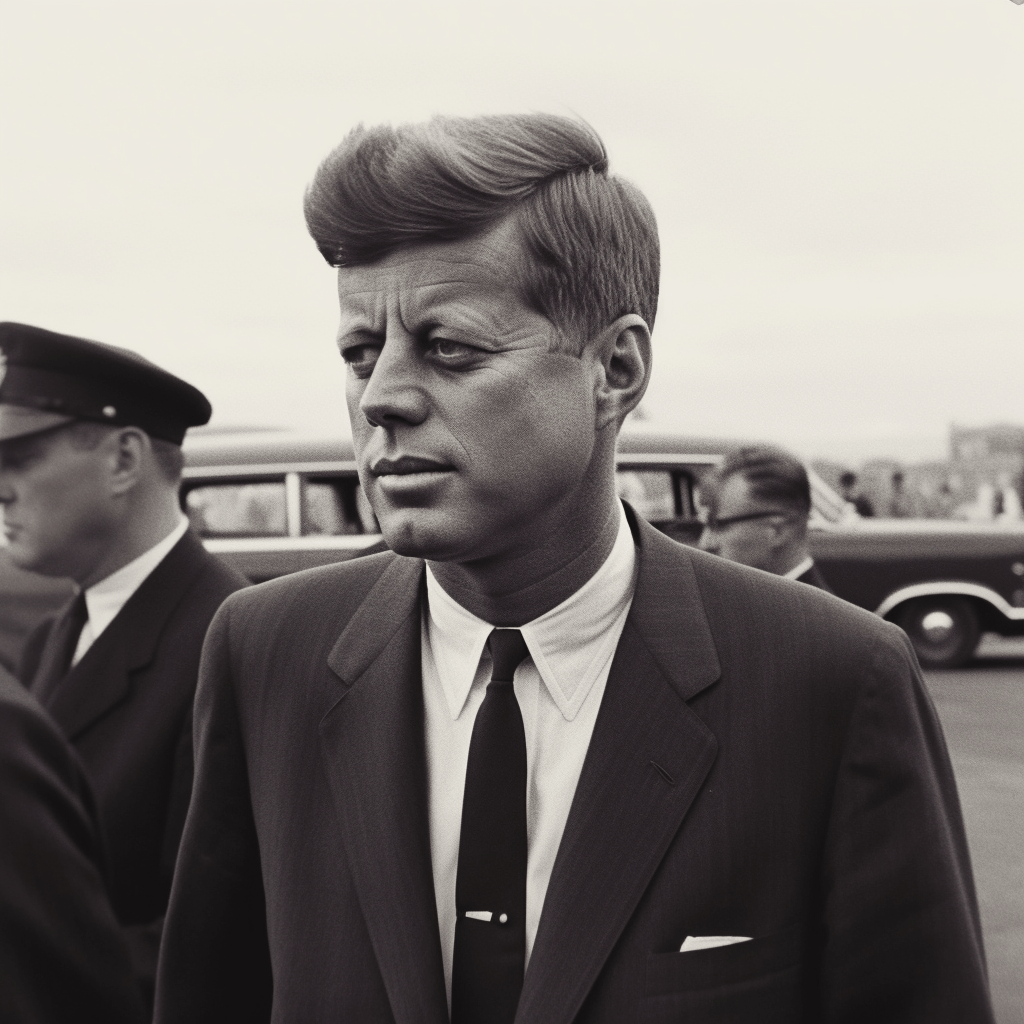
The assassination of John F. Kennedy, the 35th President of the United States, on November 22, 1963, stands as one of the most shocking and pivotal moments in American history. Kennedy’s sudden death on a sunny Dallas afternoon gave birth to an enduring mystery that continues to captivate and provoke debate more than half a century later. Who was truly responsible for the assassination of JFK?
Officially, the blame rests with a lone gunman: Lee Harvey Oswald. The Warren Commission, the official government inquiry into Kennedy’s assassination, concluded in 1964 that Oswald, acting alone, shot and killed Kennedy from the sixth floor of the Texas School Book Depository. Oswald was captured later that day but was himself murdered two days later by nightclub owner Jack Ruby, a tragic twist that further enshrouded the case in mystery.
However, despite the official narrative, doubts have persisted. Critics of the Warren Commission’s findings have pointed to alleged inconsistencies and omissions in the evidence, fueling a host of conspiracy theories. Some argue that the “magic bullet theory,” posited by the Warren Commission to explain how a single bullet caused multiple wounds on Kennedy and Texas Governor John Connally, defies physics. Others point to the suspiciously perfect alignment of Oswald’s actions, suggesting that he was either incredibly fortunate or part of a larger plot.
Alternative theories on JFK’s assassination abound. Some suggest that organized crime was behind the killing, pointing to Kennedy’s crackdown on the mafia during his presidency. Others propose that rogue elements within the CIA orchestrated the assassination due to Kennedy’s perceived weakness against Communism, or because of his plans to curtail the agency’s power.
Some theories even allege that foreign governments, such as Cuba or the Soviet Union, could have been involved, given the geopolitical tensions of the time. A few theories suggest that the “military-industrial complex” had a hand in Kennedy’s death, unhappy with his efforts towards peace during the height of the Cold War.
Several investigations over the decades have revisited the assassination, including the 1979 House Select Committee on Assassinations, which controversially concluded that JFK was likely assassinated as the result of a conspiracy, based on audio evidence suggestive of a second gunman. Yet, no inquiry has definitively proven the involvement of a second party, and the audio evidence used by the House Committee has been contested.
In the absence of definitive proof, the question of who killed JFK remains an open one, as much a historical investigation as a window into America’s cultural psyche. The persistence of conspiracy theories reflects a deep-seated skepticism towards official narratives and a sense of the world’s complexities that often escape simple explanations.
JFK’s assassination marked the shattering of American innocence, ushering in a more cynical and distrusting era. The quest for the truth behind his death, therefore, is not merely about solving a historical mystery. It’s also about understanding a pivotal moment that forever changed how Americans perceive their government, institutions, and their place in the world.
In the end, we may never know with absolute certainty who killed JFK. The layers of mystery surrounding his assassination have become intertwined with the fabric of American history. But the ongoing search for answers, the dogged questioning, and the refusal to accept a single narrative, reflect a society’s unending quest for truth, accountability, and justice.
The mystery of JFK’s assassination reminds us that history is not always clear-cut, that truth can be elusive, and that questioning and skepticism are essential to a healthy democracy. As we continue to seek the truth of that fateful day in Dallas, we’re not just asking who killed JFK, but probing the complexities of power, the murkiness of intrigue, and the enduring fascination of an unsolved mystery that continues to resonate in the collective consciousness of the American people and the world at large.
Furthermore, the relentless quest to understand JFK’s assassination underlines the broader human yearning for clarity and closure, a desire to make sense of events that seem senseless, and to seek justice in the face of tragedy. It illuminates our collective endeavor to discern truth in a world where facts can often be as elusive and mutable as shadows.
Despite the countless investigations and speculations, the identity of JFK’s assassin or assassins remains shrouded in mystery, a complex enigma embedded in the heart of modern American history. But the ongoing quest for answers serves a purpose beyond merely solving a mystery. It is a testament to the human spirit’s relentless pursuit of truth, a chronicle of our refusal to accept the unexplained, and a tribute to a leader whose legacy continues to captivate the world.
While we may never definitively know who killed JFK, the enduring mystery serves as a powerful reminder of our shared history and our ongoing quest to understand the world around us. The journey to uncover the truth behind JFK’s assassination is as much about understanding ourselves and our society as it is about solving one of the most perplexing mysteries of the 20th century.
In the final analysis, the true value of this quest may lie in the questioning itself. It is a journey that forces us to confront our assumptions, challenge our perceptions, and critically examine our understanding of history. And as we continue to delve into the enigma of JFK’s assassination, we affirm our commitment to the unending pursuit of truth, no matter how elusive it may be.
Therefore, in the face of a question that may never be fully answered — who killed JFK? — we find a deeper understanding of our own quest for truth, justice, and meaning in the chaos and complexity of our shared history.
-
Unraveling the Enigma of King Arthur: Myth, Legend, or History?

King Arthur, the legendary ruler said to have led Britain against Saxon invaders during the late 5th and early 6th centuries, stands as one of the most enduring figures of folklore and literature. His story, embellished by centuries of retelling, has produced a rich tapestry of myth and legend. But who was the real King Arthur? This question has intrigued historians, archaeologists, and lovers of myth alike, sparking debates and investigations that have endured for centuries.
The Arthurian legend as we know it today, complete with the Round Table, the Holy Grail, and characters like Merlin, Guinevere, and Lancelot, is primarily a product of medieval romance literature. The figure of Arthur first emerged in historical texts, such as the “Historia Brittonum” (History of the Britons) from the 9th century and the “Annales Cambriae” (Annals of Wales) from the 10th century. These documents reference a heroic figure named Arthur, attributing to him great military victories against invading forces, though they do not denote him as a king.
The definitive image of Arthur as a chivalrous king was largely shaped by Geoffrey of Monmouth in his pseudohistorical work “Historia Regum Britanniae” (History of the Kings of Britain) in the 12th century. Geoffrey’s Arthur was a wise, noble, and victorious monarch who conquered much of Europe but fell tragically in battle, promising to return in Britain’s hour of greatest need. His portrayal, interwoven with elements of mythology and folklore, would deeply influence later Arthurian literature and the broader Western cultural imagination.
Despite the rich tradition of Arthurian lore, evidence for the existence of the historical King Arthur is elusive. No contemporary historical records from the supposed time of Arthur’s reign conclusively mention him. Some scholars posit that Arthur may have been a composite character, a symbolic figurehead created from the exploits of several real-life warlords. Others suggest he could have been a Roman-affiliated military leader named Artorius, or a shadowy figure of oral folklore eventually committed to text by early historians.
In the absence of clear historical evidence, archaeology has often been turned to in the search for Arthur. Sites such as Tintagel Castle in Cornwall, Cadbury Castle in Somerset, and Glastonbury Abbey have been linked to Arthur through legend and historical speculation. However, while these sites reveal fascinating insights into Dark Age Britain and the formation of Arthurian legend, none have provided definitive proof of Arthur’s existence.
The quest for the real King Arthur, then, is less a concrete search for an individual figure and more an exploration of cultural memory, folklore, and national identity. Arthur, whether as a legendary king, a folk hero, or a symbol of idealized leadership and chivalry, has been deeply woven into the fabric of British and Western cultural consciousness. His story reflects societal ideals of bravery, justice, and nobility, while also grappling with themes of betrayal, fallibility, and the transience of glory.
Furthermore, Arthur’s legendary return serves as a beacon of hope, a promise of resilience and restoration in times of despair. This enduring aspect of the Arthurian legend continues to resonate, reflecting our collective longing for heroes who can guide us through the tumult of our times.
Despite the lack of concrete historical evidence, the pursuit of the real King Arthur remains a captivating endeavor. It takes us beyond the quest for an individual, leading us into a rich labyrinth of myths, legends, and histories. In the process, it reveals the power of stories to shape our understanding of the past, to embody our ideals and aspirations, and to inspire us in the present.
In a sense, the real King Arthur may lie not in the elusive historical figure, but in the enduring resonance of his legend. He is an embodiment of societal ideals, a reflection of the cultural psyche, and a character that has grown and transformed with every retelling of his tale. Arthur represents a shared heritage and mythology, a narrative that spans across centuries and continues to captivate audiences today.
Some might argue that the search for the historical Arthur, while fascinating, is less important than acknowledging the cultural impact of the Arthurian legend. Whether or not there was a ‘real’ King Arthur is almost beside the point. What is undeniable is the lasting influence of the Arthurian narrative and its ability to encapsulate a spectrum of human experiences and ideals.
The real King Arthur, then, exists in our collective imagination. He is a symbol of heroism and leadership, a character marked by both triumph and tragedy. He is the focus of a story that has been told and retold, reimagined and reinvented, for over a thousand years. His tale is one of the enduring narratives of Western culture, a saga that continues to inspire, intrigue, and provoke thought.
Ultimately, the quest for the real King Arthur illuminates the incredible power of narrative and mythology. It demonstrates how stories, passed down through generations, can shape our understanding of history, inform our values, and stimulate our imaginations. As we delve into the enigma of King Arthur, we do not just uncover a legend or a historical mystery, but a reflection of our own cultural identity and heritage.
As we move further into the 21st century, the tale of King Arthur continues to captivate, inspire and evoke curiosity. His narrative, interwoven with our cultural fabric, challenges us to seek out our heroes, to understand our past, and to continue the timeless tradition of storytelling. And so, the quest for the real King Arthur endures, a testament to the enduring power of myth, the mystery of history, and our ceaseless fascination with the unknown.
-
The World One: Decoding the Prophetic Bytes of an Early Computer


In the labyrinth of prognostications surrounding the end of the world, there is a rather unique narrative, shrouded in a mix of technophobia, cold war anxieties, and the dawn of computing technology. The protagonist of this tale is not a doomsday prophet or a mystic, but a computer — World One, a machine developed by MIT researchers in the early 1970s. Its alleged prediction of global collapse by 2040 has fueled numerous debates, creating ripples of intrigue and concern.
In 1972, a team of computer scientists and systems theorists at MIT, led by Professor Jay Forrester, was commissioned by the Club of Rome to model global socioeconomic trends and predict future outcomes. The Club of Rome, an organization comprising scientists, economists, businessmen, international civil servants, and heads of state, aimed to understand the long-term future of the global system. This quest led to the creation of World One, a pioneering endeavor in the nascent field of computer modeling.
World One used a method known as system dynamics to simulate the interplay between five key factors: population growth, industrialization, pollution, food production, and resource depletion. The model was programmed into a room-sized mainframe computer, a behemoth by modern standards, known as the DYNAMO (DYNAmic MOdels). It was a cutting-edge machine capable of crunching large data sets and simulating complex systems — a marvel of early computing technology.
The computer model was fed historical data from 1900 to 1970, which it extrapolated into the future to make predictions. The model suggested that if significant changes were not made, a global collapse would occur around 2040, characterized by a drop in global population and industrial capacity due to dwindling resources and rising pollution.
These predictions were published in a report titled “The Limits to Growth.” The report received mixed reactions, with some hailing it as a groundbreaking work, while others dismissed it as overly pessimistic. Critics argued that the model oversimplified complex economic and social processes, and did not adequately account for human ingenuity and adaptability.
Despite criticism, the World One prediction remained an enduring aspect of global collapse discourse, resurfacing periodically in media reports and discussions on sustainability. The idea of a computer accurately predicting the world’s end is both fascinating and frightening, touching on deep-seated fears of uncontrollable technology and a dystopian future.
However, it’s crucial to understand the context and purpose of World One. It was not designed to predict an immutable future, but rather to explore possible outcomes based on the trends of its time. The primary objective was to provide a tool for policymakers, researchers, and the public to understand the potential consequences of unchecked growth and environmental degradation. In this regard, World One was less a doomsday oracle and more a call to action, a warning of the potential perils of unsustainable development.
As we approach the supposed year of doom, it’s interesting to revisit the World One prediction in light of current global trends. While not all specifics align, certain aspects, such as climate change and resource scarcity, resonate strongly with contemporary challenges. This reflection raises pertinent questions about our relationship with technology, our response to scientific predictions, and our collective responsibility for the planet’s future.
World One serves as a historical landmark at the intersection of computer science, system dynamics, and global sustainability discourse. It embodies the optimism of early computing, the fears of unchecked growth, and the desire to harness technology for global problem-solving. The narrative surrounding World One offers a fascinating glimpse into our collective consciousness, reflecting both our fears of a dystopian future and our hopes for technological salvation.
In conclusion, the tale of the World One
computer is not just about a singular prediction of doom, but a larger narrative about the evolution of our relationship with technology and our understanding of the delicate balance between growth and sustainability. It highlights our continuing struggle to comprehend the complexity of global systems and the challenges of making informed decisions for our collective future.
In the context of today’s advanced computational models, which offer increasingly refined predictions about climate change and other global trends, World One serves as a reminder of the importance of data and foresight in navigating the future. While we can’t predict the future with absolute certainty, we can use technology to illuminate potential pathways, giving us the knowledge we need to make informed choices.
Perhaps the most compelling lesson from the story of World One is not the specific prediction it made, but the broader message it carried. It urged us to question our trajectories, to reassess our notions of growth and progress, and to recognize the profound impact our actions can have on the global ecosystem. As we move closer to the year 2040, it’s worth revisiting the World One narrative, not as a prophecy of inevitable collapse, but as a poignant reminder of our shared responsibility for the planet.
The World One computer, in its historical context, is a testament to the remarkable advancements of the human intellect and our never-ending pursuit of knowledge. Its story urges us to reflect on our past, evaluate our present, and envision a sustainable future. As we progress further into the 21st century, grappling with increasingly complex global challenges, the insights and discussions sparked by World One continue to resonate. While the story of this computer ends in the annals of the 20th century, the conversations it began persist, prompting us to think critically about our collective future and the role technology can play in shaping it.
Wonder about your world…

Take the plunge down the rabbit hole of insanity and wonder in this fast-paced, nonstop psychological thriller that will leave you questioning the very nature of reality and beyond. Part thriller, part romance, part existential horror, A Dream of Waking Life delves into lucid dreaming, psychedelics, existential ontology, video games, the nature of love, the nature of reality, and more.

Mendel’s Ladder delivers an adrenaline-fueled journey set on a dystopian future Earth, brimming with high-stakes action, adventure, and mystery. This epic series opener plunges readers into a world filled with diverse cultures, heart-pounding battles, and characters who will captivate your heart and imagination.

“E.S. Fein is raising the bar for quality as it’s a very well-written and thought-provoking book…There are points and themes in the story that could be discussed for eons as people will have their own idea on where it leads. It’s a book I would highly recommend.” – Andy Whitaker, SFCrowsnest
 Wondergressive