
-
Car Warming: Debunking the Myth

I need to let my car warm up!
http://www.corvallisadvocate.com/2013/0124-idling-your-car/I really can’t stay… baby its cold outside. I’ve got to go away… baby its cold outside! Those words are the words of our freezing cars in the winter. Common folklore tells us that it’s better to wait and allow our vehicle to warm up before we use it, but is that thinking actually correct? The Hinkle Charitable Foundation talks about 3 myths that are commonly associated with vehicles and warming them up before driving off. First and foremost:
Myth 1: Cars should run in an idling mode for several minutes before being driven.
Related Article: Google’s Self Driving Car Initiative
The foundation proposes that simply driving gently helps warm up the engine in seconds rather than letting the car sit on and idle. In fact, by idling you are mostly just wasting gasoline and straining the engine. Not to mention the increase in CO2 emissions! Which brings us to myth number 2.
Myth 2: Each time you start your car you waste more gasoline than if you let it idle.
Actually, the opposite is the case. When the car is idling you are wasting more gasoline than you do starting it up. The amounts aren’t great, but over time if you add them up you get significant differences. After a couple of tests listed by Natural Resources Canada, it was found that a 5 minute warming session increases fuel consumption by 7 to 14 percent and a 10 minute warming increased fuel consumption by 12 to 19 percent. The folks over in Ohio have made it illegal to idle and warm up their car… what?? Likewise, myth number 3 debunks the idea of allowing your vehicle to stay on while you pop inside for a quick visit.
Myth 3: Repeatedly restarting your car is hard on the engine and quickly drains the battery.
Related Article: Remote Control Cockroaches
Still not convinced? The EcoEnergy publication states that:
Even on the coldest of winter days, you can drive away after only 30 seconds of idling (provided your windows are defrosted).
Let us say you have your windows defrosted, you drive off and are on the road to your family’s but you forgot some flowers for your mother. You run inside the store quickly and leave your car running to conserve wasting gas on restarts. Wrong!
If you’re stopped for more than 10 seconds, turn off your engine. It has a minimal impact on the starter switch, and idling for over 10 seconds uses more fuel than it would take to re-start your engine
How about all of us that have a remote starter? Well…
Avoid using remote car starters. These devices encourage you to start your vehicle before you’re ready to leave, resulting in needless idling and wasted fuel.
Who would have thought? It would make sense to practice each myth with old vehicles, from the 20’s…. but we live in the new millennium! Cars have evolved past the point of the Model T and are efficient and able to handle much more than we give them credit for! So what should we really do?
At most, if it is freezing outside and you start your vehicle, let it idle for a minute or two max, then gently drive off and allow it to work itself into efficiency! And don’t worry, your oil will warm up as well; automobiles today are not so fragile that they will fall apart and quit without a truly good mechanical reason! So stay warm, stay safe, and mostly stay joyful this Christmas as your vehicle just warmed up in less time than it took for you to read this article. Merry Christmas and Happy Holidays to all!
Research:
Hinkle Charitable Foundation: Anti-Idling Primer
Warming Car in Ohio is Illegal EcoEnergy publication
-
Waking Up: New State of Consciousness Proposed


Consciousness is not black and white. http://www.costaricantimes.com/ Professor Jaideep Pandit, Consultant Anaesthetist & Fellow of St John’s College, Oxford, UK, has proposed the existence of a new state of consciousness called ‘dysanaesthesia.‘ Dysanaesthesia is a state of being that numerous people have experienced while under the effects of anesthesia. It is neither the conscious nor unconscious state, it is a new state of consciousness.
Pandit believes that dysanaesthesia is a wrench in the spokes when attempting to monitor the conscious state of a person under anesthesia. While it’s easy to tell the difference between a conscious and unconscious state of being, it is extremely difficult to recognize when someone is in between the two states. It is also near impossible to know if a person’s state is closer to a conscious or unconscious state when dealing with states in between the two. According to Pandit, we know very little about the mechanics of shifting into different states of consciousness:
Even in 2013, we are still struggling to define what consciousness actually is. We can obviously see when someone is awake and responding, and when someone is asleep or unconscious, but our understanding of what changes us from one state to the other is still evolving.
The greatest mystery is the self. http://teacherzen.com/ Related Article: Scientists Agree; Animals are just as Conscious as Us
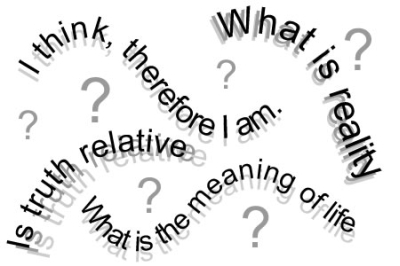
As the old saying goes, “the more we learn, the less we know.” Consciousness is a persistent enigma. It is ubiquitous throughout history as a central theme in philosophical ideology. Consider, what does it mean to be conscious? Is there a clear line between a conscious and unconscious state? Or between a confused and lucid state? Any answer could be argued to irrelevancy. Consciousness is at the center of this debate.
Despite its medical prevalence, no one fully knows how anesthesia actually works. Scientist are still unable to identify the specific electroencephalography (EEG) patterns that show when a person has slipped into an unconscious state, or back into a conscious one. While most people think of anesthesia as the drug that makes you fall into a deep sleep, this idea is a total misconception. Emery Brown, professor of anesthesia at Harvard Medical School told NPR that,
Sleep is not the state you’re going in, nor would it be the state in which someone could perform an operation on you. What we need to do in order to be able to operate on you — to perform a procedure which is, indeed, very invasive — is to put you in a state which is effectively a coma which we can readily reverse.

Where am I? Be you angels? http://www.sickchirpse.com/ Related Article: Doctors Communicate with Vegetable Through Brain Scans
Prof. Pandit examined data from studies all over the world and found that if a patient is asked following surgery if they recall anything, 1 in 500 will say they did. 1 in 15,000 patients report without being asked that they were aware during the surgery. This means that each year up to 40,000 people will wake up during surgery. Doctors have called this phenomenon anesthesia awareness, and it can be a nightmarish experience and state of consciousness for some.
Interestingly though, only a third of the patients who reported ‘waking up’ experienced pain or panic during the awareness. For the most part, if someone wakes up during surgery it isn’t unpleasant or of particular importance during the episode. This neutral state is what Pandit proposes is the foundation of the new consciousness. He explains that,
What we are possibly seeing is a third state of consciousness—dysanaesthesia—in which the patient is certainly aware of events, but not concerned by this knowledge (especially as they are not in pain).

It took 8 years of university to get that hammer! englishmanjon.blogspot.com Related Article: The Extraordinary Benefits of Psilocybin in Magic Mushrooms
Prof. Pandit performed his own experiment on the new state of consciousness. In his experiment Pandit anesthetized patients and used a neuromuscular blocking agent to paralyze the entire body except for the forearm. The patients did not voluntary move their fingers, but a third of them responded to questions through finger movement. These are very surprising results because,
To date no patients in these experiments have moved their fingers voluntarily to indicate wakefulness, yet 1 in 3 (a third) of them can move their fingers if asked to by medical teams. This again suggests that in a majority of those patients who experience awareness, it may not be unpleasant or distressing to them, since they are not moving their fingers to make medical teams aware of this.
The patients are aware, but totally unscathed, and in fact not even interested in the objective reality we are all experiencing. They are not conscious, yet not totally unconscious. This is a realm of consciousness that we don’t have even a rudimentary map to begin to understand. Further studies could lead to a better understanding of consciousness itself, as well as quelling fears people have of anesthesia.
Related Article: Mystery of Death Solved: DMT is the Key
This state sounds very much like deep meditative states people have described. Maybe that’s because meditation is the practice of experiencing states of consciousness without judgement. Regardless, if while in this state people are “aware of events, but not concerned,” then it sounds like a worthwhile state to explore. Onward to our new state of consciousness.
Sources:
http://www.aagbi.org/sites/default/files/FINAL_AAGBI_Pandit_AC_Dublin_2013.pdf
http://www.bu.edu/today/2013/unexpected-awakenings/
http://www.npr.org/2011/04/25/135516582/you-wont-feel-a-thing-your-brain-on-anesthesia
anaesthetist, anesthesia awareness, awareness, being aware, brain pattern, brain surgeon, brain wave, conscious state, consciousness, doctor, dysanaesthesia, EEG, eeg pattern, evolving, harvard medical school, harvard study, jaideep pandit, new state of consciousness, npr, oxford, pandit, reality, reality shift, st john’s college, state of awarness, state of being, states of consciousness, surgeon, unconscious state -
Beer is the Way: Humanity’s Secret Weapon for Survival and Health


We all love beer! mommylovestv.wordpress.com Most of us cherish the feeling of gulping down an ice cold brew. For many of us, it doesn’t even matter if it’s morning, afternoon, night, or a time unknown to our drunken selves. But hey, it’s beer, the sweet nectar of the gods, so luckily no one blames us, right?
We all know beer is great, but did you know it is arguably the only reason humanity exists today? Let’s take a look at how this delectable drink has ensured humanity’s survival into the grand age of Google and Hot Pockets.
[no_toc]
A Brief History of Humanity and Beer
According to Charlie Bamforth, Anheuser-Busch Endowed Professor of Brewing Science at the University of California, Davis,
Beer is the basis of modern static civilization, because before beer was discovered, people used to wander around and follow goats from place to place. And then they realized that this grain [barley] could be grown and sprouted and made into a bread and crumbled and converted into a liquid which gave a nice, warm, cozy feeling. So gone were the days that they followed goats around. They stayed put while the grain grew and while the beer was brewed. And they made villages out of their tents. And those villages became towns, and those towns became cities. And so here we are in New York, thanks to beer.
This is a very simplified and exaggerated version of human history, but many historians argue that Bamforth’s description may not be that far from the truth.
Related Article: Ancient Human DNA Found: Old World Similar to Lord of the Rings

No way! Is this the new Nile Magic microbrew? http://www.distantmirror.discoveryworld.org Brewing beer has been practiced by our ancient ancestors for at least 7,000 years. Brewing may be even older, but the earliest tangible evidence dates back to around 3,400 B.C., nearly 5,400 years ago. The evidence was discovered using a chemical tests of ancient pottery jars in what is today Iran. The jars contained chemicals only found via the brewing process.
Egyptians and Mesopotamians left extensive written documentation of brewing practices, tavern laws, and nutrition. Kings, pharaohs, merchants, and commoners alike all drank beer due to its nutrition and effects on the body and mind. They also drank beer due to dirty water conditions back in the day.
After Christian monks started brewing beer, a whole new standard and efficiency of beer production began. Monks and nuns choosing to follow the Rule of Saint Benedict are required to live self-sufficiently without charity, work hard, accommodate guests and help the poor. To meet all of these requirements monastic orders and churches started brewing and selling beer.

Beer, an American pastime. http://brewpublic.com/ In the 1850’s Louis Pasteur studied beer extensively and realized that it was alive. His work led to the pasteurization process, allowing our favorite drink to be more easily handled, produced, and transported. After the invention of refrigeration, automatic bottling machines, and widespread railroads, everybody was double-fisting brews like the U.S. was one big University frat party.
Related Article: Life, It’s All Over the Place
Today the beer industry is composed of thousands of local and international businesses which had a total global revenue of over 500 billion dollars ($509,554,000,000 to be exact) in 2012, a number that continues to grow year after year. The world always has and always will love a good brew.
So, is all this guzzling a good thing? That is entirely dependent on how much beer you consume. As long as your consume a moderate amount, which is more than you might think, your body and mind will love you!
Why We Should All Drink Beer
Moderate consumption of any type of alcohol is associated with overwhelming benefits for the heart and overall well-being. Nearly all people living in Blue Zones, areas of the world where people live drastically longer on average, have been said to partake in regular, but moderate consumption of alcohol. This remains true across all Blue Zones. Moderate drinkers live longer than non-drinkers or heavy drinkers. Beer has an upper-hand on other alcoholic beverages, however, due to its nutritional content.
Related Article: No Heart? No Pulse? No Problem!

She knows what’s good for her! http://www.noclipmode.com Beer is likely the most nutritious of all alcoholic beverage and. Although many people think of wine as the ‘healthy’ alcohol to consume in moderation, beer and wine have the same number of antioxidants (though the type of antioxidants do vary). Beer contains more B vitamins and protein. To make the playing field even more one sided, drinking 4 or more glasses of wine per week has been linked to a 15% increase in breast cancer in women!
Cardiovascular Health:
A meta-analysis of several studies revealed that moderate beer consumption reduces a person’s risk for cardiovascular disease and strokes by a whopping 31%. This is approximately equivalent to the heart pumping power of wine.
Mental Acuity:
A study of 12,000 women showed that consuming light to moderate amounts of beer daily makes you 20% less likely to experience age-related mental problems later in life. According to Francine Grodstein of Brigham and Women’s Hospital in Boston, senior author on the study,
Low levels of alcohol appear to have cognitive benefits. Women who consistently were drinking about one-half to one drink per day had both less cognitive impairment as well as less decline in their cognitive function compared to women who didn’t drink at all.
Congratulations ladies, your mental Holy Grail has been revealed.
Stress Reduction:
Consumption of alcohol, as we all know, dramatically reduces stress levels. This is arguably the most important health benefit beer can provide since stress is associated with nearly every illness. Beer is an especially good choice because it takes longer to consume, making it less likely that you will over-drink, which isn’t biologically beneficial in the least (the other benefits, are a different story). This benefit is entirely dependent upon set and setting. If you are depressed, or are in a dangerous place, any type of alcohol has the potential to increase stress levels.

Cat’s drink beer: all is well with the world. http://synergyfitnessbootcamp.com/ Nutritional Benefits:
The nutritional benefits of beer were discussed above. Don’t forget that the essential nutrients in beer are vital to a healthy, illness free life. As for calories… let’s just pretend all the empty calories are perfectly filling.
No More Bad Hair Days:
Apparently certain beers can get rid of frizzy hair and add volume.
The malt nourishes and smooths hair, while yeast strengthens your strands and pumps up the volume.
Great for Skin:
Alright guys, I know most of us will stick to just plain drinking beer, but the ladies like to take extra special precautions when it comes to skin health. Beer is reportedly an incredible skin-care agent. Many breweries in Austria and the Czech Republic have recently created Heaven by opening beer spas and filling entire swimming pools filled with the golden goodness. Beer facials and beer-based meals are available of course.
Related Article: Generations of Life Created From Skin Cells
A Healthy Level of Beer
Although scientists disagree on the recommended daily intake of beer, the consensus narrows down to no more than four drinks in one day, and no more than 14 drinks in a week for men, and no more than three drinks in any day and no more than seven drinks in any week for women. Ideal amounts are less though, at roughly 22 ounces (just under 2 American bottles) of beer with 5% alcohol for men, and 12 – 18 ounces ( 1 to 1.5 bottles of American bottles) for women. Women, give that other half of your bottle to your man. Or, live on the wild side and drink 2!

Life is good. whachow.com *Note: According to the National Institute of Alcohol Abuse and Alcoholism, 43% of men and 29% of women in the U.S. are binge drinkers (4+/5+ (women/men) drinks within 2 hours at least once). While there is a fine line between control and alcoholism, just remember that alcohol is an incredibly dangerous and deadly drug. We have all experienced the dangers of alcohol either directly or indirectly. I am only advocating a healthy dosage of alcohol each day, nothing more.
Related Article: U.K. Chief Advisor on Drug Policy Fired For Showing Danger of Alcohol and Tobacco
If you do not want to consume alcohol but still want to participate in the glory that is beer, you can always drink a non-alcoholic brew. Apparently they taste incredible, and are still packed full of nutritional goodness.
Which Beer is the Healthiest?
The answer to this question depends on what you consider healthy. Are you looking for less calories, or are you interested in B vitamins and antioxidants?
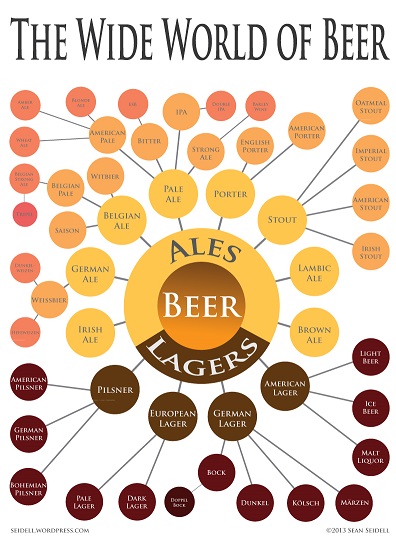
Although there are many types of beer, the two most basic types are ales and lagers. They differ by the temperature they ferment at and the type of yeast used. Beers can differ in nutritional content with surprising magnitude. Some bottles boast a measly 5 grams of carbs while other bottles contain a hefty 65 grams of carbohydrates or more.
Related Article: Low Carb/Low Calorie Diet Produces Compound that Blocks Effects of Aging
Many people focus on caloric content, opting for light beers instead of the regular. The truth is that in most cases light beers differ from their heavy counterparts by about 40 calories, an utterly negligible amount. And for those of you looking for the buzz of drinking, in most cases light beers are light because alcohol is removed, so you’ll have to drink even more to attain the same feeling. Some brewski lovers choose to drink ultra-light beers that are less than 100 calories while retaining 4% alcohol. In these cases something other than alcohol has to be removed, which means grains and many of the nutritional sources that make beer such a healthy drink.
There is no single healthiest type of beer. Countless representatives from the entire spectrum of beer brews have claimed the title of healthiest beer, but again, it is entirely dependent on what health means to you.
So much beer, so much time… http://prafulla.net/ Sources:
http://www.smithsonianmag.com/history-archaeology/The-Beer-Archaeologist.html
http://www.imdb.com/title/tt1832368/
http://www.ancient.eu.com/article/223/
http://sidurisadvice.com/Hartman.pdf
http://www.scientificamerican.com/article.cfm?id=ales-well-with-the-world
http://www.bbc.co.uk/religion/0/20909447
http://books.google.com/books/about/Studies_on_Fermentation.html?id=S-xaAAAAQAAJ
http://www.ncbi.nlm.nih.gov/pubmed/11093684
http://pmj.bmj.com/content/77/914/747.full
http://www.bluezones.com/live-longer/power-9/
http://secure.ce-credit.com/articles/100623/Reduce_Stress.pdf
http://www.washingtonpost.com/wp-dyn/articles/A21693-2005Jan19.html
http://www.csun.edu/~vcpsy00h/students/illness.htm
http://www.nytimes.com/2006/04/30/travel/30surfacing.html?_r=1&
alcohol abuse, Alcoholism, anheuser busch, barley, beer, beer antioxidants, beer austria, beer b vitamins, beer brewing, beer calories, beer carbohydrates, beer carbs, beer czech republic, beer dangerous, beer egyptians, beer facial, beer facts, beer fermentation, beer good, beer guzzling, beer hair, beer hair frizz, beer health, beer healthy, beer history, beer industry, beer ingredients, beer kidneystones, beer mesopotamia, beer most nutritious, beer nutrition, beer nutrition facts, beer pool, beer skin, beer spa, beer spa europe, beer stress, beer sumer, beer sumeria, binge drink, binge drinking, blue zone, blue zone alcohol, blue zones beer, brewing practices, catholic beer, charlie bamforth, christian monk beer, civilization, davis, evidence of beer, feeling, grain, history of beer, hops, how much beer, light alcohol, light beer, louis pasteur, moderate alcohol, monks beer, nectar of the gods, New York, oldest beer, on fermentation, rule of saint benedict, trapper beer, types of beer, university of california, wheat beer, whole grain, wine breast cancer, women beer, yeast -
Grow All of Your Own Food With A Forest Garden


Forest gardens are THE solution. http://www.greenprophet.com/ The world is currently experiencing rampant population growth, land deterioration, and food shortages around the planet. All of these issues can be solved by incorporating forest gardens into society. Forest gardens will allow you to grow all of your own food, save money, gain food independence, improve the land, and feed the world.
What is A Forest Garden?
Wikipedia tells us that:
Forest gardening is a low-maintenance sustainable plant-based food production and agroforestry system based on woodland ecosystems, incorporating fruit and nut trees, shrubs, herbs, vines and perennial vegetables which have yields directly useful to humans. Making use of companion planting, these can be intermixed to grow in a succession of layers, to build a woodland habitat.
Forest gardening is a prehistoric method of securing food in tropical areas. In the 1980s, Robert Hart coined the term “forest gardening” after adapting the principles and applying them to temperate climates.
Robert Hart used companion planting and intercropping to develop a seven layer system to maximize the benefits of the plants and minimize work for the care taker. The seven layers work together to create a closed ecosystem that takes care of itself, with no need for weeding, fertilizing or tilling the land. The care takers are left to harvest and enjoy their crops!
Related Article: WWOOF and HelpX: Seeing the World One Farm at a Time
To hear Robert Hart himself talk about why he made his forest garden and some of his main inspirations watch his portion in the documentary “Permaculture Trio” (he’s the first portion). Since the development of the seven layer system there have been advances in the technique to include two more layers, but to skip to the meat (fruit?) of the issue here are the original seven layers:
‘Canopy layer’ consisting of the original mature fruit trees.
‘Low-tree layer’ of smaller nut and fruit trees on dwarfing root stocks.
‘Shrub layer’ of fruit bushes such as currants and berries.
‘Herbaceous layer’ of perennial vegetables and herbs.
‘Ground cover layer’ of edible plants that spread horizontally.
‘Rhizosphere’ or ‘underground’ dimension of plants grown for their roots and tubers.
‘Vertical layer’ of vines and climbers.The two new layers which can be incorporated to a forest gardening system (from Temperate Climate Permaculture) are
‘Aquatic wetland layer’
‘Mycelial fungal layer’For a full description of all the layers and to learn a whole lot more about permaculture make sure to read Temperate Climate Permaculture’s article on the Nine Layers of the Edible Forest Garden. If the walk with Robert Hart through his forest garden didn’t satisfy your desire to see one of these for yourself, there’s always more on Youtube. I also highly suggest this one with Martin Crawford from the Agroforestry Research Trust of England.
Why Forest Garden?
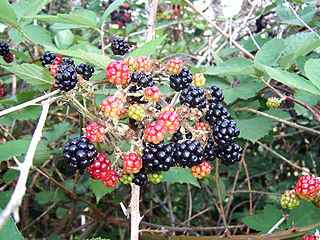
A forest garden creates a closed ecosystem. This is a system where there are no waste products. Everything which is created is used in another part of the system. There is no need to bring in anything to help the system because it produces everything it needs, and there is no need to remove any “waste” because everything produced is used. This promotes healthy environments since nothing is added to the system to unbalance it.
Related Article: Edible Landscapes
Forest gardening is a perfect example of a closed ecosystem. According to a paper written by Professor Miguel A. Altieri from the University of California, Berkeley, a closed ecosystem is in direct opposition to the way that mainstream agriculture has been developing over the past four decades. In his paper he discusses modern agriculture’s open ecosystem of monoculture and the effects that such an open system creates for the world it is used in. Altieri points out the many immediate disadvantages of single crop agriculture. Disadvantages include sacrificed pest resistance for increased productivity, and previous resources (such as cow manure) turning into liabilities as the single crop farms grow so large it becomes economically unrealistic to transport the manure.
He moves on to talk about the environmental effects produced by single crop farms because of their disadvantages. For instance, because the crops being grown are less pest resistant, farmers must use more chemicals and fertilizers. Fertilizers have been linked to destruction of all animal life in water systems. Modern farms strive not to have the most efficient system for producing the most food sustainably, but instead to make the most money off of one large single crop.
Through Professor Altieri’s paper it becomes evident why monoculture is so detrimental to the planet. It is easy to see the need for a closed system that is self sufficient. In permaculture, if a crop is susceptible to a pest, a species is planted near it that is host to that pest’s predator. If a plant needs more nitrogen in the soil to remain healthy a nitrogen fixing plant is placed near it so that one’s waste is another food. If a certain weed is known to grow near a plant, then an alternate, helpful and desirable plant (that requires the same nutrients as the weed) is placed near the first plant to deprive the weed of the nutrients and space.
The Benefit to Gardeners
The environment isn’t the only thing to benefit from the forest garden. The gardener also has benefits. In the forest garden model “chop and drop” plants are used to maximize ground nutrients. These plants have deep tap roots that reach where other roots do not and retrieve valuable nutrients from deep within the soil. The nutrients are brought to the plant’s leaves, and after the plants have grown too large for their environment they are cut and left on the ground as fertilizer and mulch. This mulch smothers the ground preventing any weeds from arising. In permaculture and forest gardens, turning the soil is looked down upon because this destroys the ecosystem already present and the life that has currently taken up residence there. The forest garden system reduces time spent in the garden because there is no need to fertilize, no need to weed and no need to dig up the soil.
Related Article: Permaculture Connection
 While the time saving, and food attaining benefits alone might convince one that this is the way to go, there’s still more. In addition to having your own homegrown organic food there is also the added benefit of a clearer mind. In a piece titled Easing Brain Fatigue With a Walk in the Park from the New York Times, Gretchen Reynolds states,
studies have found that people who live near trees and parks have lower levels of cortisol, a stress hormone, in their saliva than those who live primarily amid concrete, and that children with attention deficits tend to concentrate and perform better on cognitive tests after walking through parks or arboretums. More directly, scientists have brought volunteers into a lab, attached electrodes to their heads and shown them photographs of natural or urban scenes, and found that the brain wave readouts show that the volunteers are more calm and meditative when they view the natural scenes.
This article also talks about a more recent study showing that time in nature,
is likely to have a restorative effect and help with attention fatigue and stress recovery.
So what could possibly be better than having a park-like space in your backyard that helps the environment, provides you with food, and aids in stress recovery? I sure can’t think of anything better, short of wild unicorns popping up inside my forest garden.
Tips on Starting your Own
 For anyone interested in incorporating this into their life I highly suggest taking a look at Edible Forest Garden‘s website. Continue reading for more advice, dependent upon your living environment.
If you live in the suburbs like I do, it may not really be possible to have your own forest garden. There are many different types of living accommodations and not all of them have space for a forest garden. So here I’ll list some resources on how to be more oriented toward a forest gardening lifestyle for whatever your living situation is.
- If you live in a small apartment, you can still have edible house plants.
- If you are a busy person with little time for house plants, there is the Mother-in-law’s Tongue, perfect for the first time plant owner, and it requires little attention while cleaning your air.
- You can also have a worm farm to turn old food scraps into soil for new house plants. These will help you get closer to a closed system in your own life.
Related Article: The Natural, Three-Plant Air Purifying System
If you have a small yard, but it’s not big enough for a full forest garden, you can still apply several of the techniques used in forest gardening. In the documentary Permaculture Trio, the third section focuses on urban permaculture and different techniques a British couple used to turn their backyard into a food producing garden. One of the best tips is to use companion planting to make fewer plants more productive. For further information head over to Urban Permaculture Guild‘s site to see what else is out there.
If you happen to have enough space for a full blown forest garden and are interested in starting one, I would recommend starting with watching Permaculture Trio, and then moving on to the Edible Forest Garden site. There are many websites dedicated to discussion and learning so go forth and enjoy!
[sdonations]1[/sdonations]
Sources:
Crawford, Martin (2010). Creating a Forest Garden. Green Books. p. 18.
http://en.wikipedia.org/wiki/Forest_gardening#cite_note-Crawford_2010_18-1
http://www.youtube.com/watch?v=OXVnAMQRGbI
http://en.wikipedia.org/wiki/Intercropping
https://wondergressive.com/news/wwoofing-seeing-world-one-farm-time/
http://tcpermaculture.com/site/2013/05/27/nine-layers-of-the-edible-forest-garden/
http://www.agroforestry.co.uk/forgndg.html
http://www.agroforestry.co.uk/
http://en.wikipedia.org/wiki/Forest_gardening#Seven-layer_system
https://wondergressive.com/news/edible-landscapes/
http://nature.berkeley.edu/~miguel-alt/modern_agriculture.html
http://www.organicgardening.com/learn-and-grow/companion-planting
http://www.permies.com/t/4124/permaculture/Chop-Drop-Mulch
http://www.backyardecosystem.com/organic-gardening/stop-killing-your-soil-debunking-double-digging/
https://wondergressive.com/news/permaculture-connection/
http://well.blogs.nytimes.com/2013/03/27/easing-brain-fatigue-with-a-walk-in-the-park/?_r=0
http://www.sciencedirect.com/science/article/pii/S0169204611003665
http://www.ncbi.nlm.nih.gov/pmc/articles/PMC1448497/
http://well.blogs.nytimes.com/2008/10/17/a-dose-of-nature-for-attention-problems/
http://www.ncbi.nlm.nih.gov/pubmed/23467965
http://www.edibleforestgardens.com/about_gardening
http://www.beautiful-vegan.com/2011/10/7-edible-houseplants-you-can-grow.html
https://wondergressive.com/news/natural-three-plant-fresh-air-system/
http://unclejimswormfarm.com/index.php/Indoor-Composters/View-all-products.html
http://www.organicgardening.com/learn-and-grow/companion-planting
agroforestry, agroforestry research trust, aquatic layer, canopy layer, chop and drop, closed ecosystem, companion planting, ecosystem, edible forest, edible forest gardens, edible landscapes, forest garden, forest gardening, fungal layer, Gretchen Reynolds, ground cover layer, herbaceous layer, horizontal layer, how to forest garden, intercropping, martin crawford, miguel altieri, modern agriculture, monoculture, mother in law’s tongue, mycelial layer, new york times, nine layers, no fertilizer, no weeding, open ecosystem, permaculture, permaculture trio, pests, polyculture, rhizosphere layer, robert hart, seven layers, shrub layer, single crop farm, temperate climate permaculture, UC Berkeley, university of california, vertical layer, weeds, wetland layer, worm farm -
Peanut Allergy on the Rise: Clever Cure on the Horizon

I’m not a draft dodger I have a peanut allergy! Although it isn’t an issue that is normally spoken about, I’ve seen firsthand how lives can be dramatically warped by America’s favorite nut. More than 3 million Americans are allergic to peanuts, and reactions can range from skin rashes to death.
Peanuts have been found to cause the majority of deaths in the U.S. from anaphylaxis, or severe allergic reaction. Allergic reactions can occur from eating peanuts or from even the slightest exposure to peanuts in some individuals. But hope is on the horizon. Researchers and scientists have found a way to “turn off” life-threatening allergic reactions to peanuts and possibly other foods by playing a trick on the immune system. This trick could be the key to saving millions of lives and improving the quality of life for many peanut allergy sufferers.
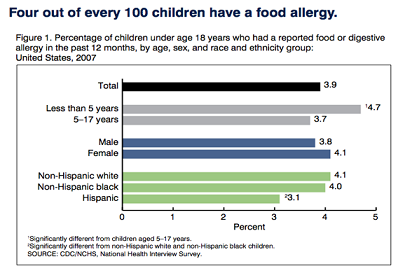
More people have a food allergy than the whole U.S. prison population. http://cleanoutthepantry.org/ Peanut allergy is the most common cause of food related death in Americans. 90% of those suffering from food allergies suffer from an allergy to 1 of 8 foods. A peanut allergy is the most prevalent and dangerous of these 8 foods. 4% – 8% of U.S. children are allergic to peanuts. Peanuts are a seriously underestimated danger.
Related Article: A Tick is Turning People into Vegetarians for Life
New research done at the Northwestern University suggests that despite its prevalence, this peanut allergy may become a thing of the past. Dr. Stephen Miller and Dr. Paul Bryce, professors and researchers at Northwestern University pioneered the study. According to an October 2011 article from Northwestern University, they were inspired by Dr. Miller’s research on Multiple Sclerosis. Using mice as models, Miller hit on the idea of taking blood from a mouse with MS symptoms, attaching myelin protein to certain white blood cells, and infusing the blood back into the mouse’s bloodstream. According to Dr. Miller,
The idea is to convince the patient’s immune system that the myelin is not dangerous and to turn off its attack.
This same method could be applied to their research on peanut allergy relief. Dr.Bryce developed lab mice that were sensitive to peanuts and would suffer the same reactions as allergic humans — hives, swelling and, in more severe cases, constriction of breathing, plummeting blood pressure and shock that can lead to loss of consciousness and death. In their experiments, Bryce and Miller drew blood from their peanut allergic mice and attached peanut protein to white blood cells. They then infused the blood back into the mice and fed them peanut extracts that normally would set off severe allergic reactions. The results were more than they could have hoped for: The system increases the number of regulatory T cells in the mouse with the peanut allergy while “turning off” other cells that cause the peanut allergy, restoring tolerance to peanuts to the immune system.
Related Article: A Delicious Cure – Honey As An Antibiotic & Much, Much More

This kid’s body cannot withstand the power of the peanut war. Let’s help him! trialx.com Despite this major breakthrough in the battle against the peanut allergy, many sectors of our community continue to establish new rules and regulations that are meant to control and monitor exposure to peanuts. For example, more schools than ever are banning peanuts and peanut products as the number of kids diagnosed with the potentially life-threatening peanut allergy has climbed dramatically in recent years. Between 1997 and 2002, the rates of peanut allergies in children under age five doubled, and consequently, 30,000 schools in America are now “peanut free”.
Despite this, there is still a tried and true convenience factor when it comes to peanut butter and kids. When busy parents are affected by an allergy that belongs to neither them nor their child, it is difficult to see the necessity of the rules against peanuts and peanut butter. Parents continue to ask, should one child’s allergy affect another child’s lunch? That is what school districts across the country are trying to establish.
Related Article: Eat Nuts for a Longer Life
Schools are not the only area of society to be affected by the consequences of possible exposure to peanuts in allergy sufferers. The debate has actually gone above and beyond us…literally. Federal regulators have considered banning peanuts and peanut products on flights. The Air Carrier Access Act prohibits discrimination against those with disabilities by U.S. and foreign air carriers, and the Department of Transportation requires airlines to accommodate travelers with disabilities unless doing this would cause an “undue burden” or require the airline to “fundamentally alter its services”. The Department of Transportation believes that a severe peanut allergy counts as a disability — and federal law prohibits air carriers from discriminating against individuals with a disability. Therefore, further research is being done so the Department of Transportation can conclude whether they are really honoring a disability, or whether not serving nut products on flights is fundamentally altering its services. Schools and airlines represent just a few examples of how we are all affected by peanut allergies, whether we actually have one or not.

They have us surrounded! This may seem like a lot of input from “the peanut gallery”, but these debates prove that in a way, we are all peanut allergy sufferers, so the future implications of being able to “turn off” a peanut allergy mean something to the way we all live our lives. Despite the ground breaking research that has been done on how to lessen the negative effects of peanut exposure, results may be far off. According to Dr. Paul Bryce,
we… think we have recalibrated the immune system, but we’re still trying to understand how it works. Researchers say we are looking at three-five years before this approach can actually be tested on humans.
Related Article: The Greatest Medical Discovery of Our Time: Starve Cancer by Eating
If the peanut allergy treatment works on humans, it’s likely the method could also be applied to the growing list of food allergies and to autoimmune diseases. Another method for curing the peanut allergy is also in the early stages of development at the New England Food Allergy Treatment Center.

Heeeere’s peanuts! peanutfreegallery.blogspot.com The method called Oral Immunotherapy, involves the patient actually eating small amounts of nuts in a controlled setting. The author of the study, Dr. Scott Nash of Duke University, says the treatment includes three phases: one day in the medical center, with increasing doses given throughout the day; a home phase lasting three or four months that involve daily, escalating doses; and a home maintenance phase in which the daily dose is 300 milligrams, about the equivalent of one peanut. At the end of the study, Nash’s team gave patients a “food challenge” with peanut flour, exposing them to the equivalent of more than 13 peanuts.
The goal of immunotherapy is for the allergy to go away, but more research is needed. Nash says patients are now at reduced risk for anaphylaxis. It isn’t a cure to the peanut allergy, but it’s not peanuts, either! In fact, according to the results, immunotherapy increased the quality of life for every single person that has participated in the therapy. New methods such as these are just the beginning of a new life for food and peanut allergy sufferers and a new beginning for how society handles the peanut allergy.
Related Article: Cannabis Cures Cancer and More: A Thorough History and Review of the Evidence
Do you remember that song? “It’s peanut butter jelly time, peanut butter jelly time!” Well thanks to new studies and technology, we’ll be able to have peanut butter jelly time no matter who is around, whether they’re a peanut allergy sufferer or not. Schools will lift their ban on peanuts and peanut butter; airlines may be able to have an allergy sufferer sit next to a non allergy sufferer; and we will finally be able to do away with any type of food allergy fear once and for all.
Sources:
http://content.time.com/time/health/article/0,8599,1869095,00.html
http://www.ncbi.nlm.nih.gov/pmc/articles/PMC154188/
http://www.foodallergy.org/facts-and-stats
http://www.northwestern.edu/newscenter/stories/2011/10/peanut-allergy-bryce.html
http://www.ncbi.nlm.nih.gov/pubmed/14657884/
http://www.huffingtonpost.com/2010/06/12/peanut-ban-on-airplaines-_n_610247.html
http://www.myelinrepair.org/about/principal_investigators.shtml
http://digitalcommons.uconn.edu/cgi/viewcontent.cgi?article=1032&context=uchcgs_masters
http://www.law.cornell.edu/cfr/text/49/subtitle-B
http://www.huffingtonpost.com/2010/06/12/peanut-ban-on-airplaines-_n_610247.html
http://airconsumer.dot.gov/rules/382short.pdf
air carrier access act, air carriers, airlines, allergic reaction, allergic to peanuts, allergies, allergy myelin, America, america allergic to peanuts, america allergies, america food allergy, american school food allergy, Americans, ban peanuts, chicago tribune, constriction of breathing, death, department of transportation, disabilities, disability, dr. paul bryce, dr. stephen miller, drew blood, duke university, federal regulators, foreign air carriers, go nuts, hives, how many peanut allergy, immune system, immunotherapy, life threatening, many nuts, mice peanut allergy, most common food allergy, ms, ms symptoms, multiple sclerosis, myelin, negative effects, new england food allergy treatment center, northwestern university, nuts, paul bryce, peanut allergies in children, peanut allergy, peanut allergy airline, peanut allergy airlines, peanut allergy anaphylaxis, peanut allergy relief, peanut allergy schools, peanut butter jelly time, peanut free, peanut gallery, peanuts, plummeting blood pressure, research, school district, scott nash, shock, stephen miller, study, swelling, turn off, turn on, types of food allergy -
Native Americans are Originally From Europe
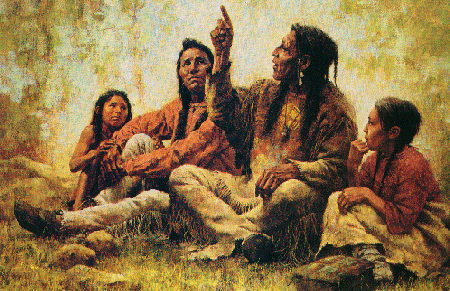

The native American “We are part of humanity’s final migration.” http://www.ilhawaii.net/ A recent study performed by geneticists at the University of Copenhagen has confirmed that Native Americans are originally from Europe, at least in part. Up to 38% of Native American ancestry can be traced to Europe and western Asia, collectively known as Eurasia.
Palaeogeneticist Eske Willerslev at the University of Copenhagen, along with his team, confirmed this by sequencing the genome of DNA found in the 24,000-year-old remains of a young boy from the Siberian village of Mal’ta. This is coincidentally the oldest known modern human DNA ever found.
Related Article: Ancient Human DNA Found: Old World Similar to Lord of the Rings
The study shows us that modern humans living in Europe spread much further East than anthropologists had initially realized and lived in Siberia during the last ice age.
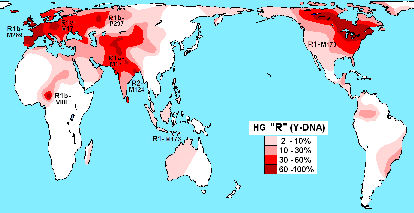
While scientists have known for years that Native Americans are directly related to east Asians, the European genes are a breakthrough discovery. The whole story behind the origins of Native Americans is in fact still a mystery. According to the research team,
The origins of the First Americans remain contentious. Although Native Americans seem to be genetically most closely related to east Asians, there is no consensus with regard to which specific Old World populations they are closest to.
Related Article: Modern Languages May Share Common, Ancient Ancestor
So, the idea that Native Americans are just slightly different east Asians is just an assumption. What we do know is that 24,000 year old Europeans had a hardcore Asian fetish. According to Eske Willerslev,
At some point in the past, a branch of east Asians and a branch of western Eurasians met each other and had sex a lot.

Looks like the ideal location for committing genocide! http://www.nativevillage.org/ Native Americans are a true meeting of East and West: the evolutionary offspring of the mingling of Europeans and Asians. This type of widespread, inter-racial sex is a repeat of humanity’s ancient past, one filled with inter-sub-species sex between neanderthals, denisovans, homo sapiens, and other early humans.
Related Article: The “Friends of the Indian” and How They Treated Their Friends
European features had previously been recognized in modern day humans living in the Americas. For example, some ancient Native American skulls look very different from modern day Native Americans. Mitochondrial DNA that shares a lineage with Europeans was also found in Native Americans. This type of evidence however, was always attributed to post-Columbian encounters with Europeans. We now know that is simply not the case.
If we view history in terms of the last few thousand years, the post-columbian invasion of the America’s can be viewed as totally alien invaders advancing on a land filled with an utterly strange group of people. If we broaden that view to include the last few hundred thousand years though, we see a different picture: A group of people invading its own ancestral family; warring family trees sharing the same ancient roots.
Sources:
http://www.nature.com/nature/journal/vaop/ncurrent/full/nature12736.html#ref10
http://en.wikipedia.org/wiki/Eurasia
http://www.cell.com/current-biology/retrieve/pii/S0960982209020661
biggie, Biggie smalls, christopher columbus, denisovan, DNA, eske willerslev, eurasia, Europe, final frontier, final world, geneticist, genocide, haplope, homo sapien, human migration, immigration america, Mitochondrial DNA, native American ancestry, native american from europe, native americans east asians, neanderthal, notorious big, siberian village, where do humans come from -
Ancient Human DNA Found: Old World Similar to Lord of the Rings

Humanity is just starting to get interesting . http://humanorigins.si.edu/ ancient humans Scientists have discovered a femur that contains 400,000 year old DNA from an as yet undiscovered ancestor of modern day humanity. It was discovered at Sima de los Huesos, or “the pit of bones,” in Spain. This same pit has offered 28 other samples of ancient humans. The femur contains DNA that is similar to that of Denisovan, an eastern Eurasian sister group to Neanderthals, and a being which shares a common ancestor with you and I.
The only other evidence of the elusive Denisovan, the ancient human sub species, is DNA from a finger bone and tooth dated to 41,00 years ago, which was found in Siberia, 4,000 miles away. How did this type of DNA get all the way to Spain, and which hominid does the ancient human DNA actually belong to?
Related Article: Women Who Give Birth to Men Have Male DNA in Brain for Life

Humans mated and spread like rabbits all over the globe. Scientists are able to answer far more questions regarding our origins and early migration patterns out of Africa due to the constant improvements in DNA reading technology and genomic sequencing. According to Juan Luis Arsuaga, a paleoanthropologist at Universidad Complutense de Madrid and a co-author of the paper,
This would not have been possible even a year ago.
One of the reasons this study is so profound is due to how far back it allows us to peer into our past. In 1997, scientists made a breakthrough by sequencing 40,000 year old Neanderthal DNA. In 2006 the record became 100,000 years. Only 7 years later the record has quadrupled to nearly 400,000 years. That is incredible progress.
Of course, more progress means more questions, and it seems that the more accurate our view of the past becomes, the stranger history turns out to be. Our ancient human predecessors were not so similar to us as imagined.
Related Article: Watching Evolution Occur
What we know about modern humanity is that it left Africa in 3 migrations, with each migration separated by two hundred thousand years or more. This theory as a whole is dubbed the “out of Africa hypothesis,” and is generally accepted by the anthropological community. The theory is based on a near endless amount of archaeological studies, genetic, and anatomical studies, and works like this:
- Around 4 – 8 million years ago (still debated) humans, chimpanzees and bonobos began evolving as separate lineages from a common ancestor. This common ancestor shares an older common ancestor with gorillas, orangutans, and gibbons.
- This separated lineage evolved into homo habilis 2.3 million years ago. This is the first early human species to use tools, and walk on the ground on only two legs, instead of living in trees and depending on all 4 limbs for transportation.

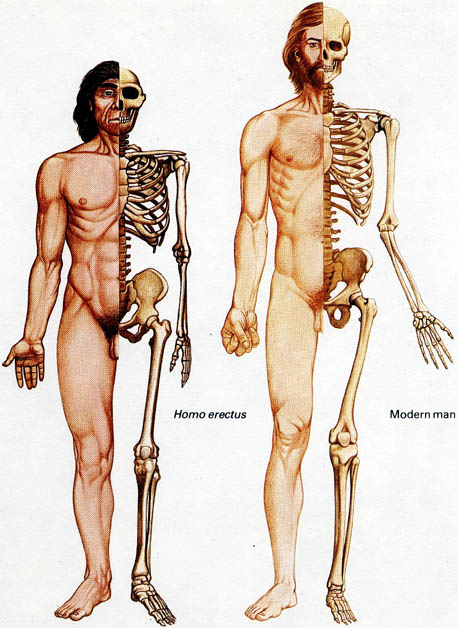
That is one weird looking tree! - Around 1 million years later, ancient humans evolved into homo erectus (or maybe habilis and erectus lived side by side?) Homo erectus had double the cranial size of its ancestors and was the first human species to walk fully upright. It was also the first species to leave the nest: Africa. Homo erectus left Africa between 1.3 and 1.8 million years ago, and spread through Africa, Asia and Europe. This was the first major migration out of Africa.
- The second major migration involved an evolved form of homo erectus that had remained in Africa called homo heidelbergensis. This migration occured around 600,000 years ago. Homo heidelbergensis is the direct ancestor of neanderthals, denisovan, and homo sapiens.
- Around 200,000 years ago humanity, still in Africa, had evolved into homo sapiens. Homo sapiens left Africa in the third major migration around 125,000 years ago and spread all around the world. Homo sapiens evolved into homo sapien idaltu, now extinct, and homo sapien sapien, commonly referred to as cro magnon. Homo sapien sapien is the only species of human alive today; congratulations, we made it.
This is a very simple, linear explanation, and the truth is that nothing in life, especially when it concerns ancient humanity, is ever that simple. Studies like the first one we discussed have proven that our past is far less linear and extremely complex, leaving anthropologists in constant debate.
Related Article: DNA Ancestry Checking Is as Cheap as $99
The above explanation doesn’t take into account the countless as yet unnamed ancient human sub species that DNA tests have discovered, nor does it take into account other sub species that existed between the several hundred thousand year gaps between the major evolutionary stepping stones. Examples include homo antecessor , homo ergaster, or homo floresiensis, which scientists have dubbed ‘hobbits’ due to their incredibly small stature yet fully developed brains.
Human Mark II and Mark V http://donsmaps.com/ As a clearer picture of our past is revealed, the name ‘hobbit’ becomes increasingly more apt. According to Mark Thomas, an evolutionary geneticist at University College London,
we’re looking at a Lord of the Rings-type world … there were many hominid populations.
Dozens, maybe even hundreds of undiscovered ancient human sup species may have lived side by side, some with a culture and anatomy similar to modern day humans, and others markedly strange. So far, evidence shows that at least 5 different sub species of ancient humans spread throughout Africa, Europe, and Asia, and lived on the planet at the same time. Scientists even found denisovan, neanderthal, and modern human bones all in the same cave.
Related Article:Deep Storage Project
Probably the most interesting part of our history is that all of the different ancient human sub species interbred like British royalty, with mystery human sub species spicing up the sex life of our great human ancestors. This is why the DNA of many modern humans is actually a mix,
All modern humans whose ancestry originates outside of Africa owe about 2% of their genome to Neanderthals. Certain populations living in Oceania, such as Papua New Guineans and Australian Aboriginals, share about 4% of their DNA with Denisovan.
These sub species of ancient human were so close that there is 500,000 year old neanderthal and denisovan viruses in modern human DNA.
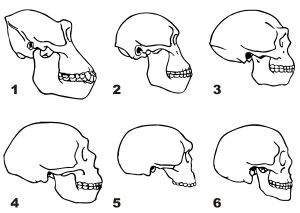
Skulls of: 1. Gorilla 2. Australopithecus 3. Homo erectus 4. Neanderthal (La Chapelle aux Saints) 5. Steinheim Skull (Archaic Homo sapiens) 6. Anatomically modern Homo sapiens Ancient human history is far more complex, and incidentally, contains far more inter-sub-species-sex than anthroplogists and historians ever gave it credit for. The recent research discussed above represents the very tip of the iceberg regarding the incredible potential that improved DNA testing has. It’s only a matter of time before we reveal the full truth of our origins and ancient human history.
Related Article: Bonobo Makes Tools Similar to Early Humans
Hopefully we will find out all of the answers one day, but for now, Matthias Meyer, a geneticist at the Max Planck Institute for Evolutionary Anthropology in Leipzig, Germany thinks that,
We’ve basically generated a big question mark.
Ancient humans were more awesome than any of us imagined.
Sources:
http://en.wikipedia.org/wiki/Denisova_hominin
http://www.nature.com/nature/journal/vaop/ncurrent/full/nature12788.html
http://www.ncbi.nlm.nih.gov/pubmed/20336068
http://humanorigins.si.edu/resources/whats-hot/mystery-pit-bones-atapuerca-spain
http://www.cell.com/retrieve/pii/S0092867400803104?cc=y
http://www.cell.com/current-biology/retrieve/pii/S0960982206015594
https://wondergressive.com/news/morality-in-animals/
http://www.paleodiversitas.org/PDF/135.pdf
http://mbe.oxfordjournals.org/content/14/3/248.full.pdf+html
http://books.google.com/books?id=AmvJ1XtnIQoC&pg=PA90#v=onepage&q&f=false
http://www.nytimes.com/2007/08/09/science/08cnd-fossil.html?ref=science&_r=0
http://en.wikipedia.org/wiki/Homo_habilis
http://www.himalayanlanguages.org/files/hazarika/Manjil%20Hazarika%20EAA.pdf
http://www.ncbi.nlm.nih.gov/pubmed/12802332
http://en.wikipedia.org/wiki/Cro-Magnon
http://www.theworld.org/2012/08/scientists-map-an-extinct-denisovan-girls-genome/
http://en.wikipedia.org/wiki/Homo_antecessor
http://en.wikipedia.org/wiki/Homo_ergaster
https://wondergressive.com/news/bonobo-makes-tools-similar-to-early-humans/
http://www.ncbi.nlm.nih.gov/pubmed/20336068
http://www.nature.com/news/mystery-humans-spiced-up-ancients-sex-lives-1.14196
400000 year old dna, africa origin, ancient dna, anthropology, common ancestor, cro magnon, denisovan, dna sequencing, eurasia, evolution, evolution evidence, femur 400, homo antecessor, homo erectus, homo ergaster, homo floresiensis, homo habilis, homo heidelbergensis, homo sapien evolution, homo sapien idaltu, homo sapien sapien, human ancestor, human bonobo dna, human common ancestor, human dna, human evolution, human genetic code, human migration, human origin, human origins, human sub species, mark thomas, modern day human, neanderthal dna, neanderthals, oldest human dna, oldest humans, out of africa, palleoanthropologist, progress, scientists, sima de los huesos, spain fossils, three migrations, university college london -
Stonehenge and Other Megaliths are Mind Altering Acoustical Devices

Talk about Stonehenge: a great place to jam out! http://pintaw.com/ Studies spanning decades have revealed that Stonehenge and other ancient megalithic structures and tombs may have been used to create music and various mind altering sounds. These studies represent a relatively new theory to explain what megalithic structures like Stonehenge were used for, and how important they were to early humans. They have also created a new field of study called archaeoacoustics, the study of the acoustical properties of archaeological sites.
According to authors Steven Brown, Björn Merker, and Nils L. Wallin in their book The Origins of Music,
The language-centered view of humanity has to be expanded to include music, first, because the evolution of language is highly intertwined with the evolution of music, and, second, because music provides a specific and direct means of exploring the evolution of human social structure, group function, and cultural behavior. Music making is the quintessential human cultural activity, and music is an ubiquitous element in all cultures large and small.
Music plays a much larger role in the history and evolution of humanity than we normally give it credit for. So, maybe it isn’t so far fetched that early humans dragged 25 ton stones over 100 miles just to create Stonehenge and jam out. This is the conclusion that researchers from the Royal College of Art in London are beginning to entertain.
Related Article: The Mystery of America’s Stonehenge: Coral Castle
In 2006 Paul Devereux and Jon Wozencroft began testing rocks with digital field sound recorders in hand. They focused most closely on rocks found at a site called Carn Menyn in South-West Wales, where archaeologists believe many of the blue stones used to create Stonehenge and other similar megalithic structures in the area came from. The researchers stated that,
Because it would be impractical to attempt to acoustically test all the thousands of individual rocks involved, our methodology was to conduct percussion tests using small hammerstones on many rocks (over a thousand in all) in organized transects at points along the Carn Menyn ridge. From this we could make an informed estimate of the incidence of ringing rocks.
While not all of the stones at Stonehenge they tested “rang,” or made various drum, gong, and bell-like sounds when struck, a surprising number did. The variation in the sounds that the rocks can make is incredible. After having a listen it is very easy to imagine our ancestors creating ritualistic music or just killing time by jamming on the gigantic monoliths.
Related Article: Modern Language May Share Common, Ancient Ancestor
It was inevitable that the researchers would test the stones at Stonehenge. They expected all potential sound to be muted due to a lack of air space around each stone. The results, however, surprised them, as they were still able to play the monoliths like giant xylophones. Amazingly, archaeologists have reproduced the results of this study many times at various sites around the world, even in ancient crypts in Greece. Some researchers have even created reproductions of what ancient Lithoacoustic (music created from stones) songs may have sounded like.
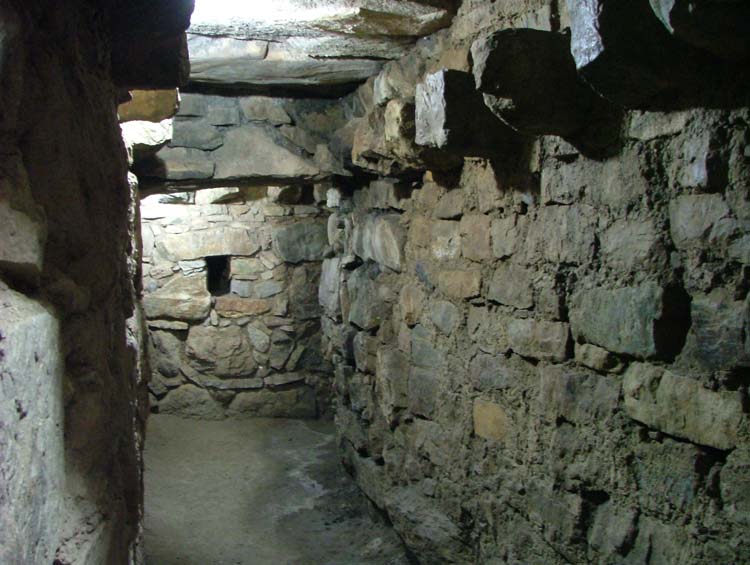
Time to swallow some cactus and trip out at the local megalith! http://www.megalithic.co.uk/ Research into archaeoacoustics jumps down the rabbit hole via a further field of study called psychoacoustics, a branch of psychophysics which deals with physiological and psychological responses to sound. Studies performed at an ancient site called Chavín de Huántar in Peru have revealed that ancients intentionally constructed sites to enhance the psychoactive effects of the San Pedro cactus, and to intensify psychedelic and ritualistic experiences. Ancients constructed their sites with such precision that a single hand clap while standing on a central staircase sounds identical to a quetzal bird. Additionally, areas of the sites were specifically constructed so that shadows produced by sunlight outside of the structure would create incredibly psychedelic shadows and effects when perceived by an ancient. According to Miriam Kolar, a researcher at Stanford University’s Center for Computer Research and Acoustics,
These structures, unlike those at Stonehenge, could be physically disorienting and the acoustic environment is very different than the natural world. The iconography shows people mixed with animal features in altered states of being. There is peyote and mucus trails out of the nose indicative of people using psychoactive plant substances. They were taking drugs and having a hallucinogenic experience.
Related Article: Music’s Grand Effect on the Mind
Mayans and other ancients were the original hippies, superior to hippies in that they appear to have empirically explored the psychological and physiological effects of sound and imagery on the observer. Right now we can only imagine what those at Stonehenge experienced during their jam sessions.
If you are interested in experiencing the effects that specific sound frequencies can have on your mind and body, check out binaural beats, which are tones that affect the way our brains function and process thoughts and information in various ways. Through the use of binaural beats, simply listening to a particular frequency can induce states of incredible calm, stimulation, or even heightened awareness. I recommend this playlist of different frequencies to experience the profound effects of these sound vibrations on the mind and body.

Screw mediation, let’s just listen to these audio files and go deeper than Gautama! http://www.binauralbeatsfreak.com/ Sources:
http://en.wikipedia.org/wiki/Archaeoacoustics
http://books.google.com/books?id=vYQEakqM4I0C&printsec=frontcover#v=onepage&q&f=false
http://antiquity.ac.uk/ant/073/Ant0730325.htm
http://invenio.lib.auth.gr/record/124480
http://www-personal.mus.cam.ac.uk/~ic108/lithoacoustics/
http://en.wikipedia.org/wiki/Psychoacoustics
https://ccrma.stanford.edu/groups/chavin/kolardissertation.html
http://en.wikipedia.org/wiki/Quetzal
http://en.wikipedia.org/wiki/Binaural_beats
http://www.youtube.com/playlist?list=PL3D3E88FF8078B4C4
acoustics, acoustics stone, ancient aliens, ancient ritual, archaeoacoustic, archaeoacoustic stonehenge, binaural beats, bjorn merker, bluestone, Chavín de Huántar in Peru, computer research, drug, effects, erowid, frequencies, frequency, Greece, greece crypts, human evolution music, human music, humanity, iconography, jon wozencroft, lithoacoustic, LSD, megalith, megalithic structure, mind and body, miriam kolar, monolith, music, nils wallin, origins of music, paul deveruex, peyote, playlist, psychedelic, psychoactive, quetzal, researchers, ritual, royal college of art in london, san pedro, sound, sound frequency, south wales, Stanford University, steven brown, stonehenge, stonehenge acoustics, stonehenge music, stonehenge mystery, study, trip, wales, YouTube -
The Root of All Evil: Quality Vs. Quantity in America
We have a number problems in this country: the national debt,the quantity of jobs available, the rocky relationship between Robert Pattinson and Kristen Stewart, all of which deserve our undivided focus and attention. There is another problem we face, one that comes close to equaling Rob and Kristen’s emotional rollercoaster. It is a problem that contributes to our social and economic conditions. Our society faces the problem of trying to find the delicate balance between the lack of quality and the excess of quantity that is found in multiple aspects of our culture. Simply put, Americans want more. And they want it to levels of excess that have become problematic and detrimental.
Today, we’ll first look at the causes behind our society’s issues with quality as it relates to quantity. Next, we’ll examine the effects of this epidemic, and finally, we’ll pin-point some solutions that will allow us to balance our growing need for more, with what we actually need, so that we can tip the scales in our favor.
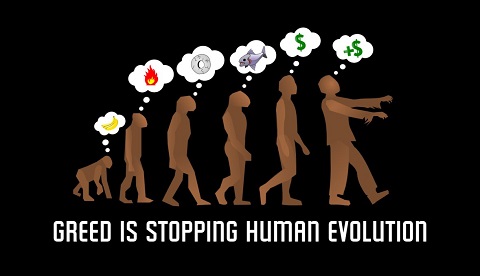
Need money, feed me! hateandanger.wordpress.com Tipping the scales back towards center may not be as easy as it seems. We are fighting against more than balancing our needs and wants; we are fighting against a way of thinking that has dominated our social understanding of quality versus quantity. In the 1987 movie Wallstreet, corrupt businessman Gordon Gekko tells us that,
Greed is good. Greed is right, greed works. Greed clarifies, cuts through, and captures the essence of the evolutionary spirit.
Unfortunately, what Mr. Gekko says is true. Greed is now what drives our wants and desires, and what pushes us to obtain what we want at any cost. We have entered a time where people pay less attention to what you have, and more attention to how much of it you have. We are blinded by the quantity of the things we own, rather than the quality of our possessions and our lives. According to physicist and computer scientist Carlos Roca in his article “Social Cohesion in a Society of Greedy, Mobile Individuals,” published in the Journal of the National Academy of Sciences,
Human wellbeing in modern societies relies on social cohesion, which can be characterized by high levels of cooperation and a large number of social ties. Both features, however, are frequently challenged by individual self-interest. The stability of social and economic systems can suddenly break down as the recent financial crisis illustrates.
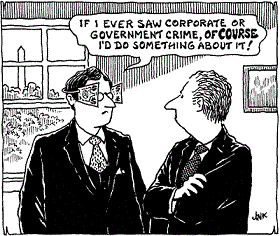
Very, very dependable. http://bostonoccupier.com/ What this means is that our individual interests are actually breaking down our social structure. Our “me-first” attitude is what directly affects our need for quantity, instead of quality. If we are focused on getting as much as we can, as fast as we can, the quality of what we consume is going to be compromised.
There are many aspects of our society that have been affected by our focus on quantity at the expense of quality. In the business and entertainment sectors, we’ve seen politicians sent to jail for crimes motivated by greed, and celebrities and artists produce material that is at best of questionable quality. One need look no further than politicians like disgraced Illinois senator Rod Blagoivich, or companies like Johnson and Johnson, which in 2007 reported illegal activity to the government such as bribing government-paid doctors and health officials to promote sales of medical devices in Greece, Poland and Romania. According to Robert Khuzami, director of the Securities and Exchange Commission’s division of enforcement,
For years, the company tried to hide its illegal activities by using sham contracts and off-shore companies to cover its tracks. The Johnson & Johnson’s bribes might have harmed public health in several European countries.
The scariest effect of this mentality is the disregard for the public’s well-being. This side-effect manifests itself in the actions of companies like Johnson and Johnson, but also in what we are exposed to in our everyday lives.
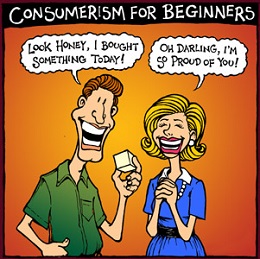
OMG let’s go to the mall! http://www.ourbreathingplanet.com Our country’s obesity rate, for example, is a calling card of society’s issue with quantity. A 2012 report published by the American Journal of Preventive Medicine found that by 2030, 42 percent of U.S. adults will be obese, adding $550 billion in obesity-related medical expenses to healthcare costs over that period, unless Americans change their ways. Our need for more money, more food, and more recognition is literally making us sick. If we don’t work to correct the imbalance between how much of everything we want, versus how much of it we need, we will find ourselves with a lot of stuff, but without the most important things we have – our physical and emotional health.
Back in 1997, Rapper The Notorious B.I.G. told us that,
Fifteen years later, his words, like the rapper, have started to take on an even larger meaning. When it comes to getting our B.I.G. quantity issues under control, we need to change rappers. And by that I mean, change the rap lyrics our country has come to identify with. The iconic group Outkast tells us,
Don’t act impatiently. You’ll get where you need to be, in due time.
What this means is that we need to be patient and work for good things in our lives, instead of accepting the many mediocre things that come our way. Anthony Levine, CEO of the Nonprofit Finance Fund and author of Impact Investing: Transforming How We Make Money While Making a Difference, argues we need to approach solving our attitudes towards the need for excessive quantity from an economic angle. He says that,
When the market’s crashed in 2008, I think people realized just how much we need community. Not only did out of control money put us in a bad situation, but we realized that we can’t rely 100% on 401ks and the market to take care of us. Trying to make so much money so that you don’t need anyone is a ridiculous and lonely pursuit. We need to view our financial returns alongside the society we’re building. It keeps us connected.
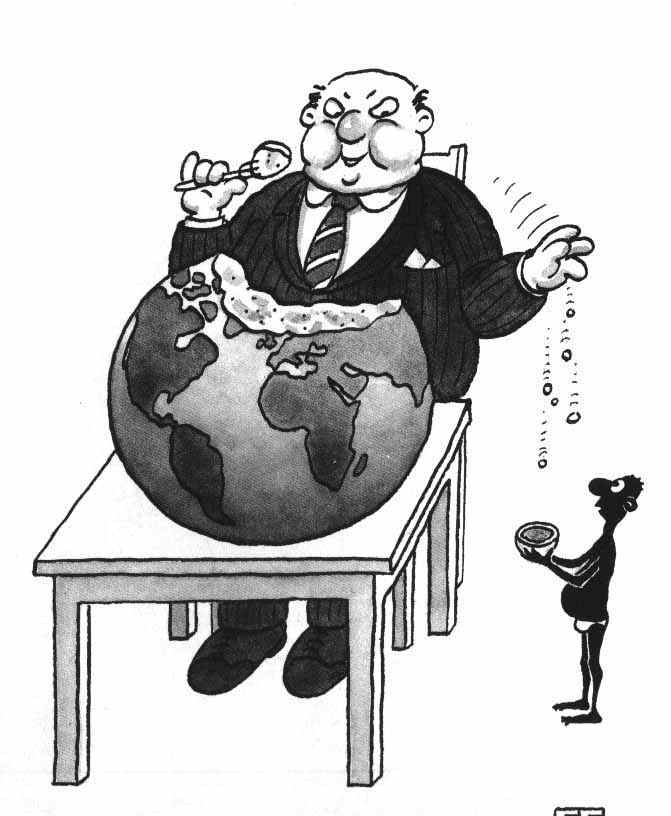
Please sir, may I have some more? rashidaanurse.blogspot.com As Mr. Levine says, we need to make sure we are focusing on what’s good for our society, not just what is good for us as individuals. We need to remember that greed only leads to excess, which does not translate into having items of quality in our lives, and also, a quality society. The only thing greed leads to is a huge quantity of stuff.
As the saying goes, the best things in life are worth waiting for. And that is what we need to keep in mind when we evaluate what we have in our lives. You may desire more in terms of your financial, social, or personal gains, but that isn’t the answer. The answer is to appreciate the quality of what you have and know that quantity never equals quality.
So, while we still have issues such as our nation’s debt and the job crisis, perhaps these words will reach the ears of the people who hold the fate of our country’s happiness and health in their hands, and it will teach them to love and be grateful for what they have. Here’s looking at you, Kristen and Rob.
Sources:
http://www.imdb.com/title/tt0094291/
http://www.pnas.org/content/early/2011/06/21/1101044108.abstract
http://star.worldbank.org/corruption-cases/node/20060
http://en.wikipedia.org/wiki/Rod_Blagojevich
http://www.nytimes.com/2011/04/09/business/09drug.html
http://www.reuters.com/article/2012/09/18/us-obesity-us-idUSBRE88H0RA20120918
http://www.youtube.com/watch?v=xZ4tNmnuMgQ
1984, 401k, america quality, america waste, anthony levine, Biggie smalls, carlos roca, ceo, economy, excess, gordon gekko, human wellbeing, instant gratification, johnson and johnson, johnson and johnson bad, johnson and johnson illegal, krisen and rob, kristen stewart, me first, mobile individuals, money, Mr. Gekko, National Academy of Sciences, notorious B.I.G, obesity, occupy wallstreet, outkast, quality vs quantity, quantity, rap lyrics, rapper, rob pattinson, rober pattinson, robert khuzami, rod blagoivich, rollercoaster, securities and exchange commission, social cohesion, wallstreet, wallstreet movie -
New Greenhouse Gas Discovered: 7,100 Times Worse Than Carbon Dioxide
Chemists at the University of Toronto have discovered a new greenhouse gas which impacts climate change 7,100 times more than CO2. This new greenhouse gas is called perfluorotributylamine (PFTBA), and has far more potential to effect the climate than any other substance found to date.
A greenhouse gas’ effect on the environment is rated in three ways: quantity, time, and power. Each greenhouse gas has a different effect on the climate based on how much is present (quantity), how long it stays in the environment (time), and how much heat it traps (power). For example, there is dramatically more carbon dioxide than methane on the planet, and although methane stays on the planet for less time, it traps 21 times more heat than CO2 over a 100 year period. Sounds like methane is a pretty serious greenhouse gas, but as far as contributing to climate change, nothing compares to PFTBA.
Related Article: 90 Companies Responsible for Climate Change

The government says so, it must be true! http://www.globalchangeblog.com According to an article published in the University of Toronto News,
PFTBA has been in use since the mid-20th century for various applications in electrical equipment and is used in thermally and chemically stable liquids marketed for use in electronic testing and as heat transfer agents. It does not occur naturally; that is, it is produced by humans.
You know what that means Tea Party fanatics? There is no way you can blame this new greenhouse gas on ‘natural causes’. According to Angela Hong, one of the University of Toronto chemists working on the study,
PFTBA is extremely long-lived in the atmosphere and it has a very high radiative efficiency; the result of this is a very high global warming potential. Calculated over a 100-year timeframe, a single molecule of PFTBA has the equivalent climate impact as 7,100 molecules of CO2.
There is no known way to destroy the greenhouse gas, PFTBA, in the lower atmosphere. It can only be destroyed in the upper atmosphere. This means that the world is stuck with this incredibly damaging chemical lingering all around us for possibly 100’s of years.
Related Article: Germany Sets Example for Global Climate Battle
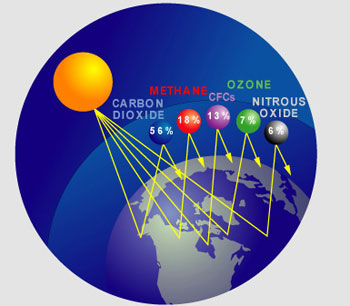
So many greenhouse gases, so many climate change deniers… http://www.learner.org/ This news has been released and undoubtedly seen by the The House Science, Space and Technology Committee. Unfortunately 17 out of 22 members on the committee are vehement climate change deniers, so it is unlikely this news will incite any motivation for change. Follow that last link for a list of all the climate change deniers in the U.S. congress and how much money they’ve made from the fossil fuel industry. Sometimes denial makes you filthy rich.
Climate change deniers have given rise to very powerful special interest energy gangs, as well as creating what is aptly called ‘delusional America.’ It’s a big world out there fellow citizens, and a large number of countries are actually doing their best to run entirely on green energy.
Related Article: Delusional America and Special Interest Gangs
It’s 2013 and we only just discovered the presence of this new greenhouse gas. What else could be lingering all around us that we haven’t the slightest clue about?
Sources:
http://www.epa.gov/climatestudents/basics/today/greenhouse-gases.html
http://thinkprogress.org/climate/2013/12/11/3045841/house-science-hearing-weather-climate/
carbon dioxide, Climate change, climate change america, climate change effect, climate denier, CO2, cost of global warming, effects of global warming, fossil fuel industry, germany climate change, Global warming, global warming bad, greenhouse gas, kyoto protocol, perfluorotributylamine, pftba, radioactive, types of greenhouse gas, U.S. congress, university of toronto, worst greenhouse gas
Wonder about your world…

Take the plunge down the rabbit hole of insanity and wonder in this fast-paced, nonstop psychological thriller that will leave you questioning the very nature of reality and beyond. Part thriller, part romance, part existential horror, A Dream of Waking Life delves into lucid dreaming, psychedelics, existential ontology, video games, the nature of love, the nature of reality, and more.

Mendel’s Ladder delivers an adrenaline-fueled journey set on a dystopian future Earth, brimming with high-stakes action, adventure, and mystery. This epic series opener plunges readers into a world filled with diverse cultures, heart-pounding battles, and characters who will captivate your heart and imagination.

“E.S. Fein is raising the bar for quality as it’s a very well-written and thought-provoking book…There are points and themes in the story that could be discussed for eons as people will have their own idea on where it leads. It’s a book I would highly recommend.” – Andy Whitaker, SFCrowsnest
 Wondergressive