
-
Frozen Fries are Cancer Causing

Researchers are warning that frozen french fries, those tasty delectables you get at junk food restaurants that are magically soft on the inside and perfectly crisp on the outside, contribute to the formation of cancer due to high levels of carcinogenic chemicals.
The process that factories use of partly cooking fries so they remain raw on the inside produces high amounts of acrylamide, a cancer causing agent.
Acrylamide is actually a natural byproduct of many types of cooked foods, especially potatoes. The problem is that these types of fries have dangerously high levels due to the levels of fructose and the preparation methods at factories.
To be blunt, you didn’t really think french fries were anything but destructive to you right?
Here’s another reason to order broccoli instead.
Sources:
http://www.telegraph.co.uk/health/healthnews/9572168/Frozen-chips-are-a-cause-of-cancer.html
Acrylamide, applebees, cancer causing, carcinogenic chemicals, Cook, delectables, food, Food chemistry, food restaurants, French fries, fried food cancer, frozen french fries, International Agency for Research on Cancer, junk food restaurant, natural byproduct, order broccoli, Potato, types of food, United States -
The More We Think, The More Selfish We Are

A study from Harvard University has found that the more time we are given to think, the more selfish our decisions become.
Scientists performed ten separate studies on cooperation and the effect it had on various participants. The goal of the experiments was to understand whether we are inherently selfish or greedy.
Many of the studies used Amazon Mechanical Turk (an online labor market that pays workers for ‘quick jobs’) to gauge generosity as it relates to response time, and for the sake of having a highly diverse pool of participants.
212 participants were paid 40 cents for a ‘quick job’ and asked to contribute whatever amount they wanted to a communal pool that would be doubled by the researchers and divvied up among the participants. The researchers compared the time it took to make a decision with the amount contributed. The longer people took to decide, the less they put into the pool.
Here’s the really interesting part:
The researchers conducted a variation of this study, but manipulated the amount of time people had in which to decide how much to donate. One group of subjects had to make their decisions within ten seconds; other subjects had to wait ten seconds before they were allowed to contribute anything, and third group of participants had no time constraints at all. The researchers found that subjects under time pressure gave significantly more money than either those that had to wait or those that were unconstrained. Participants in the ‘time-delay’ condition were the least generous, donating significantly less money than those in the other two groups.
Researchers stated that this same behavior can be viewed when money is involved, or when simply playing a game. The studies seem to suggest that greed is just an afterthought, that we are instinctively generous, but rational thought turns us into Orwellian pigs.
So, does this mean we are all genetically generous, divine creatures, corrupted by materialism and competition? Probably not. Researchers noted that
“Nurture may play an important role here. Humans are reared in a generally cooperative society where we engage in repeated interactions with people we know, and where our reputations are important. Under these conditions, we likely learn that cooperation is the best way to proceed, and subsequently act this way instinctively.”
The test results are clear, but the conclusions remain a mystery. What do you think?
Sources:
Ars Technica: Cooperation comes easily but thinking makes us selfish
Nature.com: Spontaneous Giving and Calculated Greed
-
A Mouse with Salamander-like Cell Regeneration
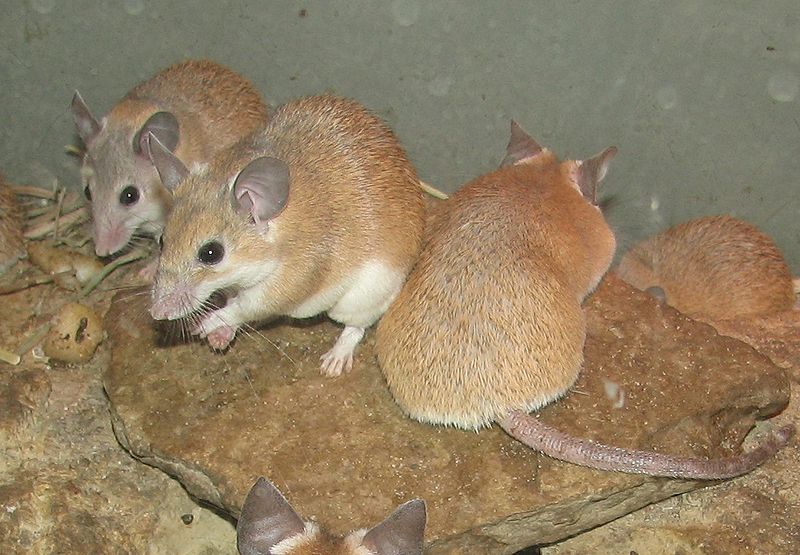
The movie 127 Hours would not have been as thrilling if the main character was an amphibian. Instead of spending days with his arm stuck under a boulder, Aron Ralston could have just ripped the arm off of his body and have a brand new limb in the morning ready to be crushed all over again. Regeneration of limbs and tails is very common in the world of amphibians and reptiles. Unfortunately for mammals, we do not have the same luxury.
The future, however, may be different. Biologists have recently discovered an African mouse, the African spiny mouse, that has the ability to completely regrow cells at a rapid rate in nearly the same way Salamanders regrow arms and legs. Other mammals, like humans, get filled with scar tissue, but that’s not the case with the spiny mouse.
Ashley W. Seifert, a researcher in University of Florida’s biology department, explains that:
The African spiny mouse appears to regenerate ear tissue in much the way that a salamander regrows a limb that has been lost to a predator. Skin, hair follicles, cartilage — it all comes back.
Although the mice can’t regrow muscle, they don’t produce scar tissue like we do. Their skin completely regenerates itself. The researchers believe this will lead to a whole new realm of regenerative medicine.
Goodbye pretending to lose an arm while playing ‘War’ as a child, and hello real life hacking of limbs. Playtime will never be the same again.
Sources:
127 hours, arms and legs, aron ralston, between a rock and a hard place, biology department, cartilage, childhood, Hair follicle, james franco, limb hacking, Mammal, Nairobi, nature, red hot chili peppers scar tissue, regeneration, Regenerative medicine, regrow, Salamander, scar tissue, science, Spiny mouse, University of Florida -
Astronauts Vote With Absentee Ballot from Space
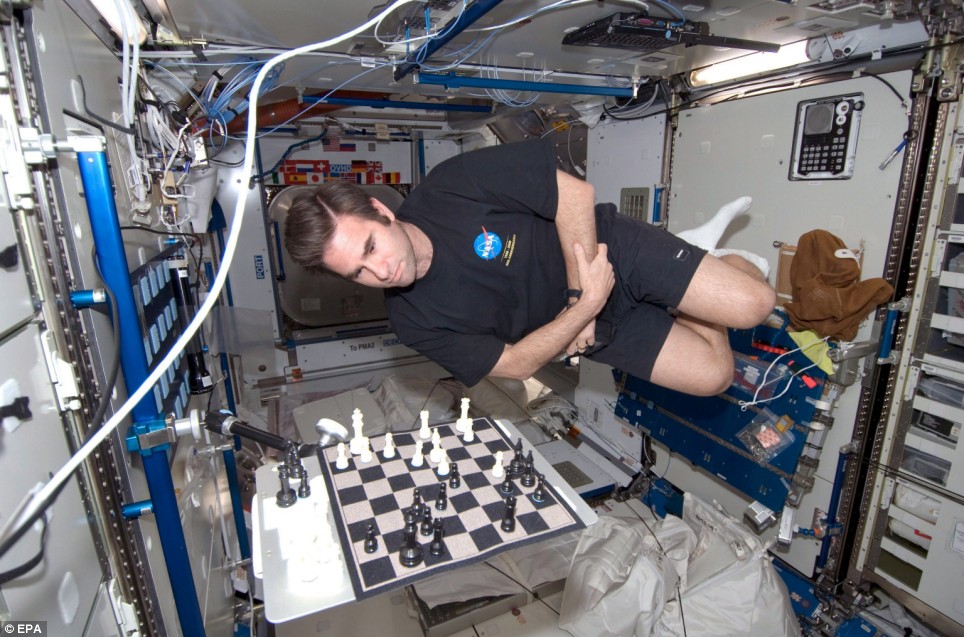
They may only be 200 miles away, but keep in mind that that distance is measured vertically. Astronauts at the International Space Station vote for their choice of president with a birds eye view of the entire spectacle.
They are able to send and receive an absentee ballot to and from Mission Control in Houston.
By the way, the first American to vote in a presidential election from the vacuum of space was Leroy Chiao, in 2004.
Sources:
http://www.space.com/18341-astronaut-vote-election-space-station.html
-
Women Who Give Birth to Men Have Male DNA in Brain for Life
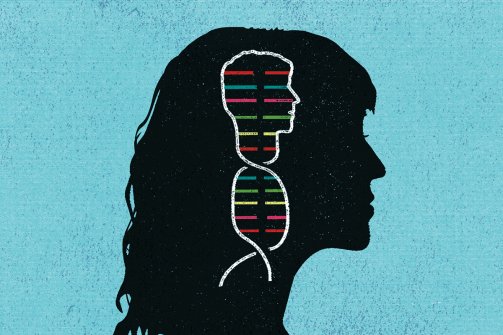

Illustration by Oliver Munday for Newsweek This isn’t something I ask everyday, but have you ever been pregnant, for any amount of time with a boy? If so, your brain likely contains relatively large amounts of male DNA. Researchers have recently discovered that through a process called michrochimerism fetal cells cross the blood-brain barrier of women and remain there for the rest of their life. This includes male DNA found in baby boys, meaning that women everywhere have male DNA in their brains.
That’s right fellas, your better half has more in common with you than you thought.
Scientists performing the research are torn regarding whether male DNA michrochimerism is a benefit or a detriment to women. Studies have found that:
“Women who harbor male DNA might be protected against some types of cancer, such as breast cancer, and autoimmune disease, like rheumatoid arthritis. It may, though, increase the risk of other cancers, such as colon cancer.”
Further research is required before implications can be defined with 100% accuracy.
There you are Mom, there’s no need to cry. No matter where I go, I will always be there with you, lurking deep inside your brain.
Sources:
The Daily Beast: How Male DNA Gets in a Woman’s Brain
Discovery News: Male DNA Found in Brains of Women
NCBI: Male fetal progenitor cells persist in maternal blood for as long as 27 years postpartum
-
Implantable Telescope Restores Elderly Vision


http://1-media-cdn.foolz.us/ It’s too late for the elderly of the world to undergo laser eye surgery, but all hope is not lost. Researchers have developed an implantable telescope that completely restores vision, well sort of.
The easily implanted, pea sized telescope doesn’t actually restore vision, but in fact redirects incoming light to healthier areas of the retina.
The telescopic implant restores vision by projecting images onto an undamaged portion of the retina, which makes it possible for patients to again see people’s faces and the details of objects located directly in front of them.
Virginia Bane, an 89 year old artist from California, was the first person to undergo the surgery. According to Bane:
I can see better than ever now. Colors are more vibrant, beautiful and natural, and I can read large print with my glasses. I haven’t been able to read for the past seven years. I look forward to being able to paint again.
Richard Van Buskirk, an optometrist, explains that Virginia will continue to regain vision as she retrains her brain to see. The implant, which is only in her left eye, will help her to see details and small text, while her right eye will provide peripheral vision.
I’d like to get a pair of these telescopic eyes to help me be more romantic. I could view spectacular sunsets all around the world at anytime of the day! Sure, ocular telescopes might not be the most aesthetically pleasing sight, but they improve vision, so that totally equals out.
Sources:
http://gizmodo.com/5945406/this-tiny-telescope-implant-gives-eyesight-to-the-blind
batou, batou eyes, blind, California, eye implant, eye romance, eyesight, ghost in the shell, ghost in the shell batou, implantable telescope, incoming light, laser eye surgery, macular degeneration, occular implant, opometrist, retinal implant, return vision, richard van buskirk, romance, science, spectacular sunsets, sunset, surgery, undamaged portion, virgina bane, Virginia -
Hairy Men Everywhere Rejoice: New Bandages Painlessly Remove From Skin
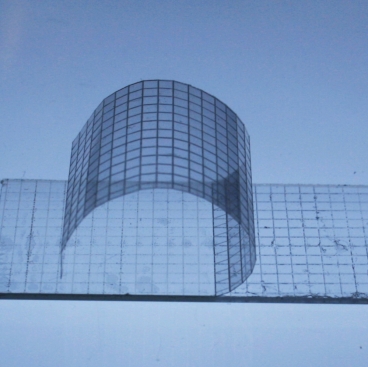
Image: Byan Laulicht To science! Finally, a problem that has plagued hairy men and monkey-children everywhere has been solved: bandages are now painless to remove!
In an innovation surprisingly not realized before, this new-style of medical tape separates the adhesive layer and the top protective layers allowing your skin to not come along with it. Whatever adhesive is left becomes easy to remove with a simple flick of your fingernail.
I may have worded it lightly, but the problem of sticky bandages is more than uncomfortable – it has shown to scar the skin of infants and can even injure the elderly. In 2006, the Institute for Pediatric Innovation (IPI) began collecting data from practitioners and medical workers about their most common after-treatment injuries. The data is surprising – a total of 1.5 million events were reported in just one year related to medical tape.
Don Lombardi, CEO of the IPI succinctly states:
When you take the tape off, you take the skin off. It’s very painful, obviously, and it scars them. Some end up with months of aftercare for lesions on their skin due to the tape.
The best part about the technology is that it already exists, so it is easy to start high-scale production. Jeffrey Karp, who’s work at Harvard Medical School was paramount in developing the product, states:
All of the processes are already in place: to place the adhesive layer, to place release liners onto surfaces, and to assemble the adhesive. We really see this as a solution that can be rapidly translated to the clinic, to immediately reduce complications from adhesives…
Sooner rather than later, please. I’m well past the age of unhairiness.
Sources:
-
Fresh Air Turned into Gasoline

Scientists have created a new technology that has allowed them to create gasoline out of thin air. The method also removes carbon dioxide from the air in the process.
By taking carbon dioxide from air and hydrogen from water, the scientists have successfully created a clean form of gasoline that can be used to its full potential even while using current infrastructure.
The companies chief executive, Peter Harrison, has stated that:
It looks and smells like petrol but it’s a much cleaner and clearer product than petrol derived from fossil oil. We don’t have any of the additives and nasty bits found in conventional petrol, and yet our fuel can be used in existing engines. It means that people could go on to a garage forecourt and put our product into their car without having to install batteries or adapt the vehicle for fuel cells or having hydrogen tanks fitted. It means that the existing infrastructure for transport can be used.”
The company, Air Fuel Synthesis in Stockton-on-Tees, is responsible for the breakthrough. They are currently seeking additional funding to make the process more efficient and ready for commercialization.
The executives of the company realize something that is becoming more pressing with each day that passes; fossil fuels are a dead end market. No matter how long it takes, it is a limited resource, and becoming drastically more limited even as you read this. The countries that are seeking and implementing energy independence will be the true super powers within the coming decades and centuries.
Sources:
Air Fuel Synthesis in Stockton-on-Tees
Suggested Wondergressive Readings You Might Enjoy:
Water Droplets Now Used as Computers
Stem Cells Created Using Urine
Cyborg Lobsters Power a Digital Watch
A Product That Will Turn You Into a Tree After Death
MIT Separates Oil From Water Magnetically
air fuel synthesis in stockton on tees, air petrol, america super power, brit petrol, Britain, carbon dioxide and hydrogen, china super power, clean air, clean fuel, dead end market, energy dependence, Fuel cell, gasoline from air, gasoline out of thin air, green energy, infrastructure, limited resource, Peter Harrison, petrol, petrol derived from air, remove carbon dioxide, russia super power, super power -
Fooling People into Passionate Belief

What you believe in may not be as strong of a belief as you might have thought. Researchers have found that people can be tricked into believing the opposite of what they claim to believe and will even create well supported arguments in opposition of their initial beliefs.
People were asked to answer questions regarding their opinion on moral issues using a clipboard with two sheets of paper. The first sheet of paper secretly contained two statements glued on top of each other. When the unsuspected victim of adhesive magic flipped the page to fill out the second sheet, a strong adhesive on the back of the clipboard removed the first statement, revealing a second, identical looking statement holding the opposite stance.
After flipping the page back over they were asked to read the statements aloud and discuss why they answered the way they did. Reserachers found that:
“About half of the participants did not detect the changes, and 69% accepted at least one of the altered statements. People were even willing to argue in favour of the reversed statements: A full 53% of participants argued unequivocally for the opposite of their original attitude in at least one of the manipulated statements”
More than half the people changed their mind and even argued for the opposite stance they had just completely disagreed with moments before.
Researchers state that this shows how inaccurate questionnaires actually are. It also reveals how incredibly complex our opinions and beliefs actually are, and how easily we can be swayed one way or another.
The conclusion this study brought me to personally is that 53% of people have absolutely no clue what they are talking about when they tell you their opinion. But we all knew that, didn’t we?
ABC, Adhesive, Arts, Ask an Expert, Belief, believe with conviction, brainwashing, bullshit, Christianity, crazy belief, current-events, morality, Paper, Performing Arts, perspective, propaganda, Spirituality & Religion, sticky note trick, tricked into believing, unsuspected victim, you know nothing -
Enslaved Ants Regularly Stage Rebellions
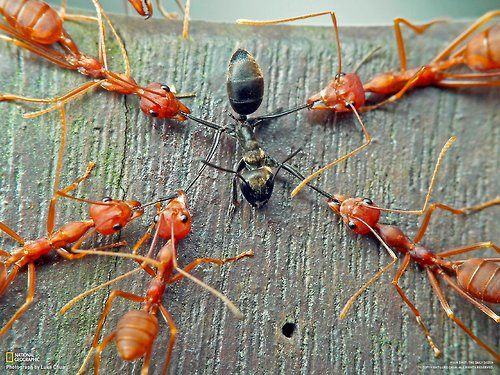
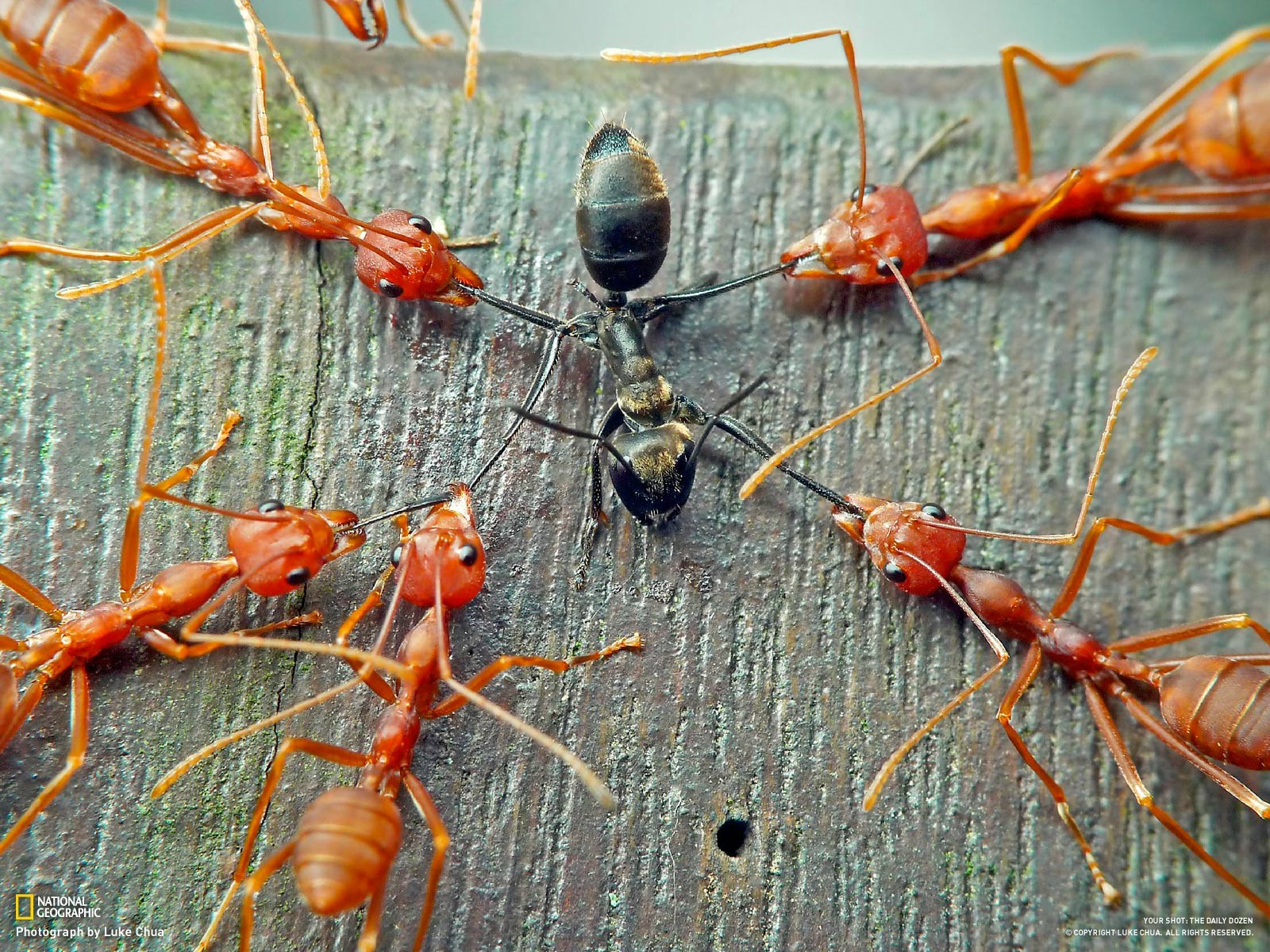
Ants that become enslaved by other ants naturally and regularly rebel against their captors.
Ants are notorious for making sprawling networks of city states beneath the ground. They have been observed farming mushrooms, domesticating aphids, and even creating nurseries and learning centers for their young.
Scientists have made a new discovery, further anthropomorphizing ants. Ants all over the United States take other species and colors of ants as slaves, and the slaves very often try to break free, or sabotage the captors’ colony. As usual, truth is more surprising than fiction.
Protomognathus americanus, the American slave maker ant, has evolved to stop foraging for food and instead steal the larvae of other ants and raise them as slaves to forage for food and raise their young. Talk about lazy.
Just like in our society, the enslaved ants don’t just blindly accept their servitude. The slave ants sabotage the colony by killing thousands of the colony’s children. When an ant is newborn, the enslave ant nanny is unable to tell the difference. But once it begins to show signs that it is the same species as its captor, the enslaved ant is quick to brew the poison.
Interestingly, only 27% of slave maker ant pupae survived within colonies in West Virgia, Ohio, and New York. Despite this fatal statistic, the ants continue the slave trade. Somebody call DCFS.
If you are interested in further information regarding the minds of ants check out this mind blowing spectacle. Scientists poured cement into the tunnels of an ant colony, and after waiting for it to harden, excavated many tonnes of earth to analyze the structure of the whole colony. They found a copious amount of roads, sub roads, garbage dumps, fungal gardens, nurseries, and more. Even more amazingly, the tunnels were designed for optimal ventilation, and efficient transportation. Each colony, from an ant’s perspective, is equivalent of building the Great Wall of China.
You are walking on top of thousands of world wonders every day!
Ant, Ant colony, ant pupae, ant single mind, ant world wonder, architecture, blind servitude, call child services, cement in ant colony, DCFS, environment, great wall of china, grow mushrooms, hive mind, human society, mind blowing, mushroom farm, nanny ant, nature, network city, new discovery, New York, Ohio, politics, Protomognathus americanus, rage against the machine, rebel, science, slave maker ant, Slavery, slaves everywhere, United States, west virgia, West Virginia, world wonder, YouTube
Wonder about your world…

Take the plunge down the rabbit hole of insanity and wonder in this fast-paced, nonstop psychological thriller that will leave you questioning the very nature of reality and beyond. Part thriller, part romance, part existential horror, A Dream of Waking Life delves into lucid dreaming, psychedelics, existential ontology, video games, the nature of love, the nature of reality, and more.

Mendel’s Ladder delivers an adrenaline-fueled journey set on a dystopian future Earth, brimming with high-stakes action, adventure, and mystery. This epic series opener plunges readers into a world filled with diverse cultures, heart-pounding battles, and characters who will captivate your heart and imagination.

“E.S. Fein is raising the bar for quality as it’s a very well-written and thought-provoking book…There are points and themes in the story that could be discussed for eons as people will have their own idea on where it leads. It’s a book I would highly recommend.” – Andy Whitaker, SFCrowsnest

 Wondergressive