
-
Crystal Skulls: Mysteries Etched in Quartz

Crystal skulls are enigmatic artifacts that have fascinated archaeologists, scientists, spiritualists, and the general public alike for decades. Carved from clear or milky white quartz, these life-sized human skull representations provoke a sense of mystery and intrigue, inviting various interpretations about their origins and purpose. This article aims to delve into the world of crystal skulls, exploring their history, controversies, and enduring appeal.
The Discovery of Crystal Skulls
The crystal skulls first appeared in the public domain during the mid-19th century. They were reportedly discovered in ancient Mesoamerican sites, specifically within the Mayan and Aztec ruins. Anna Mitchell-Hedges, F.A. Mitchell-Hedges’ adopted daughter, is famous for allegedly discovering the most well-known and intricate of these skulls, known as the ‘Mitchell-Hedges Skull,’ in Belize in the early 20th century.
Description and Craftsmanship
Crystal skulls are usually life-sized and bear an uncanny resemblance to human skulls. Some are simple, while others, like the Mitchell-Hedges Skull, are intricately detailed with detachable jaws. The skulls are crafted from quartz crystal, a material that the ancient Mesoamericans held in high regard.
Creating such intricate items from a hard, brittle material like quartz would require significant skill and time. This realization led to theories that the skulls were the work of advanced, possibly non-human civilizations.
The Mystery and Controversy
Crystal skulls have been subjects of intense debate and controversy. The primary controversy revolves around their origins. Early hypotheses suggested that these were pre-Columbian Mesoamerican artifacts. However, scientific investigations in the late 20th century cast doubt on this theory.
Studies revealed modern tool marks on the skulls, suggesting that they were made no earlier than the mid-19th century. This evidence supports the notion that the skulls are not ancient artifacts but rather modern creations, possibly made in Europe during a period when interest in ancient cultures was flourishing.
However, the mystery doesn’t end there. The exact origin and the identity of the craftsmen who made these skulls are still unknown. Furthermore, the question of why someone would create such detailed and time-consuming forgeries is yet to be answered satisfactorily.
Crystal Skulls in Popular Culture
Despite, or perhaps because of, the controversies surrounding them, crystal skulls have cemented their place in popular culture. They’ve been featured in various media, including books, films, and TV shows. Notably, a crystal skull played a central role in the 2008 film “Indiana Jones and the Kingdom of the Crystal Skull.”
Spiritual Significance
In New Age circles, crystal skulls are regarded as powerful spiritual symbols. They’re believed to possess healing properties and are often used in meditation and energy work. Crystal skulls are thought to activate higher consciousness, facilitate deep healing, and provide insight into past lives and civilizations.
Conclusion
The crystal skulls, despite being shrouded in controversy and mystery, continue to captivate our collective imagination. Whether they’re seen as sacred spiritual tools, elaborate hoaxes, or fascinating historical anomalies, their allure remains undeniable. As we continue to investigate their origins and purpose, these enigmatic artifacts remind us of our enduring fascination with the unknown and our relentless pursuit of truth.
-
The People of the Mount: A Forgotten Civilization

The world of archeology and anthropology often brings to light stories of ancient civilizations and cultures that once thrived but are no longer present. Among these narratives, the tale of the ‘People of the Mount,’ though not as widely known, is equally fascinating and thought-provoking.
Who Were the People of the Mount?
The People of the Mount, also known as the Mount Builders, were a prehistoric civilization believed to have existed in what is now the United States’ Midwest and Southeast regions. This civilization is primarily known for its impressive earthwork mounds, hence the name ‘Mount Builders.’
These mounds, ranging in size from small hillocks to massive earthen structures, served various purposes. Some were burial sites, while others were platforms for important structures or ceremonial purposes. The intricacy and size of these mounds suggest a society with advanced knowledge of construction, organization, and possibly even astronomy.
Discovering the People of the Mount
The first European settlers in North America were likely the ones to discover these mounds, but the identity of the builders remained a mystery for centuries. It wasn’t until the 19th century that scientists and explorers began attributing these structures to a distinct and sophisticated prehistoric civilization.
During the 19th and 20th centuries, archeologists uncovered numerous artifacts, including pottery, tools, and ornaments, further confirming the existence of a complex society. Carbon dating of these artifacts suggests that the People of the Mount thrived from around 1000 BCE to 1700 CE, a timeline that spans almost 3000 years.
Debunking Misconceptions
In the past, several misconceptions circulated about the People of the Mount. Some proposed that these mounds were the work of a ‘lost race’ or even extraterrestrials due to the advanced construction techniques they seemed to demonstrate. These theories, however, have since been debunked.
Modern archeology and anthropology link the People of the Mount to indigenous North American cultures, such as the Adena, Hopewell, and Mississippian cultures. These societies are thought to have developed the mound-building practices independently, contributing to the vast range of mound styles and functions seen across the region.
Legacy of the People of the Mount
The legacy of the People of the Mount persists through their remarkable earthworks. Many of these mounds, such as the Great Serpent Mound in Ohio and the Monk’s Mound in Illinois, are now protected historical sites. They offer glimpses into the lives and beliefs of these ancient people and provide valuable context for understanding the prehistoric cultures of North America.
Conclusion
Despite their fascinating history and contributions, the People of the Mount remain largely overshadowed in discussions of ancient civilizations. Further research and exploration of their remaining earthworks can provide deeper insight into their society and practices, enriching our understanding of human history. As we continue to unearth the mysteries of the past, the story of the People of the Mount serves as a testament to the indelible mark left by these ancient societies on the landscape of North America.
-
The Oil Pit Squid: A Mysterious Marine Phenomenon

From bioluminescent creatures that inhabit the inky depths to microscopic organisms vital to marine ecosystems, the ocean teems with diverse life forms. One marine organism that has intrigued researchers and enthusiasts alike is the “Oil Pit Squid.” However, unlike most cephalopods, this creature’s existence stems from folklore and urban legend rather than scientific documentation.
What is the Oil Pit Squid?
The term “Oil Pit Squid” first appeared in discussions amongst automotive mechanics. The name, born out of automotive workshops, originates from a peculiar incident in which an unidentified squid-like creature was allegedly discovered in an oil change pit.
Anecdotal evidence from various mechanics across the U.S. report instances of discovering what appeared to be small, squid-like creatures in the pits used for changing motor oil. Descriptions of the “Oil Pit Squid” often include a slimy body, multiple tentacles, and a notable resistance to conventional methods of extermination.
Myth or Reality?
The lack of physical evidence and photographic documentation combined with the inconsistency in reported sightings has led many to dismiss the existence of the Oil Pit Squid as an urban legend. Critics argue that the likelihood of a marine organism surviving in an environment filled with motor oil and automotive fluids is incredibly low.
However, some enthusiasts maintain the possibility of a previously unknown species adapted to such harsh conditions, citing instances of extremophiles—organisms that thrive in extreme environments. The deep-sea Pompeii worm, for example, survives in hydrothermal vents with temperatures exceeding 176 degrees Fahrenheit.
The Role of Misidentification
Another argument made by skeptics of the Oil Pit Squid revolves around misidentification. Mechanics, despite their expertise in automotive repair, are not typically trained in biological identification. As a result, common creatures like rats, which can appear deformed and unrecognizable after spending extended periods in oil pits, may be misidentified as squids.
Conclusion
As of now, the Oil Pit Squid remains an elusive and debated phenomenon. Whether it’s a misunderstood pest, an undiscovered extremophile, or a product of mechanic folklore, the tale of the Oil Pit Squid serves as a reminder of the ocean’s enduring ability to capture our imagination.
While scientists have explored and catalogued a significant portion of marine life, there’s still much left to uncover about our planet’s vast oceans. The speculation surrounding the Oil Pit Squid underscores the need for continuous exploration and the application of a scientific lens to validate or debunk such urban myths. In the meantime, the Oil Pit Squid continues to be a compelling enigma that adds a touch of the extraordinary to the everyday world of automotive repair.
-
Unraveling the Hooton Plan: A Controversial Post-War Proposal

The aftershocks of World War II reverberated across every sphere of human life, influencing political thought, global relationships, and socio-economic structures. During this era of uncertainty and flux, various strategies and proposals surfaced, aimed at addressing the challenges and preventing future global conflicts. One such proposition, though controversial and largely unimplemented, was the Hooton Plan.
Who Was Earnest Hooton?
Earnest Albert Hooton was a distinguished American physical anthropologist renowned for his work at Harvard University. He was a prolific scholar, contributing extensively to the study of human evolution and racial classification. However, it was a series of articles he wrote in 1943 for the New York newspaper PM that would generate the most controversy and discussion.
Unpacking the Hooton Plan
In these articles, Hooton proposed a comprehensive plan to prevent Germany from instigating another World War. The approach, later known as the Hooton Plan, advocated for the biological reengineering of the German people over a span of several generations.
Hooton suggested the mass sterilization of the SS, the redistribution of the German population across Europe, and the encouragement of mass immigration to Germany from other nations. He believed that these actions would gradually dilute the German racial stock, reducing their militaristic tendencies and thereby their potential threat to global peace.
Controversy and Criticism
The Hooton Plan was met with significant controversy and criticism. Critics denounced it as a form of genocide and a gross violation of human rights. They argued that punishing an entire population for the actions of a few leaders was not only unethical but also impractical.
There was also pushback from the scientific community, with many questioning Hooton’s underlying premise that specific racial traits are inherently linked to certain behaviors. This belief is largely dismissed today, with the consensus being that cultural, political, and environmental factors significantly influence behavior.
Did the Hooton Plan Influence Post-War Policy?
While the Hooton Plan may have influenced discussions about post-war strategies, there’s little evidence to suggest that it was ever officially adopted or implemented. The measures employed by the Allied forces in post-war Germany focused more on political, economic, and educational reforms rather than the radical biological interventions proposed by Hooton.
However, it’s undeniable that Germany underwent significant demographic shifts after the war, due to factors such as border changes, mass expulsions, and emigrations. These changes, while not intentionally engineered to fulfill Hooton’s vision, did somewhat resemble his proposals, leading some to speculate about the plan’s indirect influence.
Conclusion
The Hooton Plan remains a fascinating yet contentious part of post-World War II discourse. While Earnest Hooton’s intent may have been to prevent future conflicts, his proposed methodology underscores the dangerous implications of conflating race, behavior, and political ideology.
More than a historical artifact, the Hooton Plan is a stark reminder of the ethical lines that must be tread carefully when proposing solutions to complex geopolitical issues. It reminds us that the best path towards peace does not lie in manipulating racial or ethnic composition, but in fostering understanding, dialogue, and shared responsibility on a global scale.
-
The Phenomenon of Fish Rain: A Meteorological Marvel

Rain is typically just water falling from the sky, but what happens when the raindrops are replaced by… fish? As incredible as it might sound, this phenomenon does occur around the world, often leaving local residents astonished and scientists intrigued. Welcome to the intriguing world of “fish rain,” a weather event that, despite its strangeness, has a rational scientific explanation.
Understanding Fish Rain
Fish rain, or more broadly, animal rain, is a meteorological phenomenon where creatures like fish, frogs, or even larger animals fall from the sky during rainstorms. Although it sounds like a plot straight out of a science fiction story, it has been reported in many parts of the world including India, Honduras, and the Philippines.
The Science Behind the Spectacle
So, how does fish rain occur? The answer lies in a weather phenomenon known as a waterspout. A waterspout is a tornado that forms over a body of water. It’s capable of sucking up lightweight, nearby objects like water, fish, or frogs into a wind vortex due to the powerful updraft. If the waterspout moves onto land and encounters a storm or a weather front, it dissipates, releasing the trapped animals. If this happens to occur over a populated area, people witness what appears to be a rain of animals.
Famous Instances of Fish Rain
Throughout history, there have been many reported cases of fish rain. For instance, in the small town of Yoro, Honduras, a phenomenon locally known as “lluvia de peces” or “rain of fish” occurs annually. Since the late 19th century, the townsfolk have observed that a heavy rainstorm is often followed by hundreds of live fish scattered around the streets.
Similarly, in 2008, the town of Lalapansi in Zimbabwe experienced a rare rainfall of fish. Astonishingly, the fish rain occurred during a period when the region was going through a severe drought.
Implications and Impact
While fish rain can certainly cause astonishment and even joy (imagine free seafood falling from the sky!), it can also have more serious implications. For instance, if the fish or animals are not immediately removed, they can pose health hazards due to rapid decomposition. Moreover, the phenomenon can be destructive if larger animals or objects are involved.
Conclusion
Fish rain is indeed a fascinating demonstration of nature’s unpredictable power and the interconnectedness of atmospheric and aquatic ecosystems. It goes to show that the world around us is filled with unending marvels, some of which fall straight from the sky. This strange but real phenomenon stands as a testament to the wonders of our planet’s complex meteorological systems and the awe-inspiring oddities they can produce.
-
Bohemian Grove: A Hidden Retreat for the Elite
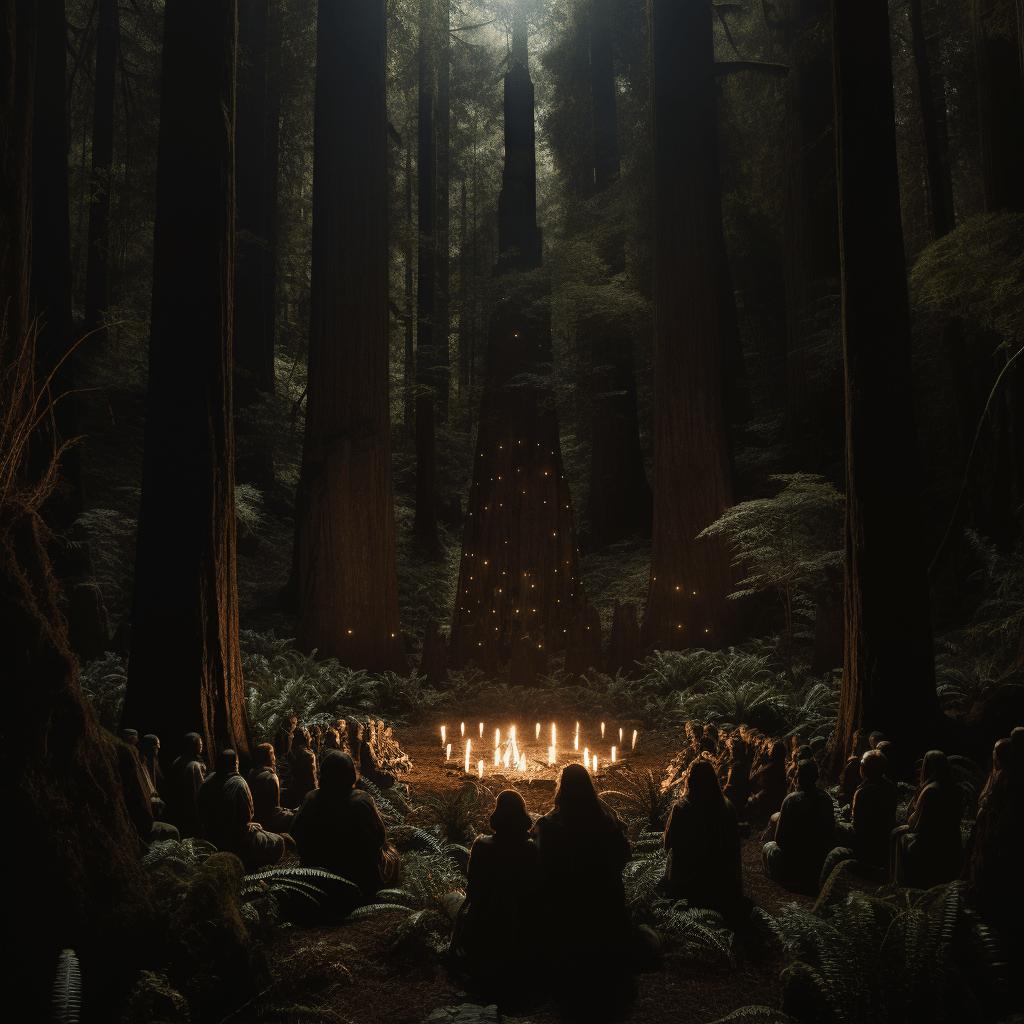
Deep within the redwood forests of Monte Rio, California, there lies a 2,700-acre retreat that has hosted some of the most powerful people in the world. Bohemian Grove is a secretive campground where each year, for two weeks in July, influential figures in politics, business, and the arts gather for a private getaway that includes festive gatherings, theatrical performances, and leisurely activities. But the secrecy surrounding the Grove and its activities has led to a host of conspiracy theories.
Historical Overview
Bohemian Grove was established in 1872 by a group of male journalists who formed the Bohemian Club in San Francisco. The club’s motto, “Weaving Spiders Come Not Here,” is an admonition against discussing business during the retreat, promoting an atmosphere of leisure and camaraderie. Over time, the membership expanded to include not just journalists, but successful men from various professional fields, especially politics and industry.
The Cremation of Care
One of the most notorious rituals associated with the Bohemian Grove gathering is the “Cremation of Care.” On the first Saturday of the camp, members perform a mock ritual sacrifice to an enormous statue of an owl, a symbol representing wisdom. On the other hand, many conspiracy theorists, such as Alex Jones, who successfully infiltrated the Bohemian Grove, have stated that the owl is a symbol of Lucifer. The ceremony involves the burning of “Dull Care,” a symbol of worldly worries and obligations, allowing members to enjoy their retreat free of care. No matter how you look at it, a ritual to a giant 40 foot stone owl in the middle of a forest is certainly strange.
Famous Members and Visitors
Over the years, Bohemian Grove has hosted a bevy of prominent figures, including every Republican U.S. president since Calvin Coolidge, as well as industry moguls such as the Rockefellers and the Morgans. Famous attendees have included Richard Nixon, Ronald Reagan, George H. W. Bush, and George W. Bush.
Conspiracy Theories
The secrecy shrouding the Grove’s activities has given rise to a wealth of conspiracy theories. Some believe the Grove is a place where global policies and decisions are clandestinely crafted. Others speculate about pagan rituals or satanic cult activities. While many of these theories are unproven and sensationalized, they underscore the fascination and suspicion that a gathering of such influential individuals incites.
alex jones, alex jones bohemian grove, American presidents, Bohemian Club, Bohemian Grove, business moguls, California, conspiracy theories, Cremation of Care, elite retreat, global policies, hidden gathering, influential people, Journalists, mock sacrifice, powerful figures, private getaway, public scrutiny, redwood forest, secrecy, world leaders, world politics -
The Mystique of Agartha: A Journey into Inner Earth

“The earth is hollow, and its center accessible. The true home of the Aryan race, Agartha, awaits us there.” – Ferdinand Ossendowski, “Beasts, Men, and Gods.”
The Lure of the Hollow Earth
Agartha (also known as Agarttha, Agharti, or Agarta) is a legendary city that is said to be located in the Earth’s core. This concept is often associated with the theory of the Hollow Earth, a belief dating back to ancient civilizations like the Greeks and Buddhists, which holds that the Earth is not a solid sphere but contains a substantial interior space.
The Legend of Agartha
The mythology surrounding Agartha has its roots in ancient spiritual traditions. Tibetan Buddhism, for instance, tells tales of Shambhala, a mystical city hidden somewhere beyond the snow peaks of the Himalayas. Some scholars speculate that this mythical paradise is, in fact, an allegorical reference to Agartha.
In western lore, the idea of a hollow earth housing a subterranean civilization gained traction in the 19th century. One of the most notable proponents was French occultist Alexandre Saint-Yves d’Alveydre. He claimed Agartha to be a hidden civilization with advanced technology and spiritual wisdom, led by superior beings known as the Ascended Masters.
Journey to the Center of the Earth
The hollow earth theory gained scientific interest in the late 17th century when Edmond Halley, the English astronomer who Halley’s Comet is named after, suggested the Earth consists of a series of nested spheres.
While this theory has been disproven by modern science, it did fuel the imagination of countless authors and explorers. In popular culture, Jules Verne’s iconic novel “Journey to the Center of the Earth” provides a fascinating, though fictional, account of an expedition to an underworld filled with prehistoric creatures and vast oceans.
Agartha and Admiral Byrd
The connection between Agartha and Admiral Richard E. Byrd, an esteemed American naval officer, and polar explorer, is one that captivates hollow earth enthusiasts. It’s alleged that during his 1947 flight over the North Pole, Byrd discovered an entrance to the hollow earth, filled with lush greenery and a civilized society. These claims, often associated with secret diary entries of Admiral Byrd, remain controversial and largely unsupported by official accounts.
The Science Against Agartha
Scientifically speaking, there’s no evidence to support the existence of Agartha or any other massive, habitable space within our planet. Seismic activity, gravity measurements, and geological studies all point to a solid earth composed of a thin crust, a thick layer of mantle, and a core split into two parts—an outer core composed of molten iron and nickel, and an inner core of the same materials but in a solid state due to immense pressure.
Conclusion: A Lasting Enigma
Despite the lack of scientific evidence, the mythos of Agartha continues to endure. Whether considered as an esoteric belief, a conspiracy theory, or a piece of science fiction, the allure of an advanced civilization residing in the heart of our planet persists. Is it the human proclivity for exploration, the appeal of undiscovered frontiers, or merely the romance of mystery that sustains the story of Agartha? Perhaps the answer, much like Agartha itself, is buried deep within us.
Admiral Richard Byrd, advanced hidden society, Agartha and science, Agartha enigma, Agartha in popular culture, Agartha legend, Agartha theory, Alexandre Saint-Yves d’Alveydre, ancient civilizations, Ascended Masters, conspiracy theories, Edmond Halley, esoteric beliefs, exploration of inner earth, Hollow Earth, Inner Earth civilization, inner earth entrance, Journey to the Center of the Earth, myths of subterranean cities, Tibetan Buddhism Shambhala -
Admiral Richard E. Byrd: An Unconventional Explorer

Admiral Richard Evelyn Byrd Jr. remains one of the most intriguing figures in the annals of polar exploration. Known for his courage, ingenuity, and penchant for the mysterious, Byrd’s legacy continues to inspire generations of explorers. This article delves into the life and expeditions of Admiral Byrd, shedding light on why his contributions to exploration and science remain significant to this day.
Early Life and Naval Career
Richard Byrd was born on October 25, 1888, in Winchester, Virginia. From a young age, he exhibited an unquenchable thirst for adventure. He attended the United States Naval Academy and graduated in 1912. His early naval career was characterized by a series of achievements, and his passion for aviation eventually led him to become a pioneering aviator and polar explorer.
Aviation Feats
Byrd’s interest in aviation was sparked at a time when the field was still in its infancy. He received flight training during World War I and became a naval aviator. His most famous early feat was his transatlantic flight in 1927. A few days after Charles Lindbergh’s solo flight across the Atlantic, Byrd and his crew flew the Fokker Trimotor monoplane, the “America,” from New York to France. Although they didn’t achieve their goal of a nonstop flight due to mechanical issues, the endeavor established Byrd’s reputation as a bold aviator.
Polar Expeditions
Byrd’s enduring legacy, however, lies in his polar expeditions. In 1926, he and his pilot, Floyd Bennett, reportedly flew over the North Pole. Though this claim was later disputed, there’s no doubt that Byrd was one of the pioneers of polar aviation.
Perhaps Byrd’s most significant achievement was the exploration of Antarctica. He led numerous expeditions to the frozen continent, with his first, famously known as the Byrd Antarctic Expedition, occurring in 1928-1930. He established the “Little America” base and flew over the South Pole, laying the groundwork for future scientific research in Antarctica. Byrd’s expeditions were among the first to use technological innovations such as radios and motorized snow vehicles to explore Antarctica’s harsh environments.
Mystery of the Inner Earth
No discussion of Byrd’s exploits can exclude the controversy and mystery surrounding his alleged discovery of a vast, warm region within the Earth during his Arctic expedition in 1947. This supposed “Inner Earth” or “Hollow Earth” was said to be inhabited by an advanced civilization. While this claim is widely considered a fantastical interpretation, it has cemented Byrd’s status as a figure of intrigue within popular culture.
Final Years and Legacy
Admiral Byrd continued his exploration well into his later years, leading Operation Deep Freeze in 1955 to establish permanent research bases in Antarctica. He passed away in 1957, but his legacy remains undiminished. His explorations paved the way for extensive scientific research in polar regions and inspired future explorers to push the boundaries of human endurance and curiosity.
Conclusion
Whether viewed as a brave explorer, a pioneering aviator, or a figure shrouded in mystery, Admiral Richard E. Byrd’s life and achievements continue to capture our collective imagination. His daring exploits in the Earth’s most inhospitable regions remind us of the human spirit’s indomitable thirst for discovery and the uncharted.
As we continue to explore the universe’s farthest reaches, we should remember explorers like Byrd, who dared to venture into unknown territories, pushing the boundaries of human knowledge and endurance. Indeed, the enigma of Admiral Byrd echoes within all who hear his tale, stirring the inherent explorer that resides within us all.
Admiral Richard E. Byrd, Antarctic research bases, Byrd Antarctic Expedition, Byrd’s aviation feats, Byrd’s early life, Byrd’s legacy, Byrd’s naval career, Floyd Bennett, Hollow Earth, Inner Earth theory, Little America base, mystery of Inner Earth, North Pole flight, Operation Deep Freeze, pioneering aviator, polar aviation, polar exploration, Richard Byrd controversy, South Pole exploration, transatlantic flight
Wonder about your world…

Take the plunge down the rabbit hole of insanity and wonder in this fast-paced, nonstop psychological thriller that will leave you questioning the very nature of reality and beyond. Part thriller, part romance, part existential horror, A Dream of Waking Life delves into lucid dreaming, psychedelics, existential ontology, video games, the nature of love, the nature of reality, and more.

Mendel’s Ladder delivers an adrenaline-fueled journey set on a dystopian future Earth, brimming with high-stakes action, adventure, and mystery. This epic series opener plunges readers into a world filled with diverse cultures, heart-pounding battles, and characters who will captivate your heart and imagination.

“E.S. Fein is raising the bar for quality as it’s a very well-written and thought-provoking book…There are points and themes in the story that could be discussed for eons as people will have their own idea on where it leads. It’s a book I would highly recommend.” – Andy Whitaker, SFCrowsnest


 Wondergressive