Are you awake? Is your reality real? Are you sure?
Take the plunge down the rabbit hole of insanity and wonder in this fast-paced, nonstop psychological thriller that will leave you questioning the very nature of reality and beyond. Part thriller, part romance, part existential horror, A Dream of Waking Life delves into lucid dreaming, psychedelics, existential ontology, video games, the nature of love, the nature of reality, and more.
Outlast. Outgrow. Outlive. In the ashes of Earth, evolution is the ultimate weapon.
Mendel’s Ladder delivers an adrenaline-fueled journey set on a dystopian future Earth, brimming with high-stakes action, adventure, and mystery. This epic series opener plunges readers into a world filled with diverse cultures, heart-pounding battles, and characters who will captivate your heart and imagination.
Embark on a cosmic mystery spanning all of spacetime and beyond to discover the very nature of reality’s multilayered foundations.
“E.S. Fein is raising the bar for quality as it’s a very well-written and thought-provoking book…There are points and themes in the story that could be discussed for eons as people will have their own idea on where it leads. It’s a book I would highly recommend.” – Andy Whitaker, SFCrowsnest
Biggest Wastes of Money (Part 2): Bottled Water, Weddings, Jewelry, Paper Towels
Waste of Money: under30ceo.com
We all spend too much money on something out there. After all, money in and of itself is useless unless we are spending it. That being said though, some of the everyday things people spend their money on are an absolute waste and a downright scam. Over the course of five posts I will go over what I see as the 10 biggest wastes of money (including 10 (dis)honorable mentions) that people spend their hard earned cash on. I am not here to judge anyone in particular, just the human race as a whole that I am happily a part of. How many of these are you guilty of?
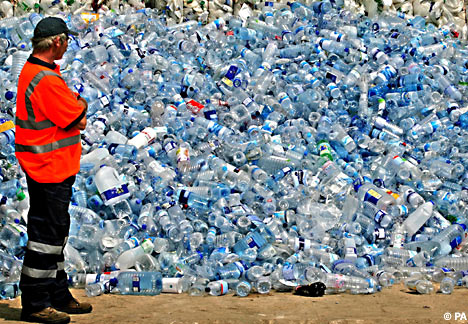
Bottled water is next on the list. Not only is bottled water a completely unnecessary expenditure in all but the most extreme cases, it is also extremely detrimental to the environment and your wallet.
Every bottle you buy and toss away has on average a 28% chance of actually being properly recycled. Keep in mind that due to improper recycling practices and the rise of plastic use around the world, parts of the Pacific Ocean contain more particles of plastic than plankton. Sea life consumes this plastic, is caught by fishing companies, and goes right back on your plate. You are eating the water bottles you throw away, that is not an exaggeration.
On average, each person in the U.S. consumes 167 plastic bottles of water each year. You can use this bottled water cost calculator to figure out your own wasteful spending, but let’s just assume you are average. If you buy 167 bottles of water per year at a low price of 1.50 per bottle (some bottles of water like Fiji brand could cost up to $5.00 per bottle in the stores) you are looking at $250 dollars per year. Compare that to buying a water filter and a reusable water bottle and the purchase already pays for itself even before the end of a year. Remember that the water filter and water bottle are almost endlessly reusable.
*Note: The one instance where it is extremely tempting to buy bottled water is while traveling where it is unsafe to drink the water. The same suggestion applies: buy a couple reusable BPA-free water bottles and just fill them on the go at your hotel/hostel. You can even get a lightweight, compact UV water purifier to bring with you and ensure your water is completely safe to drink. If you live or are traveling in North America, a great solution to bottled water is to take advantage of purified water vending machines, an idea that many bottled water companies are implementing. These vending machines can often be found outside of supermarkets.
Weddings
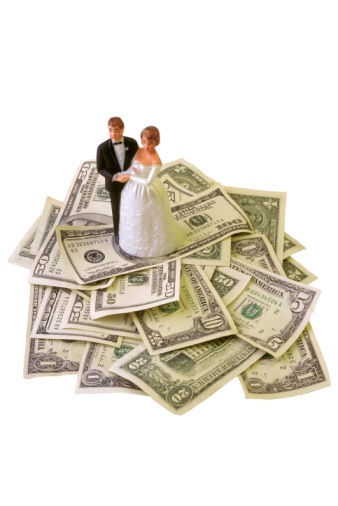
Weddings: one of the prime sources of gossip on Facebook, and one of the ultimate stressors for couples and relatives alike. Weddings are romanticized and embedded deep into the psyche of little girls from the time they are toddlers. Since time immemorial, humans have simply accepted that the culmination of success and happiness in a relationship must lead to a budget crippling, single-day expenditure called a wedding. Of course, most weddings just end in the creation of bridezillas and couples taking out a few additional loans to base the foundation of their future lives on. No wonder so many marriages end due to arguments over finances.
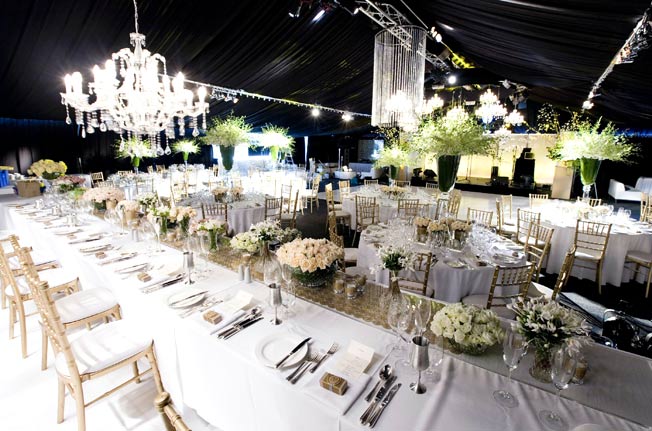
The majority of couples end up paying far more for their wedding than they had originally budgeted for. After adding up so many variables (the wedding dress, makeup and hair, DJ, decorations, food, wedding favors, invitations, photography… the list is seemingly endless) the final price of a wedding usually ends up being about the price of the downpayment on a new couple’s house. I suppose that’s easy to understand when the average price of a DJ is $748, and the average price of a photagrapher is $1,777. Even saying thank you costs big bucks, with the average price of thank you cards totaling $94.
In 2012, couples and their families in the U.S. spent an average of $28,427 on wedding ceremonies alone. This is an absolute waste of money, especially for something that lasts less than a full 24 hours. According to the Bureau of Business & Economic Research, the median personal income in the United States in 2012 was $42,693. That means that on average, couples are spending 66% of the average person’s income on a single day to celebrate, well, themselves. Spending the cost of a house downpayment on a single day to remind everyone of your love: that might be the very definition of both insanity and vanity.
You’re not a princess, princess. You’re a smart cookie. Trust me, that’s so much better.
If you are spending anywhere near the United States average on a single day, this is a great chance to improve your creativity. There are a remarkable amount of DIY wedding ideas that you can implement to ensure that your wedding is a low cost, creative, unforgettable experience. There are also many ways to have the traditional wedding you’ve been fantisizing about on the cheap by cutting out some of the unnecessary expenses. One of my favorite solutions is cutting out all the ridiculous party favors. According to Gail Johnson, a Decatur, Ga.-based wedding and event consultant:
bahmankadeh.blogspot.com
I can’t tell you [how] many times guests leave these items on the tables or take them home and toss them. Entertaining your guests with a great meal and entertainment is plenty, so there is no need to spend money on wedding favors.
Weddings are not a fairytale, they are part of a multi-billion dollar industry that wants as much of your money as possible. What’s so romantic about that?
*Note: Even the prospect of marriage isn’t entirely necessary nowadays. Although there are a great deal of federal benefits afforded to married couples, domestic partnerships and civil unions are a great option as well. Check out your state policies to see if a civil union or domestic partnership is a better alternative for you and your significant other. Remember, marriage does not equate to true love.
Dishonorable Mentions:
Paper Towels
One ton of paper towels is equal to 17 trees and 20,000 gallons of water. 3,000 tons of paper towels are produced in the U.S. each and everyday. That means that each day approximatley 51,000 trees and 60,000,000 gallons of water are used so that Americans can dry their hands.
The solution is simple. Instead of shelling out clams for disposable paper towels each time you go the supermarket, make a one time purchase and buy reusable dish towels instead. It costs $13 for a 12 pack of reusable cotton dish towels. Throw them in the wash when they get dirty, dry them, and repeat. I know Bounty brand is tempting, but it destroys the bounty of our environment!
Diamonds/Jewelry
Many people purchase diamonds and jewelry as gifts that symbolize true love. This was not always such a widespread practice though. Giving a diamond ring as an engagement gift is only about a century old. Furthermore, the only reason people do it, as usual, is because a very clever business convinced all of us that it is not only a great idea, but a crucial one. Oh well, at least diamonds and other precious jewelry are a great investment right? Wrong. This myth has been dispelled time and time again.
The value of jewelry rises at about the same rate of inflation, but good luck selling your jewelry at even half that price. The biggest issue with trying to sell jewelry is that high-end jewelry stores generally do not buy back precious stones and metals. The amount they would offer sellers would be embarassingly low as they would have to offer them the wholesale price, not the insanely high mark-up price that we all pay.
Diamonds and jewelry are a horrible waste of money and the very opposite of a smart investment. You’re better off recalibrating your societally learned bourgeoisie tastes and heading to Etsy.com for truly unique, creative, and beautiful jewelry. Besides, is it really worth putting so many eggs into one basket. Owning a $5,000 dollar diamond ring means that if your ring is lost or stolen, so are all those greenbacks the ring is worth.
Keep in mind that an unknown amount of diamonds on the market are blood diamonds, and it is very hard to be sure of the source of your precious stones. When you flash your bling-bling, there’s a good chance you are announcing to the world that you happily support slavery, suffering, and mass death. Support Etsy instead.




 Paper Towels
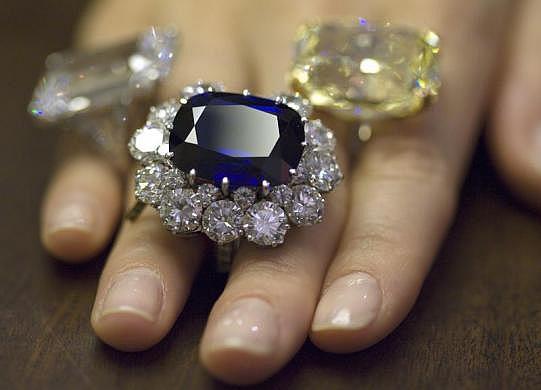 The value of jewelry rises at about the same rate of inflation, but good luck selling your jewelry at even half that price. The biggest issue with trying to sell jewelry is that high-end jewelry stores generally do not buy back precious stones and metals. The amount they would offer sellers would be embarassingly low as they would have to offer them the wholesale price, not the insanely high mark-up price that we all pay.
 Wondergressive