-
DNA Origami: The Art of Folding DNA
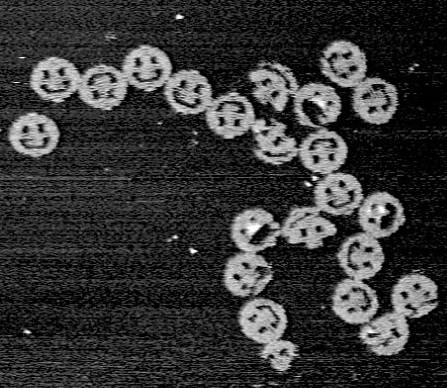

http://www.dvice.com/ DNA origami is a field you’ve probably never heard of, but ask a biologist, and they will probably be able to tell you their favorite artist. A new study has just confirmed that biotechnologists are now able to fold up DNA into various shapes and forms in a matter of mere minutes.
Biotechnologists use short DNA strands to hold a longer, folded strand in place to create different forms like the smiley faces pictured above. Hendrik Dietz, a biophysicist at the Technical University of Munich in Germany, and his colleagues have folded 19 different DNA shapes, including cylindrical, brick-like and cog-like objects. The DNA takes on its new shape in a matter of minutes by heating the strands to a very specific point somewhere in the range of 45 °C and 60 °C. Each particular temperature in this range corresponds to a specific shape.
Dietz and his team observed repeatable results with yields that approached 100%.
For future origami projects, Dietz wants to focus on designing nanostructures.
With optimal folding temperatures close to 37 °C, the temperature at which mammalian cell cultures are grown, so that DNA machines could one day be used in biological settings…The results point to similarities with protein folding in spite of chemical and structural differences. The possibility for rapid and high-yield assembly will enable DNA nanotechnology for practical applications.
The art of tomorrow can’t even be seen with the naked eye, which is, in my opinion, preferable to seeing a few lines and a rectangle being sold for millions of dollars. Seems to be the trend nowadays.
Sources:
-
Cancer Cells Avoid Chemotherapy
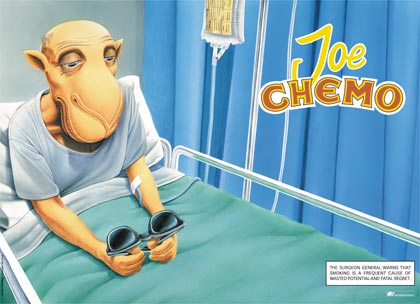
sites.psu.edu Well, surprise surprise, chemotherapy isn’t good for you. No, not just because it is astronomically expensive, involves hellish symptoms, and is frequently ineffective. A new study has revealed that cancer cells actually avoid chemotherapy by becoming dormant.
Clever little tumors! Toronto Scientists believe this is why relapse is so common.
Read the article for more specific information, but here’s a little highlight for what the scientists beleive is happening:
“Dick, whose team grew human colorectal cancers in mice for the research, says only one in every several thousand cells in a tumour can actually drive its growth.
And many of these tumour drivers are susceptible to chemotherapies because most of the drugs now used in cancer treatment target cells that multiply at abnormal speeds — a signature of the disease in all its forms.
But if some of these stem-cell-like cancer drivers are dormant — in effect hiding their ability to rapidly replicate — the drugs will pass them over.
“Some of (the cancer driver cells) are actually quite sensitive (to chemotherapy) and other ones, particularly those ones that come from these so-called dormant cells are much more resistant,” Dick says.
“And that can be responsible for relapse.””
For more information regarding the driving force of cancer and other non-traditional, albeit highly effective ways to stop it, give this article a read.
Sources:
The Star: Cancer cells hide by going dormant, Princess Margaret study finds
breaking bad, cancer, cancer cigarettes, cancer side effects, cancer symptoms, chemo, chemo bad, chemo side effects, Chemotherapy, chemotherapy dormant cancer, chemotherapy side effects, chemotherapy works, colorectal cancers, Dick, DNA, do i have cancer, dormant cancer, dormant chemo, health, joe camel, joe camel chemo, John Dick, research, stem cell, target cells, tumor -
Brazilian Prisoners Read Their Way to Freedom

http://www.case.edu Brazil’s “Redemption through Reading” program has announced that it will offer to reduce prison sentences for inmates in high security prisons by four days (up to a maximum of 48 days per year) for each book they read. They will also need to submit a well written book report proving their comprehension.
The program is an effort to reduce recidivism through education and provide incarcerated men and women with a different worldview. Brazil will test out the program’s efficiency with criminals from four high-security prisons. They will have 4 weeks to read each book and write a book report.
So far there is no approved book list or detailed requirements. I can’t imagine The Anarchist Cookbook or Prison Escape would be appropriate reading material.
Sao Paulo lawyer Andre Kehdi stated that:
“A person can leave prison more enlightened and with an enlarged vision of the world.”
Many people in favor of the program argue that studies all over the world regarding prisons suggest that
“long periods of isolation with little mental stimulus contributed to poor mental health and led to intense feelings of anger, frustration, and anxiety.”
Hopefully reading and writing can provide adequate mental stimulus to ensure prisoners never return. However, reading and writing aren’t the only approach being tried on inmates to reduce recidivism. In America we’re trying some new techniques too. From puppies to entrepreneurship, recidivism is being tackled head on.
Sources:
The Globe and Mail: Brazilian Inmates Offered Reduced Sentences for Reading Books
Huffington Post: Prison Programs Take Innovative Approach To Reducing Recidivism
Anarchist Cookbook, andre kehdi, ao paulo, Brazil, brazil literacy, brazil prison, brazil prison book, brazil prison reading, Crime and Justice, current-events, incarceration, intense feelings, libya, literacy, Monday Night Football, politics, poor mental health, prison, Prison escape, prison literacy, Prisoner, Recidivism, redemption through reading, security prisons -
2800 Year Old Lake Life Survives in Complete Isolation
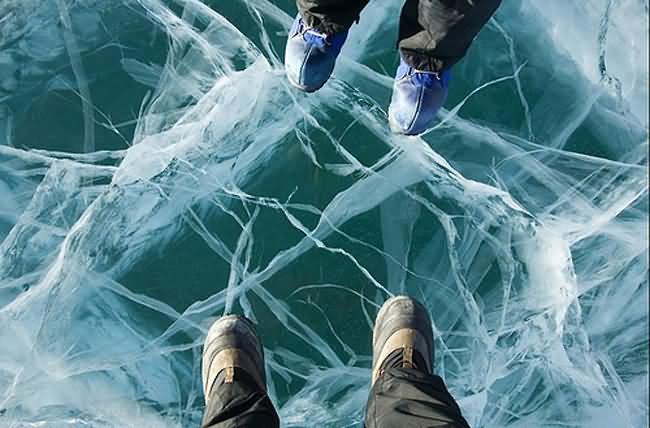

http://www.mediadump.com Scientists have discovered thriving bacteria living in Lake Vida in East Antarctica, a lake that is seven times as salty as the sea, pitch black, and 13 degrees below freezing. Most interestingly, it has been buried for over 2800 years under 20 meters of ice.
The scientists believe that the bacteria, shut off from sunlight for 1000’s of years, evolved to be able to survive by metabolising hydrogen and oxides of nitrogen that Vida’s salty, oxygen-free water has been found to contain.
The team hopes this will reveal information about potential life living under and within ice on other planets and moons.
Peter Doran of the University of Illinois, Chicago explains that:
Lake Vida is a model of what happens when you try to freeze a lake solid, and this is the same fate that any lakes on Mars would have gone through as the planet turned colder from a watery past. Any Martian water bodies that did form would have gone through this Vida stage before freezing solid, entombing the evidence of the past ecosystem.
The team’s next expedition, which started on November 25th, will be drilling into Lake Ellsworth, also situated in Antarctica. It is 3 km deep. If they do find living bacteria in Ellsworth too, I think it’s safe to begin preparing for the Martian greeting ceremony.
Sources:
New Scientist: Lake life survives in total isolation for 3000 years
https://wondergressive.com/2012/08/17/life-its-all-over-the-place/
Antarctica, bacteria ice, bacteria ice antarctica, best water, best water purifier, body of water, can i drink tap water, climate, East Antarctica, europa ice life, fresh water, lake, lake ellsworth, lake ellswoth, Lake Vida, lake water, life on mars, Mars, mars ice, mars ice life, mars water, Martian, nature, Peter Doran, planets and moons, rei, river, signs of life, tap water, uic, uiuc, University of Illinois, university of illinois chicago, Vida, water, water cleaner, water purifier -
Stem Cells Created Using Urine

memegenerator.net Researchers have discovered and outlined a way to create generations of stem cells using just your mellow yellow.
Breakthrough after breakthrough has been made regarding stem cells, and this is the newest one. Using ‘exfoliated renal epithelial cells present in urine,’ researchers have designed a method to create stem cells that is:
“simple (30 ml of urine are sufficient), cost-effective and universal (can be applied to any age, gender and race)… reasonably quick—around 2 weeks for the urinary cell culture and 3–4 weeks for the reprogramming—and the yield of iPSC colonies is generally high—up to 4% using retroviral delivery of exogenous factors.”
As capabilities have expanded and advanced, there are simply no valid arguments left, ethical or logical, against using stem cells. The American Medical Association explains why stem cells are medically important:
For decades, researchers have been studying the biology of stem cells to figure out how development works and to find new ways of treating health problems. Because stem cells can give rise to any tissue found in the body, they provide nearly limitless potential for medical applications.
Save a life, pee in a cup.
Sources:
Generation of human induced pluripotent stem cells from urine samples
American Medical Association: Basics of Stem Cell Research
age gender and race, BBC, biology, Biotechnology, Cambridge University, Cell (biology), environment, feces, Induced pluripotent stem cell, pee, pee stem cell, renal epithelial cells, science, stem cell, stem cell ethics, stem cell urine, stem cells, toilet stem cell, Translational medicine, urine, urine cure, urine researchers, wee stem cell -
Woman Needs a New Ear, Grows a New One on Her Arm
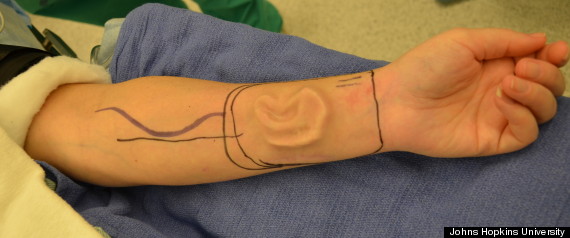
Photo Credit: Johns Hopkins University After having her ear removed to stop the spread of cancer, doctors at Johns Hopkins Institute decided Sherrie Walter needed a new one. The doctors used bone, cartilage, skin, and arteries to build a new ear, and then stored it under her forearm to allow it to grow.
The ear is in fact an exact replica. After having it surgically attached to her head, the doctors added an internal hearing aid. Walter was filled with hope and relief during the entire ordeal.
“When my doctors told me reconstruction was possible, I thought it was too good to be true; it sounded like science fiction. Just learning that reconstructing my ear was doable gave me sufficient physical and emotional strength, as well as the confidence I needed to go through with the surgeries.”
Finally a point to having so much free limb space. The days when peoples’ arms and legs are lined with spare noses, ears, fingers and toes is quickly approaching.
Sources:
Johns Hopkins: Johns Hopkins Sugeons Use Woman’s Own Tissue to Rebuild Ear Lost to Cancer
Huffington Post: Ear Reconstruction Utilizes Patient’s Tissue, Forearm In Innovative Surgery
-
First Time Photo Captures Double Helix Structure of DNA
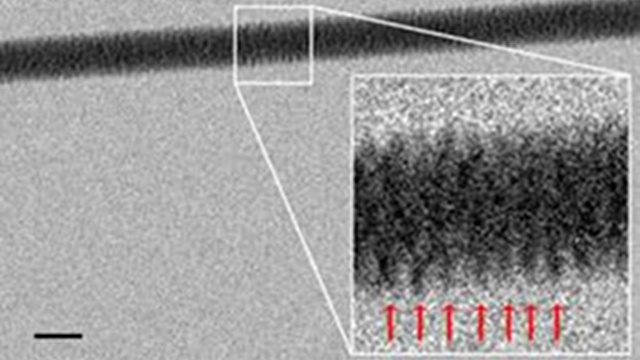
http://io9.com/ For the first time in history scientists have taken a photo that shows the double helix shape of DNA clearly. Using an electron microscope, Enzo di Fabrizio from the University of Genoa, Italy, did what was once thought to be impossible.
The structure of DNA was first hypothesized (and later understood to be spot on) by Francis Crick, who received a Nobel Prize for discovering the structure. Interestingly, after remaining unable to piece together the details of the structure for some time, Crick was reportedly able to comprehend it fully while under the effects of LSD.
After Crick and his colleagues made the discovery, the double helix structure was further validated using x-ray crystallography. Even that was still just convincing speculation. Despite learning that DNA is a double helix in school, no one had any actual visual evidence for this claim and it remained a theory backed by some pretty solid mathematics.
Well, solid mathematics is now backed by solid photography. Case closed.
Take a good, long look at that picture – that’s what you look like under an electron microscope.
Sources:
aviation, climate, Crick, DNA, dna electron microscope, double helix, double helix electron microscope, double helix structure, Electron microscope, electron microscope photo dna, enzo di fabrizio, Fabrizio, Francis Crick, history, Italy, LSD, LSD crick, lsd dna, lsd francis crick, Nucleic acid double helix, politics, science, transportation, University of Genoa -
Scientists Develop 3D Printer Capable of Printing Cartilage That Works!
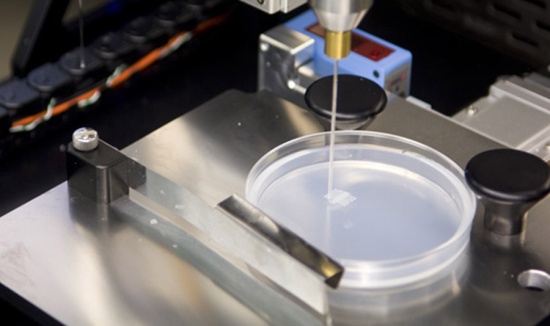
http://www.modulab.ro It’s not so hard printing cartilage If you haven’t heard about 3D printing, you are in for a mind boggling surprise. Now, researchers have taken the realm of 3D printing a whole giant leap further; they have successfully tried printing cartilage. Scientists and engineers have been developing 3D printers for a while now, with companies using them to create tools, three-dimensional diagrams, or spare parts. There are a variety of inks used in 3D printing and human tissue is now being experimented with.
Related Article: 3D Printing for All: New, Cheap 3D Printers
The 3D printing industry is only just beginning, and it is seeing exponential growth through the two main companies that hold nearly all of the patents and profits thus far; 3D Systems Corporation, and Stratasys, Inc. These two companies are on the edge of some very exciting technological developments.
The 3D tissue printer is a mix of a traditional ink jet printer and an electrospinning machine. The printed tissue seems very promising as it was:
“tested on mice and after eight weeks it had developed the structures and properties of real cartilage, demonstrating its potential use in humans.”
In the future, researchers say clinicians could develop cartilage specific to the needs of patients. For instance, an MRI scan of the body part, such as the knee, would provide a sort of blueprint and then matching cartilage could be created. Researchers are speculating that doctors in the future will have the ability of creating tissue and printing cartilage tailored to individuals so that it will be accepted into the body quicker.
Related Article: 3D Printing: The Next Revolution in Creativity
They could use MRIs or other imaging devices to create a blue print and then head to the printer to easily print off some new tissue for their patients. Printing cartilage is just the first step in personally tailored 3D printing for medicinal purposes. The possibilities of 3D printing are endless. This technology will change the future of the world and they way that economies work. Why buy something when you can print it at home? The future looks good.
Related Article: 3D? Lets go One More! 4D!
O brave new world!
Sources:
Youtube- National Geographic Known Universe S03E06 Print Tools
The Star- Scientists develop 3D tissue printer that prints cartilage
3d printer organs, 3d printer stock market, 3D printing, bio printing, bioprinting, cartilage, Electrospinning, gadgets, gaming, health, Inkjet printer, Magnetic resonance imaging, medicine, Printing, printing cartilage, printing muscle, printing organs, printing tissue, stock market, Stratasys, technology, videogames, Wake Forest Institute for Regenerative Medicine -
Time-Lapse Video of Every Nuclear Explosion Around the World, and Who Launched it

Japanese artist Isao Hashimoto has created a time-lapse video featuring a simple map of the world that highlights the location and exact date (to the month and year) of every nuclear explosion around the world taking place from 1945 -1998.
It’s absolutely jaw-dropping that over 2050 nuclear bombs have been exploded to date, with over 1000 of them taking place right in the American South West. Is it any wonder we all have cancer? Governments are now realizing that those ‘safe tests’ may be the cause of some 15,000 cancer cases around the world. Earth is a closed system, that fallout doesn’t go anywhere but into our food, water, and air.
If you are interested in learning more about nuclear testing and the history and specifics of it, check out the amazing documentary Trinity and Beyond. It features footage and information regarding the very first nuclear test ever, as well as information and more footage of future, more devastating tests from around the world.
Here is a fantastic description of the video, along with the description from the artist’s site:
“Japanese artist Isao Hashimoto has created a beautiful, undeniably scary time-lapse map of the 2053 nuclear explosions which have taken place between 1945 and 1998, beginning with the Manhattan Project’s “Trinity” test near Los Alamos and concluding with Pakistan’s nuclear tests in May of 1998. This leaves out North Korea’s two alleged nuclear tests in this past decade (the legitimacy of both of which is not 100% clear).
Each nation gets a blip and a flashing dot on the map whenever they detonate a nuclear weapon, with a running tally kept on the top and bottom bars of the screen. Hashimoto, who began the project in 2003, says that he created it with the goal of showing”the fear and folly of nuclear weapons.” It starts really slow — if you want to see real action, skip ahead to 1962 or so — but the buildup becomes overwhelming.”
From the artist:
“This piece of work is a bird’s eye view of the history by scaling down a month length of time into one second. No letter is used for equal messaging to all viewers without language barrier. The blinking light, sound and the numbers on the world map show when, where and how many experiments each country have conducted. I created this work for the means of an interface to the people who are yet to know of the extremely grave, but present problem of the world.”
Sources:
CTBTO: Isao Hashimoto “1945-1998”Youtube: Trinity and Beyond Clip
china nuclear test, france nuclear test, Isao Hashimoto, Manhattan Project, north korea, nuclear explosion time lapse, nuclear test, nuclear test world, nuclear testing, nuclear testing america, nuclear testing united states, Nuclear weapon, Nuclear weapons testing, Pakistan, pakistan nuclear test, russia nuclear test, time lapse nuclear tests, Time-lapse photography, Trinity, trinity and beyond, UK nuclear test -
Volunteering is Good for Your Health

http://www.flaglerdemocraticparty.com A study done by United Health Care has determined that volunteering is good for both emotional and physical health of the volunteer. This is an unexpected benefit of volunteer activities. All the while I’ve thought volunteering only helps the persons targeted to be helped by the organizations, but alas I was wrong and it helps physically and emotionally all involved. So why not go get involved in your community now?
There are many resources listed below to get you started. With benefits for everyone how can you not want to jump right in?
Sources and Resources:
United Health Care: Volunteers Report Improved Physical, Emotional Health
National and Community Service
Wonder about your world…

Take the plunge down the rabbit hole of insanity and wonder in this fast-paced, nonstop psychological thriller that will leave you questioning the very nature of reality and beyond. Part thriller, part romance, part existential horror, A Dream of Waking Life delves into lucid dreaming, psychedelics, existential ontology, video games, the nature of love, the nature of reality, and more.

Mendel’s Ladder delivers an adrenaline-fueled journey set on a dystopian future Earth, brimming with high-stakes action, adventure, and mystery. This epic series opener plunges readers into a world filled with diverse cultures, heart-pounding battles, and characters who will captivate your heart and imagination.

“E.S. Fein is raising the bar for quality as it’s a very well-written and thought-provoking book…There are points and themes in the story that could be discussed for eons as people will have their own idea on where it leads. It’s a book I would highly recommend.” – Andy Whitaker, SFCrowsnest
 Wondergressive