
-
Martian Spiders: Seasonal Life on Mars


http://www.npr.org/ Since 1998, scientists have speculated on what thousands of mysterious, black, spidery shapes covering Mars might be. In 2010, scientists were able to capture more detailed images from only 200 miles away and we have discovered that the strange Martian sand growths are none other than: a persistent mystery.
The black specs dot huge regions of the Martian expanse. They are sighted almost exclusively on the sunny side of ridges in the Martian deserts. The strangest part of this mystery is that the black growths appear every Martian spring, popping out of the sand from seemingly nowhere, and then disappear when Winter comes. 70% of the time they reappear in the same exact spot as the year before. They even seem to expand as the sun heats up the surface.
So, what the heck is growing all over the red planet and can we stuff our faces with it? We still have no idea. Some theories suggest that the sun is heating up an underground layer of CO2, which expands and bursts into the air like geysers on Earth, carrying basaltic sand and rocks in its wake. Other theories suggest that they may be photosynthetic microorganisms, sunbathing and warming themselves in the light of the Martian sun.
My guess is that they are Martian bears, foraging in spring and hibernating in winter. Cute, cuddly, deadly Martian bears.
Only time will tell. Time, and sweet, sweet technology.
-
Heating Yourself, Not Your House


http://www.lowtechmagazine.com/ Here is an awesome article on heating and insulating the self first and the house or space second. It talks about self insulation.
Modern thermal underclothing offers the possibility to turn the thermostat much lower without sacrificing comfort or sex appeal.
Of course its great to insulate your house, but should we all really be running about our houses naked in the middle of winter? I think we could all be doing the world a little favor and save some energy (not to mention moolah!) by wearing a nice sexy undershirt.
And then there’s THIS article on efficient heating of the space around one’s self. This blog post is pretty epic. She talks about different techniques to heating the person instead of the whole space. She goes through a whole trial and error process and the results of it. I’ll admit her techniques won’t work for everyone, but if that stops you, maybe you didn’t really want to do it in the first place. She managed to save buckets (I’m presuming one could fill at least one bucket with 250 crumpled ones) of money, and for people with larger houses this could save even more. She has charts and graphs and seriously covers all the questions you might have. Excellent inspiration.
So there it is. Maybe we should be turning the spyglass inward and focusing on ourselves this season. At least as far as the heating goes.
Sources:
blankets, buckets of money, cheap, city, clothes, cold, country living, efficient, efficient heating, electric bill, environment, heat lamps, heated keyboard, heated mouse, heater, heating blanket, home heating, homes, house heating, houses, insulate, insulation, long underwear, naked, save energy, save money, saving money, self improvement, sexy, thermal, thermal underwear, underclothing, undershirt, underwear, warm, winter -
Landmines Suck: How a New Invention is Changing the Danger of Landmines


curvelive.com.stage.gs So, landmines are heart-breaking life destroyers and apparently the Earth has got more than a few lying around. Not to mention it’s pretty darn difficult to get rid of landmines safely. So what are we doing about that? Well I wasn’t doing much until just recently when I discovered my monetary support could go to this guy, Massoud Hassani. He’s working on this gadget to help safely eradicate those life destroying contraptions. The best news? You can help him out if you so feel inclined.
Check out his kickstarter Mine Kafon Madness for more information
Check out his TED talk
-
The Obese Shall Inherit the Earth


discountdivah.wordpress.com As a species we are round, plump, overweight, porky, of ample proportions, jelly-bellied, elephanty- call it what you want. We are fat! We have evolved from scavenging bushes and laboriously hunting animals to survive a few more worrisome nights, to covering ourselves in chocolate and cream for sexual pleasure, all in the blink of a cosmic eye.
With that image in mind, hang on to your flab world, I have some back breaking news: it’s official, we are obnoxiously, and fatally fat. The shocking truth is that we are now so fat that obesity is currently a bigger global health crisis than hunger. It’s official, according to a new study from The Lancet, obesity the leading cause of disabilities around the world. The health burden from high body mass indexes now exceeds that due to hunger. The ‘big boned’ excuse isn’t going to cut it anymore.
Approximately 500 researchers from 50 different countries compiled health date from 1990 to 2010 into the Global Burden of Disease report. The numbers aren’t pretty.
Despite showing extremely high global immunization rates, the report revealed that:
Every country, with the exception of those in sub-Saharan Africa, faces alarming obesity rates — an increase of 82% globally in the past two decades. Middle Eastern countries are more obese than ever, seeing a 100% increase since 1990.
Ali Mokdad, co-author of the study, explains that:
The so-called ‘Western lifestyle’ is being adapted all around the world, and the impacts are all the same.
So what has obesity paved the way for as far as impacts go? For the first time in history, noncommunicable diseases like heart disease and diabetes are the top reasons for years spent sick.
Mokdad added that:
All these problems are tied to obesity. We’re even seeing a large percentage of people suffering back pain now. If we could lower the obesity rates, we’d see the numbers of noncommunicable diseases and pain decrease as well.
The report wasn’t all negative at least. People are living much longer than what was projected in 1990. Men have gained 10.7 years of life and women have gained 12.6. But, even those numbers are tinged by obesity, as the quality of life during old age has dramatically decreased. On average, people all over the world suffer from illness and pain for the last 14 years of life.
Mokdad points out that:
We’ve figured out how to keep the person who suffered a stroke alive, but then they’re living disabled for years afterward. That’s not the quality of life that person expected.
Noncommunicable diseases are a huge problem for the world economy and your pocket as well. A 2011 report from the World Economic Forum and Harvard School of Public Health outlines how these diseases will account for $30 trillion over the next twenty years, with an additional $16 trillion in mental health care costs.
Health professional say that stress is the greatest killer, and obesity is one of the most harmful stresses we can put on our bodies and lives. Let’s make sure we are addressing this issue on all levels, communally and individually.
Here is my number one hint in 2013 for losing weight and becoming healthier overall; drop the soda-pop.
Take your last high fructose filled gulp and never look back.
Sources:
CNN: Global report: Obesity bigger health crisis than hunger
The Lancet: Global Burden of Disease Study 2010
World Economic Forum: The Global Economic Burden of Non-communicable Diseases
CNN: Time to address a neglected global epidemic
HuffPost: Soda, Other Sugary Drinks More Firmly Tied To Obesity In New Studies
Wondergressive: Obesity and Low Carb Fads: Where Did We Go Wrong? (Part 1)
ali mokdad, cnn, corn syrup, fat american, fat guy, global burden of disease report, global fat, global health crisis obesity, global obesity, high fructose obesity, High-fructose corn syrup, jabba fat, jabba the hutt, obese, obese america, obesity, obesity global, obesity USA, overweight, research, sexual pleasure, The lancet -
Ask an Astrobiologist: Global Warming, and What to Expect
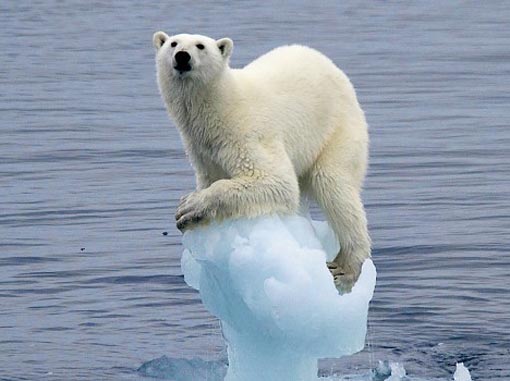
http://southweb.org/ NASA scientists have been answering astrobiology questions submitted by the general public through a new feature on their website called Ask an Astrobiologist.
I would like to share a particular question and answer with you as I find it to be fair, and relatively pertinent.
The question submitted:
I’ve noticed in many of the answers you state that the far more pressing threat to our planet is global warming. However, I’m wondering what specific threats humans will face if the carbon dioxide levels continue to increase, in the worst-case scenario. What can ordinary people be doing to address the problem of climate change?
David Morrison, Astrobiology Senior Scientist answered with this response on December 27, 2012:
We are already seeing the impacts of global warming. The rapid shrinking of the arctic icecap has opened the northeast passage to shipping, and within a decade it will also open the northwest passage. The melting arctic ice and permafrost are exposing oil and mineral deposits for exploitation, but also endangering arctic wildlife. Most important, the melting of arctic snow and ice darkens the surface, leading to rapid warming during the summer and a shift in weather patterns over North America. Loss of ice from Greenland and Antarctica is also contributing to sea level rise, making destructive storms like Sandy much more likely. The recent severe droughts in the U.S., Russia, and Australia can also be traced to global warming. Within a few years, the accelerating loss of ice from the Himalayas will lead to the summer drying up of several great Asian rivers, which are the source of water for more than a billion people in China, India, Pakistan, and Bangladesh. By the middle of the century, the loss of water from the Colorado River basin and the aquifers in northern Arizona may make Phoenix and Las Vegas uninhabitable, while rising sea levels and stronger storms are likely to lead to the permanent evacuation of much of New Orleans, New York, Miami, Amsterdam, and Venice. By late in the century we can expect to lose Los Angeles, Seattle, Houston, London, Rotterdam, Mumbai, Shanghai, Tokyo-Yokohama, Dhaka, and many other large cities, as well as several small island nations. We don’t know how fast the warming and sea level rise will take place, so I can’t predict the dates for these events, but the direction is inescapable unless we stop polluting the atmosphere with carbon dioxide and methane. In the next century we might entirely lose the great icecaps of Greenland and Antarctica, which would make the situation much worse than I have described above.
Well then, so much for the future…
What are your thoughts on global warming and the future?
-
Low Carb/Low Calorie Diet Produces Compound that Blocks Effects of Aging


girlpowerinamm.blogspot.com Researchers at the Gladstone Institutes have discovered that a low-carb, low-calorie diet delays the detrimental effects of aging by producing a compound called β-hydroxybutyrate (βOHB).
Although ketone bodies such as βOHB can be toxic at high levels for people with illnesses like Type I diabetes, Gladstone Senior Investigator Eric Verdin explains that lower concentrations of βOHB actually help protect cells from “oxidative stress,” the leading cause of just about every problem associated with aging.
Eric Verdin points out that:
Over the years, studies have found that restricting calories slows aging and increases longevity — however the mechanism of this effect has remained elusive. Here, we find that βOHB — the body’s major source of energy during exercise or fasting — blocks a class of enzymes that would otherwise promote oxidative stress, thus protecting cells from aging.”
The enzymes that are blocked during calorie restriction are called histone deacetylases, or HDACs. The researchers found that HDACs keep a pair of genes, Foxo3a and Mt2, switched off. By blocking the activity of HDACs with βOHB through a low-calorie, low-carb diet, the body is able to slow, and often prevent the harmful effects of aging in all cells of the body through the activation of the gene pair.
Research has also found that a diet with low carbohydrate density, especially diets modeled after ancestral diets, lead to lower obesity rates, in many instances completely eradicating obesity.
Just another reason to say ‘no’ to the tongue’s relentless desires and take control of your body and life.
Sources:
Wondergressive: The Wonderful, Healthier, Life Changing and Life Lengthening World of Fasting
Wondergressive: Save the Food Pyramid by Cutting it by the Limbs
Wondergressive: Obesity and Low Carb Fads: Where Did We Go Wrong? (Part 1)
aging, aging diet, Alzheimer, cancer ketone, fasting and exercising, fasting ketone, fasting weight loss, gladstone aging, gladstone fasting, Gladstone institutes, gladstone ketone, HDAC, histone deacetylases, ketone alzheimers, ketone bodies, ketone diet, ketone low calories, low calories diet, low carb diet -
Fat, Poor Kids Just Got A Little Less Fat. Still Poor.

Child size please, no ice. America, we are a fat nation – the fattest in the world, in fact. I’m willing to live with that designation. No matter which way my bulbous belly stumbles, there’s a dollar menu waiting to be ravaged and a maximum drive-thru limit to be tested. I’m not ashamed to have used all 8 of my car’s cup holders, are you?
Numerous studies have linked the poor with obesity. It’s not science, it’s a common sense mentality – poor quality, horribly processed food is within the grasps, and wallets, of many Americans. However, the CDC recently reports…KIDS ARE LOSING WEIGHT!
Well, POOR KIDS ARE LOSING WEIGHT! The rich ones were always doing alright.

We’re gonna celebrate with a cereal bath. This study, based on data collected from 30 states and the District of Columbia, shows a marked decline in the prevalence of obesity in preschool-aged children in the lower income brackets. Extreme obesity, defined as a BMI of over 120% the 95th percentile, went down to 2.07% from 2.22% . Regular ‘ol obese kids dropped to 14.91% from 15.21%.
Those numbers don’t look too promising, but as Heidi M. Blanck, a co-author of the study, puts it:
The declines we’re presenting here are pretty modest, but it is a change in direction. We were going up before. And this data shows we’re going down. For us, that’s pretty exciting.
It’s a change of direction. That is what is important. This is the first study that has showed such progress, especially in the most sensitive of the population – our children.
How we’ve reached this point is uncertain, but we do know from another of Dr. Blanck’s studies, this one focusing on food marketing, that:
- The amount of money spent on food marketing to children declined nearly 20% from 2003 to 2009.
- Cereals marketed to children have averaged one less gram of sugar per serving than before.
- Marketing of the unhealthiest of cereals (between 13 and 19 grams of sugar) has been nearly eliminated.
Not only has that helped, but things like fast food places placing nutritional content on menus and Michelle Obama’s new Let’s Move! Child Care initiative providing healthy alternatives to child care centers, all can help us curb childhood obesity from ever happening.
America, keep up the good work. Soon we won’t be the laughing stock of the entire world with our jumbo sized beverages and the fashion abomination that is Jeggings.
But until then, I’ll take the large.
Sources and further reading:
http://www.nytimes.com/2012/09/13/business/mcdonalds-to-start-posting-calorie-counts.html
http://www.healthykidshealthyfuture.org/welcome.html
http://www.watoday.com.au/lifestyle/fashion/the-new-fashion-monstrosity-20100407-rrd9.html
http://diabetes.diabetesjournals.org/content/60/11/2667.full
http://money.msn.com/family-money/does-being-poor-make-you-fat.aspx
-
MIT Discovers New State of Matter and Magnetism

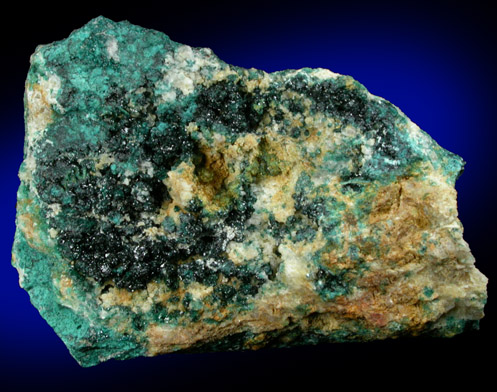
http://www.johnbetts-fineminerals.com/ I know we all learned in chemistry class that the basic building blocks of the ‘matter syndicate’ are solid, liquid, gas, and plasma, but it appears there’s a new player in town; his name is ‘quantum spin liquid.’
There are in fact many different states of matter that you’ve either never heard of, or didn’t realize was considered a different state of matter, ie. glass, or ferromagnets.
The specific quantum spin liquid that researchers at MIT have discovered is called herbertsmithite, named after, well, I’m sure you can figure that out. Quantum spin liquids, or QSLs, have a very strange type of magnetism. Unlike the magnets you stick on your refrigerator, the electrons in a QSL don’t all align with the same orientation. In fact, the internal magnetism of a QSL is constantly fluctuating. Herbertsmithite is a solid crystal, but the magnetism is in constant motion like a liquid. Despite the constant fluctuations of the magnetic orientation of the electrons in the QSL, there is a strong connection between all of the electrons, allowing this specific type of matter to have what it takes to be used in long rang quantum entanglement.
So what does that mean for us harebrained civvies? According to Young Lee, the head researcher of the discovery, this means:
…advances in data storage or communications, perhaps using an exotic quantum phenomenon called long-range entanglement, in which two widely separated particles can instantaneously influence each other’s states. The findings could also bear on research into high-temperature superconductors, and could ultimately lead to new developments in that field.
Did I just hear instantaneous long range communication, infinite cloud storage, and flying cars? Yes’m.
The truth is that this discovery will likely involve unimaginable implications.
Lee explains that:
We have to get a more comprehensive understanding of the big picture. There is no theory that describes everything that we’re seeing.
In the last decade humanity has entered the wild, wild west of the quantum future. Herbertsmithite may very well be the trusted six shooter we’ve been waiting for.
Sources:
http://web.mit.edu/newsoffice/2012/mit-researchers-discover-a-new-kind-of-magnetism-1219.html
cloud storage, ferromagnet, flying cars, herbertsmithite, long range communication, long range quantum entanglement, magnet MIT, Massachusetts Institute of Technology, matter MIT, MIT, MIT new state of matter, MIT quantum entanglement, new magnet, Quantum entanglement, six shooter, states of matter, syndicate, wild west, wild west six shooter, wild wild west -
All Your Kids are Sexting: Sex, Nudity, and Violence
A recent study has found that roughly 28% of teenagers text fully naked pictures of themselves to other people, also known as sexting. 31% of teens admitted to asking others for sexts. This means that sexting has become as trendy as bell bottoms were for your mom and dad in their psychedelic days of yore.
The study examined almost 1,000 high school students from seven public schools in southeast Texas (yes, the study is confined to Texas, so the data is extrapolated, but unless this particular region of Texas is the sexting capital of the world, it’s a fairly safe extrapolation). The participants were 14 – 19 years old and 55% were female. Interestingly, the study found that male and female teens sext at equal rates, though girls were asked far more often to send naked pictures than guys were.
Sexting also seems to be age related, as the study found that:
More 16- to 17-year-olds sexted than their younger and older peers. Sexting requests also peaked when teens were in that age range and dropped off at age 18.
Some important highlights regarding sexting include:
- White teens sext the most, far more than any other race.
- There is a strong correlation between sexting and sexual behavior, including unsafe sex.
- Girls are bothered the most to send sexts.
- Socio-economic status has no effect on the rate of sexting.
- Most importantly, due to vague laws, millions of teens may be held liable for child pornography charges, leading many to urge law makers to create more specific child pornography laws.
So what does all of this mean? Should we start destroying cell phones with bibles and ask the Westboro Baptist Church to pray for America’s salvation? Is America destined to become a sex-ridden cesspool of debauchery and child porn? No. I feel like a broken record when I say this, but what this means is that we all need a paradigm shift in the way we think, as well as more thorough and realistic education regarding the topic. We are sexual beings, and no matter how much we try to repress this fact, it remains true.
Let’s begin:
Sex is taboo in many countries around the world, and America is far from the exception. Our bodies are a constant source of shame and seen as something to hide from the world and ourselves. God forbid that a girl is curious about her vagina, or a young boy about ejaculation! On the other hand, violence, gore, and war is glorified and constantly portrayed as heroic, noble, and necessary. Why are we so afraid of telling our kids about the most essential part of life, the act that makes life possible? Our Puritan ancestors would be proud, but the progressive future is shaking a giant, phallic fist at us.
George R.R. Martin, the author of the Game of Thrones series, explains perfectly the problem with our culture regarding sex:
I can describe an axe entering a human skull in great explicit detail and no one will blink twice at it. I provide a similar description, just as detailed, of a penis entering a vagina, and I get letters about it and people swearing off. To my mind this is kind of frustrating, it’s madness. Ultimately, in the history of [the] world, penises entering vaginas have given a lot of people a lot of pleasure. Axes entering skulls, well, not so much.
We bring our children to movies featuring Arnold Schwarzenegger taking lives with every pull of his trigger finger but cover their eyes when a naked body is shown on screen. When boys get into fights we say “boys will be boys,” but when a girl has her first kiss we tell her to stay away and that sex will ruin her life. The spread of sexting is a direct reflection of a culture, and what a culture represses and praises. Curiosity killed the cat, and it also forced kids to resort to sending naked pictures of themselves. That’s all this is, simple curiosity and pubescent excitement. The age related aspect of sexting proves it. Let’s take one more look:
More 16- to 17-year-olds sexted than their younger and older peers. Sexting requests also peaked when teens were in that age range and dropped off at age 18.
Now, this situation isn’t a simple black and white, on the contrary, it is criss-crossed with the complexities of media, politics, substance, religion, parenting, education, and more. Here is something to consider when thinking about how to raise your own children though: not every westernized, developed society has the same cultural values regarding sex, nudity and violence as the United States, and guess what, they are doing fine.
Let’s consider nudity. I live in South Korea right now, and one of the cultural pastimes in Korea is going to the bath house, or in romanized Hangul, the jimjilbang. Males and females go into separate rooms and just generally relax in baths and saunas of different temperatures. The entire time you are naked. Little boys and anciently old men ‘hang out’ around each other with everything hanging loose. I must admit, as a man raised in Midwest America who is used to changing his underwear using the old ‘under the towel’ trick, the bath houses were quite a shock and took a little while to get fully used to.
When I traveled to Scandanavia, I noticed that they had a totally different view of nudity, and gender roles as well. Many of the magazines depicted topless women, and lying naked on the beach seemed pretty common in Oslo, Norway. I even saw women breast feeding their babies in public without the slightest bit of self-conscious worry.
Simply put, people in countries like these learn to be comfortable with their bodies, and grow up with a realistic understanding that the men and women they see in the movies and in pornography are not the norm.
Could sexting be related to a repression of our natural bodies? Could it be a response to a childhood of being more scared of being naked around others than anything else? I don’t know, but I do know that in America the only naked bodies, or semi-nude bodies that children see are those of perfectly sculpted, often photoshopped models/ celebrities. In a country where celebrity worship syndrome affects a large portion of the population, it is understandable that the American public has a very warped, unrealistic and shallow view of beauty and themselves.
Every country has a different view of sex and sexual education, but what is common is that sex-ed seems to be lacking in the realistic department. Unless you really are a time traveling 18th century Puritan, you will agree that teens are going to engage in sexual behavior whether we like it or not, no matter how much we like to believe our children are innocent angels devoted to celibacy. Face it, your child is a ravenous horn dog just like you, and pretending otherwise is only going to confuse the hell out of him or her and make them think there is something wrong with them when they start masturbating incessantly.
Sexuality and violence are also portrayed in a completely different light in other countries. In fact, they have utterly different rating systems. For example, in Sweden it’s totally acceptable for a 13 year old and even younger to see a movie with a scene depicting sex (I’m not referring to hardcore porn, just a scene where sex is obviously taking place). On the other hand, it is inappropriate for a 13 year old to witness any type of violence, even scenes that we Americans would consider sissy stuff, like a punch or a slap. Perhaps that’s why Sweden has one of the lowest intentional homicide rates in the entire world (to be fair, although Sweden has one of the lowest homicide rates, it does have a relatively large rape problem. )
It is very difficult to accurately and fairly measure crime rates worldwide as all countries have different definitions of crime as well as differing methods for obtaining information. One thing is for sure though, the United States is extremely violent!
It’s pretty obvious here that the media and culture at large are the leading factors in emerging sexual behavior and violence as a whole. What can we do about it? Be an honest, open parent.
Don’t punish your child for being curious and excited about the world they live in. Just because your child is engaging in sexting does not mean they are some sex crazed, immoral nympho. They are curious about their body and sexuality, and would benefit greatly from open conversations with you regarding sex and sexual behavior. Be honest with your children. Do your job and be a guide. The less you tell them, the more you are endangering and limiting their lives.
Sources:
http://techcrunch.com/2012/07/06/teenage-sexting-is-becoming-the-norm/
http://www.nytimes.com/2010/03/21/us/21sexting.html?pagewanted=all&_r=1&
http://en.wikipedia.org/wiki/Jjimjilbang_being_naked
http://scienceblogs.com/aardvarchaeology/2007/03/14/scandinavian-attitudes-to-nudi/
http://uk.lifestyle.yahoo.com/blogs/yahoo-lifestyles/models-look-photoshop-200407503-15.html
http://en.wikipedia.org/wiki/Celebrity_worship_syndrome
http://www.youtube.com/watch?v=omBfg3UwkYM
http://en.wikipedia.org/wiki/Sex_education#Other_countries
http://en.wikipedia.org/wiki/Motion_picture_rating_system
http://en.wikipedia.org/wiki/List_of_countries_by_intentional_homicide_rate
http://archives.huntingtonnews.net/39907%20rape%20in%20sweden
http://en.wikipedia.org/wiki/Violent_crime
http://en.wikipedia.org/wiki/Crime_statistics
http://www.bjs.gov/index.cfm?ty=tp&tid=31
america violence, bath house, bath house korea, bath house world, celebrity worship america, celebrity worship syndrome, homicide rate america, honest and open parent, jimjilbang south korea, norway, nudity sweden, oslo, paradigm shift sex, parenting sex, rate of violence america, sex ed, sex ed by country, sex sweden, sex teens, sexting, sexting increase teens, sexting teens, sexual education, sexual education america, south korea, Us homicide rate -
Fridge Free Food: Kick Your Obsessive Storage Habit & Keep Food Fresher Too


http://pijamasurf.com/ As a 21st century man, I’ve never thought of going a day without my refrigerator. I have a fit when my filter makes my water murky, I get pissed when my ice maker stops churning out cubes, and boy…you don’t want to be around me when the crusher jams.
I’ve never thought back to the simpler times when we didn’t have technology to aid us with man’s most basic of needs. What did we do to keep our food fresh hundreds of years ago? They didn’t shop Costco in bulk, did they?
In this article from the I-wanna-be-everlasting-green Treehugger blog, they describe a designer’s high-ingenuity, low-tech concepts to make food safety and storage simple.
From an egg storage system that checks age by water displacement, to sticking carrots downwards in sand to regulate humidity, this article is chocked full of interesting information about how designer Jihyun Ryou unlocks nature’s basic rules for longevity in your mind. Kick the fridge, stop wasting so much food, and get back to your roots.
Did you know that storing apples with your potatoes prevents them from sprouting those roots? It’s because of the ethylene gas that apples give off and that potatoes absolutely love.
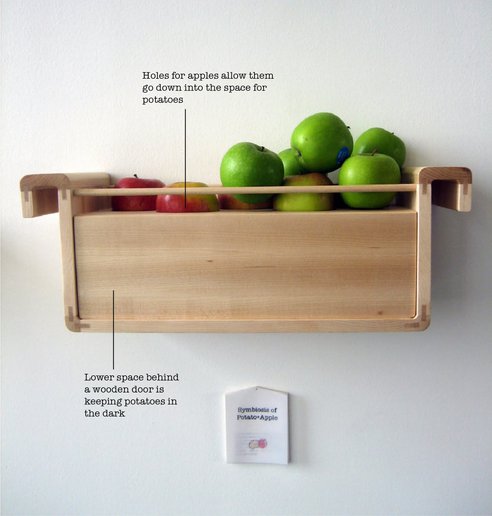 Cool, huh?
Jihyun explains my plight:
We hand over the responsibility of taking care of food to the technology, the refrigerator. We don’t observe the food any more and we don’t understand how to treat it.
She hit it right on the dot.
Head over to the sources for more information and some inspirational pictures of how it’s done. With one weekend and a couple materials, you can kick that obsessive fridge habit. Well, maybe not…I love my chopped ice.
Sources:
http://www.savefoodfromthefridge.com/
Wonder about your world…

Take the plunge down the rabbit hole of insanity and wonder in this fast-paced, nonstop psychological thriller that will leave you questioning the very nature of reality and beyond. Part thriller, part romance, part existential horror, A Dream of Waking Life delves into lucid dreaming, psychedelics, existential ontology, video games, the nature of love, the nature of reality, and more.

Mendel’s Ladder delivers an adrenaline-fueled journey set on a dystopian future Earth, brimming with high-stakes action, adventure, and mystery. This epic series opener plunges readers into a world filled with diverse cultures, heart-pounding battles, and characters who will captivate your heart and imagination.

“E.S. Fein is raising the bar for quality as it’s a very well-written and thought-provoking book…There are points and themes in the story that could be discussed for eons as people will have their own idea on where it leads. It’s a book I would highly recommend.” – Andy Whitaker, SFCrowsnest
 Wondergressive