
-
Don’t Wine About “Cork Shortage”!
WINE. Fine when you dine, make it all mine, I love the taste of fine wine! As you may be able to tell I love my wine and I open at least 4 bottles of wine every day. Not to say that I drink all of it, I mean I am pretty sure I could and it would probably follow with a painful morning, but I am a server at a restaurant and opening wine has become a kind of a fetish for me. The taste, the aroma, the tannins! Oh boy I am getting carried away… So! As of late I have been constantly hearing from people around me that there is a cork shortage going on. This did not bother me at first but as I came to realize that my wine key will become useless with no more cork pulling to do during a wine presentation, I became overrun with grief and hostility. Well not really, but it would take away from the casual conversation that could be had and the ability to show off my expertise during my wine opening “ceremony”.
Alright lets not get sidetracked. I immediately started to research a bit and it turns out that for a while Trichloroanisole or (TCA) was an issue that the cork industry ignored, creating unhappy consumers of wine. TCA causes wine aromas to be tainted with tastes of card board and mold rendering the wine undrinkable, although honestly some wine is normally undrinkable anyways. For a time there was no real testing done on cork and people started coming to the realization that cork may not be all that safe to use.
So what happens when something starts going bad? We put some spices and salt on it and eat it anyway! Really though, we usually improvise and put research into that field to better it and make it more efficient. Thus, alternatives to cork were developed such as screw caps and plastic closures. The problem with these alternatives is they are not as bio degradable as cork is, resulting in a hit on the environment. But hey, they are cheaper and that’s usually the focus anyways when it comes to any industry; if it is cheaper and more efficient who cares about the environment.
It turns out that even if these alternatives are cheaper they are not that necessary anymore since the cork industry started cracking down on TCA:
Wine taint from bottles closed with natural cork is down to 1% there is no quality benefit to using an alternative closure.
So what is the deal? Are we experiencing a cork shortage or not?! According the Cork Forest Conservation Alliance or CFCA (honestly Cork Forest Conservation Alliance is more fun to say so forget that abbreviation):
No in fact, based upon current estimates there is enough cork to close all wine bottles produced in the world, for the next 100 years. The cork forests are now being more sustainably managed than ever before in their history and new planting is always ongoing.
In fact cork forests are actually good for the environment:
These forests absorb millions of tons of CO2 each year and are a vast provider of oxygen to our planet. The forests also provide the greatest defense against the desertification of this region. The cork forests are one of the most sustainable and environmentally harvested forests in the world.
Not to mention that cork is very biodegradable and recyclable (ahhh the power of repetition)! Cork has a lot of cool uses such as flooring and different crafts, and while it may have been a problem at one point, the cork industry has taken care of business. No more of this cork shortage nonsense people! Simply put, it all boils down to money. The more you know… well at least I can peacefully resume my condescending ceremony without any real worry. For now.
So the next time you are in a nice restaurant or considering cooking up a delicious meal that would pair really well with a nice bold red wine or a crisp white wine, make sure to go for the real thing and get it with a cork! It may cost a little more but what’s wrong with spoiling yourself once in a while?! Think of it as donating to better the environment. Everybody wins.
Sources:
Food Service Warehouse- Wine Basics for the Bartender Part 2: Major Types of Red and White Wine
The Kitchn- Wine Words: Tannin
Luxist- How to Use a Wine Key Like a Pro
Wikipedia- 2,4,6-Trichloroanisole
Wikipedia- Alternate Wine Closures
Cork Forest Conservation Alliance
Wise Bread- 25 Things to do With Used Corks (Including Making Money With Them)
aroma, biodegradable, bitter, bold, bold red, bottle, ceremony, CO2, cork, cork forest, cork shortage, corks, crisp, crisp white, delicious, dine, diner, dinner, environment, feast, fine dining, gross, mold, natural gases, oxygen, party, plastic cork, presentation, recycle, red, restaurant, screw caps, screw top, shortage, tannin, tannins, taste, tasty, TCA, trichloroanisole, white, wine, wine key, wines -
FCC Proposes Free Public WiFi Nationwide (or maybe not?)

anchorhousedublin.com I’m not a huge fan of the FCC. Censorship dressed in any garb makes me cringe as taboo and repression only create greater intrigue in a curious mind. Every once in a while though the boys and girls at the FCC come up with a great idea.
The FCC recently proposed the creation of a massive and free wireless internet network across the US that can be used by the public to surf the web and even make calls. This would allow the vast majority of people residing in the US to throw away their phone and internet bills.
While many telecom companies have rallied the loud-mouth cavalry and are in full lobbying mode in an attempt to persuade law makers that money in their pockets rather than free internet and phone service is somehow a better option for the people, other companies like Google and Microsoft are praising the FCC for its potential decision.
The proposal from the FCC:
has rattled the $178 billion wireless industry, which has launched a fierce lobbying effort to persuade policymakers to reconsider the idea, analysts say. That has been countered by an equally intense campaign from Google, Microsoft and other tech giants who say a free-for-all WiFi service would spark an explosion of innovations and devices that would benefit most Americans, especially the poor.
The WiFi the FCC is proposing would be stronger (easily passing through concrete walls and hills) as well as more encompassing than the wireless internet we are familiar with today, leading to the expansive, instant connectivity of the mundane (simple text messages), to the highly vital (communication between a heart monitor and a hospital across town).
This wireless revolution would be a global first, allowing the USA to once again be the leader in innovation and freedom, and remarkable innovation is surely what will follow. The last time something of this magnitude occurred, the FCC:
made a limited amount of unlicensed airwaves available in 1985, an unexpected explosion in innovation followed. Baby monitors, garage door openers and wireless stage microphones were created. Millions of homes now run their own wireless networks, connecting tablets, game consoles, kitchen appliances and security systems to the Internet.
A free market harboring true competition and innovation while helping those in need; aren’t those some of the most basic principles of the USA? Let’s hope our stubborn congress stops selling itself out to special interest groups and worrying so much about abortion, gay rights, and an ancient book. Let’s hope our stubborn congress allows this revolution to spread its wings and connect the nation and the world at large.
Unfortunately, we may need more than just hope as:
some Republican lawmakers have criticized [the] idea of creating free WiFi networks, noting that an auction of the airwaves would raise billions for the U.S. Treasury. That sentiment echoes arguments made by companies such as AT&T, T-Mobile, Verizon Wireless, Intel and Qualcomm, in a letter to the FCC staff late last month, that the government should focus its attention on selling the airwaves to businesses.
Companies like Cisco and Intel are claiming that this Internet overhaul could interfere with various broadcasts and 4G signals, but as usual, the claims are baseless:
An FCC official added that there is little proof so far that the spectrum that could be used for public WiFi systems would knock out broadcast and 4G wireless signals.
As usual, lobbyists and big-name business execs are stagnating progress with scare tactics as they sell out the greater good of the people for a few more rounds of golf on their private islands.
I recently wrote an article discussing Google’s introduction of a free internet service using fiber optics, aptly named Google Fiber. Whether or not the FCC’s plans are allowed to play out, and regardless of Google Fiber’s rate of expansion, hopefully this recent turn of events will force telecom companies across the nation to start improving their services and charging affordable rates.
They are holding the American people, and our precious internet hostage; the ransom is a criminally high monthly bill they know we will pay.
Edit* Or maybe some of the biggest media sources, including Wondergressive, got duped! (Our precious internet being held ransom still applies people!)
Sources:
http://washpost.bloomberg.com/marketnews/stockdetail/?symbol=GOOG
http://washpost.bloomberg.com/marketnews/stockdetail/?symbol=MSFT
http://washpost.bloomberg.com/marketnews/stockdetail/?symbol=VZ
http://washpost.bloomberg.com/marketnews/stockdetail/?symbol=INTC
http://washpost.bloomberg.com/marketnews/stockdetail/?symbol=QCOM
http://washpost.bloomberg.com/marketnews/stockdetail/?symbol=T
https://wondergressive.com/2013/02/04/free-internet-help-yourself/
4G availability, america internet, ATT prices, fcc 1985, fcc censorship, FCC google, fcc innovation, FCC internet, fcc public internet, FCC wifi, google chrome, google fiber, google free internet, intel FCC, intel stock, internet browser review, microsoft phone, qualcomm stock, USA, USA internet, verizon availability, verizon prices, verizon wifi, windows phone -
Free Internet, Help Yourself

https://fiber.google.com/ Despite the US historically claiming to be against monopolies that corner markets and stifle progress and competition, we are surrounded by big name corporations that completely dominate the markets that define our consumerism-centered lives. One of the most well known industries with only a few big name contenders is the internet service industry. It is arguable as to how natural internet service provider (ISP) monopolies are, but one thing is for sure; we pay way too much for way too little!
Snail speeds, faulty connections, and despicable service standards abound across the entire spectrum of the internet industry in the US. Just think, 94% of South Koreans enjoy internet speeds that are 200x faster than the average connection in the US for an average of $27, half the price of what we yanks are stuck paying.
Lucky for us, there’s a new contender in town with a name you’ve probably heard before; Google. Google has recently constructed the infrastructure for a fiber-optic internet connection in Kansas City, Kansas, and Kansas City, Missouri. Google internet is called Google Fiber, and it’s making an incredibly positive impression on those that have had the opportunity to try it out. This was initially an experiment conducted in hopes of lowering the price, and raising the quality, and availability of internet currently being provided by such companies as AT&T, and Verizon. That being said, Google executives recently made the statement that due to the incredibly positive reviews of the service, the possibility of Google Fiber expansion is very real.
This type of turf war rhetoric is leaving other ISPs scrambling to please their customers, something that has never been seen before. A man who lives in Kansas City, one of the initial locations where Google has set up shop, noticed that his ISP, Time Warner, recently informed him that they would be boosting his internet connection by 50% and reducing his payments from $45 to $30. Not surprisingly, this sudden change of heart took place just as Google Fiber flipped the switch and went operational. Hah.
There are various problems involved with fiber-optic internet including installation costs and bandwidth availability. It appears though that through Google’s ambitious experiment we are seeing that there is much more ISPs can be doing to ensure a better product and service.
I’ve saved the best part for last, the most exciting part about Google Fiber; free internet. No kidding. Google Fiber provides free internet access for an initial one-time cost of $300. By the way, that’s the cheapest, least inclusive, and least exciting plan currently offered by Google. For $120 per month you get a 2 year contract consisting of:
Up to one gigabit upload & download speed, Full channel TV lineup, 2 year contract, No data caps, Nexus 7 tablet, 1 TV Box, Storage Box, Network Box, 1TB Google Drive
Google is handing us the horse’s head, an offer we can’t refuse. Check out the various plans and specific specifications below:
Plan Gigabit + TV Gigabit Free Internet Price $120/month ($300 construction fee waived) $70/month ($300 construction fee waived) $0/month + $300 construction fee Internet bandwidth (download / upload) 1 Gbit/s / 1 Gbit/s 1 Gbit/s / 1 Gbit/s 5 Mbit/s / 1 Mbit/s TV service included Yes No No Storage included 2 TB DVR Storage (8 simultaneous recordings possible)
1 TB Google Drive1 TB Google Drive only None Hardware included Nexus 7 tablet
TV box
Network box
Storage box (DVR)
Chromebook optionalNetwork box
Chromebook optionalNetwork box
Chromebook optional*Note: Google has plans to increase the speed of the free internet as fiber-optic cable is laid.
**Update: Google Fiber is already beginning to spread. The expansion is initially taking place around the original Google Fiber cities, but it’s only a matter of time before your neighborhood becomes a fiberhood!Sources:
http://www.nytimes.com/2011/02/22/technology/22iht-broadband22.html?_r=1&
http://gigaom.com/2010/02/11/google-fiber-network-cost/
http://en.wikipedia.org/wiki/Google_Fiber#cite_note-gigaom_feb_11-2
https://fiber.google.com/about/
http://www.wired.com/wiredenterprise/2013/01/google-fiber-shaming-exercise/2/
http://googlefiberblog.blogspot.kr/2012/12/coming-soon-fiber-for-five-more.html
https://fiber.google.com/cities/#header=check
AT&T, best internet, breaking bad, cable internet, consumerism, fiber optic google, fiber optic internet, fiber optic military, fight club, free internet, gogole fiber free internet, google, google fiber, google fiber availability, google fiber price, google free internet, google inernet kansas, google internet, google kansas, internet, internet asia, internet connection asia, internet review, ISP, ISP review, kansas city gigabit internet, kansas city internet, korea internet speed, monopoly, monopoly game, north korea propaganda, parker brothers, price internet korea, snail speed internet, south korea internet, the west, time warner, turf war, US monopoly laws, verizon, western lifestyle, western north korea, western society, wifi asia, wifi korea -
Sarcasm: Font or Symbol?
The Radicati Group, in its April 2009 estimate, concluded that some 29.4 billion legitimate emails (not spam or virus) are sent per day. The The CTIA’s Semi-Annual Wireless Industry Survey estimated in 2009 that approximately 4.1 billion text messages were sent every day in that year. Every day. That’s a lot of text-based communication happening! This doesn’t even touch upon other forms of typed communiqué such as instant messages, nor does it tell us current figures for 2013. And still the mind boggles!
My most recent scientific study suggests that approximately 100% of you reading this article right now are doing so via digital medium—and that’s fantastic! The future is a beautiful thing. But sometimes the rate of progress is incongruent with the need for it. I’m talking, of course, of the pressing need to establish an indication of sarcasm in our increasingly digital world. You know, the important issues.
Some ideas have been floating around lately (and not so lately) of pushing for a sarcasm font or mark to indicate the tone and intention of the writer in text-based spaces. The Next Web’s Drew Olanoff writes of the creators of a “Sarcastic Font” which is essentially reverse-slanted italics.
Paul Sak also has a solution (which he’s copyrighted and patented): the SarcMark.
I think both of these are heading in the right direction. So many times, tone and intention are mis-communicated in online and digital spaces. Feelings are trampled, honor is lost and a slew of unnecessary throw-downs occur due to this confusion (scientific data pending).
The way we communicate is changing. The people we communicate with are changing. We’re crossing cultures and countries. Marks like italics, bold, periods, exclamation points and question marks are universally recognized. It might be the right time to introduce a platform for sarcasm. Which do you prefer? A type treatment or simple punctuation mark to set off your sarcasm?
Sources:
http://www.ctia.org/advocacy/research/index.cfm/AID/10316
http://thenextweb.com/dd/2011/12/12/finally-sarcasm-has-a-voice-in-print-with-its-own-font/
http://02d9656.netsoljsp.com/SarcMark/modules/user/commonfiles/loadhome.do
-
I Believe in GMOs
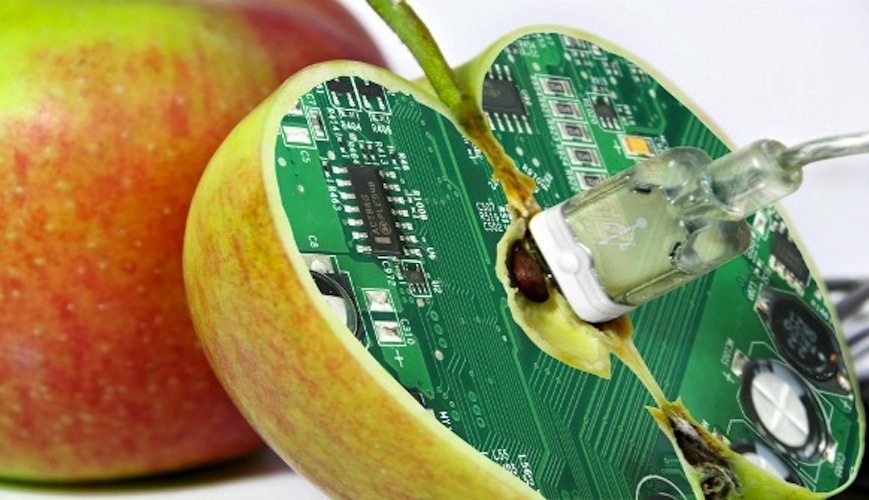

http://thumbnails.visually.netdna-cdn.com/ There is a seemingly never ending stream of controversy surrounding genetically modified organisms (GMOs). There appears to be two polar opposite views on the subject. In one camp, there are people who are happy to see a new science become incorporated into a system that could potentially offer tremendous support to the food industry and help to feed millions. In the other camp are individuals who go so far as to claim that they “know” that GMO’s cause cancer and that they will undoubtedly destroy the environment. So which is it? Like most issues, the subject of GMO’s is not black and white.
First, let’s discuss what a GMO actually is. A GMO is any organism that has a gene from another organism artificially inserted into its genome. Why would we want to do this? We can take a desirable trait from one species and incorporate it into another. Now for a lot of people, that’s all they need to hear. They immediately assume that this process will result in a dangerous plant or animal that could pose a risk to the environment, the consumer, or both. I disagree with this broad sentiment. The simple act of modifying an organism genetically does not tell us if it will be harmful or beneficial. That depends on which genes have been introduced and what their by-products will be. For example, a new GMO plant that produces a pesticide within itself that is poisonous to humans is, obviously, likely going to be detrimental when the gene product (the pesticide) is eaten. However, if the gene codes for an enzyme that helps the plant resist drought, for example, this gene will likely have no effect on whoever eats it.
Let’s look at an example: tomatoes with a gene from a fish. Here, a gene from a cold water fish was introduced into the tomato’s genome. This inserted gene codes for an “antifreeze” protein that helps prevent the fish (and in this case the tomato) from freezing in cold climates. This genetic change simply introduces the antifreeze protein into the tomato. If one wants to claim that eating a tomato that expresses this protein is dangerous, then it is similar to saying you should never eat tomatoes and fish together, since your stomach would end up with the same combination of proteins (from the tomato and the fish). The point I want to get across here is that it’s not the process of genetically modifying an organism that is dangerous. What determines if it is dangerous or not to the consumer is what the newly introduced gene will express in the new organism.
The second major concern people have about GMOs is their potential impact on the environment. I feel that this is a more legitimate concern. If a GMO proves to be more resilient, bigger, faster, or simply better able to survive than it’s natural counterpart, then the GMO could potentially become an invasive species and out compete the original native species if it is introduced into the environment. This could potentially have dire consequences on the environment as the biodiversity of the ecosystem in question could be greatly reduced if one species begins to take over. GMO producers attempt to avoid this situation by producing organisms that will be incapable of producing naturally in the wild. For example, genetically modified salmon are engineered to be sterile, so even if they escape into the environment they will soon die off. As long as the proper precautions are taken, the likelihood of a GMO devastating the environment can be minimal.
The potential benefits of GMOs are obvious: the ability to grow more nutritious food faster and in areas where these foods could not be produced before. This opens the opportunity for many starving parts of the world to become less dependent on food imports. It is primarily for this reason that I think the pursuit of GMO production is worthwhile. What will determine whether a given GMO proves to be beneficial or not, depends on the initial intentions of the genetic engineers. If we focus on being able to increase yield and nutrition while decreasing the use of pesticides and antibiotics, I believe that GMOs can be invaluable for our future. If, however, GMOs are designed with strictly economical goals in mind, then the potential to do harm is great. I feel strongly that GMO research should be government funded with these positive goals in mind, and not pursued solely by private corporations looking to capitalize on control of the world’s food supply.
I for one will continue to support GMO research because of its massive potential to help the world. As Uncle Ben said, “with great power comes great responsibility”. Let’s make sure that we don’t damage our world, but let’s also not get caught up in hysteria and block the advancement of science.
Sources:
http://en.wikipedia.org/wiki/Fish_tomato
-
Mystery of Death Solved: DMT is the Key


http://www.lightworker.com We now know what happens at death:
Resting comfortably in the recessed center of your brain, encased snugly within the corpus colossum, wrapped tightly between the dual-hemispheres of spongy nerve bundles, encased in the quarter-inch-thick armor-plating of skull, finally surrounded by your main and expressive organs with which you face the world, exists a tiny gland, long considered vestigial (serving little to no function), that holds the key to our interpretation of existence as we know it. I’m speaking of the pineal gland. This minute spec, roughly the size of a grain of rice, is more heavily protected than even the heart with its literal cage of protection, because if something happens to your heart you die, but if something happens to your pineal, you can’t go to heaven.
Never heard of it?
This pineal gland has influences on both melatonin and pinoline, but our interest is in the gland’s role in the creation of dimethyltriptamine, or DMT. This chemical, DMT, may well be the reason we, as a species, are capable of sentience itself.
I’m not a chemist; break it down.
First, DMT is a narcotic, schedule 1. It’s scheduled as a highly illegal substance all over the planet, largely because DMT is one of the most potent psychedelics known to man. Intensely powerful. Yet, every day your pineal produces this stuff.
Secondly, DMT is the chemical that elicits dreams. That’s right. Each night as you drift to slumber-land, not only are you tripping on a psychedelic, but you’re also premeditatedly committing a federal offence; possession or consumption of DMT could land you a felony charge.
And third, this illegal gateway to dreamland is released in massive amounts at the moment of death. When I say massive, if a water glass of DMT evokes a dream, at death, an equivalent river excretes into your system. Any druggies reading this?
How have I not heard of this before?
Well, the pineal’s significance is neither a new idea, nor an unfounded one. Spanning the expanse of human civilization runs an undercurrent of worshipful adoration to the almighty pineal, more widely known as the inner eye, all-seeing eye, or the like – considered the body’s gateway to the soul.

http://www.magicdinero.com Egypt had its Eye of Horus (now emblazoned on the US dollar bill). Hindu culture has its bottu (the familiar forehead dot). Even the ancient art of yoga recognizes the brow chakra, or ajna, as blossoming at the pineal, or third eye. That’s only to name a few.
The hell you say! The truth behind the cult of the pineal has gone largely unnoticed collectively, though the symbols themselves have been downright ubiquitous. Tibetan Buddhists, as well, have long carried a belief that the soul enters the fetus precisely 49 days after conception. Likely, reading this, you are not a Tibetan Buddhist – their numbers fall less than 20 million – and whether you subscribe to an eternal soul or not isn’t the point, because day 49 is the moment the pineal is formed in a fledgling brain.
Great, so what does all this have to do with death?
Well, on an experiential level, shrooms distort perception, coke smacks you with raw energy, ecstasy grants superpower orgasms (ladies), and most notably, weed slows time – time distortion seems to go hand in hand with most psychedelics as well – so time passage then is totally subjective. Ask Einstein.
Meanwhile, among DMT smokers, out of the macrocosm of potential experiences, two major themes emerge nearly universally:
1) A stretching of time – they experience the hectic 6 or 7 minutes as a near eternity or lifetime. Imagine Cobb’s 50 year night in Inception.
2) They experience religious incarnations with a tilt toward whatever sect the subject is affiliated with.
Here’s the clincher: after death, while this massive psychedelic dose courses through the brain, there is this mysterious several minutes where the brain still functions. With our new perspective, however, we at last understand what these minutes are…
These few minutes after death, subjectively, are experienced as an eternity, engrossed in the DMT universe. Also, the trip itself is a highly personal experience dictated by the deepest realms of the subconscious.
Therefore, whatever at your deepest core you expect to happen when you die… Congratulations, that’s what’ll happen… Every religion was right.
Mystery solved. Peace on earth.
If you’re resourceful, you can find this stuff and try it. The bigger question now is: do you really want to know where you’ll be spending eternity?
Sources:
University of Wisconsin: Creation of DMT
Medical Hypothesis: Endogenous Hallucinogenics Central to Nervous System
Medical Hypothesis: Visions of Dream Sleep
Third Eye Images and Symbols Around the World
Erowid: DMT Experience Reports
PopSci: The First Few Minutes After Death
Baseline of Health Foundation: Brain Functions Even After Death
49, after life, afterlife, ajna, all seeing eye, answer, ayahuasca, biology, book of the dead, brain, budd, chakra, death, dmt, dmt the spirit molecule, dream, drug, drugs, Einstein, eternity, gland, hallucinate, harvard, health, idea, Mental Health, pineal, question, religion, research, rick strassman, science, secular, society, spirit, strange answers, strassman, strausman, theory of relativity, tibetan book of the dead -
The Majesty of the Knuckleball


http://cdn.newsday.com/ With the baseball season approaching (only two weeks until pitchers and catchers report to Spring Training!), my mind focuses on the American Pastime. In 2012 a man with an improbable story and an even more incredulous name won the NL Cy Young Award: R.A. Dickey.
The Cy Young award is named after the legendary pitcher Cy Young (durrrr), who flung his craft in the late 19th and early 20th centuries, winning an insurmountable 511 games. The award is granted to the pitcher deemed to be the most dominant in each league. There is one slight twist, however: R.A. Dickey is a knuckleballer, the first ever to win the prestigious award.
The knuckleball is the most elusive and ephemeral of all baseball pitches. It has been criticized as a gimmick, unworthy of professional play. I believe it is the opposite, that it has a distinct and noble place at the table of baseball, a tool that has the potential to gain popularity in the sport once again. I congratulate Dickey for his amazing accomplishment, receiving the highest pitching honor at the advanced age of 38 in a career that had been less than stellar. With an impressive ERA of 2.73, his record was 20-6 and threw more innings and struck out more men than any other pitcher in the National League. Kudos.
For those that don’t follow baseball, the knuckleball is the rarest pitch of them all. In the past several decades, maybe two pitchers at any given time have specialized in it. And it is a pitch that must be specialized. Except as a joke, no one simply throws a knuckleball. It is a way of life. To master it is to focus on it exclusively.
Most pitches rely upon spin. There are 108 stitches on a baseball, and as they fly through the air they create small air pockets that make the ball move, or break, over the 60 feet 6 inches from the rubber to home plate. It’s called the Magnus Force, and it’s very sciency and complicated. It’s what gives sinkers their sink and curveballs their curve.
Seriously. Watch this .gif of a mesmerizing knuckleball.
Like a good Monty Python sketch, the knuckleball is something completely different. It depends on the lackof spin. A good knuckleball rotates about 1-2 times over the trip from pitcher’s hand to the plate. This means that the ball wobbles and butterflies around. It starts one place and can end up somewhere totally unrelated, with several distinct mid-air bounces along the way. It’s a nightmare to catch, let alone hit. Former catcher Bob Ueker, of “Juuuuust a bit ouside!” fame, said of the pitch:
The way to catch a knuckleball is to wait until it stops rolling and pick it up.
Good hitters have been known to sit out games when a knuckleballer is pitching: it can throw off their timing for the next couple of days.
Try throwing a ball more than two feet and have it notspin. Try to make it float. It’s exceptionally difficult. Now try to throw it 60.5 feet without spinning, and throw the ball 80 miles an hour for a strike. That’s the ineffable skill that Dickey has mastered.
The knuckler is a dangerous pitch because it’s so slow and unpredictable. Major league players are used to driving balls thrown at over 95 mph. If you mess up a knuckleball, the batter will hit it into the next time zone.
I hope that Dickey’s success with the pitch can help bring it back to the forefront. Knuckleballs are generally learned as a last resort, once it’s clear that a pitcher can’t cut it with traditional stuff. Dickey is no different. He started as a standard pitcher, but setbacks and obstacles forced him to adapt and to make the bastard pitch his own.
There’s a reason I think that the knuckleball can be a vital tool again in modern day baseball.
Baseball is by far the most mathematical sport in existence. Every aspect can be calculated (although some with more difficulty than others, like defensive prowess) to the nth degree. Teams pay good money for statisticians to calculate the odds of every conceivable type of play. How often does this pitcher throw a curve ball? When does he throw it? Where? What are the odds that it’s a strike? What pitch is this batter most successful on? Where does he have the most success? How often does he get a two-strike hit?
These are all important calculations, and someone has done the math. The sample size is big enough, and the answer is known. Before every game hitters watch video of the day’s pitcher, and that pitcher watches video of every hitter he is going to face. The batter knows the pitcher’s tendencies and predilections, and so does the pitcher. It’s the day-to-day cat and mouse game that makes baseball so personal. It’s a chess game moving at over 90 miles an hour.
The knuckleball has been a rarity in baseball for decades. But this is why it needs to make a comeback: in an era where hitters are used to studying pitchers and their tendencies, the knuckleball is the one pitch that can exploit that dependency. How can a batter prepare for a pitch that’s destination is a mystery even to the pitcher?
The knuckleball is a lot like a math teacher giving a test but not allowing calculators. Sure, the kids can do the problem with the proper tools, but what if you throw them into a situation where the tools don’t exist? What if you make them think on their feet? You exploit their weakness.
In math as in baseball, that type of test is an abject rarity. Throw a hard test at some coddled teenagers and they are likely to fail. A pitcher’s job is to make the hitter fail. Make the hitter rely on pure ability. See ball; hit ball. Don’t give them any chance to prepare. This year Dickey was the best in the league at making million-dollar players look foolish.
That’s the beauty of it. Throwing unpredictability at hitters who have never known anything other than predictability. It isn’t easy, and every pitcher makes mistakes and good hitters can hit good pitches, but it’s something different. Introduce a little anarchy, as The Joker would say.
Make them see ball, hit ball.
Dickey had an extraordinary year and did it by mastering the most baffling of pitches. I hope more people tip their cap to the reigning NL Cy Young winner and realize that the knuckleball can be a secret weapon more potent than a tight slider or high heater, and that it deserves to be studied and encouraged.
The knuckleball is like the court jester. He’s not the most important person in the room, but sometimes it takes a fool to show the king the truth. Congrats, Dickey. The baseball world is much more interesting with you in it, doing what you do best.
I am a lifelong Chicago Cubs fan, and our woeful 2012 season is likely predictive of our efforts this season. But I just can’t help myself. I can’t wait until the umpires clear the plate, the pitcher toes the rubber, and I can at last, if not play ball, watch the most complicated sports plot unfold itself over the next seven months.
Sources:
adapt, Baseball, baseball pitch, baseball season, baseball team, best baseball, best hitter, best pitcher, best runner, bob ueker, career, Chicago Cubs, cy young, how to pitch, how to throw curve ball, how to throw knuckle ball, knuckle ball, Knuckleball, Magnus Force, major league, minor league, NY Mets, Pitching, R.A. Dickey, Sports -
Solar Salamander

http://eol.org/ The spotted salamander, or Ambystoma maculatum, makes its home throughout the Eastern United States and Southern Canada. Unlike other salamanders, the spotted salamander is part of an incredible partnership that overrides the whole food-chain thingy; it has a bright partnership with the sun.
To be more precise, the solar power salamander relies on sun-harnessing algae within its eggs. As the young salamanders develop within an egg they release waste materials which the algae feeds on. The algae in turn photosynthesizes sunlight, releasing oxygen and glucose which aids an embryo in its development. In this way, the algae and salamanders engage in a highly beneficial, symbiotic relationship. The algae live a carefree life chilling with an unborn salamander, while the unborn salamander gets its own perpetual energy power supply as a roommate.
The scientific realm has known about, or at least hypothesized about solar powered salamanders since before the 20th century. Biologist Henry Orr had speculated on the abnormal relationship between the algae and salamanders after observing single celled algae colonizing salamander eggs within hours of them being laid in shallow waters. Over 100 years later, scientists have proof that this particular salamander is truly radiant.
Spotted salamanders aren’t the only non-plant species that use photosynthesis to live and grow. In fact:
Many other animals, from sponges to sea slugs pull the same trick. Corals are animals but have algae living in them that use sunlight to make sugar. One species of hornet can convert sunlight into electricity. There are also suggestions that aphids can harness sunlight, although most biologists are unconvinced.
The spotted salamander is the first vertebrate scientists have discovered to directly depend on photosynthesis for nourishment. It might be the photosynthesis of another life form, but it is still a direct form of photosynthetic exploitation and dependency.
I wonder if one day we’ll power our cities, homes, and personal devices with stores of algae. Remind me of the skin suits from a story by Stephen Baxter, “The Ghost Pit.”
Sources:
http://eol.org/pages/1048181/overview
http://jeb.biologists.org/content/216/3/452
http://www.newscientist.com/article/dn23090-zoologger-the-first-solarpowered-vertebrate.html
http://www.jstor.org/discover/10.2307/1931088?uid=3739320&uid=2&uid=4&sid=21102050285923
http://www.newscientist.com/article/mg20827901.100-light-diet-animals-that-eat-sunshine.html
http://www.newscientist.com/article/dn16124-solarpowered-sea-slug-harnesses-stolen-plant-genes.html
http://www.newscientist.com/article/dn19709-zoologger-the-solarpowered-electric-hornet.html
http://www.newscientist.com/article/dn22195-aphids-may-be-first-photosynthesising-animal.html
20th century, ambystoma maculatum, animals algae, animals photosynthesis, BC, BC restaurants, biologist, biology, eastern united states, embryo algae, food chain, henry orr, henry orr salamander, New vs Salamander, photosynthesis, photosynthesize, salamander algae, salamander food chain, salamander sun power, solar powered salamander, southern canada, spotted salamander, stephen baxter, stephen baxter the ghost pit, sunlight animals, the ghost pit, US, US salamander -
Blimps are the Future!


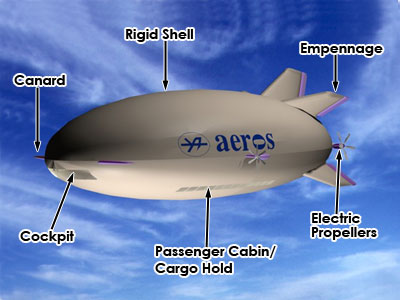
Aeros Corp in southern California is developing an Aeroscraft which resembles a blimp in technology and appearance. These neat nifty new age airships have the ability to climb vertically in altitude to a desired height of up to 12,000 feet and can travel horizontally at 222 km/hour or roughly 134 miles/hour. AerosCorp is working on different models that can lift from 20 tons to 500 tons of equipment! These airships have an eerie UFO look to them, since, well they really are unidentified as of yet.
 Still in development, the ultimate goal of these airships is to carry military cargo using roughly a third of the fuel of a conventional cargo plane. The Aeroscraft, measuring at only 230 feet long, is built so efficiently it is able to manuever easily through the sky and land anywhere from a landing pad to a parking lot. A prototype is set to fly this year and a full sized Aeroscraft will set out in 2016.
Without the modern day limitations of an airport, you can land this Aeroscraft anywhere hilly and resupply a village with equipment. Help out that local revolution without being slowed down by travel on the ground. And for those with lots of money? How about a vessel for all your fortune as you travel the world? Think Casino in the Sky! Training facility on the way to that big sports event! Scenic sky cruise of the Himalayas! Or maybe Blitzball brought to reality in the sky. I’d name mine “Plane to Sea”.
The future is NOW! Or rather, it has been? Only better! But similar.
000 feet, 12, 134 m/h, 20 tons, 222 km/h, 500 tons, Aeros Corp, Aeroscraft, airship, Blimp, cargo, cargo plane, casino, flight, military, new, new age, prototype, science, sea, ship, sky, technology, UFO, ufo airship -
Can Genetically Modified Corn Form Tumors in the Body?
http://www.thegrocer.co.uk If you are planning on prolonging your life and evading this cancer frenzy, you should be careful of which breakfast cereals and tortilla chips you choose. If you are not aware of the negative effects of wheat, a quick glance about wheat and what gluten is won’t hurt, but read on to learn about yet another daily source of negative possibilities.
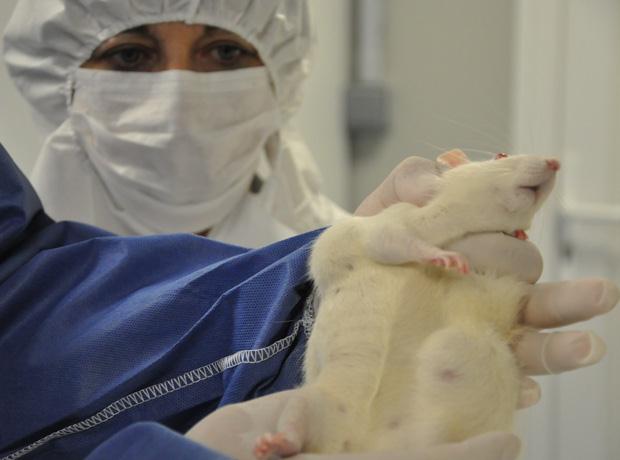
Most of the consumed corn in the United States is genetically modified. According to a recent study by researchers at the University of Caen connecting genetically modified corn and long term effects on health, it can cause rapid and uncontrollable tumor growth as well as damage organs. This has been already tested on research rats. We can be thankful to Monsanto for the GM maize and their fertilizer, which in trace amounts is enough to cause the aforementioned wreck along with premature death.
According to the same site, this genetically modified maize that we all consume, also known as NK603, even in the smallest quantities has made the rats form tumors in the mammary glands as well as develop liver and kidney damage. The male rats exhibited the observable effects as early as 4 months, and female rats as early as 7 months. The control group observed the effects within twenty-three and fourteen months respectively.
Here is a quick list of some the facts from the study
-
Between 50 to 80 per cent of female rats developed large tumours by the beginning of the 24th month, with up to three tumours per animal. Only 30 per cent of the control rats developed tumours
-
Up to 70 per cent of females died prematurely compared with only 20 per cent in the control group
-
Tumours in rats of both sexes fed the GM corn were two to three times larger than in the control group
-
The large tumours appeared in females after seven months, compared to 14 months in the control group. The team said the tumours were ‘deleterious to health due to a very large size’, making it difficult for the rats to breathe and causing digestive problems
Shortly after the release of this study RT reports that:
The national academies of agriculture, medicine, pharmacy, sciences, technology and veterinary studies issued a joint statement condemning the findings on Monsanto’s NK603 corn, which were published last month by molecular biologist Gilles-Eric Séralini of the University of Caen.
RT also reports that Seralini’s study also:
earned widespread criticism for its methodology. Tom Sanders, head of the nutritional sciences research division at King’s College London, saying the study was a “statistical fishing trip,”manipulated from the start to achieve a specific result.
This later report was released and backed by two government-commissioned scientific reviews, however Monsanto has a bit of a history of manipulating governments and placing itself in a seat of power.
Genetically modified food is a very controversial debate with many sides to the story. In the mean time we should think about what we’re putting into our bodies and make sure to always read labels when buying food.
Sources:
The Grocer- Monsanto Roundup Weedkiller and GM Maize Implicated in ‘Shocking’ New Cancer Study
Wondergressive- Save the Food Pyramid by Cutting it by the Limbs
Wondergressive- Natural, Living Pesticides
RT- Good crop, bad crop: French scientists dismiss Monsanto ‘cancer corn’ study
Global Research- Obama Gives Key Agriculture Post to Monsanto Man
Wondergressive- And the Court Battle Begins Between David and Goliath, Bowman and Monsanto
Wondergressive- I Believe in GMOs
-
Wonder about your world…

Take the plunge down the rabbit hole of insanity and wonder in this fast-paced, nonstop psychological thriller that will leave you questioning the very nature of reality and beyond. Part thriller, part romance, part existential horror, A Dream of Waking Life delves into lucid dreaming, psychedelics, existential ontology, video games, the nature of love, the nature of reality, and more.

Mendel’s Ladder delivers an adrenaline-fueled journey set on a dystopian future Earth, brimming with high-stakes action, adventure, and mystery. This epic series opener plunges readers into a world filled with diverse cultures, heart-pounding battles, and characters who will captivate your heart and imagination.

“E.S. Fein is raising the bar for quality as it’s a very well-written and thought-provoking book…There are points and themes in the story that could be discussed for eons as people will have their own idea on where it leads. It’s a book I would highly recommend.” – Andy Whitaker, SFCrowsnest
 Wondergressive