
-
30 Wasps Vs 30,000 Bees; Bees Defend With Heat
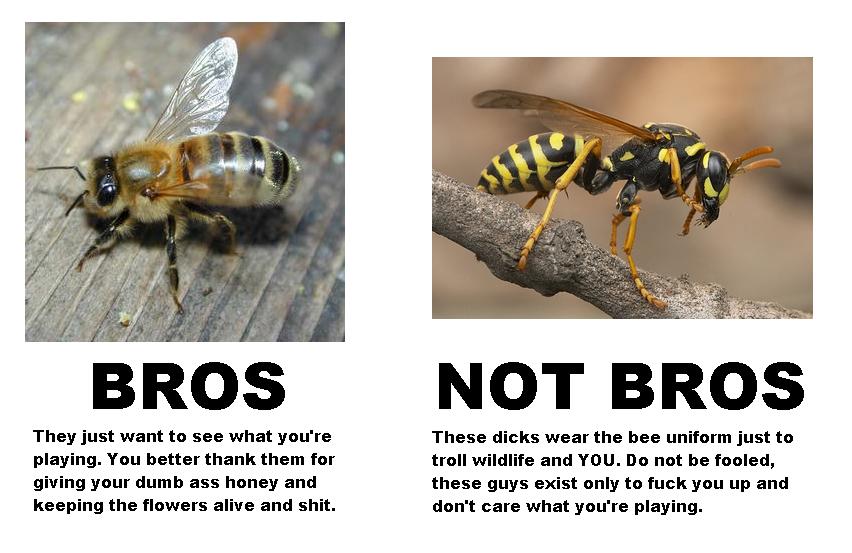
http://imagehaul.com/thehauls/ Have you ever seen 30 wasps the size of your fist attack a hive of 30,000 honeybees in real time? Here’s your chance! It’s like a single Chuck Norris taking on the entire United States Military.
The only defense bees have is to mob the wasps and generate intense heat
by contracting their wing muscles to suffocate the intruder.
Barrett Klein filmed the bees as they attacked a wasp within their hive. An infrared look at the incendiary strategy can be seen here.
Sources:
-
30 Wasps Versus 30,000 Bees; Bees Defend With Heat
Have you ever seen 30 wasps the size of your fist attack a hive of 30,000 honeybees in real time? Here’s your chance! It’s like a single Chuck Norris taking on the entire United States Military.
The only defense bees have is to mob the wasps and generate intense heat “by contracting their wing muscles to suffocate the intruder.” Barrett Klein filmed the bees as they attacked a wasp within their hive. An infrared look at the incendiary strategy can be seen here.
-
NASA Developing Orion for Human Travel Across Solar System in 10 Years
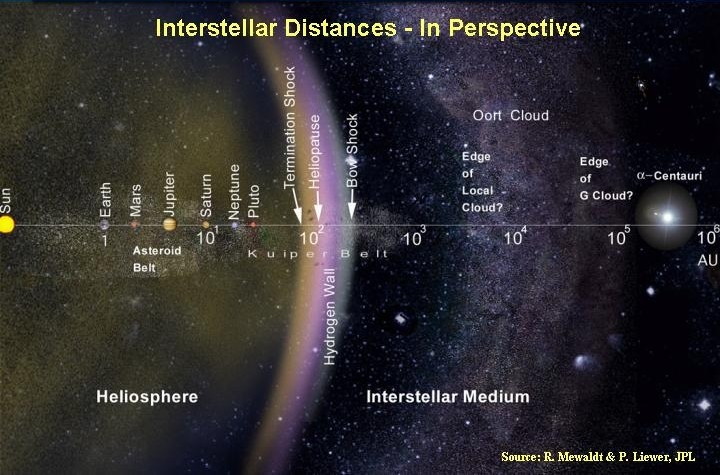
http://www.nasa.gov/ NASA has completed another round of tests on the deployment of the parachute system of the deep space spacecraft called the Orion. NASA plans to use Orion and the Space Launch System (SLS) to expand humanity’s presence across the entire solar system.
Orion’s first test flight will take place in 2014. It will travel to distances 15 times further than the International Space Station up to speeds of 20,000 mph before returning to Earth. NASA plans to launch Orion from the SLS in 2017.
Sources:
-
NASA Developing Orion for Human Travel Across Solar System in Next 10 Years
NASA has completed another round of tests on the deployment of the parachute system of the deep space spacecraft called the Orion. NASA plans to use Orion and the Space Launch System (SLS) to expand humanity’s presence across the entire solar system.
Orion’s first test flight will take place in 2014. It will travel to distances 15 times further than the International Space Station up to speeds of 20,000 mph before returning to Earth. NASA plans to launch Orion from the SLS in 2017.
-
Unprecedented Changes and Extinctions Occurring in Marine Life
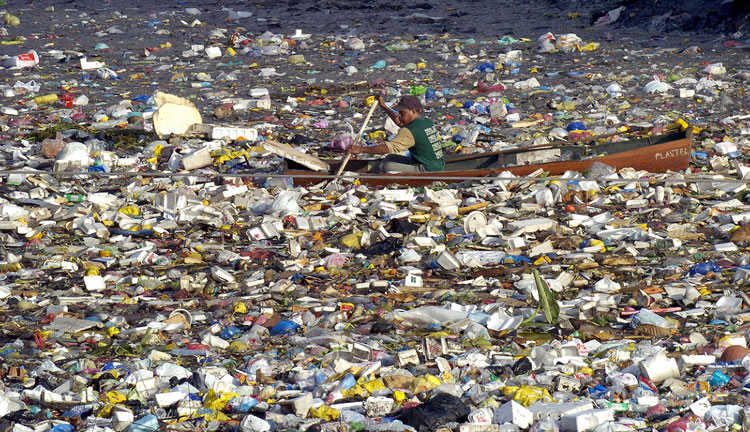
Indian Biodiversity Talks has recently posted about a review that examines the impending mass extinctions of marine life that are taking place and will continue to take place on a global scale. Due to global warming and the mass acidification of the oceans, scientists are urging the world to alter its behavior immediately and look further into which species will safely adapt, and which will perish in the wake of history.
The world must change its effect on global climate, and practice sustainable, clean lifestyles if it wishes to provide future generations with what we would consider acceptable livelihoods.
Climate change is obvious all around us, especially when viewing the melting of ice in places like the Arctic and in Greenland. In July of this year, the melted area of the Greenland ice sheet jumped from 40% to 97% in only 4 days!
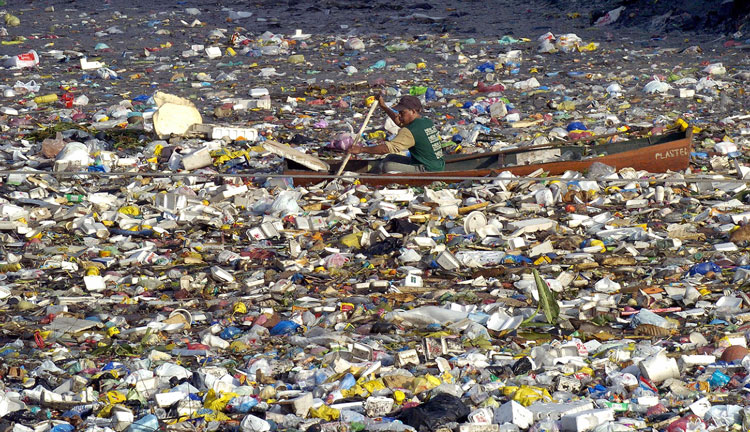
One of the greatest effects we have on our world and oceans is through the way we handle our waste. Ever heard of the Great Pacific Garbage Patch?

The Great Pacific Garbage Patch is circulated in the North Pacific Gyre. It is a patch of ocean containing, in many areas, more plastic than plankton. The U.S. produces about 6.8 billion kilograms of plastic each year and only one per cent of it is recycled. There is even plastic from the 1950’s still slowly floating in the midst of more contemporary garbage. It is one of many ever increasing problems that must be addressed swiftly and efficiently if there is any hope of saving ourselves from ourselves.
*Update* Vice released a documentary on youtube yesterday documenting never before seen aspects and information of the Great Pacific Garbage Patch. Most importantly, it reveals in detail how this garbage affects you and seeps into your body quickly and with sickening potency. Click the number to watch part: 1 2 3 (Part 1 and 3 contain the best information, while part 2 focuses more on the journalist’s experience on the ocean).
“Today’s problems cannot be solved if we still think the way we thought when we created them.” -Einstein
acidification, Captain Moore, clean lifestyle, estrogen, future life, great pacific garbage patch, greenland ice, ice melting, ice sheet, Indian Biodiversity Talks, marine extinction, mass extinction, North Pacific Gyre, ocean acidification, plastic, plastic plankton, recycle, review, sustainable, United States, Vice, Vice magazine, world behavior -
Birds Recognize and Mourn Their Dead
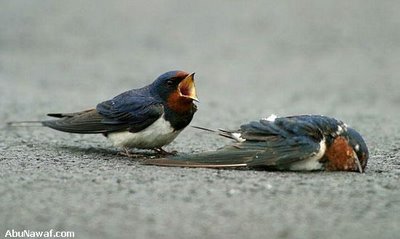

The BBC has published a study showing how jays, after finding a dead jay, will stop foraging and crowd around the body. The jays make sounds, likely to warn other jays in the area that there may be a predator on the loose.
Interestingly, the particular sounds they made when crowding around the dead jay encouraged other jays in the area to join the funeral procession around the fallen bird.
When researchers used wooden jays to mimic a dead jay, the birds “mobbed the stuffed jays; a behavior they are known to do in the wild when they attack competitors or sick birds. The fact that the jays didn’t react to the wooden objects shows that it is not the novelty of a dead bird appearing that triggers the reaction.”
The results reveal that “without witnessing the struggle and manner of death the jays see the presence of a dead bird as information to be publicly shared, just as they do the presence of a predator.”
Many animals appear to mourn the deaths of other animals, pressing the question of how sophisticated and modeled the idea of death is in the mind’s of various species.
-
Bios Urn Will Turn You Into a Tree After Death
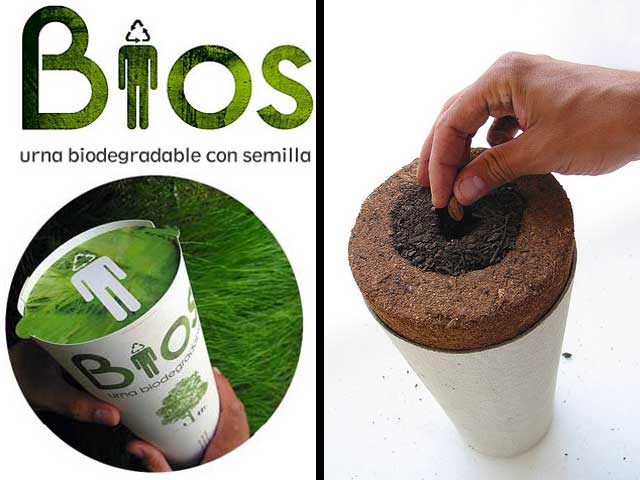
The bios urn awaits planting! http://www.atheistexile.com The Bios Urn allows people to use their cremated ashes to germinate a tree seed of their choice. The urn itself is completely biodegradable and is made of coconut shell, compacted peat and cellulose. Gerard Moline has developed the Bios Urn, but is just one of many designers currently attempting to find new ways to make our deaths more eco-friendly.
There is a turn in the way people are approaching life. There is a thriving community looking to live their lives in more ecologically sustainable ways and more and more people are looking to go into the afterlife in the same fashion. Traditional cemetery burial is highly unsustainable. The New York Times states that an
Another issue contributing to the unsustainability of traditional cemetery burial is its environmental impact. The resources that go into the ground every year associated with a typical cemetery burial translate into: enough wood to frame over 2,300 single-family homes; sufficient steel to erect almost 15 Eiffel Towers; nearly four times as much concrete as was used to build the Pentagon; and a volume of embalming fluid that would overflow an Olympic swimming pool.
In 2012 the US Cremation rate was 43.2% according to the National Funeral Directors Association; raised from only 17% in 1990. Cremation is not only cheaper but also a much more viable option for an eco-friendly alternative with a product such as the Bios Urn. However, the Bios Urn isn’t the only option for those in the market for an alternative choice. There are many emerging options for creative, eco-friendly ways to deal with the remains of a loved one after death. DarkRye.com mentions options ranging from chemical-free, short-term body preservation to completely biodegradable caskets and urns.
It’s time to get to the root of the issue and leave behind forests rather than engraved rocks. If you’re interested in purchasing one of these lovely Bios Urns you can do so at the Funeraire website, and maybe even pick up some cremation jewelry while you’re at it…
What tree do you want to become after death?
Sources:
Big Think: This Awesome Urn Will Turn You into a Tree After You Die
NYT- A Lifetime After the Baby Boom, a Burial Boom
NYT- In Tough Times, a Boom in Cremations as a Way to Save Money
DarkRye.com- The Sustainability of Death
-
A Product That Will Turn You Into a Tree After Death
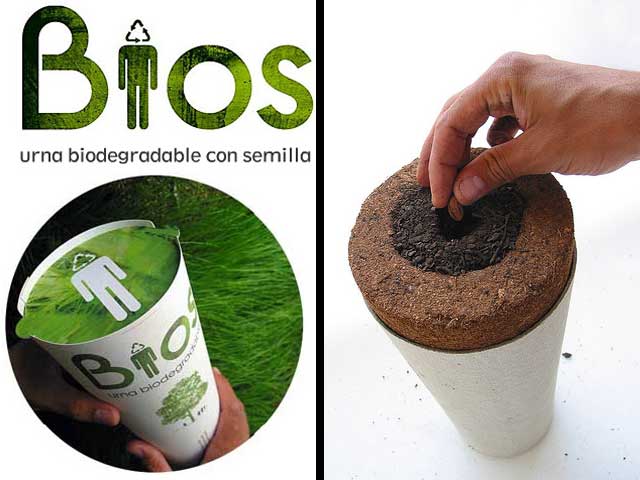
Currently there are many designers attempting to find new ways to make our deaths more eco-friendly. Gerard Moline has developed the Bios Urn.
The Bios Urn allows people to use their ashes to germinate a seed of their choice. The urn itself is completely biodegradable and is made of coconut shell, compacted peat and cellulose.
It’s time to get to the root of the issue and leave behind forests rather than engrave rocks.
-
In 1610 God Was a Binary, Fractal, Self-Replicating Algorithm
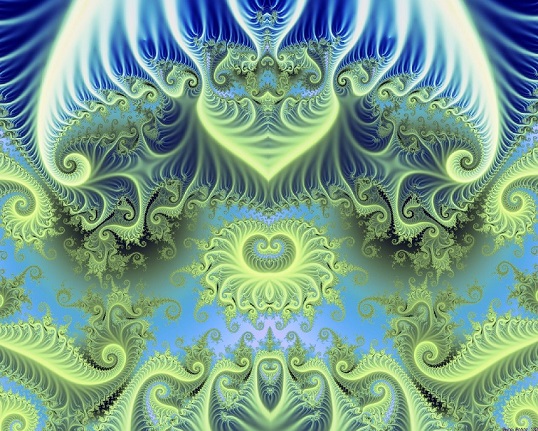
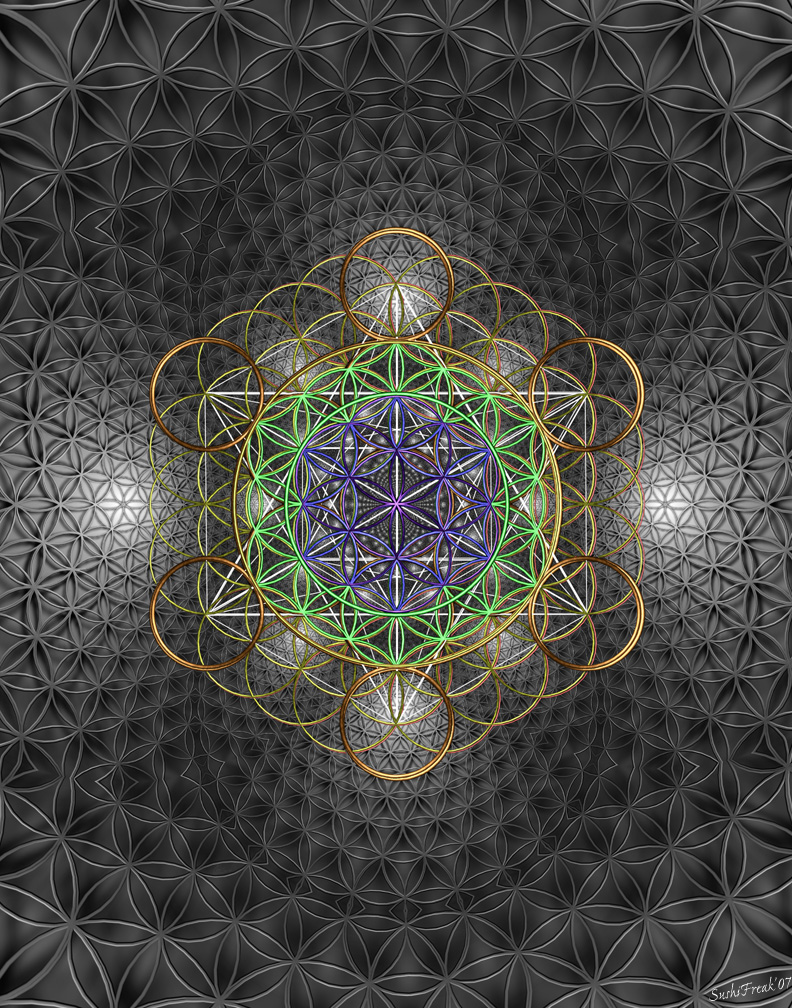
Jakob Boehme, a simple shoemaker born in the 15th century, suddenly realized one day that “God was a binary, fractal, self-replicating algorithm and that the universe was a genetic matrix resulting from the existential tension created by His desire for self-knowledge.”
Talk about incredible! A man whose education consisted of the Bible and proper sole curvature came up with a postulation that unifies religion and contemporary quantum theories of the universe during a stroke of intuition. The man has gone on to inspire such minds as Friedrich Nietzsche, to Georg Willhelm, to Philip K. Dick to Adam Weishaupt.
His work integrates, involves, and unifies kabbalah, alchemy, theosophy, sacred geometry, yin and yang, cosmology, and enlightenment.
A mind far ahead of it’s time!
adam weishaupt, alchemy, algorithm, bible, cosmology, enlightenment, fractal, genetic matrix, God, Jakob Boehme, kabbalah, nietzsche, philip k. dick, quantum physics, religion, sacred geometry, self awareness, self knowledge, self replicating, self replicating algorithm, shoemaker, theosophy, yin and yang -
A Group of Prominent Scientists Agree; Animals are just as Conscious as Us
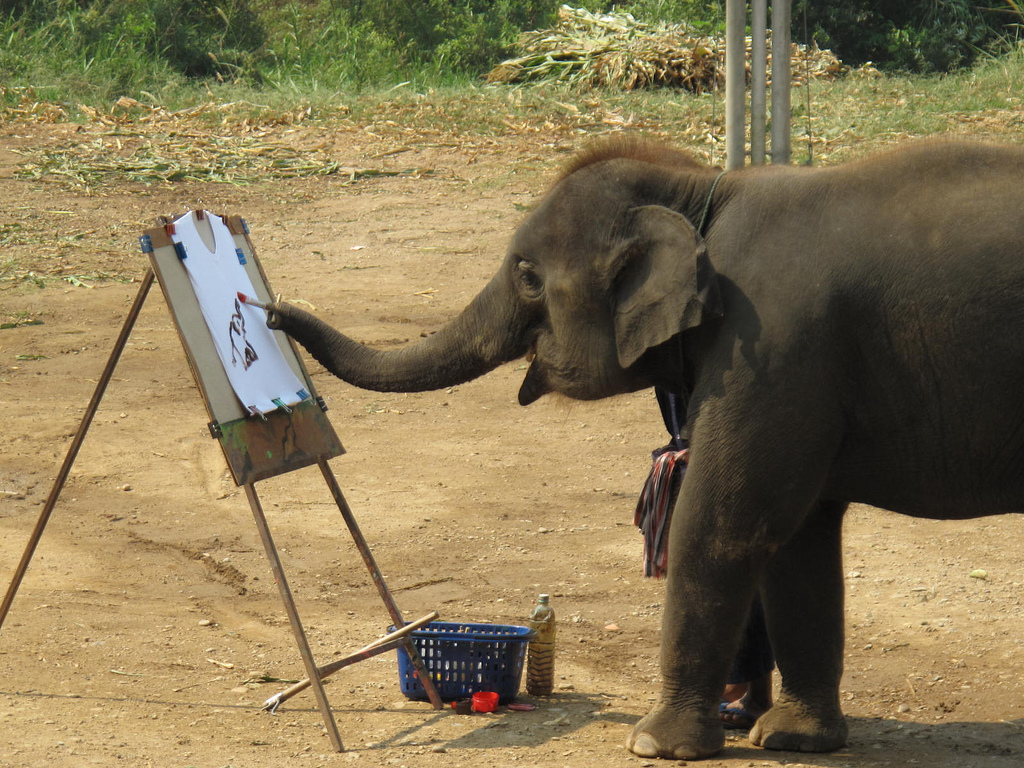
The immense intelligence and self awareness of species like elephants, dolphins, pigs, and octopi have long been documented. For the first time in history a team of international scientists have signed a document citing evidence for the claim that many animals exhibit the same degree of consciousness and awareness as humans. They act on instinct just as much as we do.
This even includes animals that are extremely unlike humans, such as birds and many forms of sea life.
“The absence of a neocortex does not appear to preclude an organism from experiencing affective states. Convergent evidence indicates that non-human animals have the neuroanatomical, neurochemical, and neurophysiological substrates of conscious states along with the capacity to exhibit intentional behaviors.”
“The scientific evidence is increasingly indicating that humans are not unique in possessing the neurological substrates that generate consciousness.”
Can we please get rid of zoos already. I’m tired of hearing the argument “the zoo keepers really take care of those animals.” If I am forced into a cage, I don’t care how well I am taken care of, I want out, even if it means death.
Some other reading and research on consciousness in animals can be found here: click click
Wonder about your world…

Take the plunge down the rabbit hole of insanity and wonder in this fast-paced, nonstop psychological thriller that will leave you questioning the very nature of reality and beyond. Part thriller, part romance, part existential horror, A Dream of Waking Life delves into lucid dreaming, psychedelics, existential ontology, video games, the nature of love, the nature of reality, and more.

Mendel’s Ladder delivers an adrenaline-fueled journey set on a dystopian future Earth, brimming with high-stakes action, adventure, and mystery. This epic series opener plunges readers into a world filled with diverse cultures, heart-pounding battles, and characters who will captivate your heart and imagination.

“E.S. Fein is raising the bar for quality as it’s a very well-written and thought-provoking book…There are points and themes in the story that could be discussed for eons as people will have their own idea on where it leads. It’s a book I would highly recommend.” – Andy Whitaker, SFCrowsnest

 Wondergressive